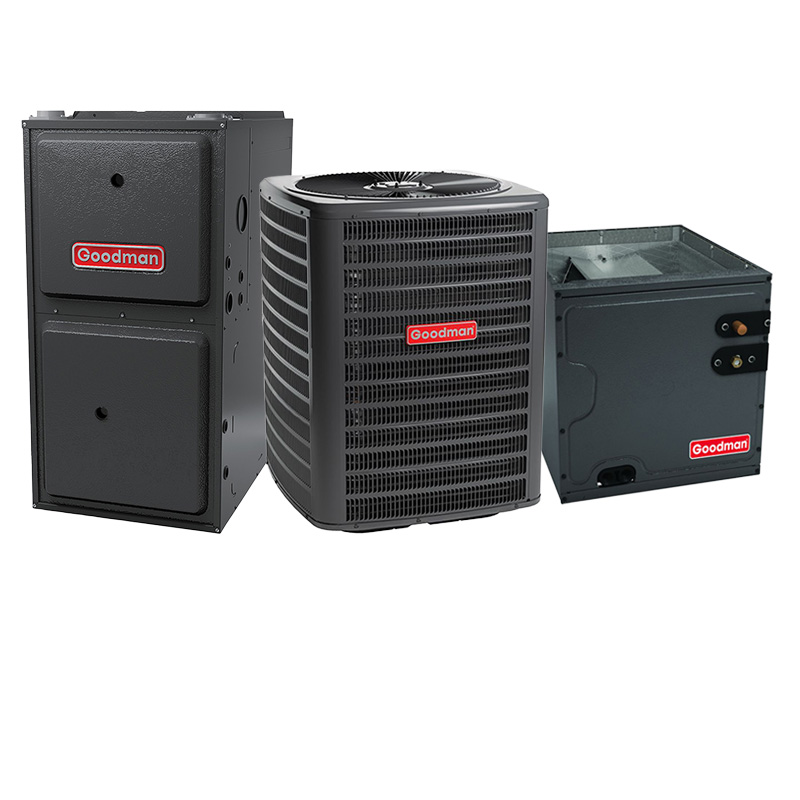
Goodman 2 Ton 13.8 SEER2 40000 BTU 96% AFUE Multi-Speed ECM Gas Furnace System – Upflow | R32
View on AC Direct see your lowest price →Check current price on AC Direct →
Key features
- 13.8 SEER2 cooling efficiency meets current federal minimums for most U.S. regions
- 96% AFUE multi-speed gas furnace recovers nearly all fuel energy as usable heat
- ECM blower motor reduces fan electricity use and improves airflow consistency
- R-32 refrigerant with lower global warming potential than outgoing R-410A
- Upflow configuration for homes with overhead duct systems
- 40,000 BTU heating capacity suited to smaller conditioned spaces
About this system
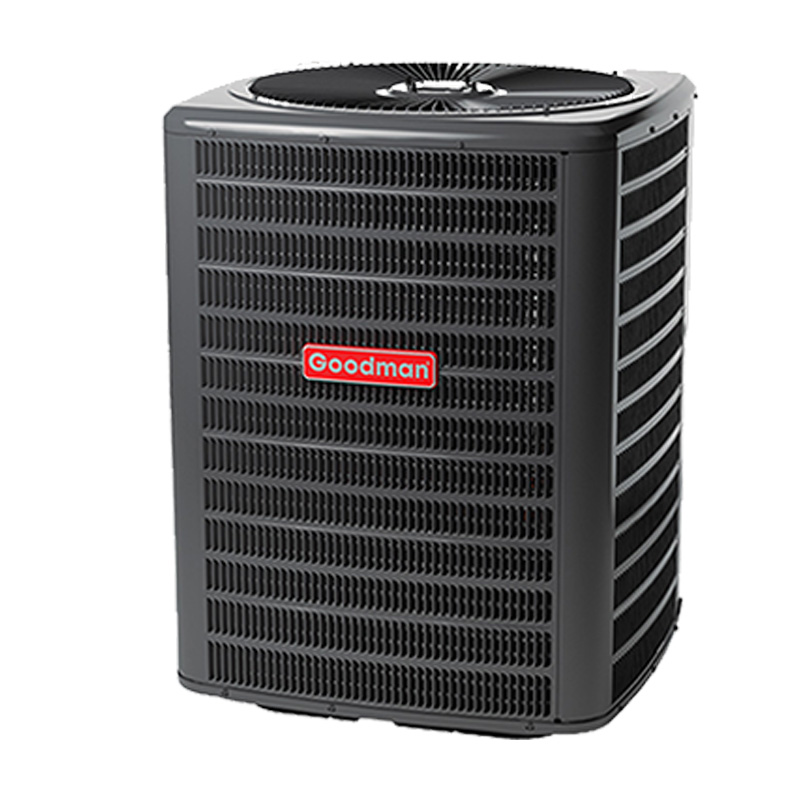
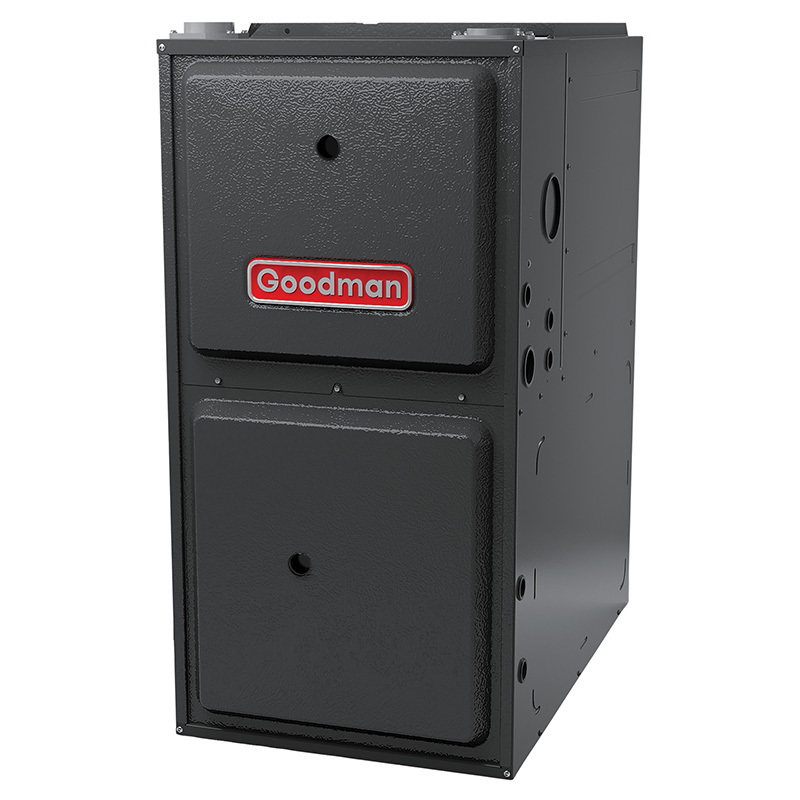
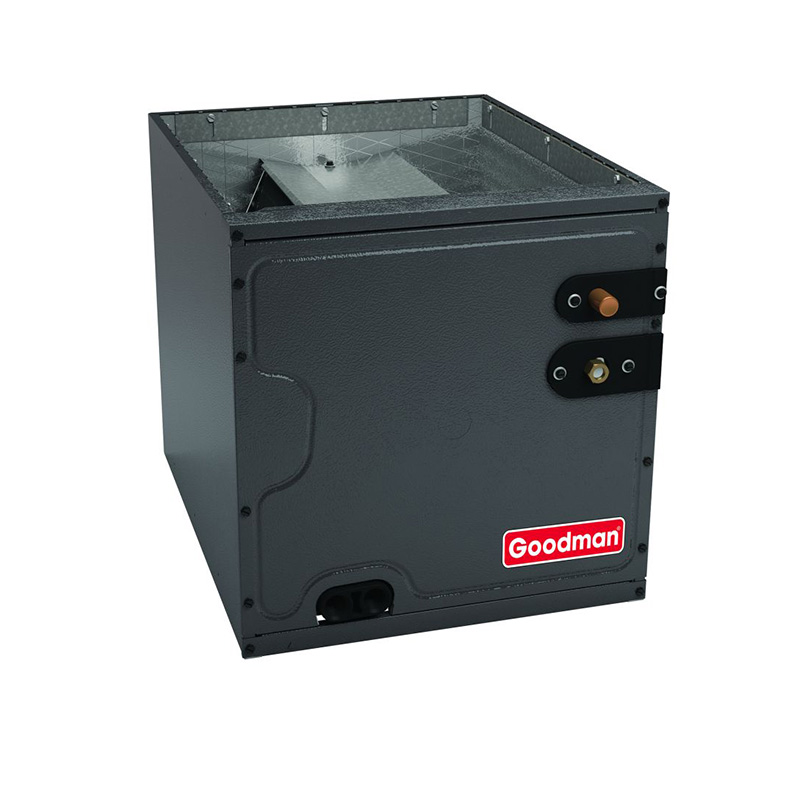
The Goodman 2-ton, 13.8 SEER2, 96% AFUE upflow system pairs a central air conditioner with a high-efficiency gas furnace in a single matched package aimed at smaller homes and conditioned spaces in the 700-to-1,000 square foot range. The 13.8 SEER2 rating clears the federal minimum for most U.S. climate regions, so this is not a high-efficiency cooling standout, but the 96% AFUE furnace is a genuine efficiency leader on the heating side, recovering 96 cents of heat energy for every dollar of gas burned. The multi-speed ECM blower motor runs at lower speeds during mild conditions, reducing electricity draw and evening out temperature swings compared to a single-speed PSC motor.
R-32 refrigerant is a forward-looking choice: it has a lower global warming potential than the R-410A it replaces and is increasingly what new equipment ships with. If you ever need a refrigerant top-off down the road, R-32 is on track to remain available and code-compliant. The upflow configuration sends conditioned air upward into overhead ductwork, which suits most basement or ground-level mechanical rooms in homes built with traditional trunk-and-branch duct layouts. Buyers who need a reliable, code-compliant system without stretching the budget will find this package straightforward to cost-justify, provided they invest in a qualified installation.
This Goodman package delivers a strong furnace efficiency rating and a future-ready refrigerant at a price point that undercuts Carrier, Trane, and Lennox by a meaningful margin. The trade-off is a brand track record that shows real long-term reliability concerns, and an efficiency ceiling on the cooling side that is adequate but not impressive. If the installation is done well, it is a defensible budget choice; if it is not, the brand's documented failure modes become a real financial risk.
Overall score is the average of the five ratings above.
What we like
- 96% AFUE furnace is among the more efficient ratings available at this price tier
- ECM blower motor cuts fan operating costs versus single-speed alternatives
- R-32 refrigerant is forward-compatible with evolving refrigerant regulations
- Purchase price runs roughly 15 to 25 percent below comparable Carrier, Trane, and Lennox systems
- Upflow orientation fits a wide range of existing residential duct configurations
Trade-offs
- 13.8 SEER2 cooling efficiency is entry-level; higher-SEER2 options exist at modest additional cost
- Compressor lifespan averages 10 to 14 years versus 15 to 20 years for premium brands, based on owner reports
- Dual-run capacitor failures are the most commonly reported service call, typically appearing after several years of use
- A minority of owners report evaporator coil leaks and refrigerant issues, and performance is heavily dependent on install quality
What homeowners and pros say about Goodman
Homeowners who research Goodman online encounter a split picture. On ConsumerAffairs, where dissatisfied buyers are most likely to leave feedback, Goodman scores around 2.5 out of 5, and the recurring complaint is repair costs that start climbing after roughly year seven. Google dealer reviews tell a more balanced story, averaging around 3.8 out of 5 across a few hundred reviews per location, where affordability is the praise that comes up most often. The honest read is that both data points are real: Goodman equipment tends to work acceptably when new and well-installed, but it draws more maintenance calls over a longer ownership window than premium brands.
Among HVAC technicians, the brand carries a reputation for being install-sensitive, meaning the gap between a careful installation and a rushed one shows up in performance and longevity more clearly than it does on premium equipment. The documented failure patterns are specific: dual-run capacitors are the most common service call and are generally a low-cost fix, but evaporator coil leaks appear often enough to be a real concern, and compressor lifespan in owner reports averages 10 to 14 years, meaningfully shorter than the 15 to 20 years more commonly seen with Carrier, Trane, or Lennox compressors. A small share of owners also report refrigerant issues within the first year, which technicians typically attribute to improper charging at installation rather than a manufacturing defect. For this 2-ton R-32 system, the calculus is the same as with any Goodman: the upfront savings are real, but they need to be weighed honestly against a reliability profile that trails the premium tier.
Sources: ConsumerAffairs Goodman owner reviews, AHRI Directory of Certified Product Performance, U.S. DOE appliance and equipment efficiency standards, Goodman product specification sheets.
What it costs to run
At 13.8 SEER2, cooling this 2-ton system for a typical 1200-hour cooling season at the U.S. average electricity rate of $0.17/kWh works out to roughly $355 per year in cooling, about $10 less per year than a minimum-efficiency 13.4 SEER2 unit of the same size. Your real cost depends on your climate and local rate.
Method: (24,000 BTU/hr ÷ 13.8 SEER2) × 1200 hours ÷ 1000 × $0.17/kWh. Rate source: U.S. EIA average; cooling hours: moderate-climate estimate.
How it compares
| Brand | Comparable model | SEER2 | Stage | Price position |
|---|---|---|---|---|
| Goodman | 2-Ton 13.8 SEER2 96% AFUE Upflow ECM System (this unit) | 13.8 | Multi-speed | Value pick |
| Carrier | Comfort Series (24ACC / 59SC5) | 14.0-15.0 | Single-stage | Typically 15 to 25 percent more than this Goodman package |
| Trane | XR14 / S9X1 system | 14.0-15.0 | Single-stage | Typically 15 to 25 percent more than this Goodman package |
| Lennox | Merit Series (14ACX / ML196) | 14.0-15.0 | Single-stage | Typically 15 to 25 percent more than this Goodman package |
Competitor rows are comparable single-stage units at similar efficiency; price is relative position, not a quote.
Questions about this system
Is 13.8 SEER2 going to cost me more in electricity bills than a higher-rated unit?
Yes, modestly. A 16 SEER2 unit in similar conditions would use roughly 14 percent less electricity for cooling. Whether that gap pays back in your climate depends on how many cooling hours per year you run and your local electricity rate, but in a mild northern climate on a 2-ton load the annual savings difference may be small enough that the upfront price gap with a higher-efficiency system never fully closes.
What does R-32 refrigerant mean for me as an owner?
R-32 is the refrigerant increasingly used in new equipment as the industry moves away from R-410A. For you as an owner it means the system is better aligned with near-term regulations, and certified technicians working on R-32 equipment will become more common as the transition continues. If a leak ever occurs, a trained tech can handle a recharge, but R-32 is mildly flammable and requires technicians with the appropriate certification.
What are the most likely repair costs I should budget for over 10 years?
The most commonly reported service issue on Goodman equipment is dual-run capacitor failure, typically a 300-to-600 dollar repair that is quick and straightforward. Evaporator coil leaks appear in a meaningful share of owner reports and are more expensive to address. Compressors on Goodman units have averaged 10 to 14 years in real-world use, so budgeting for a possible compressor replacement or system swap around that window is prudent.
Does the upflow configuration limit where I can install this system?
Upflow means the furnace pulls return air from the bottom and discharges heated or cooled air from the top, so it is designed for homes where ductwork runs above the unit, such as a basement mechanical room feeding first-floor and upper-floor registers. If your duct system pulls from above or discharges downward, you would need a downflow or horizontal unit instead. Confirm your duct layout with your installer before purchasing.
How heavily does installation quality actually affect how this system performs?
Very heavily, and this is especially true for Goodman equipment, which HVAC technicians consistently cite as a brand where install quality is the single biggest predictor of long-term performance. Proper refrigerant charge, correct airflow calibration, and tight duct connections all affect efficiency, comfort, and component life. A cut-rate installation can turn a reasonable budget system into an early-failure liability, so selecting a licensed, experienced contractor matters as much as the equipment itself.
Specifications
| Cooling capacity | 2 Ton |
| Efficiency | 13.8 SEER2 |
| Furnace output | 40000 BTU |
| Furnace efficiency | 96% AFUE |
| Configuration | Upflow |
| Refrigerant | R-32 |