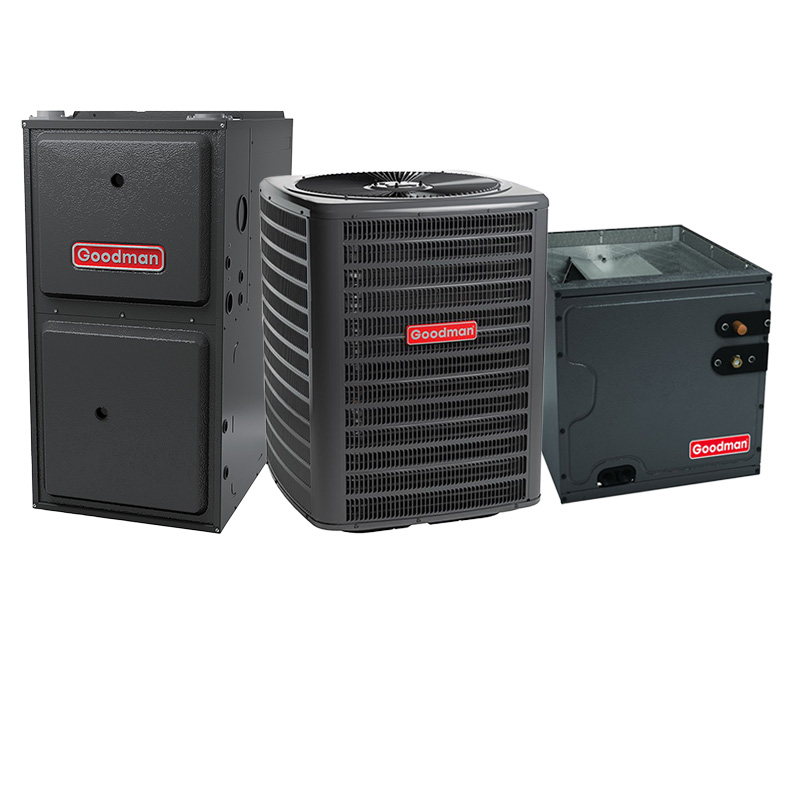
Goodman 2 Ton 13.8 SEER2 40000 BTU 96% AFUE Two Stage Multi-Speed ECM Gas Furnace System – Upflow | R32
View on AC Direct see your lowest price →Check current price on AC Direct →
Key features
- 13.8 SEER2 cooling efficiency, clearing 2023 federal minimums for northern and southern regions
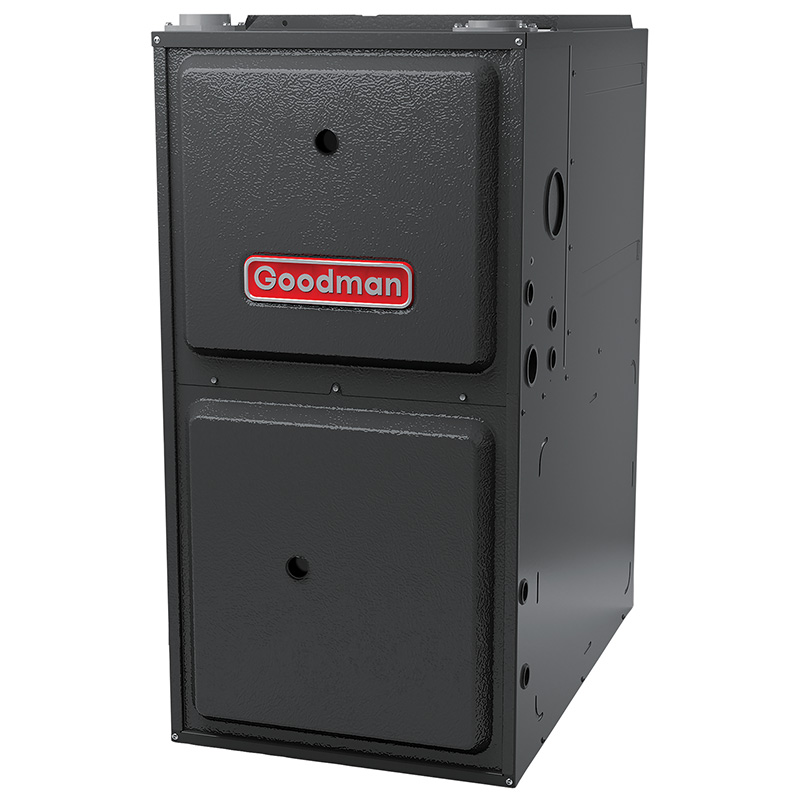
- 96% AFUE two-stage gas furnace reduces fuel waste and moderates temperature swings
- Multi-speed ECM blower motor lowers electricity use compared to standard PSC motors
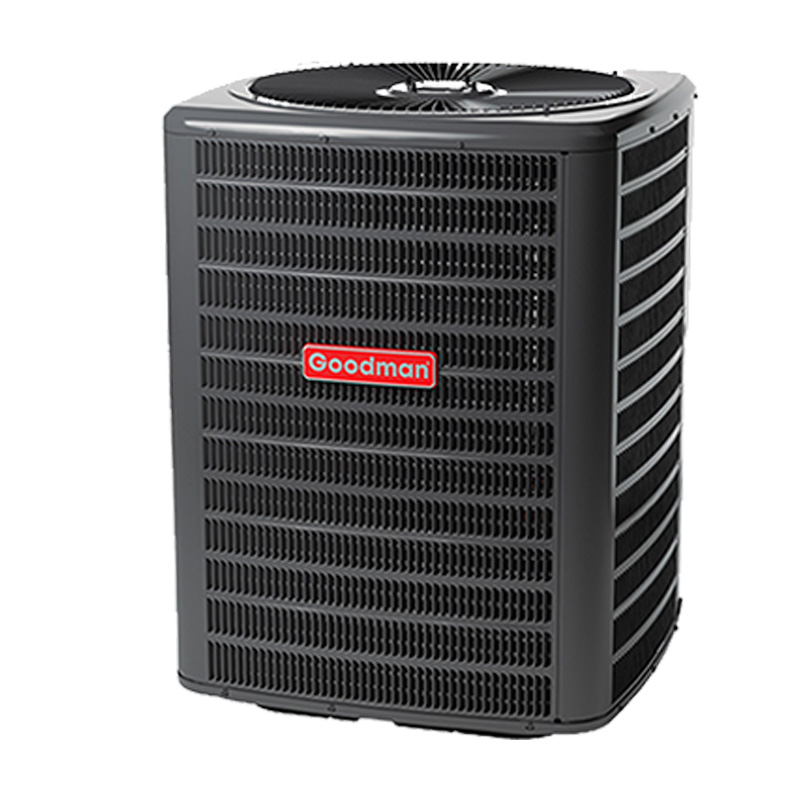
- R-32 refrigerant with a lower global-warming potential than R-410A
- Upflow configuration designed for basement or utility closet installations with overhead duct systems
- 2-ton / 40,000 BTU capacity suited to smaller homes or individual zones in the 700 to 1,000 sq ft range
About this system
This Goodman 2-ton package pairs a 13.8 SEER2 cooling system with a 96% AFUE two-stage, multi-speed ECM gas furnace in an upflow configuration, making it a practical match for smaller homes or zone additions in the 700 to 1,000 square foot range. The 40,000 BTU furnace output and two-stage operation mean the system runs at a lower fire most of the time, cycling less aggressively and delivering more consistent temperatures than a single-stage unit would. The ECM blower motor trims electricity consumption compared to a standard PSC motor, which adds a modest long-term operating cost advantage.
The refrigerant choice here is R-32, a lower global-warming-potential option that is becoming more common as the industry moves away from R-410A. R-32 systems require technicians who are familiar with the refrigerant and have the appropriate recovery equipment, so confirming that your installer is up to speed on R-32 handling before scheduling is worth the extra phone call. The upflow configuration suits basements and utility closets where supply air moves upward through the duct system, which is the most common residential furnace orientation in colder climates.
Goodman positions this system as an entry-to-mid-range option, priced noticeably below comparable equipment from Trane, Lennox, and Carrier. The efficiency ratings sit at a tier that qualifies as good rather than exceptional: 13.8 SEER2 clears the current federal minimums with some room to spare, and 96% AFUE is a genuine high-efficiency furnace rating that can support federal or utility rebates in many areas. Buyers who prioritize upfront cost savings and are willing to budget for routine maintenance will find the value proposition here reasonable, provided the installation is handled carefully.
This Goodman system offers a genuine high-efficiency furnace and adequate cooling performance at a price point 15 to 25 percent below the major premium brands, which is a real and meaningful advantage for budget-conscious buyers. The trade-off is a brand track record that shows higher-than-average repair frequency after year seven and a compressor lifespan that tends to fall short of what Carrier, Trane, or Lennox owners typically report. For buyers who are realistic about those odds and plan to keep up with annual maintenance, this system delivers solid value, especially if installation quality is treated as a non-negotiable.
Overall score is the average of the five ratings above.
What we like
- Upfront cost is meaningfully lower than Trane, Carrier, or Lennox equivalents at similar efficiency ratings
- 96% AFUE is a genuine high-efficiency rating that can support utility and federal tax rebates
- Two-stage furnace operation provides more consistent temperatures and quieter low-demand cycling
- ECM blower motor reduces fan electricity consumption over the life of the system
- R-32 refrigerant has a lower environmental impact than the R-410A it replaces
Trade-offs
- Dual-run capacitors are the most commonly reported failure point, typically surfacing within the first several years of use
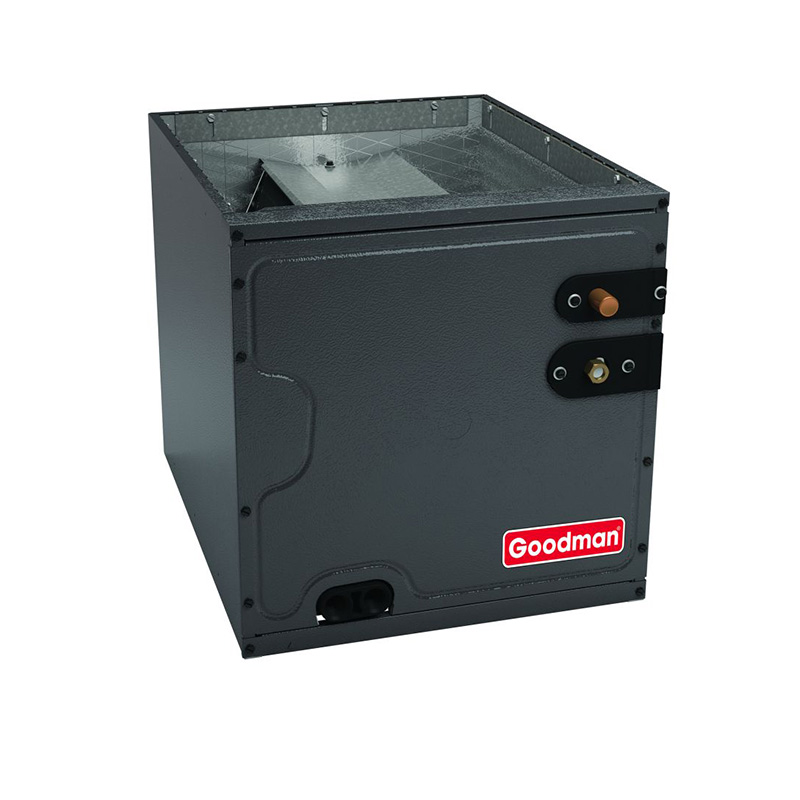
- Evaporator coil leaks appear in a meaningful share of owner reviews, which can be a costly mid-life repair
- Compressor lifespan averages 10 to 14 years versus 15 to 20 for premium-brand compressors, raising replacement risk over a long ownership horizon
- A minority of owners report refrigerant leaks in the first year, often tied to install or charge issues, making technician selection especially important with R-32
What homeowners and pros say about Goodman
Homeowners who leave reviews on ConsumerAffairs rate Goodman at roughly 2.5 out of 5, though that platform skews heavily toward owners who had a problem worth writing about. The recurring theme in those complaints is repair costs that climb noticeably after year seven, which lines up with the documented failure modes: dual-run capacitors are the most commonly cited breakdown, usually a low-cost fix in the 300 to 600 dollar range, but evaporator coil leaks and compressor failures are the repairs that draw the sharpest frustration. Across Google dealer reviews, the brand averages around 3.8 out of 5, and the most consistent praise from buyers in that channel is straightforward: the price is hard to argue with compared to what Trane, Carrier, or Lennox dealers quote for similar efficiency ratings.
HVAC technicians tend to have a more nuanced view of Goodman than either of those two averages suggests. The professional consensus is that installation quality is the single biggest variable in how long one of these systems holds up, and a carefully commissioned Goodman often outperforms a carelessly installed premium brand. For this specific R-32 system, that point is sharper than usual: a minority of Goodman owners report refrigerant leaks within the first year, and the evidence points to install or charge issues more often than manufacturing defects. Pros who work on these units regularly note that the capacitor is the one part worth checking at every tune-up, since catching a weakening one early is far cheaper than the service call it eventually causes. The compressor lifespan question is the honest long-term caveat: Goodman compressors average 10 to 14 years in documented owner experience, versus 15 to 20 years for top-tier brands, which is worth factoring in if you expect to own the home for two decades or more.
Sources: ConsumerAffairs Goodman owner reviews, AHRI Directory of Certified Product Performance, U.S. DOE appliance and equipment efficiency standards, Goodman product specification sheets.
What it costs to run
At 13.8 SEER2, cooling this 2-ton system for a typical 1200-hour cooling season at the U.S. average electricity rate of $0.17/kWh works out to roughly $355 per year in cooling, about $10 less per year than a minimum-efficiency 13.4 SEER2 unit of the same size. Your real cost depends on your climate and local rate.
Method: (24,000 BTU/hr ÷ 13.8 SEER2) × 1200 hours ÷ 1000 × $0.17/kWh. Rate source: U.S. EIA average; cooling hours: moderate-climate estimate.
How it compares
| Brand | Comparable model | SEER2 | Stage | Price position |
|---|---|---|---|---|
| Goodman | 2 Ton 13.8 SEER2 96% AFUE Two-Stage ECM Upflow R-32 System | 13.8 | Two-stage | Value pick |
| Carrier | Comfort 13 / 14 Series (CA13NA / 58SB furnace pairing) | ~14 | Single-stage | Typically 15 to 25 percent more than this Goodman system |
| Trane | XR13 / S8X1 furnace pairing | ~14 | Single-stage | Typically 15 to 25 percent more than this Goodman system |
| Lennox | Merit 13ACX / ML196 furnace pairing | ~14 | Single-stage | Typically 15 to 25 percent more than this Goodman system |
Competitor rows are comparable single-stage units at similar efficiency; price is relative position, not a quote.
Questions about this system
Is 2 tons enough for my home, and how do I know?
Two tons is generally appropriate for well-insulated homes in the 700 to 1,000 square foot range, though climate, ceiling height, window area, and insulation quality all affect the real answer. A Manual J load calculation performed by your installer is the only reliable way to confirm that 2 tons is the right size for your specific home before you commit to the purchase.
Does my installer need special certification or equipment to work with R-32 refrigerant?
Yes. R-32 is an A2L refrigerant, which means it is mildly flammable and requires technicians who are trained in A2L handling along with recovery and charging equipment rated for R-32 use. Before scheduling installation, confirm that your contractor has completed A2L training and has the appropriate tools on hand.
What is the most common repair I should budget for on a Goodman system like this?
Dual-run capacitor failures are the most frequently reported issue across Goodman owner reviews, and replacing one typically costs between 300 and 600 dollars including labor. Keeping a service agreement in place and catching a weakening capacitor during a tune-up can usually prevent an unexpected no-cooling or no-heat call.
Does the 96% AFUE rating qualify this furnace for federal or utility rebates?
The 96% AFUE rating does meet the efficiency threshold for the federal Energy Efficient Home Improvement Credit (25C) in many scenarios, and many gas utilities offer rebates for furnaces at or above 95% AFUE. You should verify current credit amounts and any utility-specific requirements with a tax professional and your local gas provider before purchase.
How does two-stage operation actually affect comfort compared to a single-stage furnace?
A two-stage furnace runs at a lower heat output most of the time, which means longer, gentler heating cycles that distribute warm air more evenly and reduce the hot-and-cool swings that single-stage units can produce. The result is a noticeably steadier indoor temperature on mild days, with the second stage available for the coldest conditions when full output is actually needed.
Specifications
| Cooling capacity | 2 Ton |
| Efficiency | 13.8 SEER2 |
| Furnace output | 40000 BTU |
| Furnace efficiency | 96% AFUE |
| Configuration | Upflow |
| Refrigerant | R-32 |