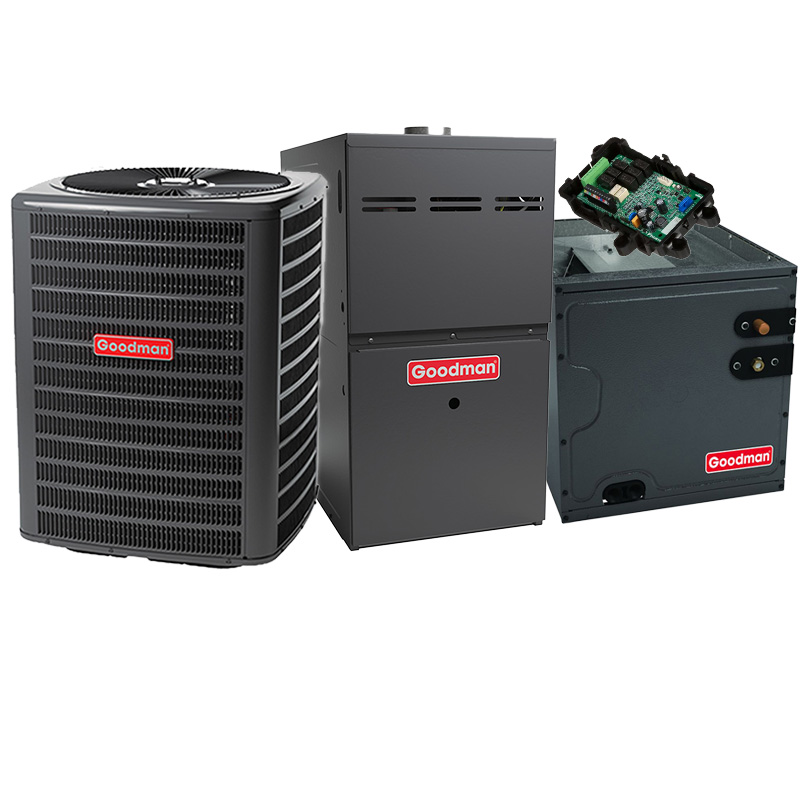
Goodman 2 Ton 14 SEER2 60000 BTU 96% AFUE Two-Stage Gas Furnace With R32 Air Condenser and Coil System – Upflow
View on AC Direct see your lowest price →Check current price on AC Direct →
Key features
- Two-stage 60,000 BTU furnace at 96% AFUE for high-efficiency gas heating
- 14 SEER2 cooling efficiency meets current federal minimum standards
- R-32 refrigerant with lower global warming potential than R-410A
- Upflow configuration for basement or ground-level closet installations with overhead ductwork
- Two-stage operation reduces temperature swings and improves humidity control versus single-stage
- Priced roughly 15 to 25 percent below comparable Trane, Lennox, and Carrier systems
About this system
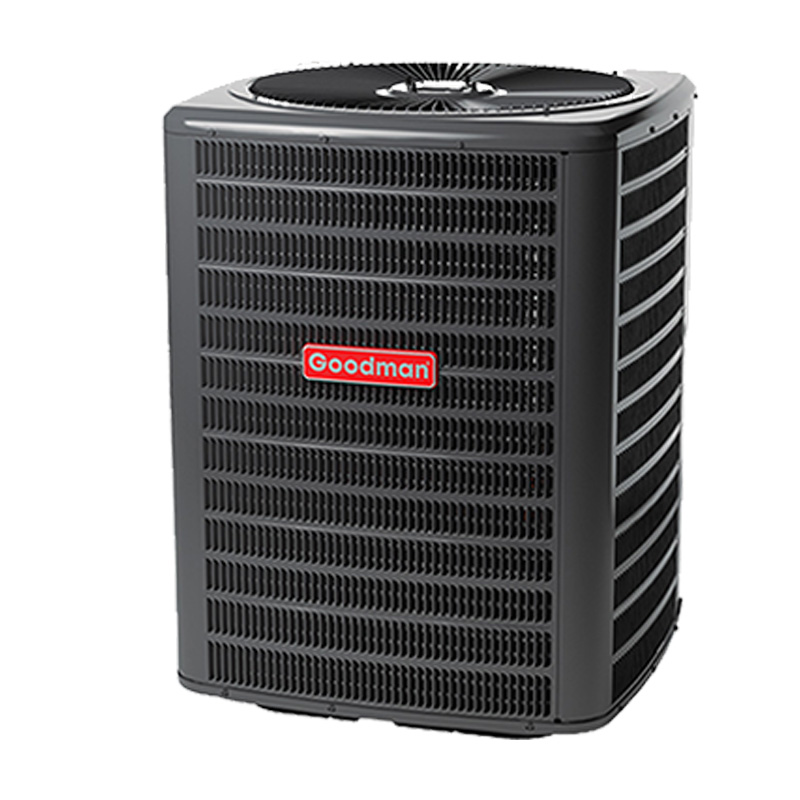
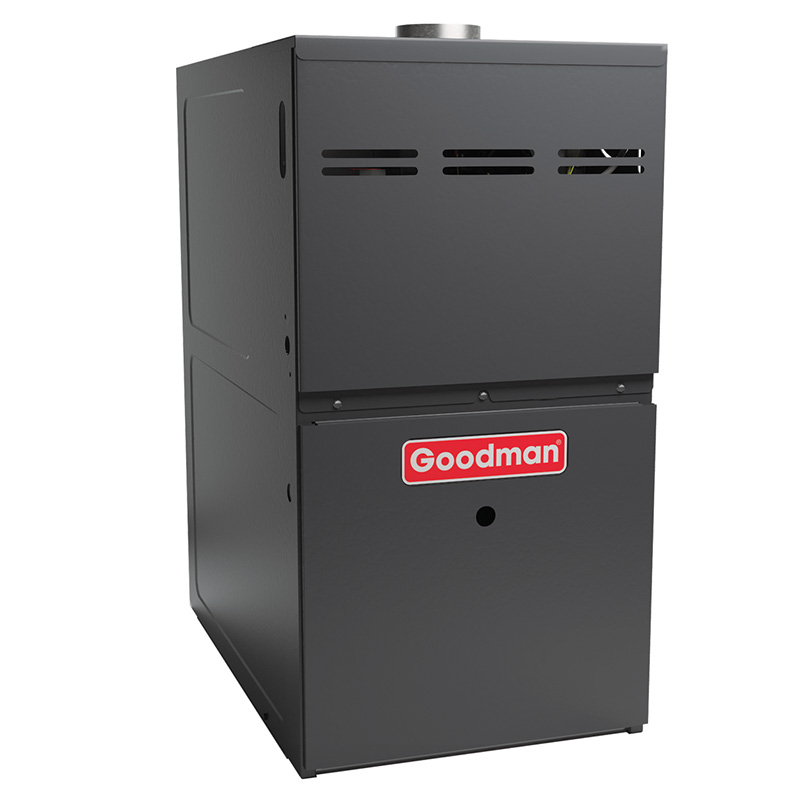
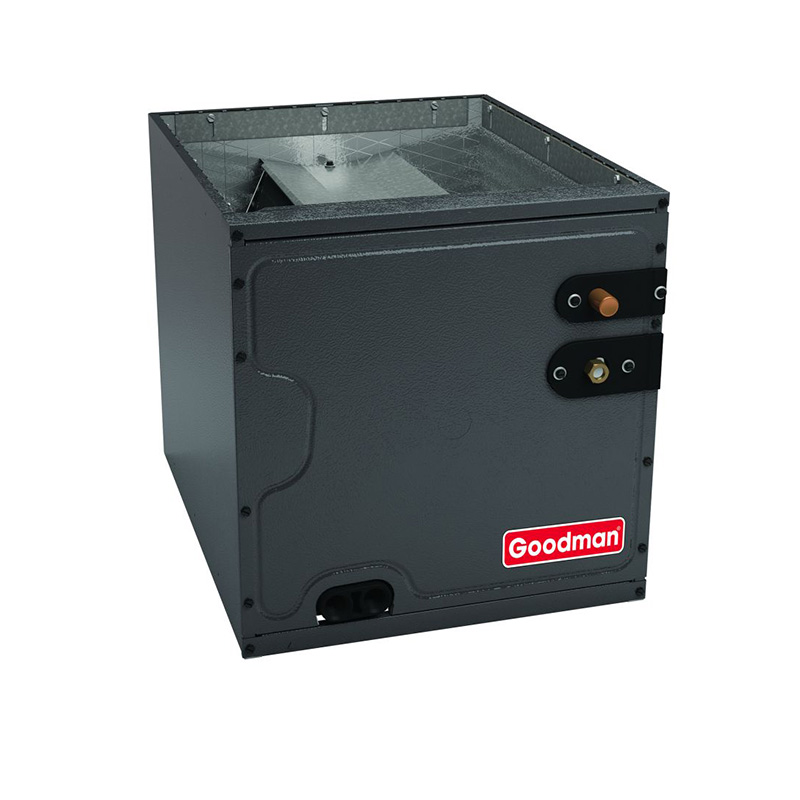
This Goodman system pairs a 2-ton, 14 SEER2 R-32 air condenser and matching coil with a 60,000 BTU, 96% AFUE two-stage gas furnace in an upflow configuration. The combination covers homes in roughly the 900 to 1,300 square foot range depending on local climate, insulation quality, and ceiling height. The 96% AFUE rating means 96 cents of every dollar spent on gas goes toward heating, placing this furnace in the high-efficiency tier and making it eligible for federal tax credits under current energy efficiency incentive programs.
The two-stage furnace is the standout spec here. Running on a lower first stage the majority of the time, it cycles less aggressively than a single-stage unit, which tends to improve humidity control, reduce temperature swings, and lower operating noise. R-32 refrigerant replaces the older R-410A in newer Goodman condensers; it carries a lower global warming potential and slightly better thermodynamic efficiency, though it does require technicians certified to handle it. The upflow configuration suits homes with a furnace in a basement or ground-level utility closet blowing conditioned air upward into overhead ductwork.
This system suits budget-conscious homeowners who want genuine high-efficiency heating and solid seasonal cooling without paying the premium commanded by Trane, Lennox, or Carrier. The trade-off is that Goodman’s long-term ownership record is more variable than those brands, and the outcome depends heavily on who installs it and whether minor components are maintained proactively.
This Goodman bundle delivers genuinely high-efficiency heating and adequate cooling at a price point that meaningfully undercuts major premium brands. Owners who pair it with a skilled installer and stay current on capacitor and coil maintenance can get solid years of service, but the brand's documented track record of climbing repair costs after year 7 and a compressor lifespan shorter than premium competitors means total cost of ownership is not always as low as the sticker price implies.
Overall score is the average of the five ratings above.
What we like
- 96% AFUE furnace qualifies for federal energy efficiency tax credits
- Two-stage heating operation reduces short-cycling and improves comfort versus single-stage
- R-32 refrigerant is more environmentally responsible than the R-410A it replaces
- Lower upfront cost frees budget for a quality installation, which is the biggest reliability factor
- 14 SEER2 meets current federal efficiency minimums and keeps summer operating costs reasonable
Trade-offs
- Dual-run capacitors are the most frequently reported failure point and should be treated as a scheduled maintenance item after year 5
- Evaporator coil leaks appear in a meaningful share of owner reviews and can be costly to repair or replace
- Compressor lifespan averages 10 to 14 years versus 15 to 20 years for premium brand compressors
- A minority of owners report refrigerant leaks within the first year, typically traced to installation or initial charge issues rather than defective parts
What homeowners and pros say about Goodman
Homeowners who choose Goodman most often point to the lower upfront cost as the deciding factor, a sentiment reflected in Google dealer review scores that average around 3.8 out of 5, where affordability is the most frequently cited reason for a positive rating. The picture shifts in longer-term ownership forums and on ConsumerAffairs, where Goodman scores closer to 2.5 out of 5 and the recurring complaint is repair bills that accumulate after roughly year 7. Those complaints are not random: dual-run capacitor failures are the single most documented failure point across Goodman condensers and are widely reported as a predictable, if affordable, maintenance item. Evaporator coil leaks represent a more serious cost risk and show up in a meaningful share of owner accounts, particularly in systems that were not commissioned carefully at installation.
HVAC technicians who work on Goodman equipment regularly tend to hold a nuanced view. They note that the brand’s performance is unusually dependent on installation quality, more so than Trane or Carrier, where tighter manufacturing tolerances leave less room for installer variation to matter. Compressor longevity is another area where technicians flag a real gap: Goodman compressors average 10 to 14 years in field experience, versus 15 to 20 years commonly reported for premium brand compressors. A small but documented share of first-year owners also report refrigerant leaks, which technicians attribute to installation or initial charge errors rather than factory defects. For the R-32 system specifically, technicians emphasize that proper commissioning by a certified R-32 technician is not a recommendation but a requirement, and that cutting corners at startup is the fastest route to the early failure stories that populate the low-star reviews.
Sources: ConsumerAffairs Goodman owner reviews, AHRI Directory of Certified Product Performance, U.S. DOE appliance and equipment efficiency standards, Goodman product specification sheets.
What it costs to run
At 14 SEER2, cooling this 2-ton system for a typical 1200-hour cooling season at the U.S. average electricity rate of $0.17/kWh works out to roughly $350 per year in cooling, about $15 less per year than a minimum-efficiency 13.4 SEER2 unit of the same size. Your real cost depends on your climate and local rate.
Method: (24,000 BTU/hr ÷ 14 SEER2) × 1200 hours ÷ 1000 × $0.17/kWh. Rate source: U.S. EIA average; cooling hours: moderate-climate estimate.
How it compares
| Brand | Comparable model | SEER2 | Stage | Price position |
|---|---|---|---|---|
| Goodman | 2 Ton 14 SEER2 / 60K BTU 96% AFUE Two-Stage Upflow Bundle | 14 | Two-stage furnace / single-stage condenser | Value pick |
| Carrier | Performance 14 Series (24ACC4) | 14 | Single-stage | Typically 15 to 25 percent more than this Goodman bundle |
| Trane | XR14S Series | 14 | Single-stage | Typically 15 to 25 percent more than this Goodman bundle |
| Lennox | Merit 14ACX Series | 14 | Single-stage | Typically 15 to 25 percent more than this Goodman bundle |
Competitor rows are comparable single-stage units at similar efficiency; price is relative position, not a quote.
Questions about this system
Is R-32 refrigerant a problem for finding a service technician?
R-32 requires technicians with specific handling certification because it is mildly flammable, which is a step up from R-410A requirements. In most metro areas this is not a significant obstacle, but in rural markets you should confirm local HVAC companies are equipped to service R-32 systems before purchasing.
Does the two-stage furnace work with my existing thermostat?
Two-stage furnaces require a thermostat capable of sending a two-stage signal, typically a thermostat with a W1 and W2 terminal. Many basic single-stage thermostats will still operate the furnace but will default it to high-stage only, eliminating the efficiency and comfort benefits of two-stage operation. Budget for a compatible thermostat if yours is older.
What is the warranty on this Goodman system?
Goodman typically covers the compressor for 10 years and other parts for 10 years when the equipment is registered within 60 days of installation. Failure to register within that window often reduces coverage to 5 years on parts, so registration is not optional. Labor is not covered by the manufacturer and must be arranged through your installer or a service contract.
How often should the capacitor be checked on this unit?
Dual-run capacitors are the most commonly reported failure point on Goodman condensers and can degrade gradually before failing. Having a technician test capacitor microfarad readings during annual maintenance, especially after year 5, is a low-cost step that can prevent a no-cool breakdown. Replacement typically runs in the 300 to 600 dollar range when it does fail.
Can this 2-ton system handle my 1,400 square foot home?
Tonnage should always be determined by a Manual J load calculation, not square footage rules of thumb, because ceiling height, insulation, window area, and local climate all shift the answer significantly. A 2-ton system is commonly sized for roughly 900 to 1,300 square feet in moderate climates, but an oversized or undersized system causes humidity problems and shortened equipment life regardless of brand. Ask your installer to perform or provide a Manual J before finalizing equipment selection.
Specifications
| Cooling capacity | 2 Ton |
| Efficiency | 14 SEER2 |
| Furnace output | 60000 BTU |
| Furnace efficiency | 96% AFUE |
| Configuration | Upflow |
| Refrigerant | R-32 |