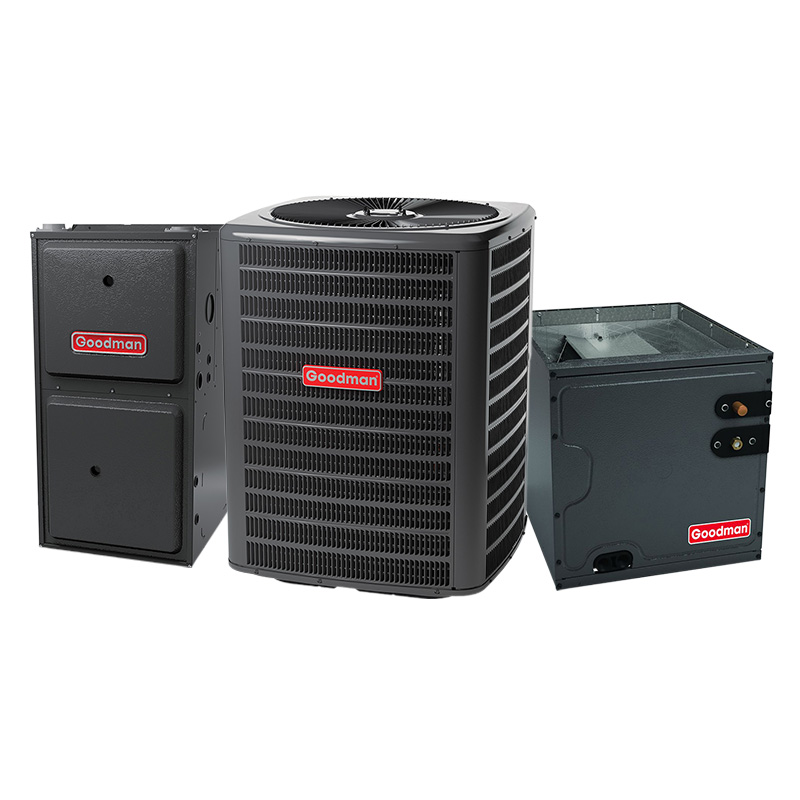
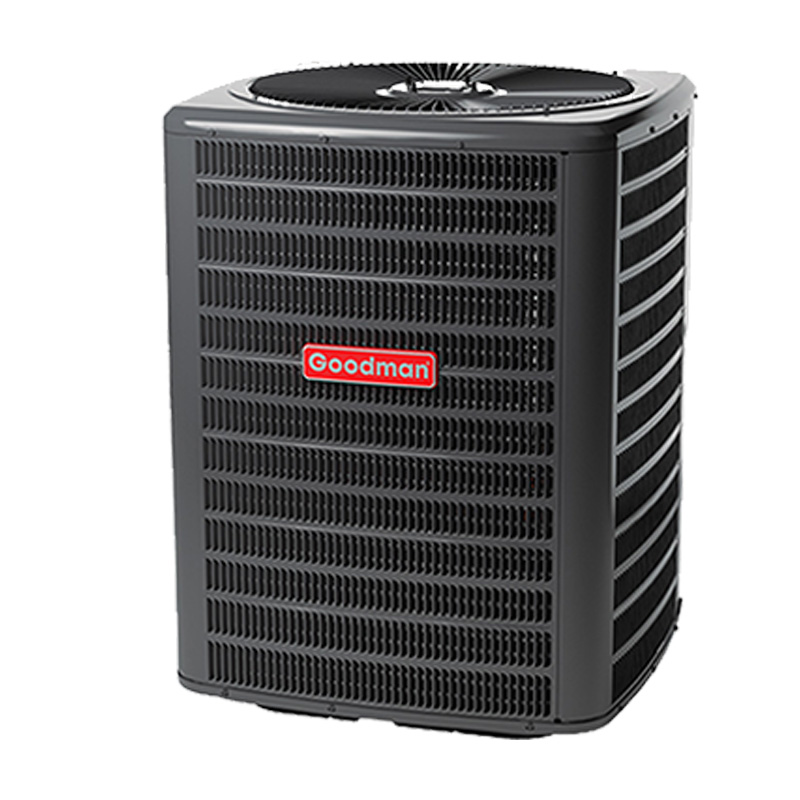
Goodman 2 Ton 13.8 SEER2 AC & Gas Furnace System – Multi-Speed, 40000 BTU Gas Furnace, 92% AFUE, Upflow, R32
View on AC Direct see your lowest price →Check current price on AC Direct →
Key features
- 2-ton cooling capacity rated at 13.8 SEER2, meeting federal minimum efficiency standards in most U.S. climate zones
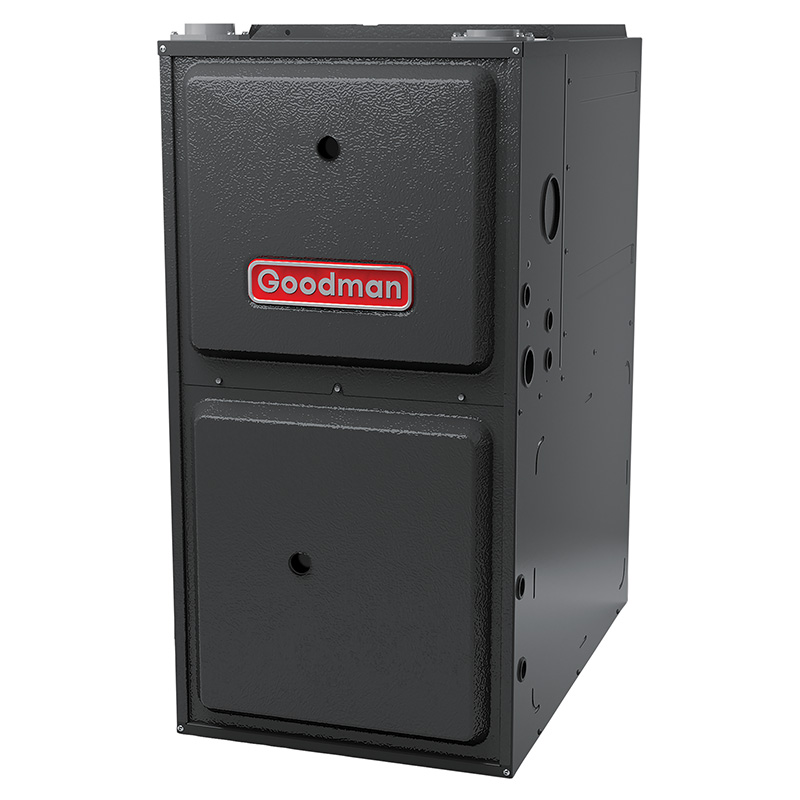
- 40,000 BTU upflow gas furnace with 92% AFUE for above-baseline heating efficiency
- Multi-speed furnace blower for improved airflow matching across heating and cooling demand
- R-32 refrigerant with lower global warming potential than legacy R-410A systems
- Upflow configuration designed for basement or ground-level installs with overhead duct systems
- Goodman factory warranty coverage on parts and compressor for qualifying registered systems
About this system
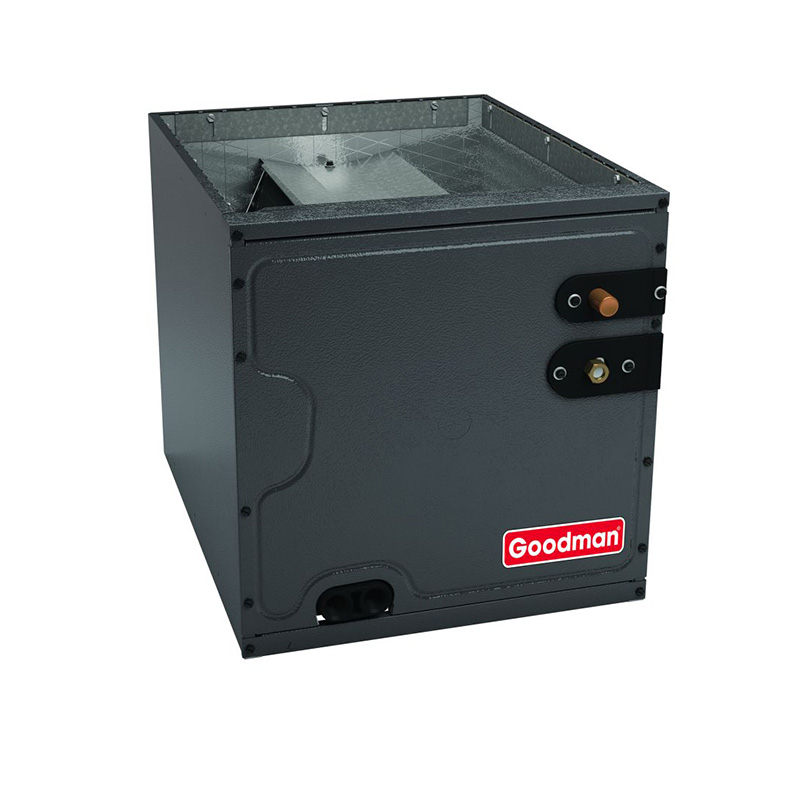
The Goodman GLXS3BN2410D pairs a 2-ton, 13.8 SEER2 single-stage air conditioner with a 40,000 BTU, 92% AFUE upflow gas furnace in an R-32 refrigerant configuration. At 2 tons, this system is sized for smaller homes typically in the 800 to 1,200 square foot range, depending on climate zone, insulation quality, and window load. The 13.8 SEER2 rating lands just above the federal minimum efficiency floor in most regions, meaning it meets code comfortably without reaching into premium-tier territory. The 92% AFUE furnace recovers 92 cents of heat energy from every dollar of gas burned, which is a meaningful step above 80% AFUE equipment but stops short of condensing-class units running at 96% or higher.
The upflow configuration sends conditioned air upward through a duct system located above the unit, making this a natural fit for basement or crawlspace installations in homes with overhead duct runs. Multi-speed furnace airflow helps the system better match heating demand across varying conditions rather than running at a single fixed rate. R-32 refrigerant carries a lower global warming potential than the R-410A it replaces and is now standard across Goodman’s newer product lines. This system suits homeowners in mild to moderate climates who want a reliable, code-compliant replacement or new-build system without paying premium-brand prices, and who are comfortable with the understanding that long-term performance depends heavily on professional installation and routine maintenance.
The Goodman GLXS3BN2410D is a straightforward, budget-accessible entry-level system that does what its specs promise when installed correctly. It will not match the efficiency ceiling or longevity of premium-brand equipment, and its reliability record shows documented weak points that owners should plan for. For cost-conscious buyers who want a code-compliant system and are willing to budget for potential mid-life repairs, it represents a reasonable trade-off.
Overall score is the average of the five ratings above.
What we like
- Priced 15 to 25 percent below comparable Trane, Carrier, and Lennox systems, lowering the upfront barrier significantly
- 92% AFUE furnace offers meaningful efficiency improvement over older 80% AFUE replacements without condensing-unit complexity
- R-32 refrigerant is the current industry direction, avoiding near-term refrigerant transition concerns
- Multi-speed blower improves comfort and airflow distribution compared to single-speed furnace alternatives
- Widely available parts network due to Goodman's large install base, which can reduce repair wait times
Trade-offs
- Dual-run capacitors are the most commonly reported failure point in this product line, typically requiring a 300 to 600 dollar service call
- Evaporator coil leaks appear in a meaningful share of owner reviews and can be costly to address outside of warranty
- Compressor lifespan averages 10 to 14 years in documented reports, shorter than the 15 to 20 year range associated with premium brands
- A minority of owners report refrigerant leaks within the first year, most often traced to installation or initial charge issues rather than factory defects
What homeowners and pros say about Goodman
Owners and technicians who share feedback on Goodman land in two fairly consistent camps. On Google dealer review pages, where the audience includes people who chose Goodman deliberately, the brand averages around 3.8 out of 5 stars across several hundred reviews per location, and the most repeated reason for satisfaction is straightforward: the price made an otherwise unaffordable system replacement possible. On ConsumerAffairs, a channel that skews heavily toward frustrated owners filing complaints, Goodman scores around 2.5 out of 5, and the pattern that shows up most in those negative reviews is repair costs climbing after roughly year seven of ownership. Neither data point tells the whole story on its own, but together they sketch an honest picture of a brand that delivers acceptable performance at a lower entry cost while carrying higher long-term repair risk than its premium-tier competitors.
HVAC technicians who work on Goodman equipment regularly tend to hold a pragmatic view. They point to dual-run capacitor failures as the most predictable service call on these units, a fix that is annoying but inexpensive. More significant concerns from the service side include evaporator coil leaks that show up across owner reviews and compressor lifespans that documented reports put in the 10 to 14 year window, compared to 15 to 20 years on premium brands. Technicians consistently emphasize that installation quality is the single largest variable in how a Goodman system performs and how long it lasts. First-year refrigerant leaks, when they occur, are almost always traced to connection or charge errors at startup rather than anything leaving the factory. For the GLXS3BN2410D specifically, buyers who invest in a careful, licensed installation and commit to annual maintenance are likely to get a decade of serviceable performance from a system that cost them meaningfully less than the alternatives.
Sources: ConsumerAffairs Goodman owner reviews, AHRI Directory of Certified Product Performance, U.S. DOE appliance and equipment efficiency standards, Goodman product specification sheets.
What it costs to run
At 13.8 SEER2, cooling this 2-ton system for a typical 1200-hour cooling season at the U.S. average electricity rate of $0.17/kWh works out to roughly $355 per year in cooling, about $10 less per year than a minimum-efficiency 13.4 SEER2 unit of the same size. Your real cost depends on your climate and local rate.
Method: (24,000 BTU/hr ÷ 13.8 SEER2) × 1200 hours ÷ 1000 × $0.17/kWh. Rate source: U.S. EIA average; cooling hours: moderate-climate estimate.
How it compares
| Brand | Comparable model | SEER2 | Stage | Price position |
|---|---|---|---|---|
| Goodman | GLXS3BN2410D | 13.8 | Single-stage | Value pick |
| Carrier | Comfort Series (24ACC6) | 13.8 to 14.3 | Single-stage | Typically 15 to 25 percent more than Goodman |
| Trane | XR13B Series | 13.8 to 14.0 | Single-stage | Typically 15 to 25 percent more than Goodman |
| Lennox | Merit Series (ML14XC1) | 13.8 to 14.3 | Single-stage | Typically 15 to 25 percent more than Goodman |
Competitor rows are comparable single-stage units at similar efficiency; price is relative position, not a quote.
Questions about this system
Is a 2-ton unit going to be enough for my home?
Two tons of cooling capacity is generally appropriate for homes in the 800 to 1,200 square foot range, though the right size depends on your climate zone, insulation, ceiling height, and window area. Oversizing causes short-cycling, which hurts dehumidification and component life, so a proper Manual J load calculation by your installer is the only reliable way to confirm fit before purchase.
What does 13.8 SEER2 actually mean for my electricity bill compared to older equipment?
SEER2 ratings use a more realistic test standard than the older SEER scale, so a 13.8 SEER2 system is roughly equivalent to about a 14 to 15 SEER unit under the old measurement. If you are replacing equipment from the late 1990s or early 2000s rated at 10 SEER or lower, you can expect a noticeable reduction in cooling energy use, though exact savings depend on local utility rates, hours of operation, and home envelope quality.
How serious is the capacitor failure issue I keep reading about with Goodman?
Dual-run capacitor failures are the most frequently reported service issue across Goodman's product line. The good news is that capacitors are one of the least expensive HVAC repairs, typically falling in the 300 to 600 dollar range including labor. Having your technician check capacitor health during annual maintenance can catch a weakening capacitor before it causes a no-cooling breakdown on a hot day.
Does this system come with R-32 refrigerant already charged, or does the installer handle that?
The condensing unit ships with a factory refrigerant charge suitable for a standard line set length. Your installer will need to verify the charge during commissioning and adjust if your line set run differs from the factory assumption. A small share of Goodman owners report refrigerant leaks in the first year, most of which investigators trace back to connection or charge errors at install rather than factory defects, so a careful startup procedure by a licensed technician matters here.
What should I budget for repairs over the life of this system beyond regular maintenance?
Beyond annual tune-ups, the most common unplanned costs for Goodman systems are capacitor replacements in the 300 to 600 dollar range, potential evaporator coil work if a leak develops, and the possibility of compressor replacement after the 10 to 14 year range that documented owner reports describe. Setting aside a modest annual repair fund starting around year five is a practical approach given the brand's reliability profile.
Specifications
| Cooling capacity | 2 Ton |
| Efficiency | 13.8 SEER2 |
| Furnace output | 40000 BTU |
| Furnace efficiency | 92% AFUE |
| Configuration | Upflow |
| Refrigerant | R-32 |
| Model | GLXS3BN2410D |