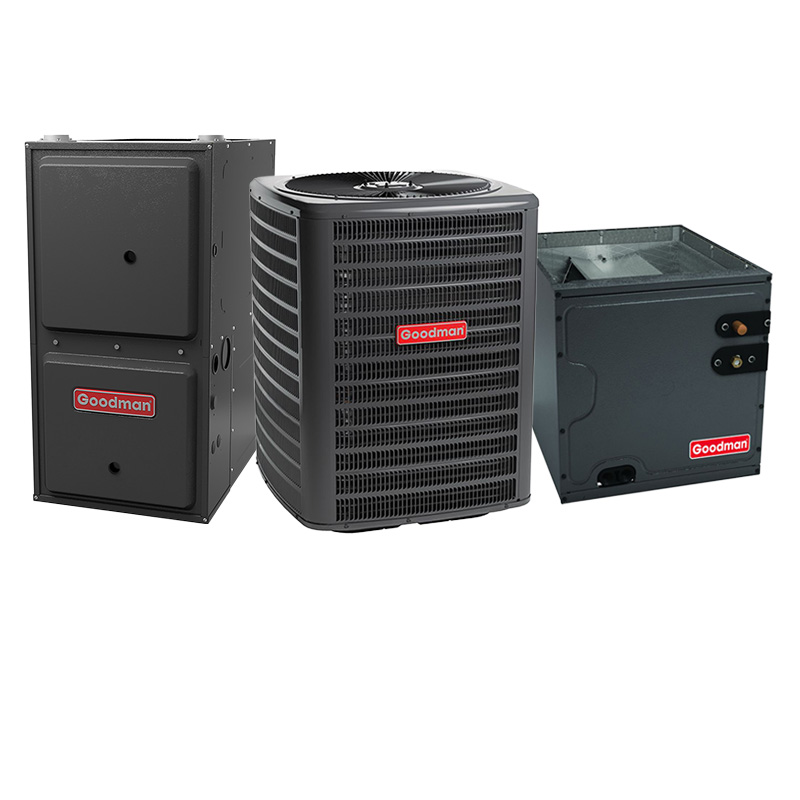
Goodman 2 Ton 14.3 SEER2 60000 BTU 80% AFUE Multi-Speed ECM Gas Furnace System – Downflow | R32
View on AC Direct see your lowest price →Check current price on AC Direct →
Key features
- 14.3 SEER2 cooling efficiency meets current federal minimum standards for most U.S. climate zones
- 60,000 BTU 80% AFUE gas furnace with multi-speed ECM blower motor for quieter, more efficient airflow
- Downflow configuration designed for slab-on-grade homes or underfloor duct systems
- R-32 refrigerant with lower global-warming potential than legacy R-410A systems
- Multi-speed ECM motor reduces blower electricity consumption versus standard PSC motors
- Factory-matched system designed for simplified commissioning when installed by a licensed contractor
About this system
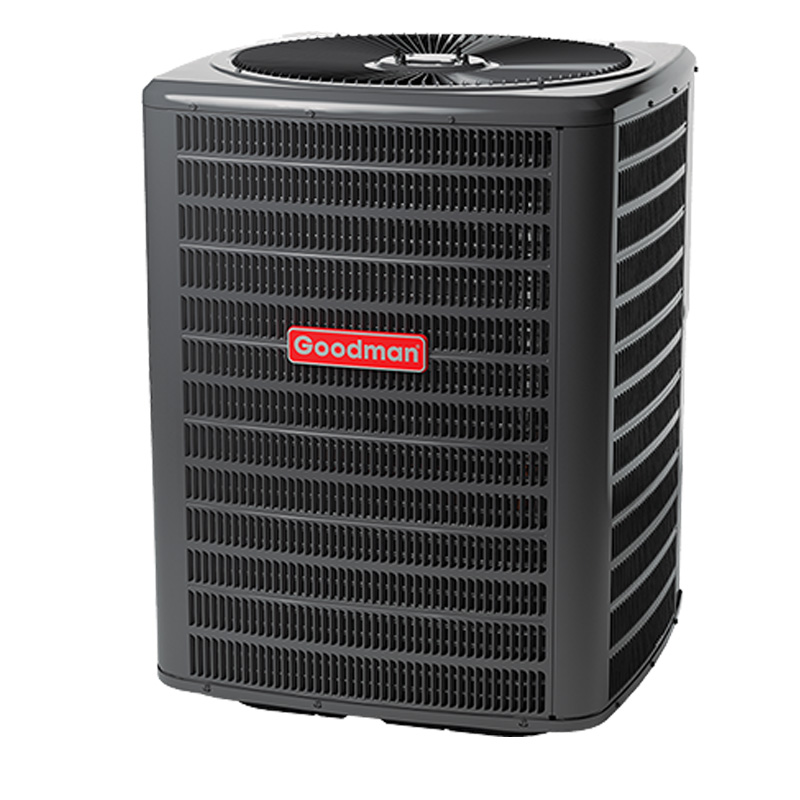
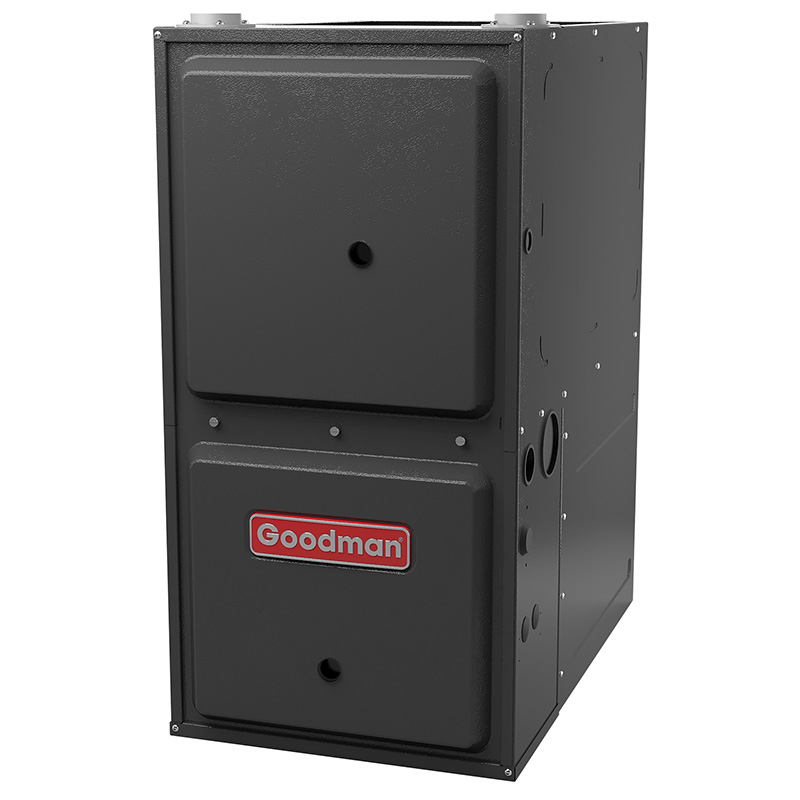
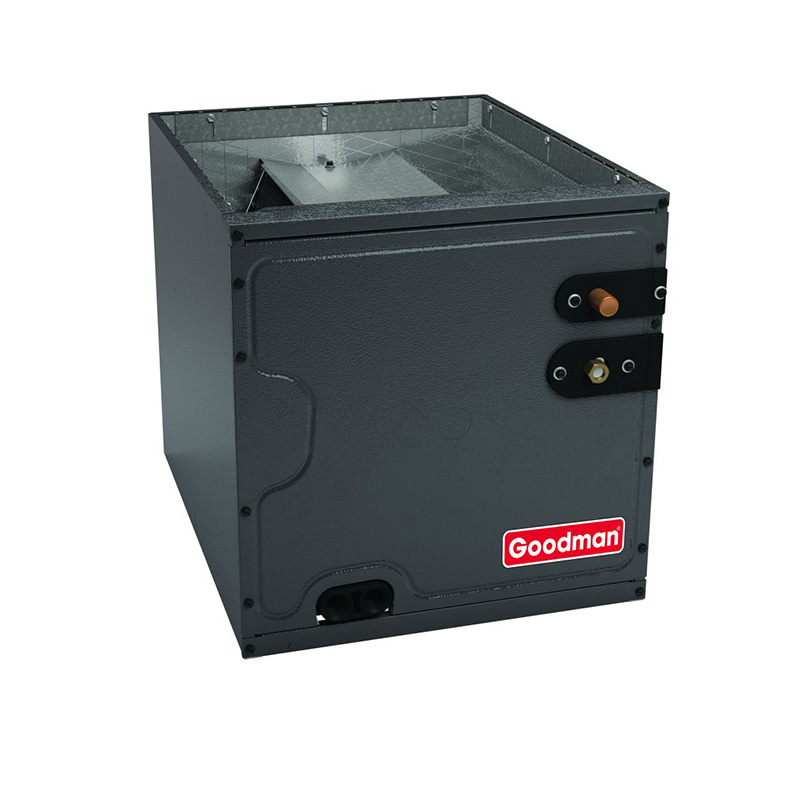
The Goodman 2-ton, 14.3 SEER2 downflow system pairs a 60,000 BTU, 80% AFUE multi-speed ECM gas furnace with a matched 2-ton condensing unit using R-32 refrigerant. At 14.3 SEER2, it sits right at the current federal minimum efficiency threshold for most northern climate regions, which keeps the equipment cost low but means operating costs will be higher over time compared with 16+ SEER2 alternatives. The 80% AFUE furnace converts eight of every ten units of gas into heat, an entry-level efficiency rating that makes more sense in mild climates or homes where natural gas prices are low. The ECM blower motor is a genuine upgrade over standard PSC motors, running quieter and consuming noticeably less electricity during fan operation.
The downflow configuration means conditioned air is discharged downward from the furnace, which suits homes built on slab foundations or those with ductwork routed beneath the floor. That is a specific installation requirement, so buyers need to confirm their duct layout before purchasing. R-32 refrigerant is the modern replacement for R-410A, carrying a lower global-warming potential and slightly better thermodynamic efficiency, though field technicians will need R-32 certification and compatible recovery equipment. This system is best suited to smaller homes in the 700 to 1,100 square foot range, though proper load calculations by a licensed HVAC contractor should always drive the final sizing decision.
This Goodman downflow system delivers a functional, code-compliant heating and cooling solution at a price point 15 to 25 percent below comparable Carrier, Trane, and Lennox equipment. The ECM motor and R-32 refrigerant are legitimate value adds, but the entry-level efficiency ratings and Goodman's documented repair history after year seven mean buyers are trading upfront savings for potentially higher long-term costs. It is a reasonable choice for budget-conscious homeowners who understand the trade-offs and commit to professional installation and regular maintenance.
Overall score is the average of the five ratings above.
What we like
- Significantly lower purchase price than comparable Carrier, Trane, or Lennox systems
- ECM multi-speed blower motor reduces fan energy use and improves comfort compared with single-speed PSC motors
- R-32 refrigerant is modern, forward-compatible, and has a lower environmental impact than R-410A
- Downflow design is well suited to slab homes where comparable configurations from premium brands cost considerably more
- Factory-matched system simplifies equipment selection and helps ensure rated performance when properly installed
Trade-offs
- 80% AFUE is an entry-level furnace efficiency rating; homeowners in cold climates will pay more in gas costs than with a 96% AFUE unit
- 14.3 SEER2 is at the federal minimum; energy bills will be higher than a 16+ SEER2 system over the system's lifespan
- Goodman's ConsumerAffairs rating sits around 2.5 out of 5, with recurring complaints about repair costs rising after roughly year seven
- Documented failure modes include dual-run capacitor failures, evaporator coil leaks, and compressor lifespans averaging 10 to 14 years versus 15 to 20 for premium brands
What homeowners and pros say about Goodman
Homeowners who review Goodman equipment on ConsumerAffairs give the brand roughly 2.5 out of 5, and the pattern in those reviews is consistent: most complaints surface after year seven, when repair bills for components like dual-run capacitors, evaporator coils, and, in some cases, compressors start to accumulate. Google dealer reviews tell a more mixed but somewhat more favorable story, averaging around 3.8 out of 5 across hundreds of location-level reviews, where the most repeated praise is straightforward: the price is hard to argue with. For a downflow gas system at this efficiency tier, Goodman’s upfront cost advantage over Carrier, Trane, and Lennox is real and meaningful, and for a buyer who needs a working system on a limited budget, that matters.
HVAC technicians who work on Goodman equipment frequently point to install quality as the variable that separates a unit that runs well for 15 years from one that causes headaches by year eight. The specific failure modes that come up in owner and technician discussions are consistent: capacitors are the most common call-back item and are a low-cost fix, but evaporator coil leaks and compressor replacements are costlier concerns that show up more often in Goodman units than in premium-brand equipment. The compressor lifespan difference, roughly 10 to 14 years for Goodman versus 15 to 20 for higher-end brands, is worth factoring into any honest total-cost comparison. For this particular downflow, R-32 configuration, a qualified installer who follows manufacturer startup procedures and verifies the refrigerant charge precisely is not optional; it is the single biggest factor in how this system performs over its service life.
Sources: ConsumerAffairs Goodman owner reviews, AHRI Directory of Certified Product Performance, U.S. DOE appliance and equipment efficiency standards, Goodman product specification sheets.
What it costs to run
At 14.3 SEER2, cooling this 2-ton system for a typical 1200-hour cooling season at the U.S. average electricity rate of $0.17/kWh works out to roughly $342 per year in cooling, about $23 less per year than a minimum-efficiency 13.4 SEER2 unit of the same size. Your real cost depends on your climate and local rate.
Method: (24,000 BTU/hr ÷ 14.3 SEER2) × 1200 hours ÷ 1000 × $0.17/kWh. Rate source: U.S. EIA average; cooling hours: moderate-climate estimate.
How it compares
| Brand | Comparable model | SEER2 | Stage | Price position |
|---|---|---|---|---|
| Goodman | 2 Ton 14.3 SEER2 / 60K BTU 80% AFUE Downflow ECM | 14.3 | Multi-speed | Value pick |
| Carrier | Comfort Series (24ACC / 58SB pairing) | 14.3 | Single-stage | Typically 15 to 25 percent more than this Goodman system |
| Trane | XR14 / S8B1 pairing | 14.3 | Single-stage | Typically 15 to 25 percent more than this Goodman system |
| Lennox | Merit ML14 / SL280 pairing | 14.3 | Single-stage | Typically 15 to 25 percent more than this Goodman system |
Competitor rows are comparable single-stage units at similar efficiency; price is relative position, not a quote.
Questions about this system
Is the downflow configuration required, or can this furnace be converted to upflow or horizontal?
This unit is specifically designed and rated for downflow installation only. Using it in an upflow or horizontal orientation would void the warranty and could create safety hazards. If your ductwork runs through a ceiling or attic, you need to select an upflow or horizontal model instead.
My technician needs R-32 certification to work on this system. Is that easy to find?
R-32 certification is becoming more common as the industry transitions away from R-410A, but not every technician in every market has it yet. Before purchasing, confirm that your installing contractor holds the appropriate certification and has the recovery equipment required for R-32. This is especially important to sort out before scheduling service calls down the road.
What are the most likely repairs I should budget for over the life of this Goodman system?
Dual-run capacitor failure is the most commonly reported issue and typically costs between 300 and 600 dollars to repair. Evaporator coil leaks appear in a meaningful share of owner reviews and can be a more expensive fix. Compressor lifespan on Goodman units tends to average 10 to 14 years, shorter than the 15 to 20 years commonly seen with premium brands, so budgeting for a potential compressor replacement or full system swap in that timeframe is prudent.
Is 2 tons the right size for my home, and how do I know?
A 2-ton unit is commonly sized for homes in the roughly 700 to 1,100 square foot range, but actual sizing depends on your climate zone, insulation levels, window area, and ceiling height. The only reliable way to confirm sizing is to have a licensed HVAC contractor perform a Manual J load calculation. Oversizing or undersizing a system causes comfort problems and shortens equipment life.
Does Goodman's warranty cover parts and labor, and how long does it last?
Goodman typically offers a 10-year parts warranty when the equipment is registered within 60 days of installation by a licensed contractor, covering major components including the compressor and heat exchanger. Labor is not covered by the manufacturer's warranty and must be negotiated separately with your installing contractor or through an extended service agreement. Failing to register on time usually reduces coverage to five years, so registration is a step worth completing promptly.
Specifications
| Cooling capacity | 2 Ton |
| Efficiency | 14.3 SEER2 |
| Furnace output | 60000 BTU |
| Furnace efficiency | 80% AFUE |
| Configuration | Downflow |
| Refrigerant | R-32 |