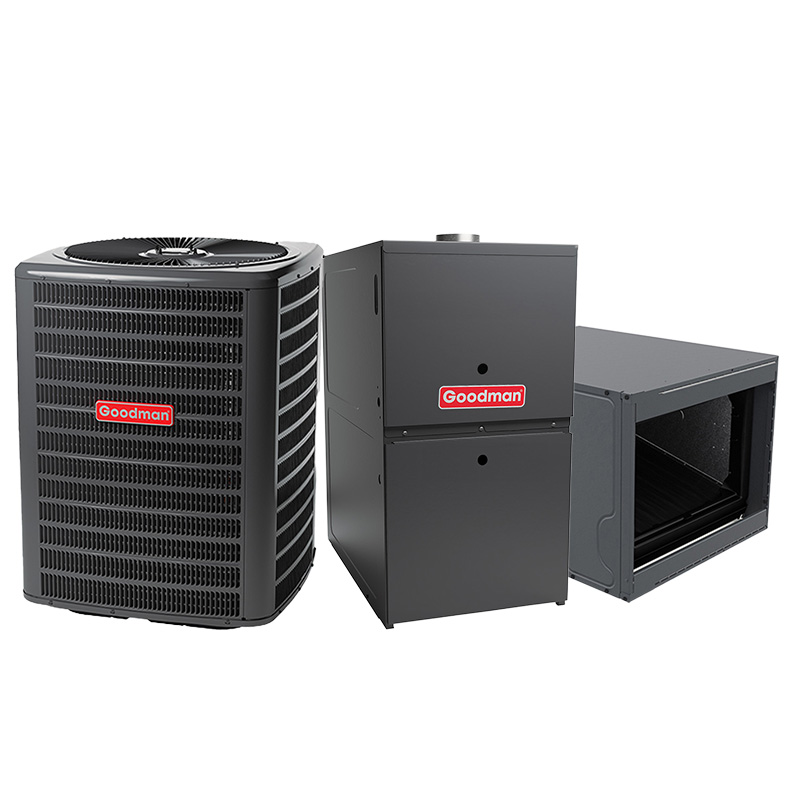
Goodman 2 Ton 14.3 SEER2 AC & Gas Furnace System – Two Stage Variable-Speed, 60000 BTU Gas Furnace, 80% AFUE, Horizontal, R32
View on AC Direct see your lowest price →Check current price on AC Direct →
Key features
- Two-stage compressor for reduced short-cycling and improved humidity control
- Variable-speed blower motor for quieter, more consistent airflow
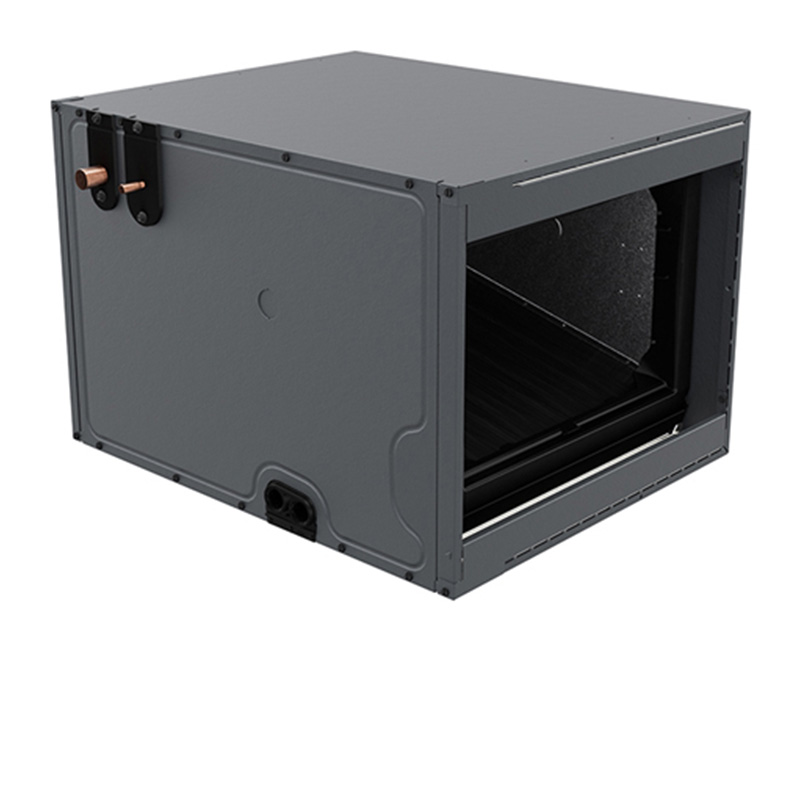
- Horizontal cabinet orientation for attic, crawlspace, and side-closet installs
- 60,000 BTU gas furnace at 80% AFUE meets federal minimum efficiency
- R-32 refrigerant charge with lower global warming potential than R-410A
- Value pricing typically 15 to 25 percent below Trane, Lennox, and Carrier at similar specs
About this system
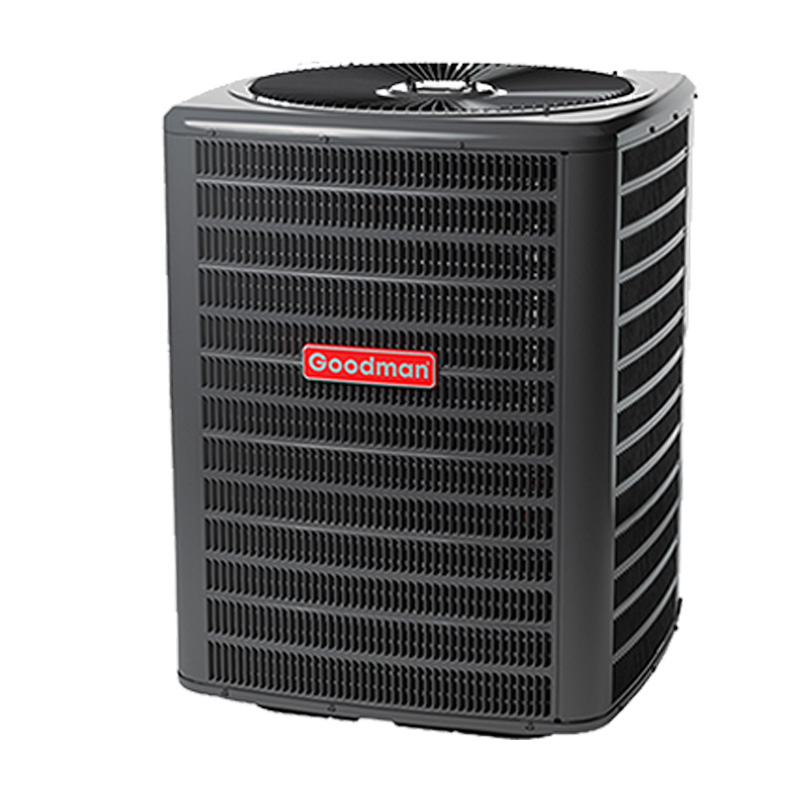
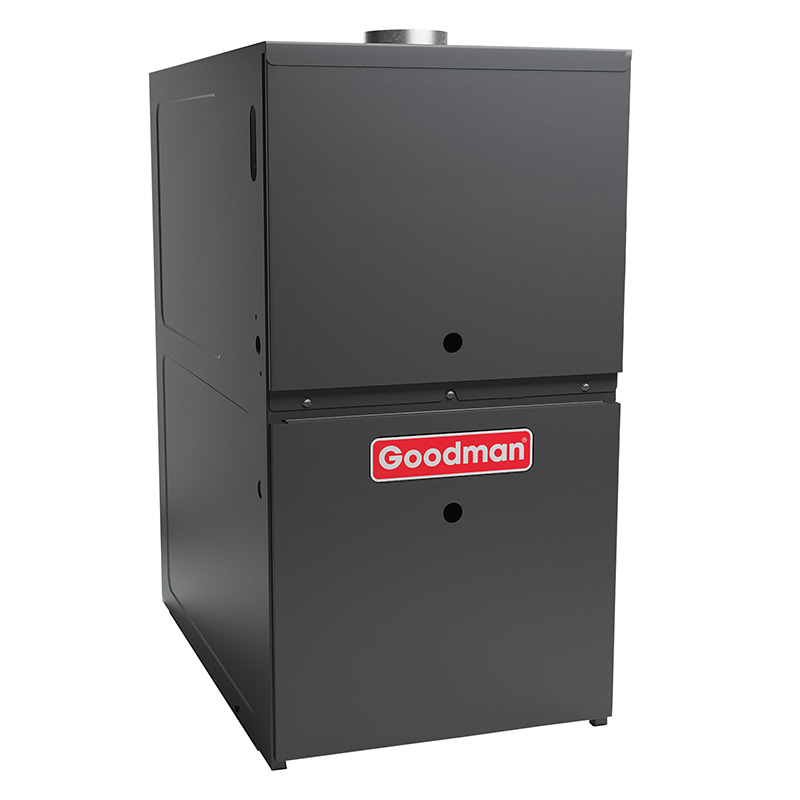
The Goodman 2-ton, 14.3 SEER2 split system pairs a two-stage, variable-speed air conditioner with a 60,000 BTU horizontal gas furnace rated at 80% AFUE. The horizontal configuration is purpose-built for tight spaces where a vertical installation is not possible, most commonly attics, crawlspaces, and side-closet mechanical rooms. At 2 tons, the cooling capacity targets smaller homes and conditioned zones typically in the 700 to 1,100 square foot range, though a proper Manual J load calculation should always confirm the right size before purchase.
The two-stage compressor runs at a reduced capacity during moderate conditions and ramps to full output on the hottest days, which cuts short-cycling, maintains more consistent indoor temperatures, and supports better humidity control compared to a single-stage unit. Variable-speed airflow from the air handler reinforces those comfort gains and tends to run quieter than fixed-speed alternatives. The system uses R-32 refrigerant, which carries a lower global warming potential than the R-410A it replaces, and is becoming the standard charge across new residential equipment. The 80% AFUE furnace meets federal minimum efficiency standards and is a practical match for mild to moderate heating climates, though homeowners in cold northern regions may want to weigh a higher-AFUE option before committing.
This system occupies a value position in the market, typically priced 15 to 25 percent below comparable Trane, Lennox, and Carrier equipment. That gap makes it attractive for budget-conscious buyers who want two-stage performance without a premium-brand price tag, provided they invest in a skilled installer, which is the single factor technicians most consistently identify as determining how long a Goodman system actually lasts.
This system delivers genuine two-stage comfort at a price point well below major premium brands, making it a reasonable choice for cost-focused buyers in moderate climates who prioritize upfront savings. The horizontal-only configuration limits installation scenarios, and long-term ownership costs can erode the initial savings if capacitor replacements, coil issues, or a shortened compressor lifespan materialize. The value proposition holds best when installation quality is high and the homeowner is prepared for potential mid-life component repairs.
Overall score is the average of the five ratings above.
What we like
- Two-stage operation improves comfort and humidity control over single-stage units at a lower price
- Variable-speed blower reduces noise and energy use during part-load conditions
- R-32 refrigerant is the emerging standard and avoids near-term phase-out concerns
- Horizontal cabinet expands placement options in attics, crawlspaces, and confined mechanical spaces
- Priced 15 to 25 percent below comparable Carrier, Trane, and Lennox systems, reducing the upfront investment
Trade-offs
- 80% AFUE is the federal minimum; homeowners in cold climates will pay more in fuel costs versus a 95%+ AFUE system
- Dual-run capacitor failures are the most documented repair, typically adding 300 to 600 dollars around or after year 7
- Compressor lifespan averages 10 to 14 years versus 15 to 20 years reported for premium brands, meaning a full replacement may arrive sooner
- A minority of owners report refrigerant leaks in the first year, most often traced to install quality or initial charge issues rather than factory defects
What homeowners and pros say about Goodman
Homeowners who bought Goodman equipment tend to split into two camps, and both camps are well represented in online feedback. On Google dealer reviews, Goodman installations average around 3.8 out of 5 stars across hundreds of reviews per location, where the most common praise centers on affordability and the fact that the equipment works without incident when installed by a careful technician. On ConsumerAffairs, the score drops to roughly 2.5 out of 5, a channel that skews toward people who had problems rather than those who did not. The recurring theme there is repair costs climbing after the seven-year mark, with dual-run capacitor failures leading the list as the most frequently mentioned component issue, typically a 300 to 600 dollar fix. Evaporator coil leaks appear in a meaningful share of owner reports as well, and while individual experiences vary, they show up often enough to be worth factoring into a long-term cost estimate.
HVAC technicians who work on Goodman equipment regularly tend to describe it as adequate hardware whose longevity depends heavily on who installed it and how well it is maintained. The compressor lifespan documented across this brand averages 10 to 14 years, which is meaningfully shorter than the 15 to 20 years cited for Trane, Lennox, and Carrier equipment at similar price points adjusted for brand premium. A small but notable minority of owners report refrigerant leaks in the first year of operation, which technicians most often attribute to install workmanship or an improper initial charge rather than a factory defect. For this specific horizontal, two-stage R-32 system, those facts translate to a straightforward calculus: the upfront savings are real, the comfort features are genuine, and the ownership experience tends to track closely with the skill level of the installer and the diligence of annual maintenance.
Sources: ConsumerAffairs Goodman owner reviews, AHRI Directory of Certified Product Performance, U.S. DOE appliance and equipment efficiency standards, Goodman product specification sheets.
What it costs to run
At 14.3 SEER2, cooling this 2-ton system for a typical 1200-hour cooling season at the U.S. average electricity rate of $0.17/kWh works out to roughly $342 per year in cooling, about $23 less per year than a minimum-efficiency 13.4 SEER2 unit of the same size. Your real cost depends on your climate and local rate.
Method: (24,000 BTU/hr ÷ 14.3 SEER2) × 1200 hours ÷ 1000 × $0.17/kWh. Rate source: U.S. EIA average; cooling hours: moderate-climate estimate.
How it compares
| Brand | Comparable model | SEER2 | Stage | Price position |
|---|---|---|---|---|
| Goodman | GMEC96 / CHPF series (this system) | 14.3 | two-stage | Value pick |
| Carrier | Comfort 14 (24ACC4 series) | 14.3 | single-stage | Typically 15 to 25 percent more than this Goodman system |
| Trane | XR14 series | 14.3 | single-stage | Typically 15 to 25 percent more than this Goodman system |
| Lennox | Merit ML14XC1 series | 14.3 | single-stage | Typically 15 to 25 percent more than this Goodman system |
Competitor rows are comparable single-stage units at similar efficiency; price is relative position, not a quote.
Questions about this system
Why does this system only come in a horizontal configuration, and can I install it vertically?
The horizontal designation means the cabinet and heat exchanger are engineered specifically for horizontal airflow, which is required for attic and crawlspace installations where vertical standing room is not available. Using a horizontal-only unit in a vertical position is not supported by the manufacturer and can affect drainage, airflow, and heat exchanger performance. If you need a vertical install, you would need a different cabinet configuration from the same product line.
What does two-stage cooling actually mean for day-to-day comfort compared to a single-stage unit?
A two-stage compressor runs at a lower capacity during mild weather, which means longer, gentler cooling cycles instead of short blasts of cold air. Longer run times allow the coil more time to pull humidity out of the air, which is noticeable in humid climates. The trade-off versus a fully variable-speed compressor is that it still steps between only two outputs rather than modulating continuously.
How serious is the dual-run capacitor failure issue, and what does it cost to fix?
Capacitor failure is the most commonly reported repair on Goodman equipment and typically shows up after year 7, though it can occur earlier. It is one of the less expensive HVAC repairs, generally in the 300 to 600 dollar range including labor, and a competent technician can usually complete it in under an hour. Keeping a service contract or checking the capacitor condition at annual maintenance visits is a straightforward way to catch it before the unit stops running on a hot day.
Is 80% AFUE good enough, or should I spend more on a higher-efficiency furnace?
At 80% AFUE, one dollar in five of your gas bill is leaving through the flue as exhaust heat. In mild or shoulder-season heating climates, the payback period on a 95% or 96% AFUE upgrade can stretch well beyond 10 years, making 80% a defensible choice. In climates with long cold winters and high gas costs, the upgrade to a condensing furnace typically pays back within 5 to 8 years and should be seriously considered.
Does using R-32 refrigerant change anything about servicing or finding a technician?
R-32 requires technicians to use equipment rated for its slightly higher operating pressures and to follow updated handling procedures, since it is mildly flammable at high concentrations. Most licensed HVAC contractors in the US have updated their equipment and training as R-32 becomes the residential standard, so finding qualified service should not be a significant hurdle. Refrigerant availability is improving, and it is not subject to the same phase-down timeline that affected R-22 or the near-term restrictions coming for R-410A.
Specifications
| Cooling capacity | 2 Ton |
| Efficiency | 14.3 SEER2 |
| Furnace output | 60000 BTU |
| Furnace efficiency | 80% AFUE |
| Configuration | Horizontal |
| Refrigerant | R-32 |