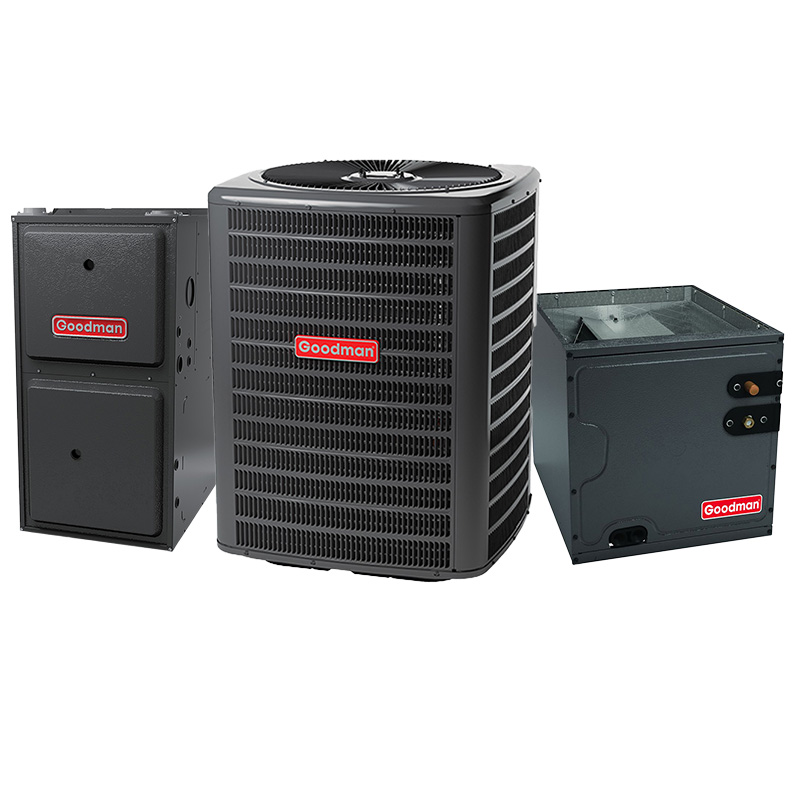
Goodman 2 Ton 14.3 SEER2 AC With 80000 BTU 96% AFUE 2-Stage Variable-Speed ECM Gas Furnace System – Upflow | R32
View on AC Direct see your lowest price →Check current price on AC Direct →
Key features
- 14.3 SEER2 cooling efficiency meets current federal minimum standards for most U.S. climate regions
- 96% AFUE two-stage gas furnace qualifies for federal energy-efficiency tax credits
- Variable-speed ECM blower motor reduces temperature swings and lowers blower electricity use
- R-32 refrigerant has roughly 68% lower global-warming potential than R-410A
- Upflow configuration suits basement, closet, or utility room installations with supply air directed upward
- 2-ton capacity targets smaller homes typically in the 800 to 1,200 square foot range
About this system
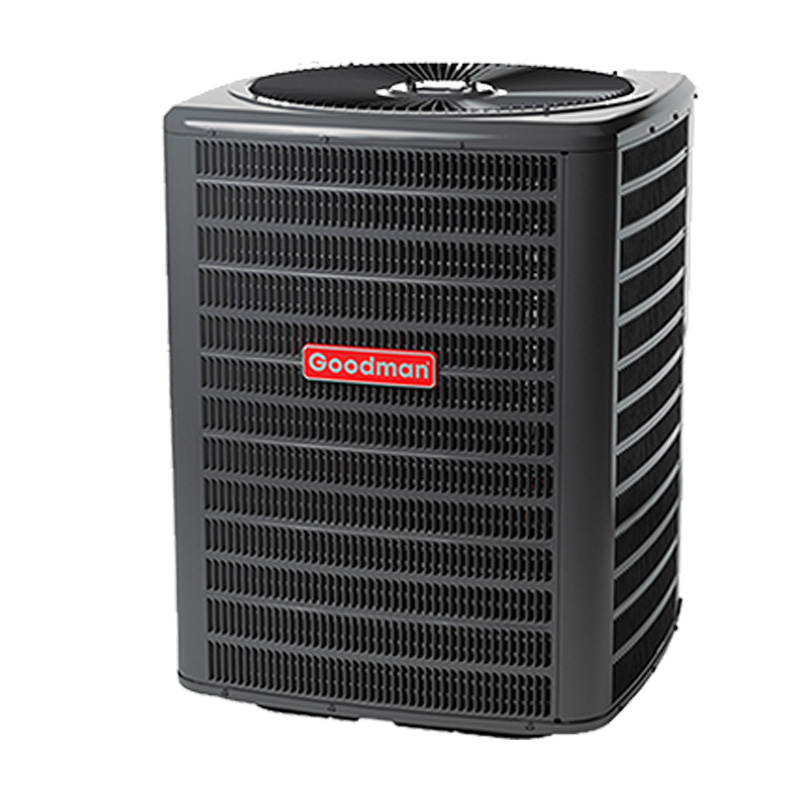
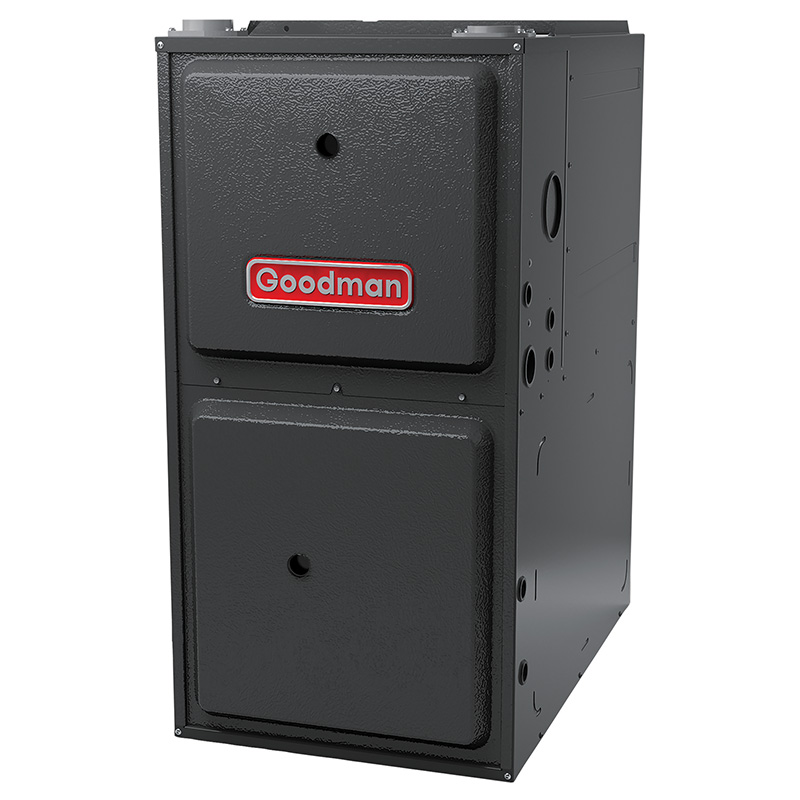
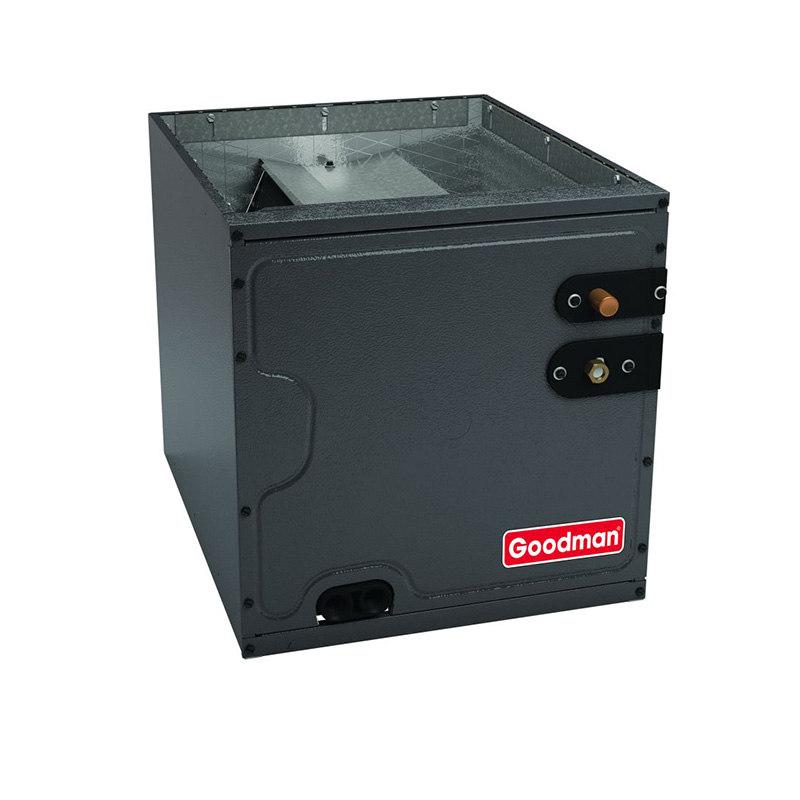
This Goodman package pairs a 2-ton, 14.3 SEER2 air conditioner with an 80,000 BTU, 96% AFUE two-stage, variable-speed ECM gas furnace in an upflow configuration. The refrigerant is R-32, a lower global-warming-potential option that is becoming standard as R-410A is phased out. At 2 tons, this system is sized for smaller homes, typically in the 800 to 1,200 square foot range depending on climate zone, insulation quality, and window load. Proper Manual J load calculation before purchase is essential, since undersizing or oversizing will hurt both comfort and longevity regardless of equipment quality.
The 96% AFUE rating means roughly 96 cents of every dollar spent on gas goes toward heat, placing this furnace in the high-efficiency tier and making it eligible for federal tax credits under current energy efficiency rules. Two-stage heating and a variable-speed ECM blower motor are meaningful upgrades over single-stage, entry-level systems: the furnace runs on its lower stage the majority of the time, reducing temperature swings, improving humidity control in shoulder seasons, and operating more quietly. The variable-speed blower also moves air more consistently, which pairs well with any zoning setup or media filter you add later. For a smaller home where a budget-friendly high-efficiency combo is the goal, this configuration makes real sense.
This Goodman combo delivers a genuinely high-efficiency heating and cooling system at a price point that undercuts comparable Trane, Carrier, and Lennox equipment by 15 to 25 percent. The two-stage furnace and variable-speed blower are real comfort upgrades, not just spec-sheet padding. The honest trade-off is that Goodman's long-term reliability record is weaker than premium brands, and the quality of your installing contractor will matter as much as the equipment itself.
Overall score is the average of the five ratings above.
What we like
- 96% AFUE two-stage furnace is genuinely high-efficiency and qualifies for federal tax incentives
- Variable-speed ECM blower improves comfort and cuts operating costs compared to single-speed alternatives
- R-32 refrigerant is more environmentally responsible and increasingly well-supported by technicians
- Price typically 15 to 25 percent below comparable Trane, Lennox, and Carrier systems
- 14.3 SEER2 meets federal minimums and keeps cooling operating costs reasonable for the size class
Trade-offs
- Dual-run capacitors are Goodman's most frequently reported failure point, usually surfacing within 5 to 10 years
- Evaporator coil leaks appear in a meaningful share of long-term owner reviews, a known weak spot
- Compressor lifespan averages 10 to 14 years versus 15 to 20 years typical of premium brands
- A minority of owners report refrigerant leaks within the first year, usually tied to install or factory charge issues
What homeowners and pros say about Goodman
Homeowners who research Goodman online encounter a split picture. On ConsumerAffairs, where frustrated buyers are more likely to post, Goodman scores around 2.5 out of 5, with the recurring theme being repair costs that start climbing after roughly year seven. Google dealer reviews tell a different story, averaging around 3.8 out of 5 across hundreds of reviews per location, where the most common praise is straightforward: the system cost significantly less than competing bids and it cools and heats the house as expected. The gap between those two scores is itself informative. Goodman systems that are installed carefully and maintained regularly tend to satisfy owners; the ones that generate complaints often involve installation shortcuts or deferred maintenance that would have hurt any brand.
HVAC technicians have a consistent view of Goodman: it is a workable product at a fair price, but the dual-run capacitor is almost a guaranteed eventual service call, and evaporator coil leaks show up in a notable share of systems past the ten-year mark. Compressor longevity, averaging 10 to 14 years in real-world reports, runs shorter than the 15 to 20 years more commonly seen in Trane, Carrier, and Lennox equipment. For this specific system, the two-stage furnace and variable-speed blower add genuine complexity compared to entry-level Goodman configurations, which means the installer’s skill in commissioning the controls and verifying refrigerant charge is especially important. A first-year refrigerant leak, reported by a minority of owners, is almost always a field issue rather than a factory defect, reinforcing the point that who installs this system will shape your experience as much as what the system is rated to do.
Sources: ConsumerAffairs Goodman owner reviews, AHRI Directory of Certified Product Performance, U.S. DOE appliance and equipment efficiency standards, Goodman product specification sheets.
What it costs to run
At 14.3 SEER2, cooling this 2-ton system for a typical 1200-hour cooling season at the U.S. average electricity rate of $0.17/kWh works out to roughly $342 per year in cooling, about $23 less per year than a minimum-efficiency 13.4 SEER2 unit of the same size. Your real cost depends on your climate and local rate.
Method: (24,000 BTU/hr ÷ 14.3 SEER2) × 1200 hours ÷ 1000 × $0.17/kWh. Rate source: U.S. EIA average; cooling hours: moderate-climate estimate.
How it compares
| Brand | Comparable model | SEER2 | Stage | Price position |
|---|---|---|---|---|
| Goodman | GMVC96 + GSXH5 (this system) | 14.3 | two-stage / variable-speed | Value pick |
| Carrier | Performance 96 (59TP6) + Comfort 14 (24ACC4) | 14.3-15.0 | two-stage / variable-speed | Typically 15 to 25 percent more than this Goodman system |
| Trane | S9V2 Furnace + XR14 Air Conditioner | 14.3-15.0 | two-stage / variable-speed | Typically 15 to 25 percent more than this Goodman system |
| Lennox | ML96V Furnace + XC14 Air Conditioner | 14.3-15.2 | two-stage / variable-speed | Typically 15 to 25 percent more than this Goodman system |
Competitor rows are comparable single-stage units at similar efficiency; price is relative position, not a quote.
Questions about this system
Is 2 tons actually the right size for my house?
Not necessarily, and this matters more than most buyers realize. Two tons is generally appropriate for roughly 800 to 1,200 square feet in a moderately insulated home in a mixed climate, but the real answer requires a Manual J load calculation from your installer. Oversizing causes short-cycling that hurts humidity control and accelerates wear; undersizing leaves the system running constantly on hot days.
What does two-stage heating actually mean in day-to-day use?
The furnace has a lower firing rate, typically around 65 percent of full capacity, and a higher one at 100 percent. On most winter days it runs at the lower stage, which means longer, quieter cycles that keep temperatures more even and do a better job removing humidity during transitional months. It only jumps to full capacity when demand calls for it, such as on the coldest days.
How does R-32 refrigerant affect me as an owner?
R-32 is mildly flammable, which means not every technician is currently certified to work with it, though industry training is catching up quickly. You should confirm any HVAC service company you call for future repairs or refrigerant work is R-32 qualified. On the positive side, it has a lower environmental impact than R-410A and is likely to remain available and legal as refrigerant regulations tighten.
What maintenance items should I budget for over the first 10 years?
Annual tune-ups, filter replacements, and coil cleaning are standard for any system. Specific to Goodman, the dual-run capacitor is the most commonly reported failure and typically costs 300 to 600 dollars to replace including labor, a relatively inexpensive fix. Keeping the outdoor coil clean and ensuring refrigerant charge is checked at installation reduces the risk of the two bigger failure modes: compressor wear and evaporator coil leaks.
Does this system qualify for the federal energy-efficiency tax credit?
The 96% AFUE furnace meets the efficiency threshold for the federal 25C tax credit, which allows up to 600 dollars for qualifying furnaces as of current rules. The 14.3 SEER2 air conditioner portion is at the minimum efficiency threshold and may or may not qualify depending on the full system certification and current IRS guidance, so confirm with your tax preparer and check the ENERGY STAR certified products list before filing.
Specifications
| Cooling capacity | 2 Ton |
| Efficiency | 14.3 SEER2 |
| Furnace output | 80000 BTU |
| Furnace efficiency | 96% AFUE |
| Configuration | Upflow |
| Refrigerant | R-32 |