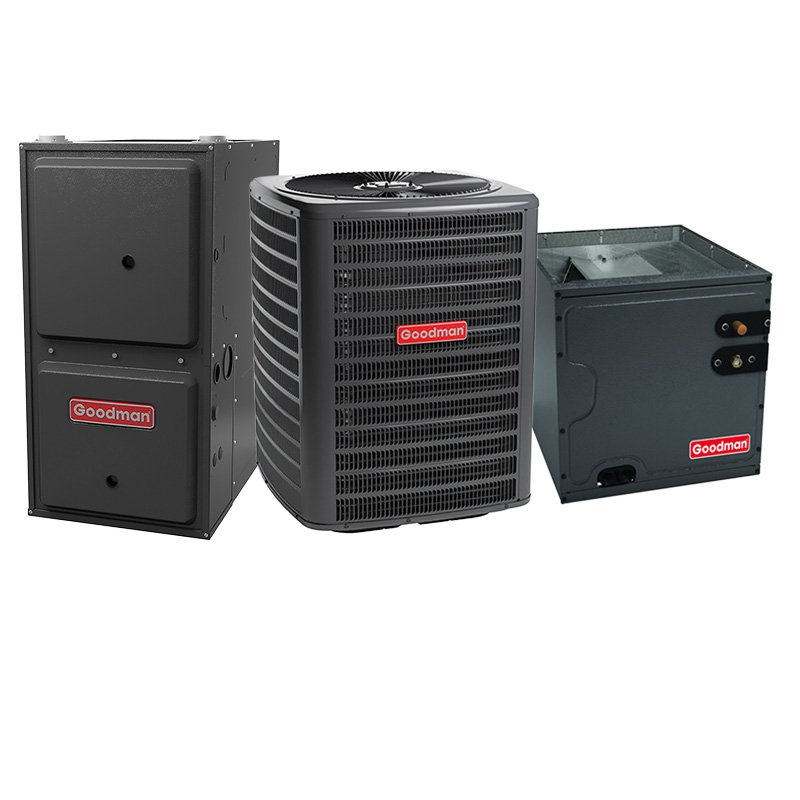
Goodman 2 Ton 14.5 SEER2 40000 BTU 80% AFUE Two Stage Multi-Speed ECM Gas Furnace System – Low NOX For California Downflow | R32
View on AC Direct see your lowest price →Check current price on AC Direct →
Key features
- 2-ton two-stage compressor for better humidity control and quieter part-load operation
- 14.5 SEER2 efficiency, meeting or exceeding federal minimums for most U.S. regions
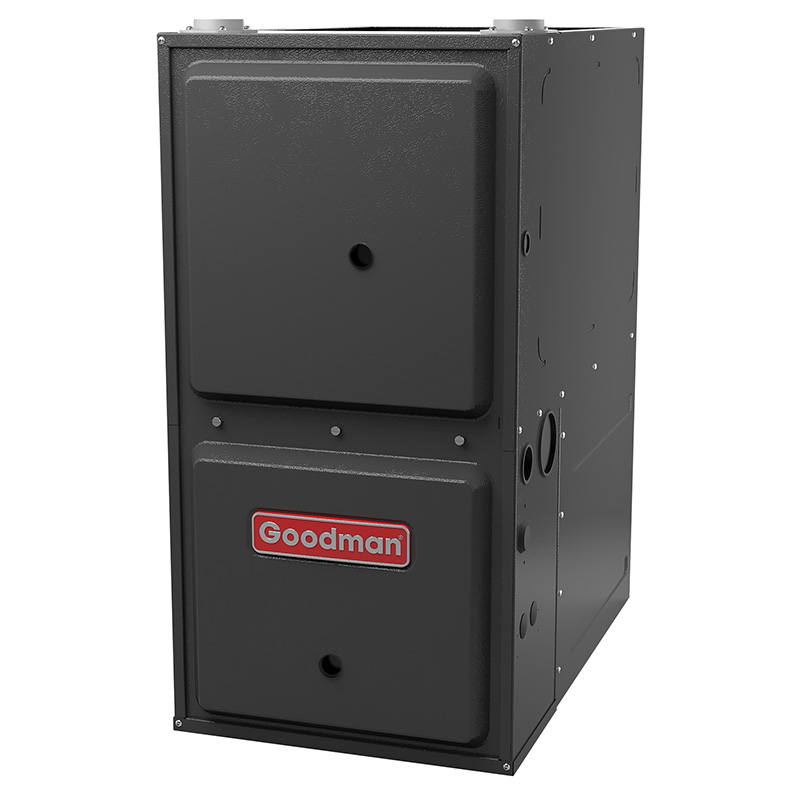
- 40,000 BTU 80% AFUE two-stage gas furnace in downflow configuration
- Multi-speed ECM blower motor reduces air-handler electricity consumption vs. PSC motors
- R-32 refrigerant charge, lower global warming potential than R-410A
- Low NOx burner design meets California Air Quality Management District requirements
About this system
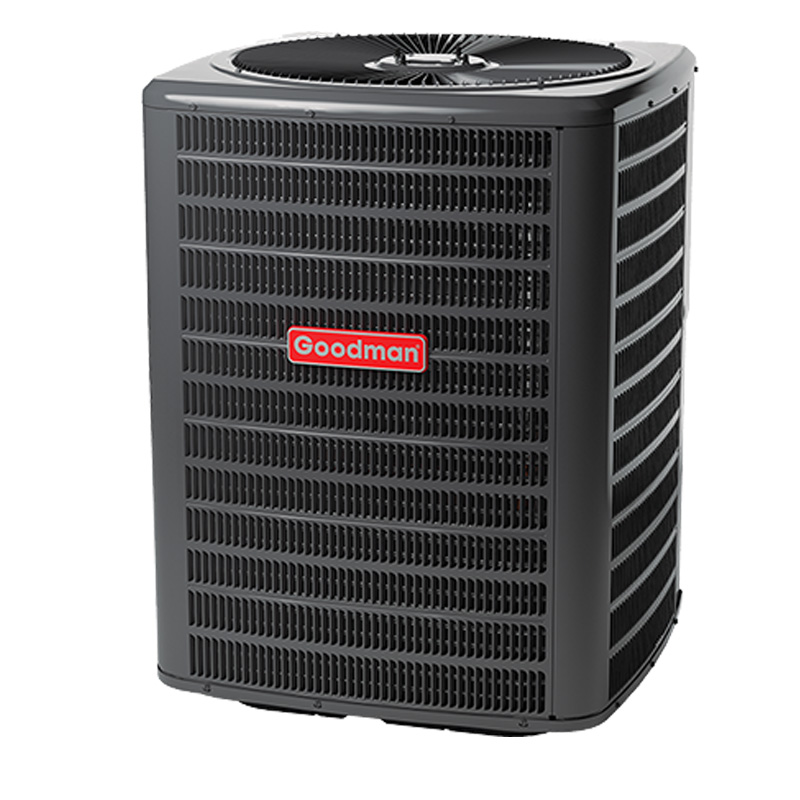
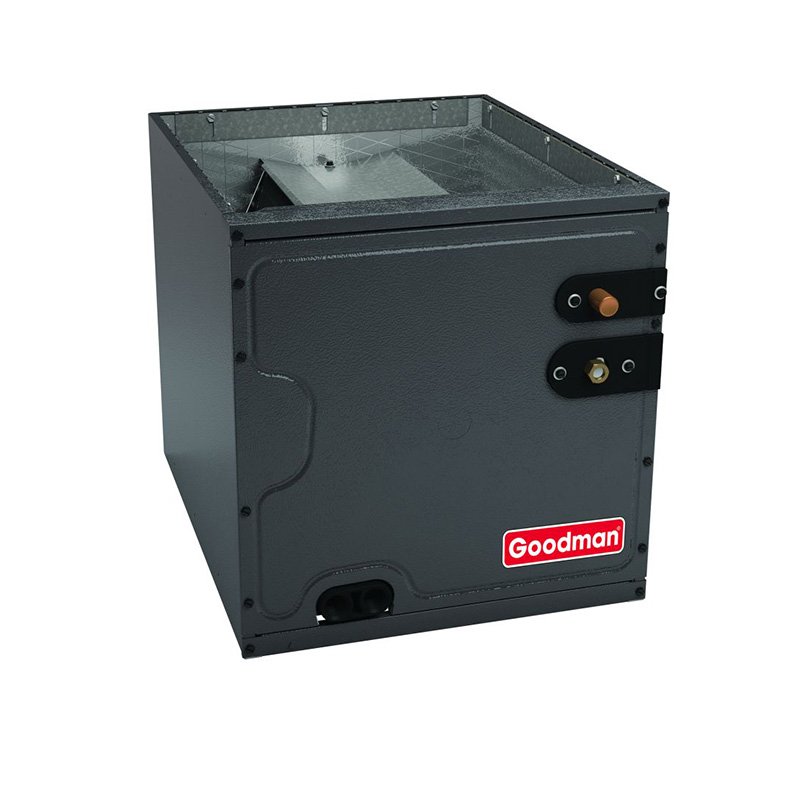
The Goodman GLXS4BA2410 is a 2-ton, 14.5 SEER2 split system paired with a 40,000 BTU 80% AFUE two-stage gas furnace in a downflow configuration. That combination is designed for homes where the air handler sits above a crawlspace or basement return, discharging conditioned air downward through floor registers. The R-32 refrigerant charge and Low NOx burner rating make this system compliant for California installation, a requirement that eliminates a surprising number of competing units from consideration in that state.
The two-stage compressor and multi-speed ECM blower motor are the headline specs here. Two-stage cooling means the system runs at a reduced capacity on most days and only shifts to full output during peak heat, which reduces short-cycling, holds humidity better than a single-stage unit, and keeps operating noise lower during the longer low-stage run cycles. The ECM motor trims electricity use at the air handler compared with a PSC motor. At 14.5 SEER2, efficiency sits just above the federal minimum for most regions, so this is an entry-to-mid tier efficiency system, not a premium one. It suits budget-conscious homeowners in mild to moderate climates, or buyers replacing a failed system on a tight timeline who want two-stage comfort without stepping up to a variable-speed price point.
Goodman prices this package roughly 15 to 25 percent below equivalent Carrier, Trane, and Lennox configurations. That savings is real, but the brand’s track record means installation quality carries more weight here than it would with a premium unit. Buyers who pair this system with an experienced, detail-oriented installer and plan for a maintenance schedule stand the best chance of reaching or exceeding the expected 10-to-14-year compressor lifespan.
The GLXS4BA2410 delivers genuine two-stage comfort and California-compliant R-32 refrigerant at a price point that undercuts the major premium brands by a meaningful margin. The trade-off is a brand reliability record that trails Trane and Carrier, and a compressor lifespan that averages shorter than premium alternatives. It is a reasonable buy when installation quality and post-warranty service access are locked in beforehand.
Overall score is the average of the five ratings above.
What we like
- Two-stage compressor improves humidity control and reduces short-cycling compared with single-stage units at this price tier
- ECM blower motor lowers fan electricity draw across all operating modes
- R-32 refrigerant compliance opens the system to California installations where R-410A units may not qualify
- Purchase price typically 15 to 25 percent below comparable Carrier, Trane, and Lennox configurations
- Low NOx burner satisfies strict California Air Quality Management District combustion standards
Trade-offs
- 80% AFUE is the low end of modern furnace efficiency; a 96% AFUE unit would recover cost in fuel savings over time in colder climates
- Goodman compressors average 10 to 14 years versus 15 to 20 for premium brands, meaning earlier replacement likelihood over a home ownership period
- Dual-run capacitor failures and evaporator coil leaks are documented recurring issues in owner feedback, adding potential repair costs after year 7
- Downflow configuration limits installation flexibility and adds complexity versus a horizontal or upflow setup, requiring a technician specifically familiar with this orientation
What homeowners and pros say about Goodman
Homeowners who have lived with Goodman equipment reflect a split experience. On ConsumerAffairs, Goodman scores around 2.5 out of 5, a channel that skews toward people with complaints, and the recurring theme there is repair costs that begin to climb after roughly year 7. Google dealer reviews tell a more balanced story, landing around 3.8 out of 5 across hundreds of location-level reviews, where affordability is the most consistently praised attribute. For this specific downflow system, real-world owner concerns worth weighing include evaporator coil leaks reported in a meaningful share of longer-term accounts, and dual-run capacitor failures that show up as the most frequently cited repair, typically a 300-to-600-dollar fix. Compressor longevity is the bigger picture concern: Goodman compressors tend to average 10 to 14 years, a shorter window than the 15-to-20-year range associated with Carrier, Trane, and Lennox at similar use levels.
HVAC technicians who install and service Goodman equipment regularly point to one consistent theme: the unit itself is only part of the outcome. Proper refrigerant charge, verified airflow, and a clean downflow duct connection matter more with this brand than with premium equipment that has tighter factory tolerances. A small number of first-year refrigerant leak reports in owner feedback are generally traced to installation or initial charge errors rather than factory defects, which underscores why choosing an installer who performs a thorough commissioning process is not optional with this system. Buyers who treat installation quality and routine maintenance as non-negotiable report outcomes that align more with the Google dealer scores than with the ConsumerAffairs complaints.
Sources: ConsumerAffairs Goodman owner reviews, AHRI Directory of Certified Product Performance, U.S. DOE appliance and equipment efficiency standards, Goodman product specification sheets.
What it costs to run
At 14.5 SEER2, cooling this 2-ton system for a typical 1200-hour cooling season at the U.S. average electricity rate of $0.17/kWh works out to roughly $338 per year in cooling, about $27 less per year than a minimum-efficiency 13.4 SEER2 unit of the same size. Your real cost depends on your climate and local rate.
Method: (24,000 BTU/hr ÷ 14.5 SEER2) × 1200 hours ÷ 1000 × $0.17/kWh. Rate source: U.S. EIA average; cooling hours: moderate-climate estimate.
How it compares
| Brand | Comparable model | SEER2 | Stage | Price position |
|---|---|---|---|---|
| Goodman | GLXS4BA2410 | 14.5 | two-stage | Value pick |
| Carrier | Performance 14 (24ACC4) | 14.3 | single-stage | Typically 15 to 25 percent more than the Goodman |
| Trane | XR14 | 14.3 | single-stage | Typically 15 to 25 percent more than the Goodman |
| Lennox | Merit 14ACX | 14.3 | single-stage | Typically 15 to 25 percent more than the Goodman |
Competitor rows are comparable single-stage units at similar efficiency; price is relative position, not a quote.
Questions about this system
Does this system actually qualify for installation in California, and what paperwork is involved?
Yes. The Low NOx burner rating meets California Air Quality Management District standards, and the R-32 refrigerant satisfies current California requirements. Your installing contractor will need to pull the appropriate permits and may need to file compliance documentation with your local AQMD district; confirm this with them before scheduling.
What does two-stage cooling actually change in day-to-day comfort versus a single-stage unit at the same SEER2?
On most days the system runs at the lower stage for longer periods rather than short cycling on and off at full capacity. Longer run times pull more moisture out of the air, which matters in humid climates, and the lower airflow stage is noticeably quieter. The efficiency gain from two-stage at the same SEER2 rating is modest, but the comfort and humidity benefits are real.
What are the most likely repair costs I should budget for over the first 10 years?
Based on documented owner feedback, dual-run capacitor replacement is the most common service call and typically runs 300 to 600 dollars including labor. Evaporator coil leaks appear in a meaningful share of long-term owner reports and can cost significantly more. Setting aside a small annual service reserve after the warranty period is a practical step with any Goodman system.
R-32 refrigerant is newer to residential systems. Will local technicians be able to service it?
Most HVAC technicians certified under Section 608 can handle R-32, but it is a mildly flammable refrigerant (A2L classification) that requires specific recovery equipment and procedures. Confirm your prospective service technician has the right equipment before you need an emergency repair, particularly in rural areas where equipment availability can be limited.
How important is the installer for a system like this, and what should I look for?
Installer quality is the single most-cited factor in how long Goodman equipment lasts, according to HVAC technicians familiar with the brand. Look for a contractor who performs a Manual J load calculation, pressure-tests the refrigerant lines, and verifies airflow at startup. A minority of early refrigerant leak reports in owner reviews trace back to install or initial charge issues, which a thorough commissioning process should catch before you sign off.
Specifications
| Cooling capacity | 2 Ton |
| Efficiency | 14.5 SEER2 |
| Furnace output | 40000 BTU |
| Furnace efficiency | 80% AFUE |
| Configuration | Downflow |
| Refrigerant | R-32 |
| Model | GLXS4BA2410 |