Goodman 2 Ton 14.5 SEER2 60000 BTU 80% AFUE Two Stage Multi-Speed ECM Gas Furnace System – Low NOX For California Downflow | R32
View on AC Direct see your lowest price →Check current price on AC Direct →
Key features
- 14.5 SEER2 two-stage cooling rated for 2 tons (24,000 BTU/hr)
- 60,000 BTU 80% AFUE two-stage gas furnace with Low NOX burner for California compliance
- R-32 refrigerant with lower global warming potential than R-410A
- Multi-speed ECM blower motor for reduced electricity use and quieter part-load operation
- Downflow configuration designed for attic or closet installations with downward air delivery
- Two-stage compressor reduces short-cycling and improves humidity control on mild days
About this system
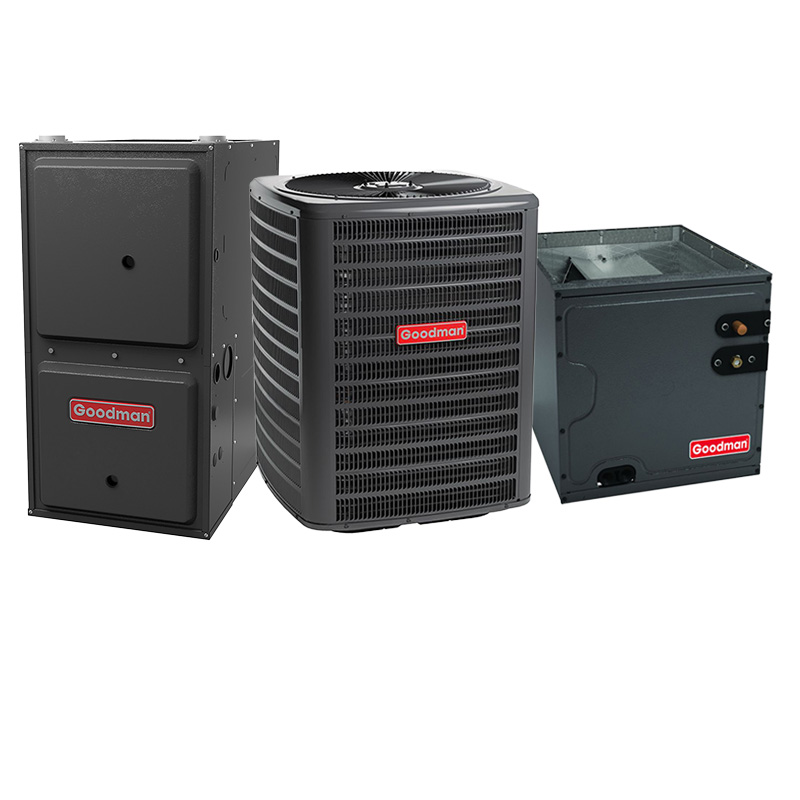
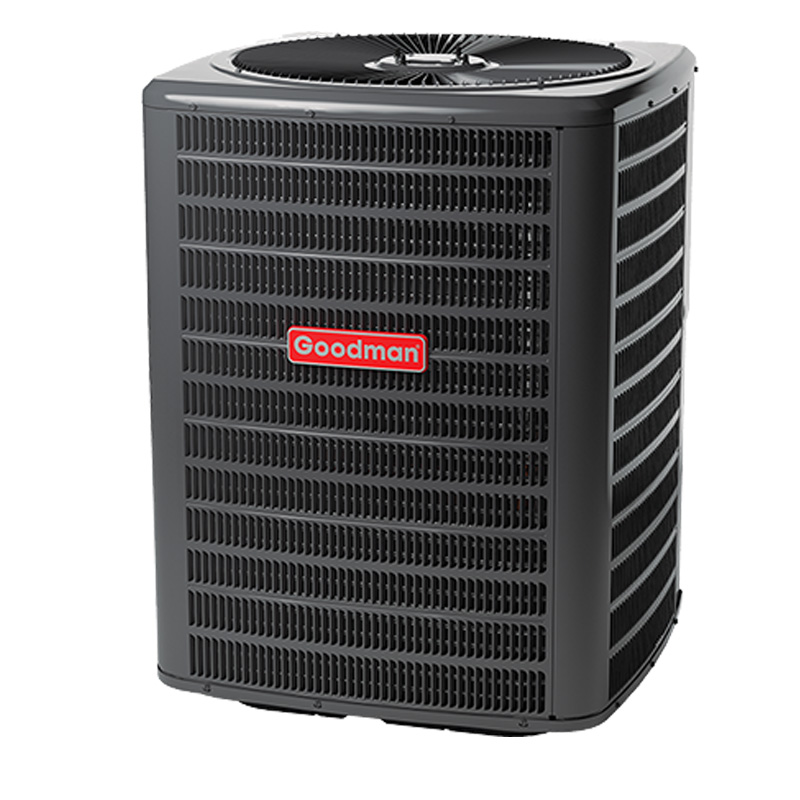
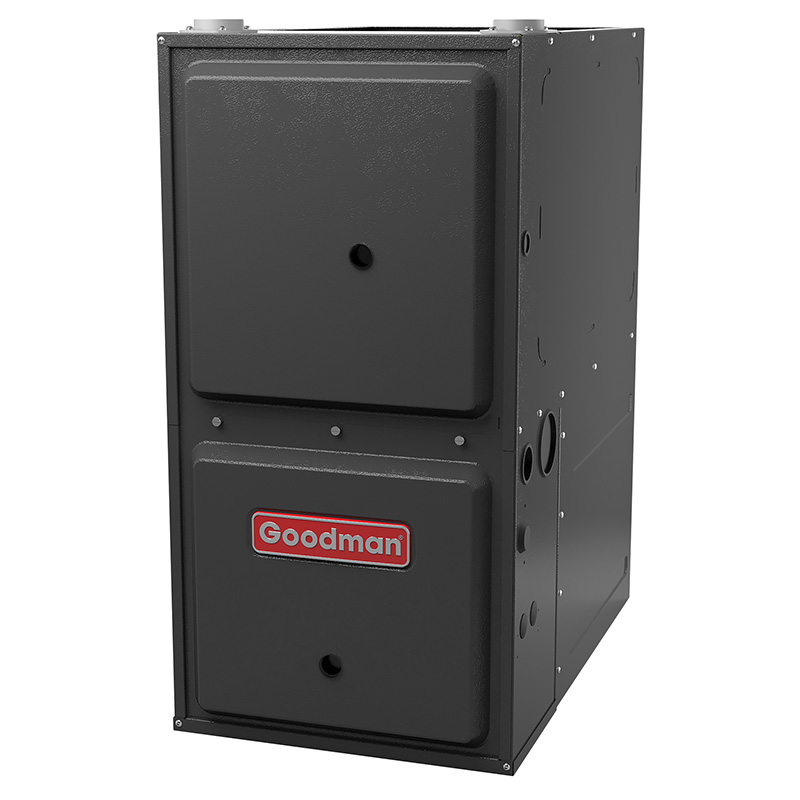
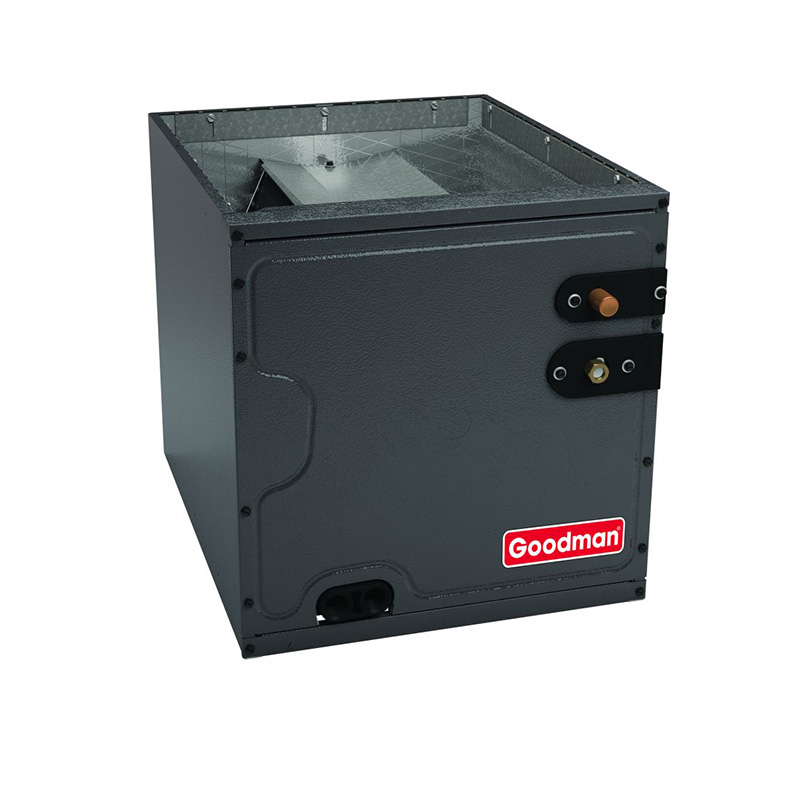
The Goodman GLXS4BA2410 pairs a 2-ton, 14.5 SEER2 R-32 air conditioner with a 60,000 BTU, 80% AFUE two-stage gas furnace in a downflow configuration, making it a practical choice for homes where the air handler sits in an upper closet or attic and supply air flows downward into the living space. The R-32 refrigerant charge meets California’s Low NOX requirements and newer environmental standards, and the two-stage compressor lets the system run at a lower capacity on mild days before stepping up when the load demands it, which helps with humidity control and reduces short-cycling compared to single-stage equipment.
The ECM (electronically commutated motor) blower is one of the more meaningful upgrades at this price tier. It draws significantly less electricity than a standard PSC motor, adjusts airflow continuously to maintain static pressure, and operates more quietly at low speeds. Combined with the two-stage furnace, it makes this system a reasonable mid-range performer without the cost of full variable-speed modulation. That said, 80% AFUE leaves roughly 20 cents of every heating dollar going up the flue, so homeowners in colder climates or those with high heating loads may want to weigh the long-term fuel cost against the lower upfront price of this configuration.
This system suits mild to moderate California climates where cooling loads are moderate, heating seasons are shorter, and local air quality rules require Low NOX certification. It is a value-positioned package that rewards a careful, experienced installer and does less well when shortcuts are taken during setup.
This system delivers a functional, code-compliant cooling and heating package at a price noticeably below Carrier, Trane, and Lennox equivalents, and the two-stage operation plus ECM motor give it genuine performance advantages over entry-level single-stage alternatives. The trade-offs are real: Goodman's documented failure patterns, particularly with dual-run capacitors and evaporator coil longevity, mean ongoing maintenance costs deserve a spot in any budget projection. Buyers who prioritize low installed cost and are comfortable with the brand's reliability profile will find it a reasonable fit; those expecting premium-brand durability without premium-brand spend may be disappointed.
Overall score is the average of the five ratings above.
What we like
- Priced roughly 15 to 25 percent below comparable Carrier, Trane, and Lennox systems, lowering the upfront installed cost
- Two-stage compressor improves comfort and humidity control compared to single-stage alternatives at the same price point
- ECM blower motor reduces fan electricity consumption and operates more quietly at reduced speeds
- R-32 refrigerant is California-compliant and carries a lower environmental footprint than R-410A
- Low NOX burner satisfies California air quality district requirements without needing an aftermarket upgrade
Trade-offs
- 80% AFUE means 20% of fuel energy is lost, which adds up in climates with meaningful heating seasons
- Dual-run capacitors are a documented frequent failure point, typically around year 5 to 8, adding to lifetime maintenance costs
- Compressor lifespan averages 10 to 14 years versus 15 to 20 for premium brands, meaning replacement may come sooner
- Evaporator coil leaks appear in a meaningful share of owner reports, and a first-year refrigerant leak, though less common, is a documented risk tied to install quality
What homeowners and pros say about Goodman
Homeowners who have purchased Goodman equipment reflect the split you would expect from a value brand. On Google dealer reviews, Goodman systems average around 3.8 out of 5 across locations, and the most consistent praise is straightforward: the price made the purchase possible when a premium brand was out of reach. ConsumerAffairs tells a harsher story, averaging roughly 2.5 out of 5, with the dominant complaint being repair costs that start climbing after about year 7. The gap between those two scores is partly a platform effect, but it also reflects a real pattern: owners who get a clean install and stay on top of maintenance tend to report acceptable results, while those who encounter an early failure or a rushed installation often feel the savings evaporated quickly.
HVAC technicians are candid about Goodman in ways that are useful for buyers of this specific system. Dual-run capacitor failures are the repair call they associate most with the brand, typically an inexpensive fix but one that comes up repeatedly over the system’s life. Evaporator coil leaks show up in a meaningful portion of owner histories, and compressor lifespan on Goodman equipment tends to run 10 to 14 years, shorter than the 15 to 20 years technicians associate with Trane, Carrier, and Lennox compressors. A smaller share of owners report refrigerant leaks within the first year, which technicians generally attribute to install or initial charge issues rather than a manufacturing defect. The consistent professional advice is the same regardless of brand tier: a skilled, experienced installer who pressure-tests properly and charges refrigerant by weight is the single biggest variable in how this system performs and how long it lasts.
Sources: ConsumerAffairs Goodman owner reviews, AHRI Directory of Certified Product Performance, U.S. DOE appliance and equipment efficiency standards, Goodman product specification sheets.
What it costs to run
At 14.5 SEER2, cooling this 2-ton system for a typical 1200-hour cooling season at the U.S. average electricity rate of $0.17/kWh works out to roughly $338 per year in cooling, about $27 less per year than a minimum-efficiency 13.4 SEER2 unit of the same size. Your real cost depends on your climate and local rate.
Method: (24,000 BTU/hr ÷ 14.5 SEER2) × 1200 hours ÷ 1000 × $0.17/kWh. Rate source: U.S. EIA average; cooling hours: moderate-climate estimate.
How it compares
| Brand | Comparable model | SEER2 | Stage | Price position |
|---|---|---|---|---|
| Goodman | GLXS4BA2410 (this system) | 14.5 | two-stage | Value pick |
| Carrier | Comfort 14 Series (24ACC4) | 14.3 | single-stage | Moderately higher than this system |
| Trane | XR15 Series (4TTR5) | 15.0 | single-stage | Noticeably higher than this system |
| Lennox | Merit 14 Series (14ACX) | 14.3 | single-stage | Moderately to noticeably higher than this system |
Competitor rows are comparable single-stage units at similar efficiency; price is relative position, not a quote.
Questions about this system
Does this system meet California's Low NOX requirements for gas furnaces?
Yes, the furnace is specifically built with a Low NOX burner to satisfy California air quality district rules, which ban standard NOX-emission furnaces in much of the state. Always confirm your local district's current requirements with your installer before purchasing.
Why does the downflow configuration matter, and will it work in my home?
Downflow means the furnace pulls return air from the top and delivers conditioned air downward through the floor or a lower plenum. It is designed for attic installations or raised-floor closets where ductwork runs below the unit. If your existing system is upflow or horizontal, this cabinet orientation is not a drop-in replacement.
What should I expect in terms of maintenance costs over the life of this system?
Dual-run capacitor replacements are the most commonly reported repair on Goodman equipment, typically costing 300 to 600 dollars and usually occurring somewhere in the 5-to-10-year range. Evaporator coil leaks are a documented but less universal issue. Budgeting for at least one capacitor replacement and annual professional maintenance visits is a reasonable approach.
What warranty does this Goodman system carry?
Goodman typically offers a 10-year parts limited warranty when registered within a set period after installation, covering major components including the compressor and heat exchanger. The unit-replacement limited warranty on the compressor and covered components applies as well, but coverage terms require owner registration, so confirm the current warranty card details and register promptly after install.
Is R-32 refrigerant harder or more expensive to service than R-410A?
R-32 requires technicians with A2L refrigerant handling certification, which is not yet universal among all service companies. Parts and refrigerant availability are growing as the industry transitions, but in some areas you may have a narrower pool of qualified technicians for service calls, so it is worth confirming your local HVAC service provider is A2L-certified before purchasing.
Specifications
| Cooling capacity | 2 Ton |
| Efficiency | 14.5 SEER2 |
| Furnace output | 60000 BTU |
| Furnace efficiency | 80% AFUE |
| Configuration | Downflow |
| Refrigerant | R-32 |
| Model | GLXS4BA2410 |