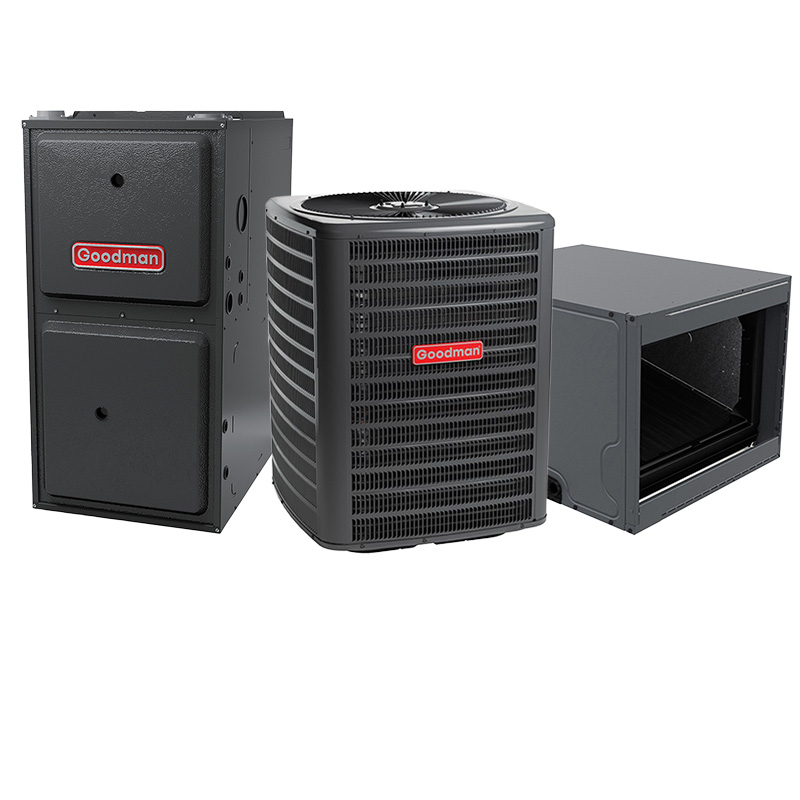
Goodman 2 Ton 14.5 SEER2 60000 BTU 80% AFUE Two Stage Multi-Speed ECM Gas Furnace System – Horizontal | R32
View on AC Direct see your lowest price →Check current price on AC Direct →
Key features
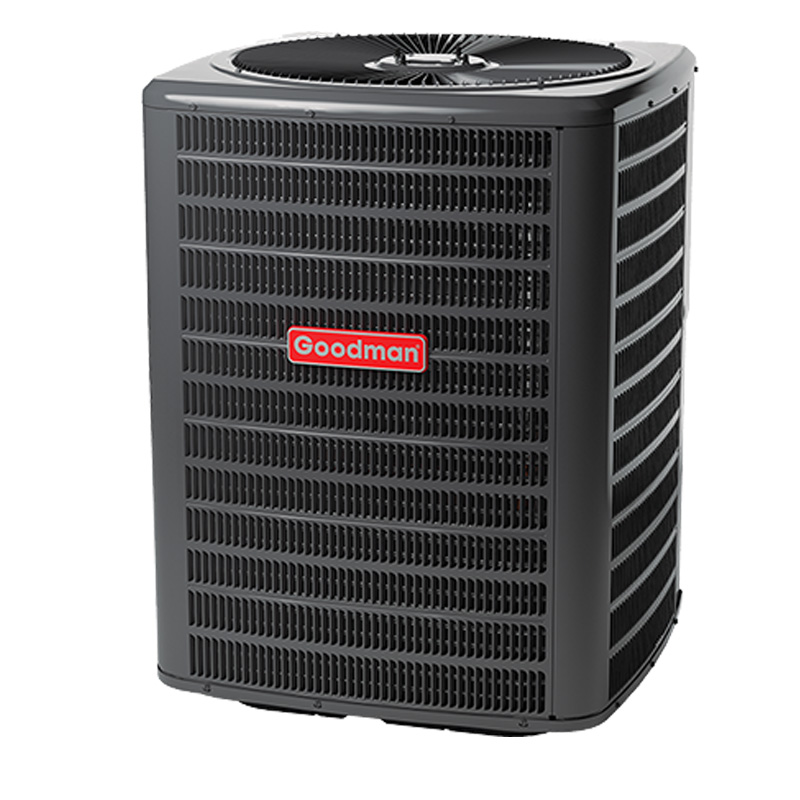
- 2-ton, 14.5 SEER2 R-32 condenser sized for small-to-mid homes up to roughly 900 to 1,200 sq ft depending on climate and insulation
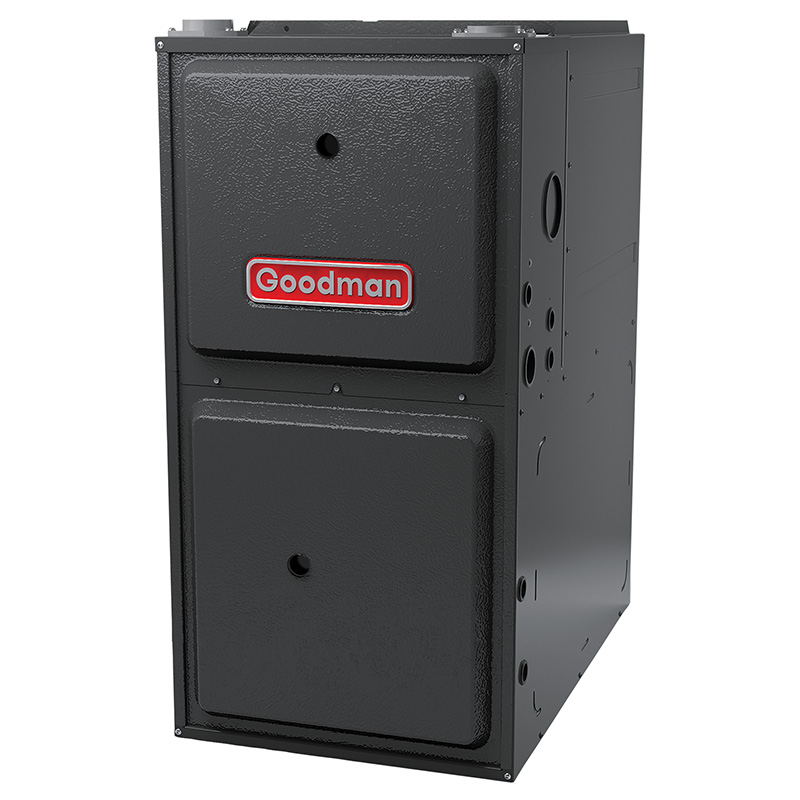
- 60,000 BTU two-stage gas furnace fires at a reduced rate on moderate heating days to reduce short-cycling and temperature swings
- Multi-speed ECM blower motor lowers fan electricity draw and ramps speed gradually for quieter operation versus a PSC motor
- 80% AFUE rating meets federal minimums but leaves 20% of combustion heat exhausted through the flue
- Horizontal-only orientation factory-configured for attic or crawlspace installations
- R-32 refrigerant charge carries a lower global-warming potential than R-410A, aligning with current EPA transition guidelines
About this system
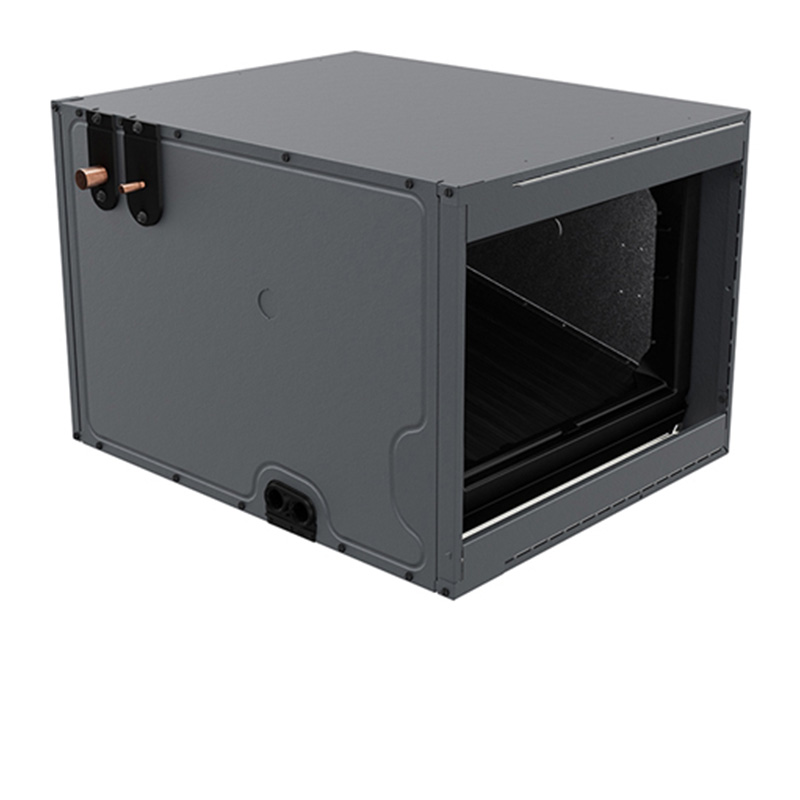
The Goodman GLXS4BA2410 pairs a 2-ton, 14.5 SEER2 R-32 condenser with a 60,000 BTU, 80% AFUE two-stage, multi-speed ECM gas furnace in a horizontal configuration, making it a purpose-built fit for attic or crawlspace installations where vertical clearance is limited. The R-32 refrigerant charge runs at lower global-warming potential than the R-410A it replaces, and the two-stage furnace operation means the system runs at a reduced firing rate on milder days, which cuts short-cycling and keeps temperature swings tighter than a single-stage unit would allow.
The ECM blower motor is a meaningful comfort upgrade over a standard PSC motor. It ramps speed gradually, reduces start-up noise, and draws considerably less electricity during fan-only operation. That said, 80% AFUE sits at the minimum efficiency tier for modern furnaces, so roughly 20 cents of every dollar in gas goes up the flue. Homeowners in cold climates who run the furnace heavily from October through March will notice that gap against a 95% or 96% AFUE alternative. For mild-to-moderate heating climates or retrofit situations where the existing vent configuration cannot handle a condensing furnace, the 80% furnace remains a practical, code-compliant choice.
At 14.5 SEER2, cooling efficiency clears the federal minimum for most U.S. regions but does not approach mid-efficiency or premium territory. The horizontal-only configuration limits where this system can be installed, so confirming attic or crawlspace airflow clearances and refrigerant line routing before purchase is essential. Buyers who can accommodate the configuration and who prioritize upfront cost over long-term operating efficiency will find the spec sheet reasonable for the price tier.
This system is a cost-conscious entry point for homeowners who need a horizontal-configured gas system and want two-stage comfort without paying premium-brand prices. The ECM motor and two-stage furnace are genuine upgrades over builder-grade equipment at this price tier, but 80% AFUE and 14.5 SEER2 are both floor-level efficiency numbers, and Goodman's documented repair history means budgeting for potential capacitor or coil service after the first few years is realistic planning, not pessimism.
Overall score is the average of the five ratings above.
What we like
- Priced 15 to 25 percent below comparable Carrier, Trane, and Lennox equipment, lowering the break-even point on replacement
- Two-stage furnace operation reduces short-cycling and keeps room temperatures more consistent than single-stage alternatives
- ECM blower motor cuts fan electricity consumption and operates more quietly than a standard PSC motor
- R-32 refrigerant is lower global-warming potential and widely available among certified technicians as the industry transitions from R-410A
- Horizontal factory configuration eliminates field-conversion steps for attic and crawlspace installs, reducing labor time
Trade-offs
- 80% AFUE is the lowest allowable efficiency tier, meaning operating costs will run measurably higher than a 95% or 96% AFUE condensing furnace over a heating season
- Dual-run capacitors are the most commonly reported failure point for Goodman condensers, typically surfacing within the first several years and costing 300 to 600 dollars to repair
- Compressor lifespan averages 10 to 14 years across Goodman owner reports, shorter than the 15 to 20 years more commonly cited for premium brands
- A minority of owners report refrigerant leaks within the first year, which, while often install-related, adds a layer of post-startup monitoring responsibility
What homeowners and pros say about Goodman
Homeowners who have gone through the Goodman experience tend to land in one of two camps. Those who had a careful, experienced installer and kept up with filter changes and annual tune-ups often report years of trouble-free operation and point to the lower purchase price as a clear win. Those who ran into problems more frequently mention capacitor failures showing up within the first few years, which is consistent with the brand’s documented track record, and a smaller but notable share describe evaporator coil leaks that required refrigerant work or coil replacement. Goodman’s Google dealer review average of around 3.8 out of 5 reflects that many buyers are satisfied, particularly with affordability, while the ConsumerAffairs score of roughly 2.5 out of 5 captures the frustration of owners who hit repair bills after roughly year 7 and felt the savings had been erased.
HVAC technicians generally describe Goodman as workable equipment whose longevity is heavily install-dependent. They point to dual-run capacitors as the single most common service call on Goodman condensers, a fix that is relatively low-cost but becomes annoying if it repeats. Compressor lifespan is the longer-term concern, with real-world reports averaging 10 to 14 years compared to 15 to 20 years for premium brands. For this horizontal system specifically, technicians caution that attic installs add heat stress to the outdoor unit’s wiring and refrigerant lines, making high-quality line-set insulation and secure mounting even more important than in a standard split installation. The R-32 refrigerant charge also requires confirming your service technician is certified for A2L refrigerants before the first scheduled maintenance visit.
Sources: ConsumerAffairs Goodman owner reviews, AHRI Directory of Certified Product Performance, U.S. DOE appliance and equipment efficiency standards, Goodman product specification sheets.
What it costs to run
At 14.5 SEER2, cooling this 2-ton system for a typical 1200-hour cooling season at the U.S. average electricity rate of $0.17/kWh works out to roughly $338 per year in cooling, about $27 less per year than a minimum-efficiency 13.4 SEER2 unit of the same size. Your real cost depends on your climate and local rate.
Method: (24,000 BTU/hr ÷ 14.5 SEER2) × 1200 hours ÷ 1000 × $0.17/kWh. Rate source: U.S. EIA average; cooling hours: moderate-climate estimate.
How it compares
| Brand | Comparable model | SEER2 | Stage | Price position |
|---|---|---|---|---|
| Goodman | GLXS4BA2410 (this system) | 14.5 | Two-stage | Value pick |
| Carrier | Performance 14 Series (24ACC4) | 14 to 15 | Single-stage | Typically 15 to 25 percent more than this Goodman system |
| Trane | XR14 Series | 14 to 15 | Single-stage | Typically 15 to 25 percent more than this Goodman system |
| Lennox | Merit 14 Series (ML14XC1) | 14 to 15 | Single-stage | Typically 15 to 25 percent more than this Goodman system |
Competitor rows are comparable single-stage units at similar efficiency; price is relative position, not a quote.
Questions about this system
Why is this system horizontal-only, and can I convert it to upflow or downflow later?
The GLXS4BA2410 furnace is factory-configured and tested in horizontal orientation for attic and crawlspace applications. Converting it to a different airflow direction in the field is not supported by Goodman for this model, and attempting a conversion would void the warranty. Confirm your installation space matches horizontal requirements before ordering.
Does the R-32 refrigerant charge require a specially certified technician?
Yes. R-32 is an A2L mildly flammable refrigerant, and not all HVAC technicians are currently equipped or certified to handle it. Before scheduling installation or future service, verify that your contractor has the training, tools, and certification specific to A2L refrigerants, as this is becoming a standard requirement as the industry transitions away from R-410A.
Goodman has mixed reviews online. How worried should I be about reliability?
Goodman scores roughly 2.5 out of 5 on ConsumerAffairs, a channel that skews heavily toward dissatisfied owners, and around 3.8 out of 5 across Google dealer reviews where affordability is the most common praise. The most documented failure points are dual-run capacitors, which are a relatively inexpensive fix in the 300 to 600 dollar range, and evaporator coil leaks. Compressors average 10 to 14 years, shorter than premium-brand benchmarks. Setting aside a small service budget and using an experienced local installer reduces risk significantly.
Is 14.5 SEER2 efficient enough to qualify for federal tax credits or utility rebates?
The federal Inflation Reduction Act tax credit for central air conditioners requires meeting specific efficiency thresholds that currently exceed 14.5 SEER2 for split systems in most regions, so this unit is unlikely to qualify on its own. Utility rebate eligibility varies by provider and state, so check your local utility's current program requirements directly before assuming any credit applies.
With an 80% AFUE furnace, how much more will I spend on gas versus a 96% AFUE unit?
On a simplified basis, for every 100 dollars in gas you burn, an 80% furnace delivers 80 dollars of heat and exhausts 20, while a 96% unit delivers 96 dollars and exhausts 4. In a moderate heating climate that costs roughly 800 to 1,200 dollars per season in gas, the efficiency gap translates to roughly 130 to 200 dollars per year in additional fuel cost, though actual savings depend on local gas prices, climate zone, and home insulation. Over 10 years the difference compounds meaningfully.
Specifications
| Cooling capacity | 2 Ton |
| Efficiency | 14.5 SEER2 |
| Furnace output | 60000 BTU |
| Furnace efficiency | 80% AFUE |
| Configuration | Horizontal |
| Refrigerant | R-32 |
| Model | GLXS4BA2410 |