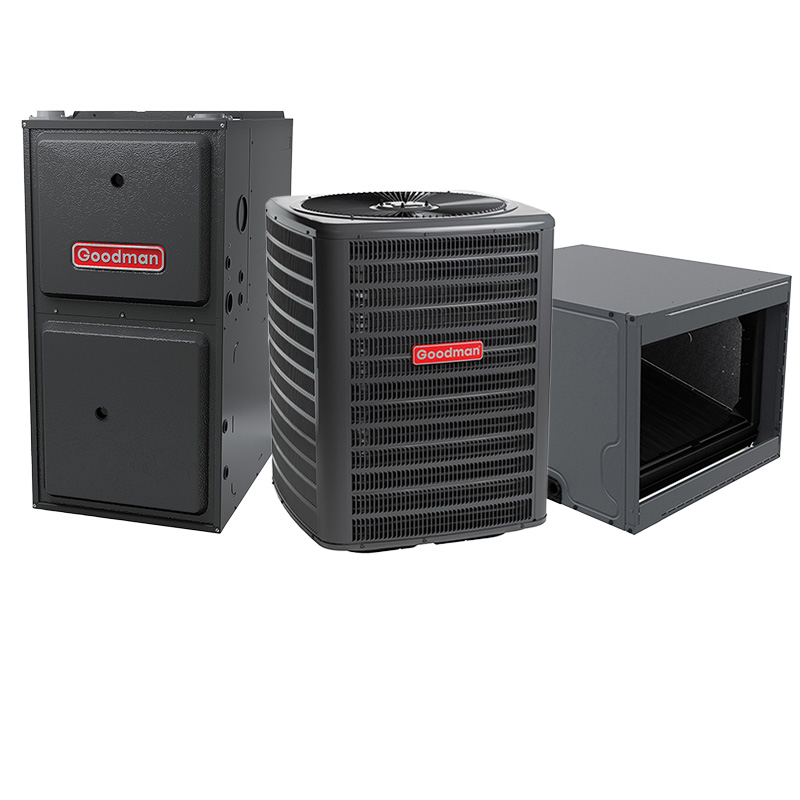
Goodman 2 Ton 14.5 SEER2 80000 BTU 80% AFUE Two Stage Multi-Speed ECM Gas Furnace System – Horizontal | R32
View on AC Direct see your lowest price →Check current price on AC Direct →
Key features
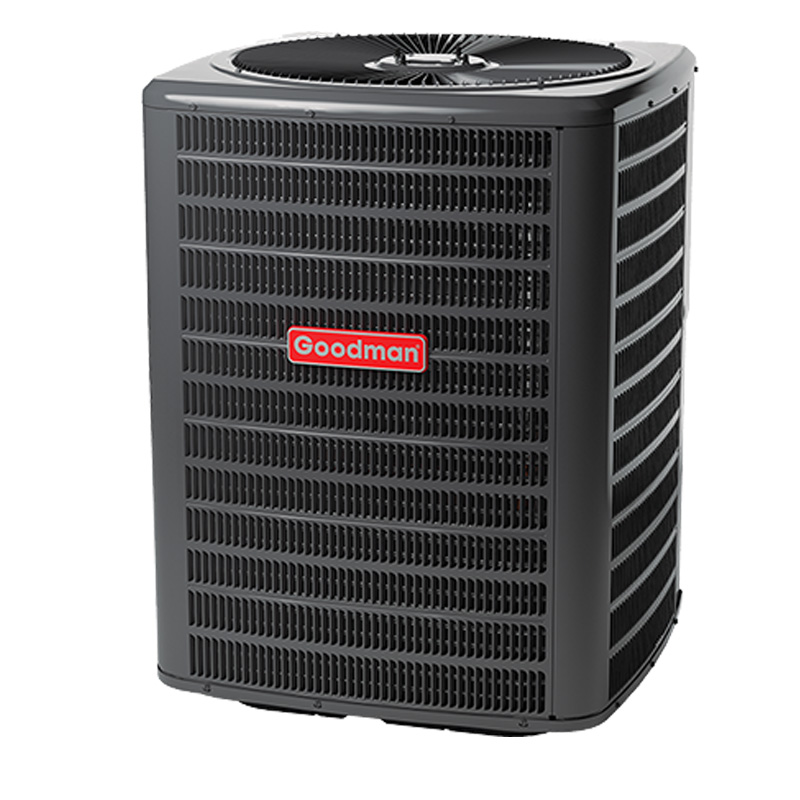
- 2-ton, 14.5 SEER2 R-32 condensing unit designed for horizontal system configurations
- Two-stage compressor reduces runtime noise and improves humidity removal on part-load days
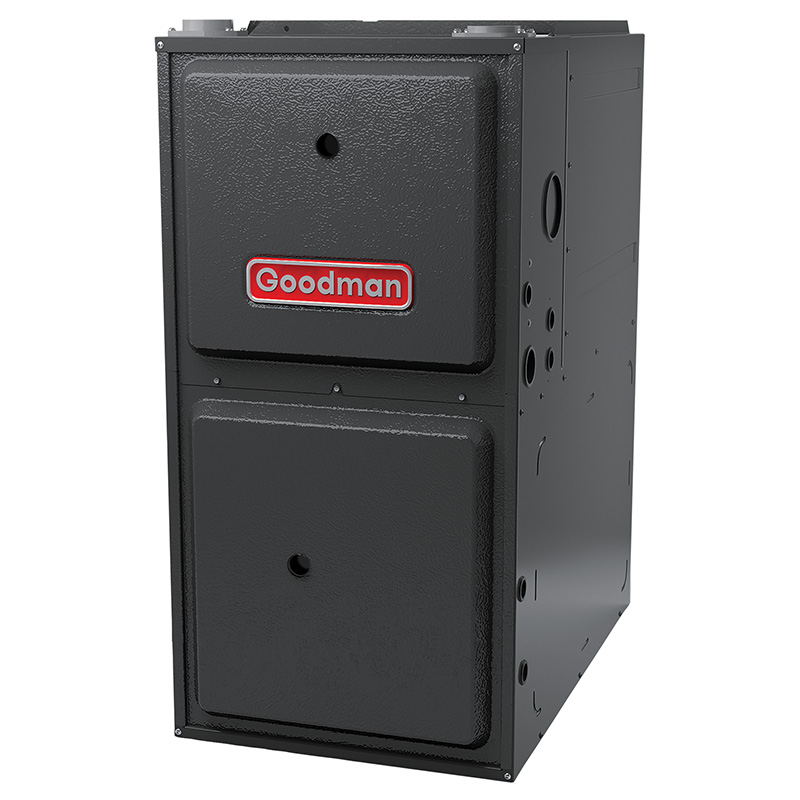
- 80,000 BTU two-stage gas furnace at 80% AFUE meets code minimums in most non-northern U.S. climates
- Multi-speed ECM blower motor lowers fan electricity use and improves airflow consistency
- R-32 refrigerant carries a lower global-warming potential than R-410A
- Factory-matched components simplify AHRI certification and warranty validation
About this system
The Goodman GLXS4BA2410 pairs a 2-ton, 14.5 SEER2 R-32 air conditioner with an 80,000 BTU two-stage, 80% AFUE gas furnace in a horizontal configuration, making it a practical choice for crawl-space installations, attic runs, or manufactured homes where upflow or downflow layouts simply will not fit. The two-stage compressor runs at a reduced capacity the majority of the time, which means quieter operation, more even temperatures, and better humidity control compared to a single-stage system, without the price jump of a full variable-speed unit.
At 14.5 SEER2 the cooling efficiency sits right at the current federal minimum for most U.S. climate zones, so you are buying compliance, not standout efficiency. The 80% AFUE furnace follows the same logic: it meets code in warmer and mixed climates but loses one-fifth of its fuel energy up the flue, which adds up in cold winters. R-32 refrigerant is a lower global-warming-potential alternative to R-410A and is increasingly common in new residential equipment. The multi-speed ECM blower motor improves air distribution and reduces electricity draw at the air handler compared to a standard PSC motor, which partially offsets the mid-tier efficiency ratings on both the cooling and heating sides.
This system suits budget-conscious buyers replacing an aging system in a single-story home or addition, installers working on new manufactured housing, or landlords who need a dependable workhorse without paying premium-brand prices. It is not the right call if you are in a heating-heavy climate where a 96% AFUE furnace pays back quickly, or if long-term reliability is your top priority over upfront savings.
The GLXS4BA2410 delivers a two-stage, ECM-equipped system at a price point most premium brands cannot touch, which is a real advantage for budget-limited buyers or replacement jobs. The trade-off is a brand track record that shows repair costs climbing after year seven and compressor longevity that tends to fall short of Trane, Carrier, and Lennox equipment. If the install is done well and the matched components are used, you get solid value; if it is not, Goodman's reputation suggests the consequences show up faster than they would on a premium brand.
Overall score is the average of the five ratings above.
What we like
- Priced roughly 15 to 25 percent below comparable Carrier, Trane, and Lennox systems
- Two-stage compressor improves comfort and humidity control over single-stage alternatives at this price tier
- ECM blower motor reduces fan electricity consumption compared to standard PSC motors
- R-32 refrigerant is a more environmentally responsible choice than R-410A
- Factory-matched system simplifies warranty claims and AHRI rating validation
Trade-offs
- 80% AFUE is the low end of modern furnace efficiency and will cost more to operate than 96% AFUE alternatives in cold climates
- 14.5 SEER2 is the federal minimum, offering no efficiency headroom above baseline
- Dual-run capacitors are the most frequently reported failure point, and coil leaks show up in a meaningful share of long-term owner reviews
- Compressor lifespan averages 10 to 14 years versus 15 to 20 years typical of premium brands, meaning replacement may come sooner
What homeowners and pros say about Goodman
Homeowners who leave reviews on ConsumerAffairs give Goodman equipment roughly 2.5 out of 5 stars, and that channel skews toward people with complaints rather than satisfied customers, so the number should be read with that context in mind. The recurring theme in those reviews is repair costs that start to climb after about year seven, with dual-run capacitor failures and evaporator coil leaks showing up as the most frequently named problems. Compressors on Goodman systems tend to average 10 to 14 years in service, which is a shorter window than the 15 to 20 years more commonly reported for premium-brand compressors. A minority of owners also report refrigerant leaks in the first year, which technicians generally attribute to installation errors or an improper refrigerant charge rather than a product defect.
HVAC dealers and installers tend to be more measured in their assessments. Google dealer reviews across Goodman-stocking locations average around 3.8 out of 5 stars across several hundred reviews per location, and affordability is the praise that comes up most often. Technicians consistently point out that install quality is the single biggest factor in how long a Goodman system holds up, and that a properly commissioned, factory-matched system can perform reliably for a decade or more. For this specific horizontal two-stage R-32 package, contractors note that the ECM blower and two-stage compressor are genuine comfort upgrades over baseline equipment, and that buyers who understand the brand’s value-tier positioning and invest in a good installation tend to come away satisfied with what they paid.
Sources: ConsumerAffairs Goodman owner reviews, AHRI Directory of Certified Product Performance, U.S. DOE appliance and equipment efficiency standards, Goodman product specification sheets.
What it costs to run
At 14.5 SEER2, cooling this 2-ton system for a typical 1200-hour cooling season at the U.S. average electricity rate of $0.17/kWh works out to roughly $338 per year in cooling, about $27 less per year than a minimum-efficiency 13.4 SEER2 unit of the same size. Your real cost depends on your climate and local rate.
Method: (24,000 BTU/hr ÷ 14.5 SEER2) × 1200 hours ÷ 1000 × $0.17/kWh. Rate source: U.S. EIA average; cooling hours: moderate-climate estimate.
How it compares
| Brand | Comparable model | SEER2 | Stage | Price position |
|---|---|---|---|---|
| Goodman | GLXS4BA2410 (this system) | 14.5 | two-stage | Value pick |
| Carrier | Comfort 14 (24ACC4) series with 80% AFUE FE4A air handler | 14.3 to 15 | single-stage | Typically 15 to 25 percent more than this Goodman system |
| Trane | XR14c series with S8X1 80% AFUE furnace | 14.3 to 15 | single-stage | Typically 15 to 25 percent more than this Goodman system |
| Lennox | Merit 14ACX series with ML180 80% AFUE furnace | 14.3 to 15 | single-stage | Typically 15 to 25 percent more than this Goodman system |
Competitor rows are comparable single-stage units at similar efficiency; price is relative position, not a quote.
Questions about this system
Why is this system configured as horizontal-only, and can it be installed in any other orientation?
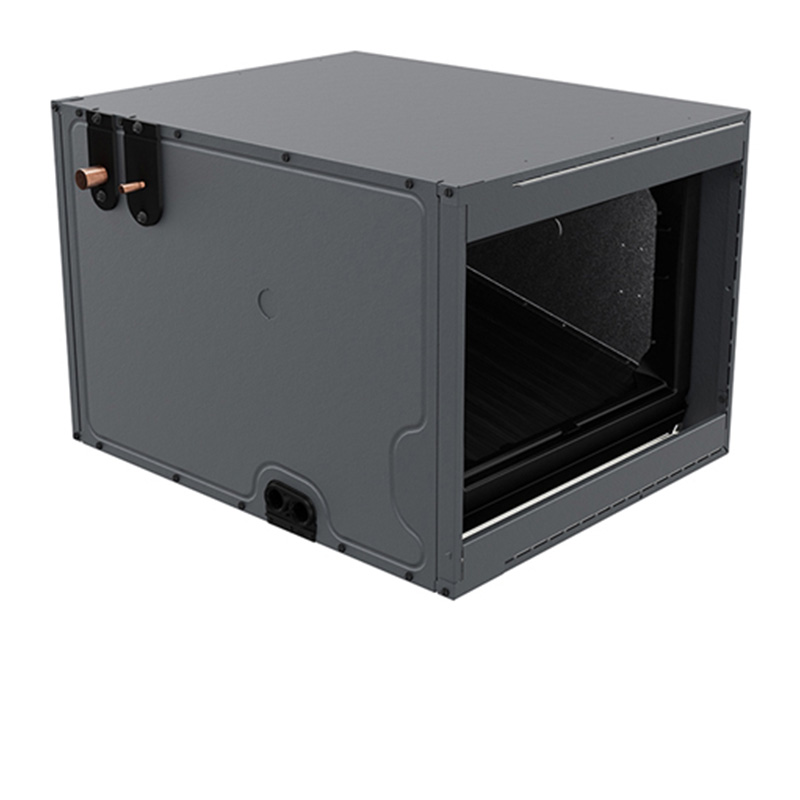
The GLXS4BA2410 air handler and coil cabinet are engineered specifically for horizontal airflow, which suits crawl-space ductwork, attic runs, and manufactured housing. Installing it in an upflow or downflow orientation is not supported and will void the warranty, so confirm your existing duct layout before purchasing.
Is 80% AFUE good enough, or should I spend more on a 96% AFUE furnace?
In warmer climates like the Southeast or Southwest where the furnace runs only a few months a year, 80% AFUE is usually fine and the payback period on a 96% unit can stretch past 10 years. In climates with long, cold winters, the 20% efficiency gap translates to hundreds of dollars annually in extra gas costs, and the higher-efficiency unit often pays back within five to seven years.
What does the two-stage compressor actually do for me day to day?
Most of the time the compressor runs at its lower stage, which means quieter outdoor unit noise, longer steady-run cycles that pull more moisture from the air, and more consistent room temperatures. It only ramps to full capacity on the hottest days. The improvement over a single-stage system is real and noticeable, especially in humid climates.
What are the most likely repair costs I should budget for over the life of this system?
Dual-run capacitors are the most commonly reported failure on Goodman equipment and typically cost between 300 and 600 dollars to diagnose and replace, including a service call. Evaporator coil leaks appear in a meaningful share of long-term owner reviews and can run 1,000 to 2,000 dollars or more depending on whether the coil is repaired or replaced. Budgeting for a service contract or setting aside a repair fund after year five is a reasonable precaution.
Does this system come with a warranty, and what do I need to do to keep it valid?
Goodman typically offers a 10-year parts warranty on registered systems when installed by a licensed contractor and using factory-matched components. Registration must be completed within a set window after installation, and using mismatched third-party components can reduce coverage. Verify current warranty terms directly with Goodman at the time of purchase, as coverage details can change.
Specifications
| Cooling capacity | 2 Ton |
| Efficiency | 14.5 SEER2 |
| Furnace output | 80000 BTU |
| Furnace efficiency | 80% AFUE |
| Configuration | Horizontal |
| Refrigerant | R-32 |
| Model | GLXS4BA2410 |