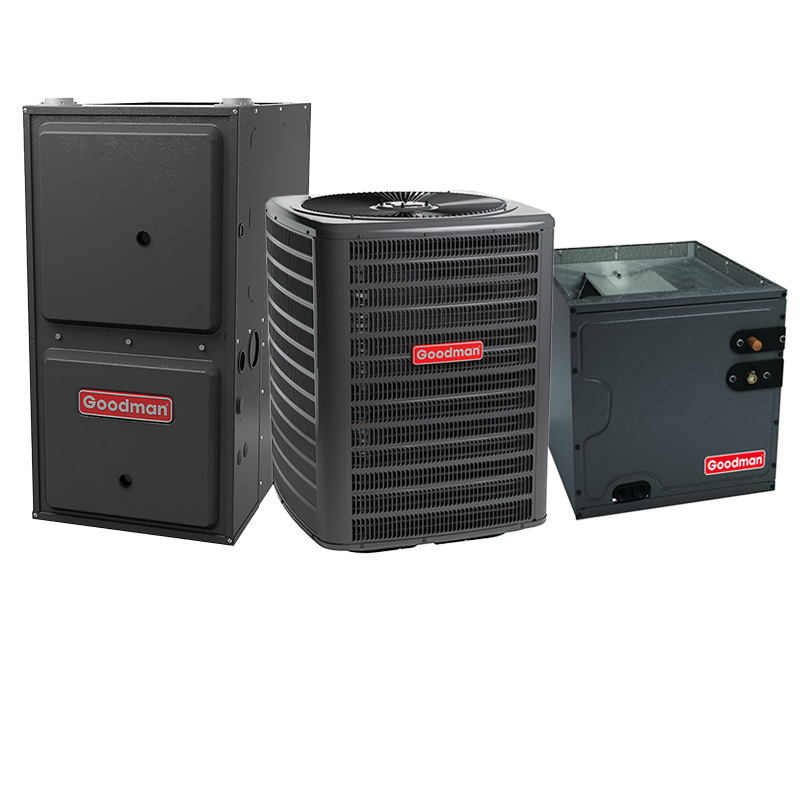
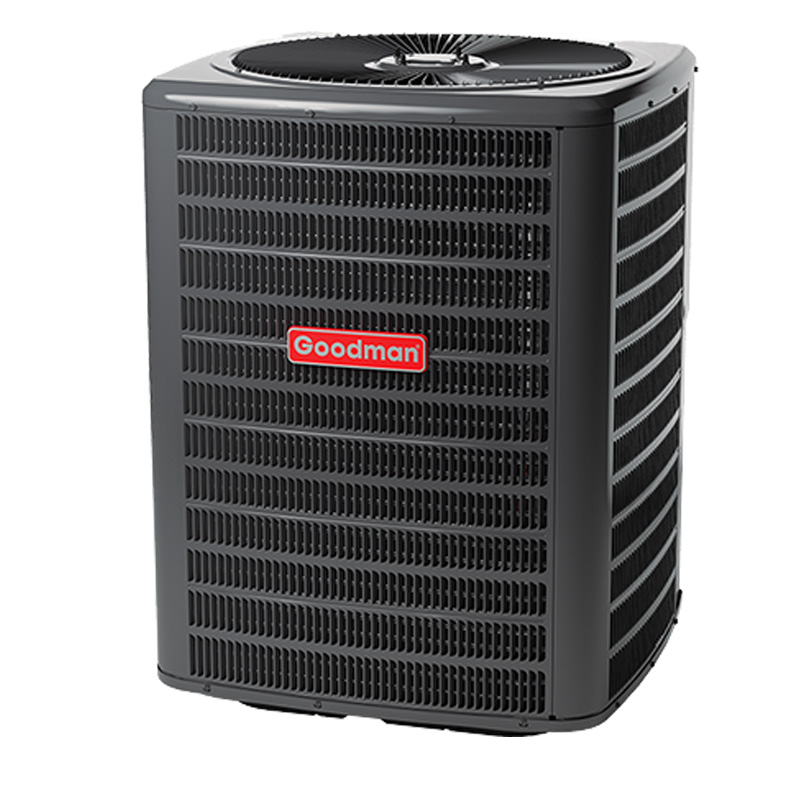
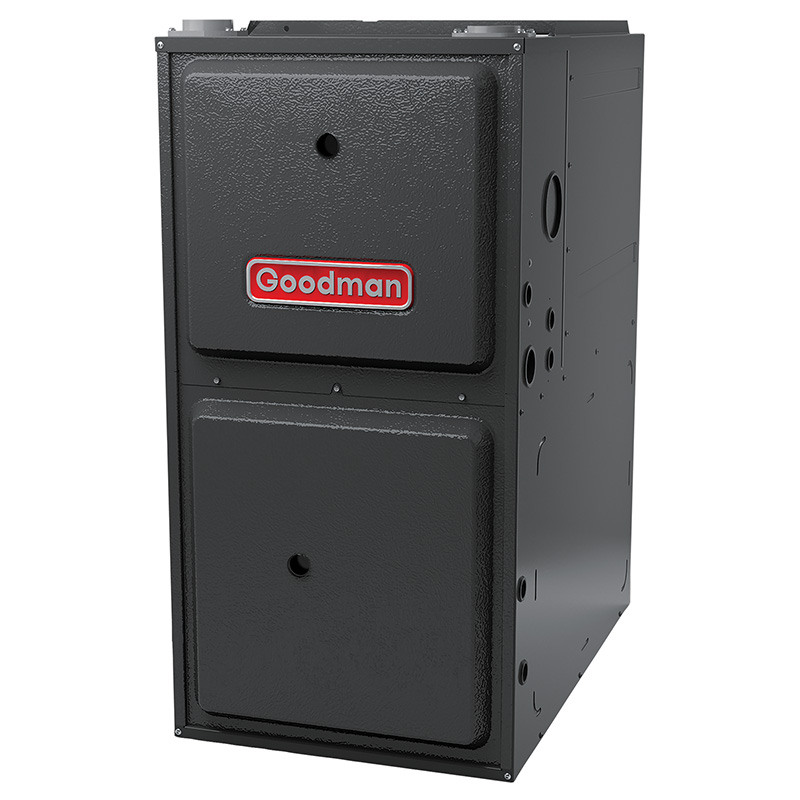
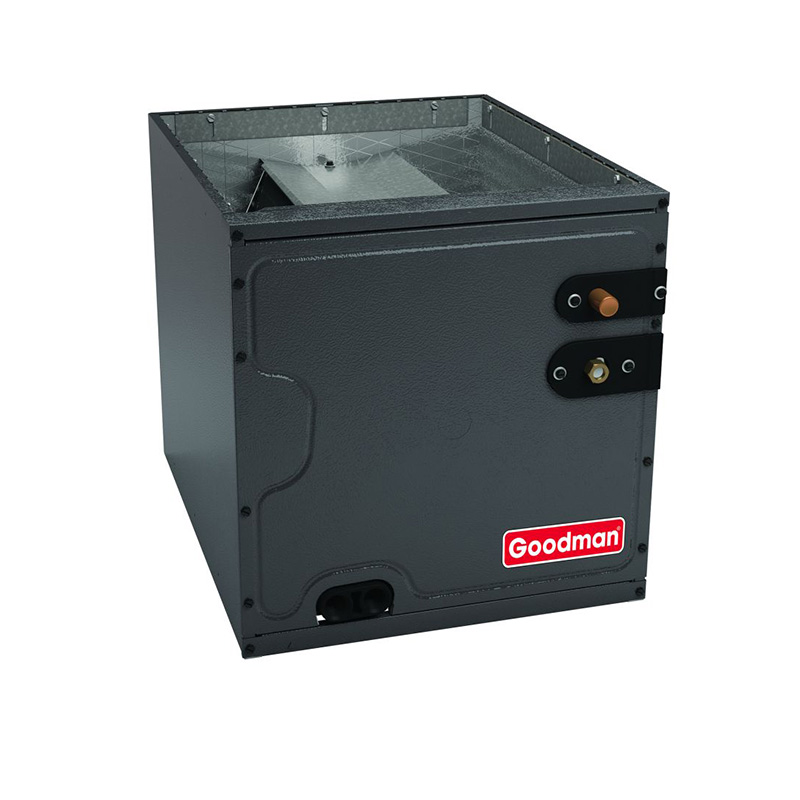
Goodman 2 Ton 14.5 SEER2 R32 AC System with 40,000 BTU 96% AFUE Gas Furnace – California & Colorado Ultra Low NOx, Upflow, Multi-Speed ECM
View on AC Direct see your lowest price →Check current price on AC Direct →
Key features
- 14.5 SEER2 cooling efficiency meets current federal minimums for most U.S. regions
- 96% AFUE upflow gas furnace with 40,000 BTU output for smaller homes
- Multi-speed ECM blower motor for quieter operation and better humidity management than PSC motors
- R-32 refrigerant with lower global warming potential than R-410A
- California and Colorado Ultra Low NOx certified (sub-20 ng/J)
- Upflow cabinet orientation suits basement, utility closet, and crawl-space installations
About this system
The Goodman 2-ton 14.5 SEER2 R-32 air conditioning and 96% AFUE gas furnace combination is a straightforward entry-level system sized for smaller homes, condos, or well-insulated spaces in the 700-to-1,000 square foot range depending on climate. The 14.5 SEER2 rating sits right at the current federal efficiency floor for most regions, meaning it clears the bar without clearing much above it. The 96% AFUE furnace is the stronger performer of the pair, converting 96 cents of every dollar of gas into usable heat, which is solidly high-efficiency territory and a meaningful upgrade over 80% AFUE units. The multi-speed ECM blower motor helps on comfort and humidity control compared to single-speed alternatives, and it reduces operating costs slightly over a standard PSC motor.
This specific configuration is built for California and Colorado Ultra Low NOx requirements, so it carries the sub-20 ng/J NOx certification those states mandate. If you are buying in either of those states, this matters a great deal; if you are outside them, you are simply getting a cleaner-burning furnace with no meaningful downside. The system uses R-32 refrigerant, which has a lower global warming potential than the R-410A it replaces and is becoming the regional and national standard as R-410A is phased down. R-32 operates at somewhat higher pressures, so technicians who have not yet worked with it will need to be up to speed on handling procedures. The upflow configuration means the furnace discharges conditioned air upward, which suits the most common basement or closet installations where ductwork runs through the ceiling or attic above.
This Goodman package delivers a code-compliant, high-efficiency furnace and entry-level AC in a single purchase at a price point that undercuts most major brands by 15 to 25 percent. The 96% AFUE furnace is a genuine strength, but the 14.5 SEER2 AC is the minimum passing grade on efficiency, and Goodman's documented history of capacitor failures, evaporator coil leaks, and compressor lifespans shorter than premium competitors means total cost of ownership over 15 years can close the gap with pricier options. For a budget-conscious buyer with a qualified installer and a service plan, it is a reasonable choice; for someone expecting set-it-and-forget-it longevity, the trade-offs deserve serious consideration.
Overall score is the average of the five ratings above.
What we like
- Purchase price is typically 15 to 25 percent below equivalent Carrier, Trane, and Lennox systems
- 96% AFUE furnace is a strong performer that meaningfully reduces heating bills versus 80% AFUE units
- Multi-speed ECM motor improves comfort and is more energy-efficient than standard single-speed blowers
- Ultra Low NOx certification satisfies California and Colorado air quality requirements without an extra upgrade
- R-32 refrigerant is positioned well for long-term regulatory compliance as R-410A is phased down
Trade-offs
- Compressor lifespan averages 10 to 14 years versus 15 to 20 for premium brands, which can offset upfront savings
- Evaporator coil leaks appear in a meaningful share of owner reports and can be a costly repair
- Dual-run capacitor failures are the most commonly documented issue, typically appearing after year 7
- A minority of owners report refrigerant leaks in the first year, usually traced to install quality rather than the unit itself
What homeowners and pros say about Goodman
Homeowners who post about their Goodman systems tend to split along a familiar line. Those who had a careful installation by an experienced contractor and registered the warranty promptly generally report years of uneventful service and point to the lower purchase price as a win. The affordability praise that anchors Goodman’s Google dealer reviews, which average around 3.8 out of 5 across multiple locations, reflects a real buyer experience: the systems can and do run without drama when they are set up correctly. The trouble shows up later and unevenly. On ConsumerAffairs, where the score sits at roughly 2.5 out of 5, the recurring thread is not catastrophic early failure but rather a pattern of repair costs rising after about year 7, which can erode the upfront savings that made the purchase appealing in the first place.
HVAC technicians who work on Goodman equipment regularly tend to have a pragmatic view. The dual-run capacitor is the part they see fail most often, and most describe it as a quick, low-cost repair in the 300 to 600 dollar range rather than a system-ending event. Evaporator coil leaks are a more serious documented concern, appearing in a meaningful share of owner accounts and carrying a higher repair cost. Compressor longevity is the bigger strategic question: Goodman compressors tend to average 10 to 14 years, compared to 15 to 20 years seen more commonly on Trane, Carrier, and Lennox units at comparable efficiency. For a rental property or a shorter ownership horizon, that gap matters less. For a primary residence with a long ownership timeline, technicians often suggest that the gap in expected compressor life is worth weighing against the purchase price difference before signing off on the job.
Sources: ConsumerAffairs Goodman owner reviews, AHRI Directory of Certified Product Performance, U.S. DOE appliance and equipment efficiency standards, Goodman product specification sheets.
What it costs to run
At 14.5 SEER2, cooling this 2-ton system for a typical 1200-hour cooling season at the U.S. average electricity rate of $0.17/kWh works out to roughly $338 per year in cooling, about $27 less per year than a minimum-efficiency 13.4 SEER2 unit of the same size. Your real cost depends on your climate and local rate.
Method: (24,000 BTU/hr ÷ 14.5 SEER2) × 1200 hours ÷ 1000 × $0.17/kWh. Rate source: U.S. EIA average; cooling hours: moderate-climate estimate.
How it compares
| Brand | Comparable model | SEER2 | Stage | Price position |
|---|---|---|---|---|
| Goodman | 2-Ton 14.5 SEER2 R-32 AC + 96% AFUE ECM Furnace (this system) | 14.5 | Single-stage | Value pick |
| Carrier | Comfort 14 Series (CA14NA / 58STA furnace pairing) | 14.3-15.0 | Single-stage | Typically 15 to 25 percent more than this Goodman package |
| Trane | XR14 Series (4TTR4 / S9X1 furnace pairing) | 14.3-15.0 | Single-stage | Typically 15 to 25 percent more than this Goodman package |
| Lennox | Merit 14 Series (ML14XC1 / ML196E furnace pairing) | 14.3-15.0 | Single-stage | Typically 15 to 25 percent more than this Goodman package |
Competitor rows are comparable single-stage units at similar efficiency; price is relative position, not a quote.
Questions about this system
Does this system actually meet California and Colorado air quality rules, or do I need a separate ultra low NOx kit?
It meets them as configured. The furnace is factory-certified to the sub-20 ng/J NOx standard that California's SCAQMD and Colorado require, so no additional modification or kit is needed. Just confirm with your installer that the unit ships with the current UL listing documentation for your jurisdiction.
My technician has never worked with R-32. Is that a real problem?
It is worth discussing with your installer before the job. R-32 operates at higher pressures than R-410A and requires specific handling precautions because it is mildly flammable, classified A2L. Technicians need the right recovery equipment and should be familiar with the updated safety procedures. Most experienced HVAC professionals are getting up to speed quickly as the transition accelerates, but verifying your installer's familiarity is a reasonable step.
The 14.5 SEER2 seems low. Will I be leaving money on the table on my electricity bill?
For a 2-ton unit in a mild climate or a well-insulated smaller home, the difference between 14.5 SEER2 and 16 or 17 SEER2 is real but modest, often in the range of 50 to 150 dollars per cooling season depending on your utility rates and run hours. If you are in a hot climate with long cooling seasons, the payback on a higher-efficiency unit can be worth calculating before committing.
What does the warranty actually cover, and are there registration requirements?
Goodman typically offers a 10-year parts limited warranty when the system is registered within a specified window after installation, dropping to a shorter term if registration is missed. The compressor often carries its own coverage term within that structure. Read the specific warranty documents for this model carefully, register promptly after installation, and keep your installer's documentation because proof of professional installation is usually required for warranty claims.
Goodman's ConsumerAffairs score is 2.5 out of 5. Should that scare me off?
ConsumerAffairs is a complaint-skewed channel where dissatisfied owners are far more likely to post than satisfied ones, so the 2.5 score overstates failure rates relative to the installed base. The more balanced Google dealer reviews average around 3.8 out of 5, with affordability as the most consistent praise. The score does, however, reflect a real pattern: repair costs climbing after roughly year 7, documented capacitor failures, and some coil leak complaints. It is not a reason to automatically pass, but it is a reason to budget for a service contract and keep a repair fund.
Specifications
| Cooling capacity | 2 Ton |
| Efficiency | 14.5 SEER2 |
| Furnace output | 40,000 BTU |
| Furnace efficiency | 96% AFUE |
| Configuration | Upflow |
| Refrigerant | R-32 |