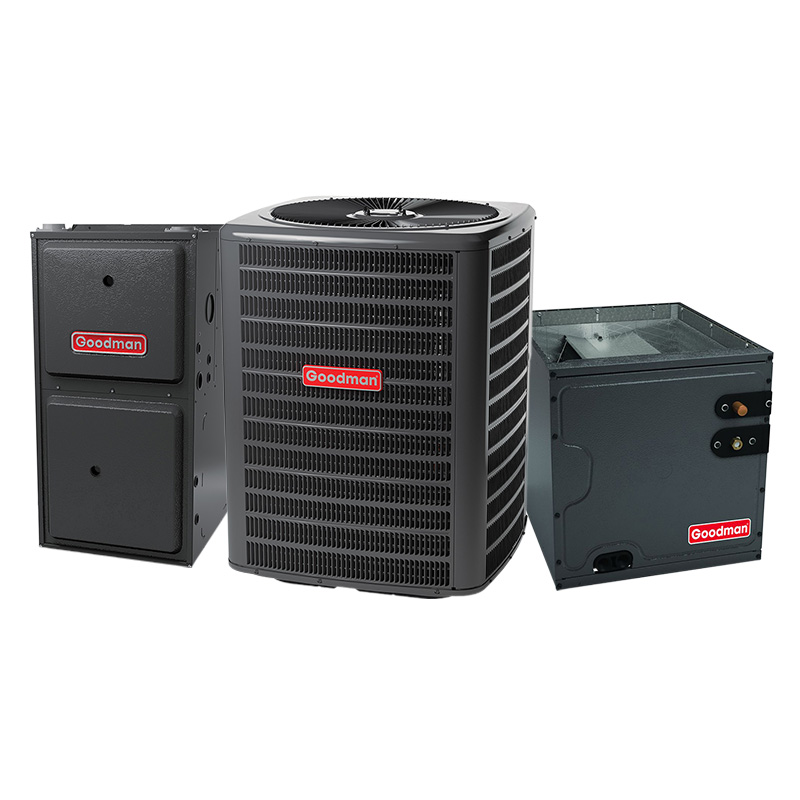
Goodman 2 Ton 14.5 SEER2 AC & Gas Furnace System – Multi-Speed, 40000 BTU Gas Furnace, 92% AFUE, Upflow, R32
View on AC Direct see your lowest price →Check current price on AC Direct →
Key features
- 2-ton cooling capacity with 14.5 SEER2 efficiency rating
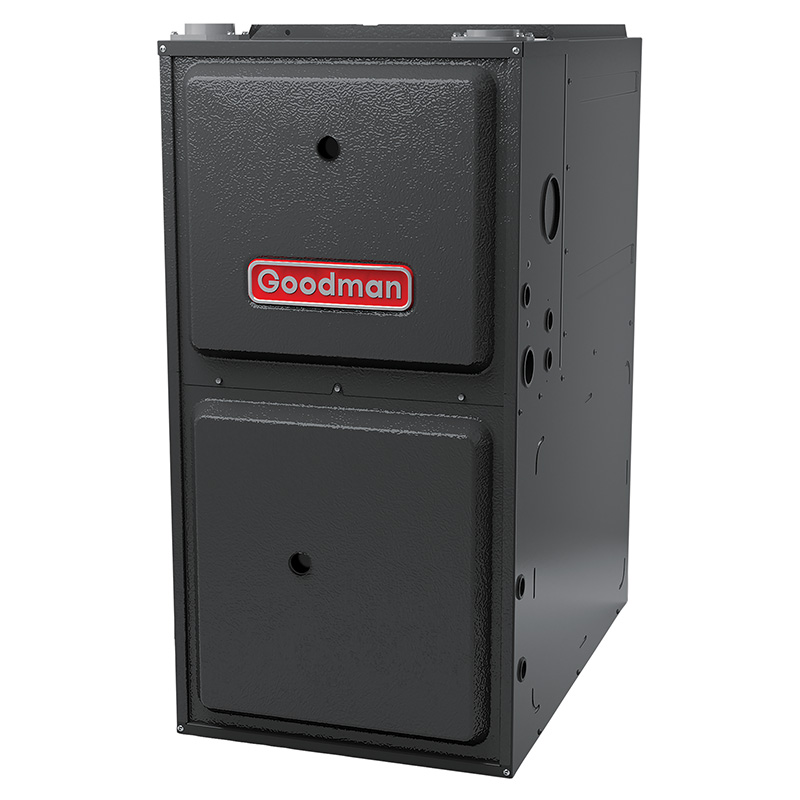
- 40,000 BTU upflow gas furnace at 92% AFUE
- R-32 refrigerant with lower global warming potential than R-410A
- Multi-speed blower motor for improved airflow distribution
- Single-stage cooling and heating operation
- Factory-matched system designed for simplified commissioning
About this system
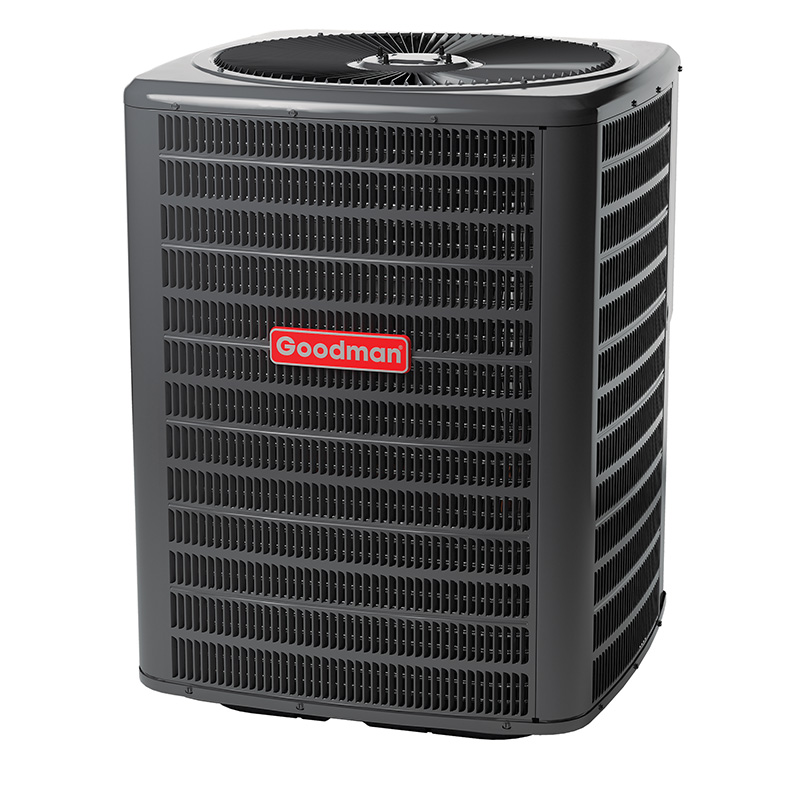
The Goodman GLXS5BA2410D pairs a 2-ton, 14.5 SEER2 single-stage central air conditioner with a 40,000 BTU upflow gas furnace rated at 92% AFUE. That efficiency tier sits just above the current federal minimum for most U.S. climate zones, meaning you get meaningfully lower heating bills compared with an 80% AFUE furnace without paying for a high-end two-stage or modulating unit. The R-32 refrigerant charge is a notable spec: R-32 has a lower global warming potential than the R-410A it replaces in newer systems, and its pressure characteristics are slightly different, so any servicing technician should confirm familiarity with the refrigerant before the job starts.
This configuration suits smaller homes and conditioned spaces in the 700 to 1,100 square foot range, depending on insulation and climate zone. The upflow furnace orientation means warm air rises through ductwork from a basement or ground-level mechanical room, which is the most common residential setup in the northern and central U.S. The multi-speed blower motor gives the system more flexibility in balancing airflow than a fixed-speed unit, though it does not deliver the humidity control or quiet operation of a true variable-speed system. Buyers who want the lowest entry price on a code-compliant, R-32-ready combo system will find this package worth a close look, provided they budget for professional installation and ongoing maintenance.
The Goodman GLXS5BA2410D delivers a solid entry-level combo system at a price point 15 to 25 percent below comparable Carrier, Trane, and Lennox equipment. The 92% AFUE furnace and 14.5 SEER2 rating clear current efficiency minimums comfortably, but single-stage operation and Goodman's documented reliability history mean buyers should treat this as a budget-conscious, install-dependent purchase rather than a set-and-forget investment.
Overall score is the average of the five ratings above.
What we like
- Priced 15 to 25 percent below comparable premium-brand systems
- 92% AFUE furnace delivers real heating-cost savings over 80% AFUE units
- R-32 refrigerant is future-ready and has lower environmental impact than R-410A
- Multi-speed blower improves comfort and airflow balance over fixed-speed alternatives
- Factory-matched pairing simplifies system commissioning and warranty alignment
Trade-offs
- Single-stage operation limits humidity control and comfort consistency compared with two-stage or variable systems
- Compressor lifespan averages 10 to 14 years versus 15 to 20 years for premium brands
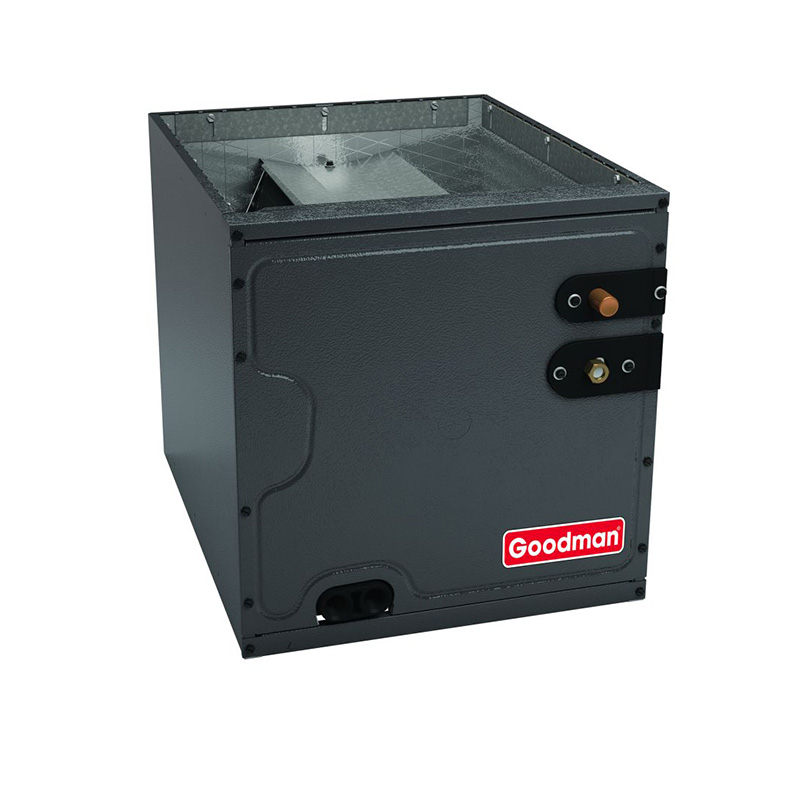
- Dual-run capacitors are the most commonly reported failure point, and evaporator coil leaks appear in a notable share of owner reviews
- Long-term performance depends heavily on installation quality, and a minority of owners report refrigerant leaks within the first year, typically traced to the install or initial charge
What homeowners and pros say about Goodman
Homeowners who leave reviews on ConsumerAffairs rate Goodman around 2.5 out of 5, and it is worth understanding what that number reflects: that platform draws heavily from owners who sought out a place to report problems, and the recurring theme is repair costs that start climbing after roughly year seven. Google dealer reviews, which include a broader range of experiences including satisfied customers, average around 3.8 out of 5 across several hundred reviews per location, where affordability consistently draws the most praise. The gap between those two scores is real and informative: Goodman owners who get solid installs and keep up with maintenance often report years of acceptable service; those who do not tend to regret the purchase by the time the unit is a decade old.
HVAC technicians who work on Goodman equipment frequently point to dual-run capacitor failures as the most predictable service call on these systems, a repair that is generally inexpensive and quick but can feel frustrating on a relatively new unit. Evaporator coil leaks show up in enough owner accounts to be worth noting, and compressor lifespan running 10 to 14 years on average versus the 15 to 20 years associated with premium brands is a concrete long-term cost consideration. A small but documented group of owners on this product line report refrigerant leaks within the first year, which technicians and Goodman alike typically attribute to installation or initial charge issues rather than a factory defect. The practical takeaway for this 2-ton R-32 system is that the contractor you choose matters as much as the equipment itself, and pairing it with a maintenance plan is not optional if you want to reach the upper end of its projected service life.
Sources: ConsumerAffairs Goodman owner reviews, AHRI Directory of Certified Product Performance, U.S. DOE appliance and equipment efficiency standards, Goodman product specification sheets.
What it costs to run
At 14.5 SEER2, cooling this 2-ton system for a typical 1200-hour cooling season at the U.S. average electricity rate of $0.17/kWh works out to roughly $338 per year in cooling, about $27 less per year than a minimum-efficiency 13.4 SEER2 unit of the same size. Your real cost depends on your climate and local rate.
Method: (24,000 BTU/hr ÷ 14.5 SEER2) × 1200 hours ÷ 1000 × $0.17/kWh. Rate source: U.S. EIA average; cooling hours: moderate-climate estimate.
How it compares
| Brand | Comparable model | SEER2 | Stage | Price position |
|---|---|---|---|---|
| Goodman | GLXS5BA2410D | 14.5 | Single-stage | Value pick |
| Carrier | Comfort 14 (24ACC4) with 58MCA furnace | 14.3 to 14.5 | Single-stage | Typically 15 to 25 percent more than the Goodman |
| Trane | XR14c with S9X1 furnace | 14.3 to 15.0 | Single-stage | Typically 15 to 25 percent more than the Goodman |
| Lennox | Merit ML14XC1 with ML193 furnace | 14.3 to 15.0 | Single-stage | Typically 15 to 25 percent more than the Goodman |
Competitor rows are comparable single-stage units at similar efficiency; price is relative position, not a quote.
Questions about this system
Is R-32 refrigerant safe and easy to service in my area?
R-32 is mildly flammable (A2L classification) and requires technicians with specific handling training and compatible recovery equipment. It is becoming more common as manufacturers phase out R-410A, but you should confirm your local HVAC service companies are equipped for it before purchasing, especially in rural areas where technician availability can be limited.
What maintenance issues should I plan for with this Goodman system?
Dual-run capacitors are the most frequently reported failure on Goodman AC units and are typically a straightforward repair in the $300 to $600 range. Evaporator coil leaks are also documented in a meaningful share of owner experiences, so annual refrigerant pressure checks during a tune-up are worthwhile. Keeping the outdoor unit clear, changing filters regularly, and scheduling annual maintenance are the best ways to extend component life.
Will a 2-ton, 40,000 BTU system be enough for my home?
A 2-ton air conditioner is generally appropriate for roughly 700 to 1,100 square feet, but the right size depends on your climate zone, insulation, window area, and ceiling height. You should have a licensed HVAC contractor perform a Manual J load calculation before ordering, because an oversized or undersized system will hurt both comfort and equipment longevity.
How does Goodman's warranty on this system work?
Goodman typically offers a 10-year parts limited warranty when the system is registered within a set window after installation, and a lifetime heat exchanger limited warranty on the furnace. If registration is missed, the warranty period is shorter. Labor is not covered, so a repair inside the warranty period still carries a service call and labor cost from your contractor.
Is single-stage operation a real drawback, or is it fine for most homes?
Single-stage means the system runs at full capacity or not at all, which works adequately in many climates but can lead to short cycling on mild days and less effective humidity removal compared with two-stage or variable-speed equipment. For hot, humid climates or homeowners sensitive to indoor humidity levels, stepping up to a two-stage system is worth considering even at the higher price.
Specifications
| Cooling capacity | 2 Ton |
| Efficiency | 14.5 SEER2 |
| Furnace output | 40000 BTU |
| Furnace efficiency | 92% AFUE |
| Configuration | Upflow |
| Refrigerant | R-32 |
| Model | GLXS5BA2410D |