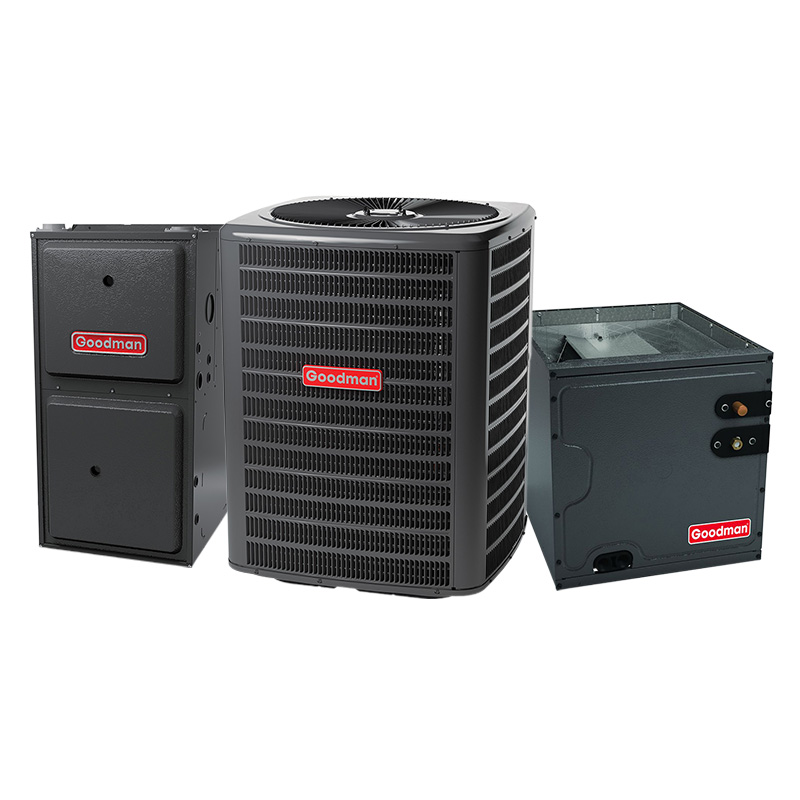
Goodman 2 Ton 14.5 SEER2 AC & Gas Furnace System – Multi-Speed, 80000 BTU Gas Furnace, 92% AFUE, Upflow, R32
View on AC Direct see your lowest price →Check current price on AC Direct →
Key features
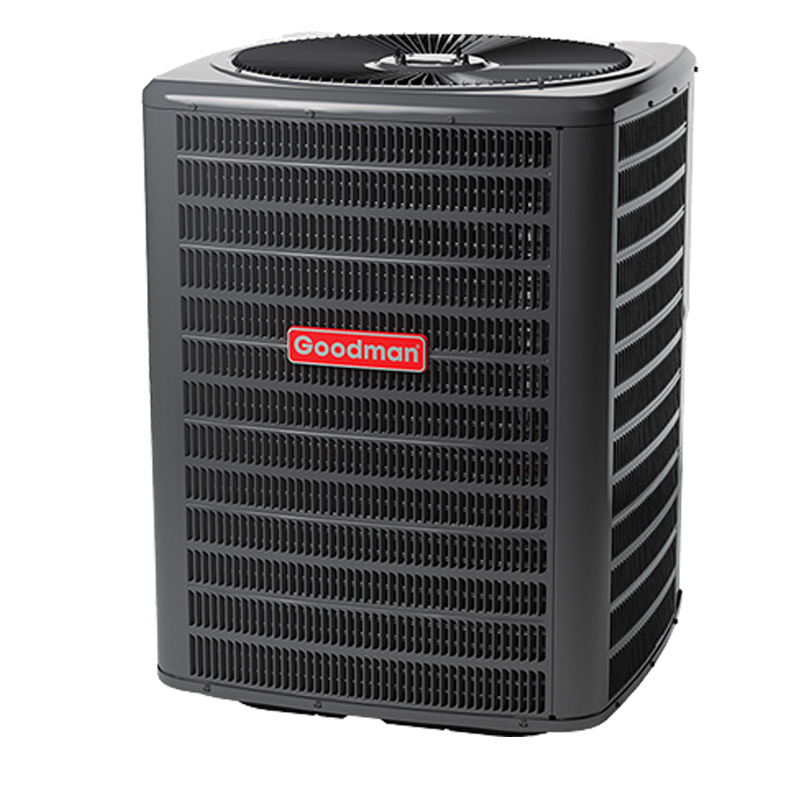
- 2-ton single-stage AC rated at 14.5 SEER2 for baseline energy compliance
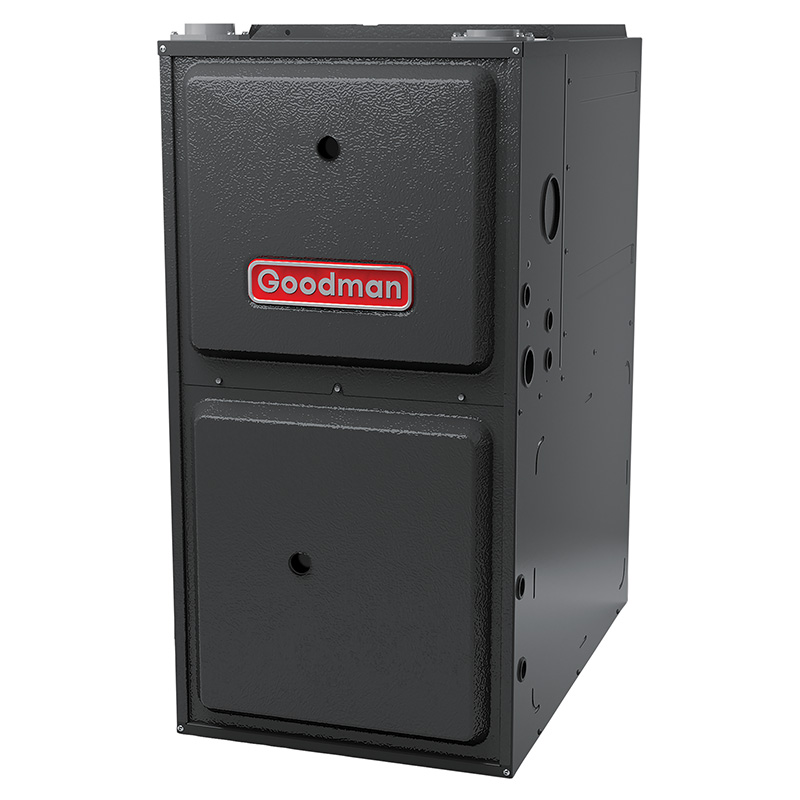
- 80,000 BTU upflow gas furnace with 92% AFUE efficiency rating
- Multi-speed blower motor for more consistent airflow than fixed-speed units
- R-32 refrigerant, a lower global-warming-potential alternative to R-410A
- Upflow configuration designed for basement or closet installations with overhead ductwork
- Goodman 10-year parts limited warranty when registered within 60 days of installation
About this system
The Goodman GLXS4BA2410 pairs a 2-ton, 14.5 SEER2 single-stage air conditioner with an 80,000 BTU upflow gas furnace rated at 92% AFUE. That combination suits a modest-sized home, typically 900 to 1,400 square feet depending on climate and insulation, where heating and cooling loads are moderate and budget matters more than top-tier efficiency. The upflow configuration means conditioned air exits through the top of the furnace cabinet and feeds a duct system that runs above the unit, the standard setup for a basement or ground-level closet installation.
The 92% AFUE rating places this furnace in the mid-efficiency tier: 92 cents of every fuel dollar becomes heat, which comfortably clears the 80% AFUE floor of older equipment without reaching the 96%+ AFUE of condensing furnaces that require a secondary PVC flue. That can simplify installation in homes where adding a second PVC drain line is impractical. R-32 refrigerant carries a lower global-warming potential than R-410A, which is being phased down under current EPA regulations, so this system is positioned ahead of that transition. The multi-speed furnace blower helps maintain steadier airflow across different operating conditions, though cooling and heating capacity itself is single-stage, meaning the system runs at full output or not at all.
This system fits homeowners who want a code-compliant, reasonably efficient replacement without paying the premium of a Carrier, Trane, or Lennox equivalent. It is not aimed at buyers prioritizing the quietest operation, the longest compressor lifespan, or the lowest lifetime repair costs. Those who keep up with annual maintenance, specifically capacitor checks and coil cleaning, tend to get the most out of Goodman equipment at this price point.
The GLXS4BA2410 is a workable, budget-friendly split system that delivers mid-tier efficiency at a price notably below comparable Carrier, Trane, and Lennox units. It performs reliably in the early years when installed correctly, but documented failure rates on capacitors and evaporator coils, along with a compressor lifespan that trails premium brands, mean owners should budget for repairs after year seven. It is a reasonable choice for cost-conscious buyers who accept those trade-offs and plan to stay on top of routine maintenance.
Overall score is the average of the five ratings above.
What we like
- Purchase price runs roughly 15 to 25 percent below comparable Carrier, Trane, and Lennox systems
- 92% AFUE furnace meaningfully cuts heating fuel costs versus 80% AFUE equipment
- R-32 refrigerant complies with current and near-term EPA refrigerant transition requirements
- Multi-speed blower provides more even air distribution than single-speed alternatives
- 10-year registered parts warranty is competitive for a value-tier brand
Trade-offs
- Dual-run capacitors are the most commonly reported failure point, typically around years 5 to 9, adding 300 to 600 dollars per repair event
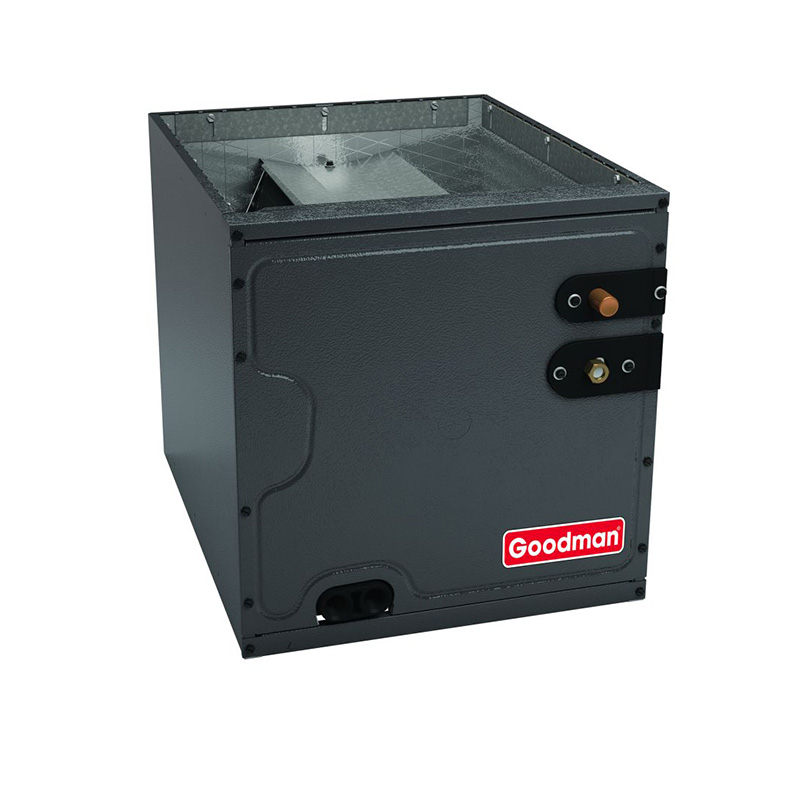
- Evaporator coil leaks appear in a meaningful share of owner reviews and can be a significant repair expense
- Compressor longevity averages 10 to 14 years, noticeably shorter than the 15 to 20 years typical of premium-brand compressors
- Single-stage operation means the system runs at full capacity or off, which can cause temperature swings and is noisier than modulating alternatives
What homeowners and pros say about Goodman
Homeowners who have lived with Goodman equipment for several years tend to have split opinions that track closely with when the system was installed and who did the work. On ConsumerAffairs, Goodman scores around 2.5 out of 5, a platform where frustrated owners are far more likely to post than satisfied ones, and the pattern in those complaints is consistent: the first five to seven years are largely uneventful, and then repair costs begin climbing. Google dealer reviews tell a somewhat different story, averaging around 3.8 out of 5 across hundreds of location-level reviews, where the most common note is straightforward: the price was right. That split in scores is not contradictory. It reflects a system that, for a segment of owners, holds up fine with regular service, and for another segment, becomes a line item in the household budget as it ages.
Among HVAC technicians, Goodman’s reputation is mixed but not dismissive. Pros who work on a high volume of these units point to dual-run capacitors as the most predictable maintenance item, usually a 300 to 600 dollar fix when caught before it takes the compressor with it. Evaporator coil leaks come up repeatedly in owner accounts and are a more expensive repair. Compressor lifespan is the longer-term concern: averaging 10 to 14 years rather than the 15 to 20 years technicians associate with premium brands, which changes the math on total ownership cost for buyers planning to stay in a home for a long time. Technicians also emphasize that a clean Goodman install, properly charged and sized, behaves very differently from one that was rushed or incorrectly commissioned, which is why installation quality is not a minor footnote for this brand.
Sources: ConsumerAffairs Goodman owner reviews, AHRI Directory of Certified Product Performance, U.S. DOE appliance and equipment efficiency standards, Goodman product specification sheets.
What it costs to run
At 14.5 SEER2, cooling this 2-ton system for a typical 1200-hour cooling season at the U.S. average electricity rate of $0.17/kWh works out to roughly $338 per year in cooling, about $27 less per year than a minimum-efficiency 13.4 SEER2 unit of the same size. Your real cost depends on your climate and local rate.
Method: (24,000 BTU/hr ÷ 14.5 SEER2) × 1200 hours ÷ 1000 × $0.17/kWh. Rate source: U.S. EIA average; cooling hours: moderate-climate estimate.
How it compares
| Brand | Comparable model | SEER2 | Stage | Price position |
|---|---|---|---|---|
| Goodman | GLXS4BA2410 | 14.5 | Single-stage | Value pick |
| Carrier | Comfort Series (24ACC6) | 14.3 to 15.2 | Single-stage | Typically 15 to 25 percent more than Goodman |
| Trane | XR14c | 14.3 to 15.0 | Single-stage | Typically 15 to 25 percent more than Goodman |
| Lennox | Merit Series (13ACX / ML14XC1) | 14.3 to 15.0 | Single-stage | Typically 15 to 25 percent more than Goodman |
Competitor rows are comparable single-stage units at similar efficiency; price is relative position, not a quote.
Questions about this system
Will this system work in my home if I currently have R-410A equipment?
Not as a direct drop-in. R-32 and R-410A are different refrigerants and are not interchangeable. The line set, coil, and other refrigerant-side components must be compatible with R-32, and your installing technician will need to verify that before charging the system. In many cases a new line set is recommended anyway during a full system replacement.
What does single-stage mean for my comfort and energy bill?
Single-stage means the compressor and gas valve operate at one fixed output level: fully on or fully off. On mild days the system may short-cycle, running in brief bursts that can leave humidity slightly higher and temperatures less steady than a two-stage or variable system. Energy use is not optimized for part-load conditions, which is most days in moderate climates.
How important is professional installation for a Goodman system specifically?
Very important. HVAC technicians consistently cite installation quality as the single largest factor in how long a Goodman unit lasts and how reliably it performs. Refrigerant charge errors are one documented source of first-year leaks on Goodman equipment, so using an experienced, licensed installer and having the charge verified with gauges is worth the investment.
What maintenance should I plan for to avoid the most common failures on this system?
Annual professional tune-ups should include a capacitor check, since dual-run capacitors are the most frequently reported failure on Goodman AC units and catching a weakening capacitor early prevents compressor stress. Coil cleaning, filter changes every one to three months, and keeping the outdoor unit clear of debris address the other common problem areas.
Does the 10-year warranty cover labor costs if something fails?
No. Goodman's registered limited warranty covers parts only; labor is a separate cost that the homeowner pays out of pocket. Some HVAC contractors offer extended labor warranties at an additional fee, and third-party home warranties sometimes cover repair labor, so it is worth exploring those options at the time of purchase.
Specifications
| Cooling capacity | 2 Ton |
| Efficiency | 14.5 SEER2 |
| Furnace output | 80000 BTU |
| Furnace efficiency | 92% AFUE |
| Configuration | Upflow |
| Refrigerant | R-32 |
| Model | GLXS4BA2410 |