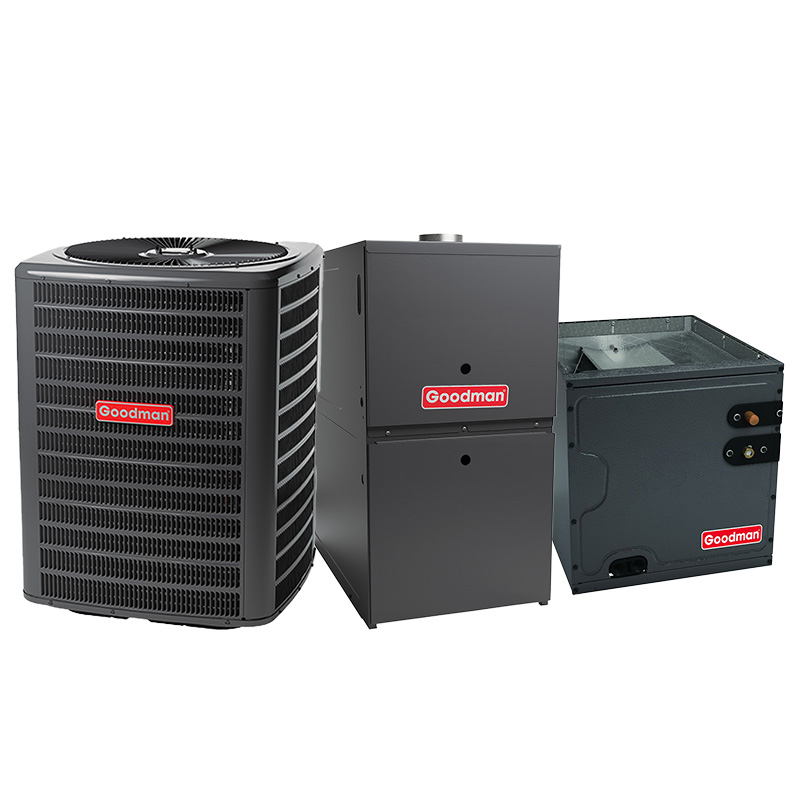
Goodman 2 Ton 14.5 SEER2 AC & Gas Furnace System – Two Stage Variable-Speed, 60000 BTU Gas Furnace, 80% AFUE, Upflow, R32
View on AC Direct see your lowest price →Check current price on AC Direct →
Key features
- Two-stage compressor runs at low stage roughly 80% of the time for steadier temps and reduced humidity
- Variable-speed ECM blower motor improves airflow consistency and lowers electricity use at the air handler
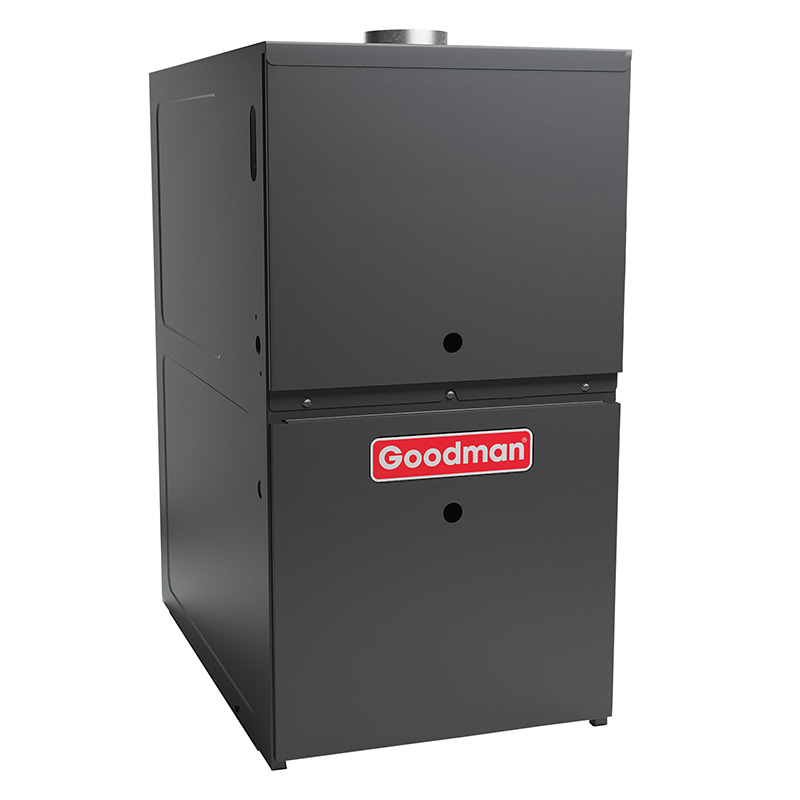
- 60,000 BTU upflow gas furnace rated 80% AFUE, sized for small-to-medium homes in moderate climates
- R-32 refrigerant with lower global warming potential than R-410A and simpler single-component recharge
- 14.5 SEER2 efficiency meets current federal minimum standards for most U.S. climate regions
- Factory-tested refrigerant circuit and matched coil design intended to simplify commissioning by certified installers
About this system
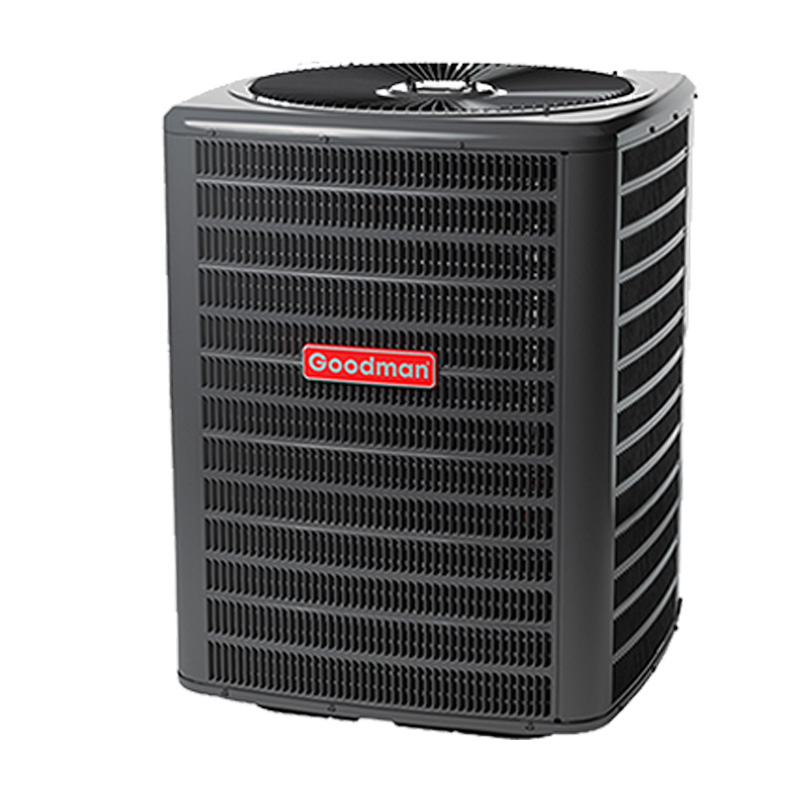
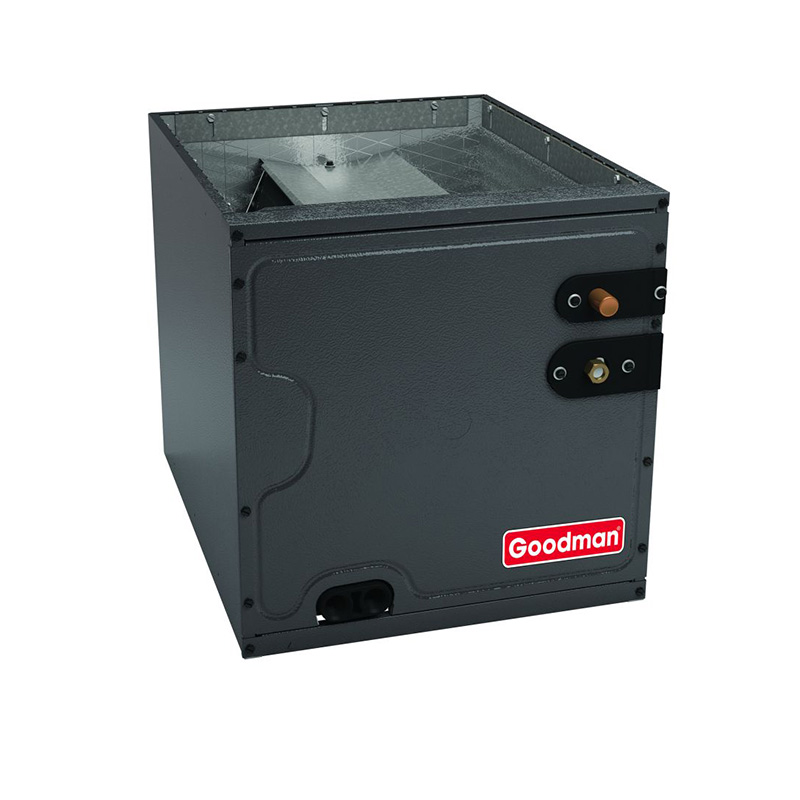
The Goodman 2-ton, 14.5 SEER2 split system pairs a two-stage, variable-speed air conditioner with a 60,000 BTU upflow gas furnace rated at 80% AFUE. The two-stage compressor runs at low capacity the majority of the time, cycling on full output only during peak heat. That behavior translates to more consistent temperatures, lower humidity on mild days, and meaningfully quieter operation compared with a single-stage unit of the same efficiency class. The variable-speed air handler distributes air more evenly and supports better filtration and dehumidification than a single-speed blower can manage.
At 14.5 SEER2 this system sits at the federal minimum efficiency threshold for most U.S. climate zones, so it is not a high-efficiency purchase. The 80% AFUE furnace means roughly one dollar in five of gas burned escapes up the flue uncaptured, which is acceptable in mild-winter climates but a meaningful operating cost in cold northern regions where 96% AFUE equipment pays back faster. R-32 refrigerant is the newer, lower-global-warming-potential replacement for R-410A, which is a forward-looking specification that will keep the system serviceable as R-410A is phased out. The upflow configuration suits homes with a basement or closet installation where the furnace sits below the duct system.
This system makes most sense for a homeowner in a moderate climate who wants the comfort upgrade of two-stage cooling without paying premium-brand prices, and who understands that long-term performance depends heavily on who installs it and how well it is maintained.
This Goodman bundle delivers a genuine two-stage, variable-speed comfort upgrade at a price point that undercuts comparable Carrier, Trane, and Lennox equipment by 15 to 25 percent, which is its clearest strength. The efficiency numbers are baseline rather than impressive, and the brand's documented history of capacitor failures, coil leaks, and compressor lifespans averaging 10 to 14 years means the value proposition depends on realistic maintenance expectations and a skilled installer. Buyers who shop primarily on upfront cost and keep up with annual service will likely be satisfied; those expecting premium longevity without premium investment may be disappointed.
Overall score is the average of the five ratings above.
What we like
- Two-stage cooling and variable-speed blower provide noticeably better humidity control and temperature evenness than single-stage alternatives at this price
- Priced 15 to 25 percent below comparable Carrier, Trane, and Lennox systems, reducing the initial capital outlay
- R-32 refrigerant future-proofs the system as R-410A supply shrinks under current EPA phase-down rules
- Goodman's large dealer network means parts and service technicians are widely available in most U.S. markets
- Two-stage operation keeps the compressor running longer at lower load, which can extend component life compared with a hard-cycling single-stage unit
Trade-offs
- Dual-run capacitors are the most commonly reported failure point for Goodman equipment, typically requiring a 300 to 600 dollar service call after the first several years
- Evaporator coil leaks appear in a meaningful share of owner reports, a concern amplified by the ongoing cost of R-32 recharging if the leak is not caught early
- Compressor lifespan averages 10 to 14 years based on documented owner experience, versus 15 to 20 years for premium brands, meaning a possible mid-life replacement cost
- 80% AFUE is the lowest efficiency tier available and will cost more to operate per heating season than 90% or 96% AFUE alternatives, especially in cold climates
What homeowners and pros say about Goodman
Homeowners who have purchased Goodman equipment tend to fall into two camps, and the split is visible in the brand’s ratings. On ConsumerAffairs, Goodman scores around 2.5 out of 5, a platform that skews toward dissatisfied owners, where the recurring frustration is repair bills that begin accumulating after roughly year seven. On Google dealer reviews the picture is more balanced, averaging around 3.8 out of 5 across hundreds of reviews per location, where the most common praise is straightforward: the price was significantly lower than competing bids. Neither number is a ringing endorsement, but together they sketch a brand that delivers on its core promise of affordability while asking more of the owner in terms of ongoing maintenance vigilance.
HVAC technicians who work on Goodman equipment regularly tend to have a pragmatic view. They flag dual-run capacitor failure as the most predictable service call, typically a 300 to 600 dollar fix that is almost routine on units past the five-year mark, and they recommend checking capacitor readings at every annual tune-up rather than waiting for a failure. Evaporator coil leaks are a more serious concern that appears in a meaningful share of owner reviews, and with R-32 now in the circuit, catching a slow leak early matters more than ever. Compressor longevity is the biggest long-term variable: documented experience places Goodman compressor life at 10 to 14 years on average, compared with 15 to 20 years for premium brands. For this two-stage system specifically, the consensus among pros is consistent: a skilled install and annual service are not optional add-ons but the actual mechanism by which the value promise holds up over time.
Sources: ConsumerAffairs Goodman owner reviews, AHRI Directory of Certified Product Performance, U.S. DOE appliance and equipment efficiency standards, Goodman product specification sheets.
What it costs to run
At 14.5 SEER2, cooling this 2-ton system for a typical 1200-hour cooling season at the U.S. average electricity rate of $0.17/kWh works out to roughly $338 per year in cooling, about $27 less per year than a minimum-efficiency 13.4 SEER2 unit of the same size. Your real cost depends on your climate and local rate.
Method: (24,000 BTU/hr ÷ 14.5 SEER2) × 1200 hours ÷ 1000 × $0.17/kWh. Rate source: U.S. EIA average; cooling hours: moderate-climate estimate.
How it compares
| Brand | Comparable model | SEER2 | Stage | Price position |
|---|---|---|---|---|
| Goodman | This system (2-ton 14.5 SEER2 two-stage / 60k BTU 80% AFUE) | 14.5 | Two-stage | Value pick |
| Carrier | Comfort 14 (24ACC4 series) with 80% AFUE Performance gas furnace | 14.3–14.5 | Single-stage | Typically 15 to 25 percent more than Goodman |
| Trane | XR14c with S8X1 80% AFUE gas furnace | 14.3–15.0 | Single-stage | Typically 15 to 25 percent more than Goodman |
| Lennox | Merit ML14XC1 with ML180 80% AFUE gas furnace | 14.3–15.0 | Single-stage | Typically 15 to 25 percent more than Goodman |
Competitor rows are comparable single-stage units at similar efficiency; price is relative position, not a quote.
Questions about this system
Is 14.5 SEER2 going to cost me noticeably more to run than a higher-efficiency unit?
Compared with a 16 or 18 SEER2 system, you will pay more in electricity each cooling season, with the gap widening in hot climates with long cooling seasons. For a 2-ton unit in a moderate climate the annual difference is real but unlikely to recoup a large upfront premium quickly, so this efficiency level is most defensible where summers are short or electricity rates are low.
Should I be worried about the R-32 refrigerant if I need a service call?
R-32 is mildly flammable, which means technicians need specific training and tools to handle it safely, and not every local HVAC company is yet equipped for it. Before buying, confirm your preferred service contractor is R-32 certified, because the pool of qualified techs is still smaller than for R-410A in some regions.
What is the actual warranty on this system and what does it cover?
Goodman typically offers a 10-year parts warranty on registered equipment, but coverage specifics vary by component and require registration within a set window after installation. Labor is not covered under the manufacturer warranty, so a service contract or extended labor warranty through your installer is worth considering given the brand's documented repair history.
How much does install quality really matter with a Goodman system?
It matters more than with most brands. HVAC technicians consistently cite installation as the single biggest factor in how long a Goodman unit lasts, and the documented first-year refrigerant leak issues are almost always traced back to improper charging or connection errors at install. Using a licensed, experienced contractor and requesting a startup checklist significantly reduces early failure risk.
The capacitors seem to fail on Goodman units a lot. Is that something I can plan for?
Dual-run capacitor failure is the most commonly reported repair on Goodman equipment and typically costs 300 to 600 dollars to fix. It is a straightforward repair when caught early, so scheduling annual pre-season tune-ups where a tech checks capacitor microfarad readings is an inexpensive way to replace the part before it fails and potentially stresses the compressor or blower motor.
Specifications
| Cooling capacity | 2 Ton |
| Efficiency | 14.5 SEER2 |
| Furnace output | 60000 BTU |
| Furnace efficiency | 80% AFUE |
| Configuration | Upflow |
| Refrigerant | R-32 |