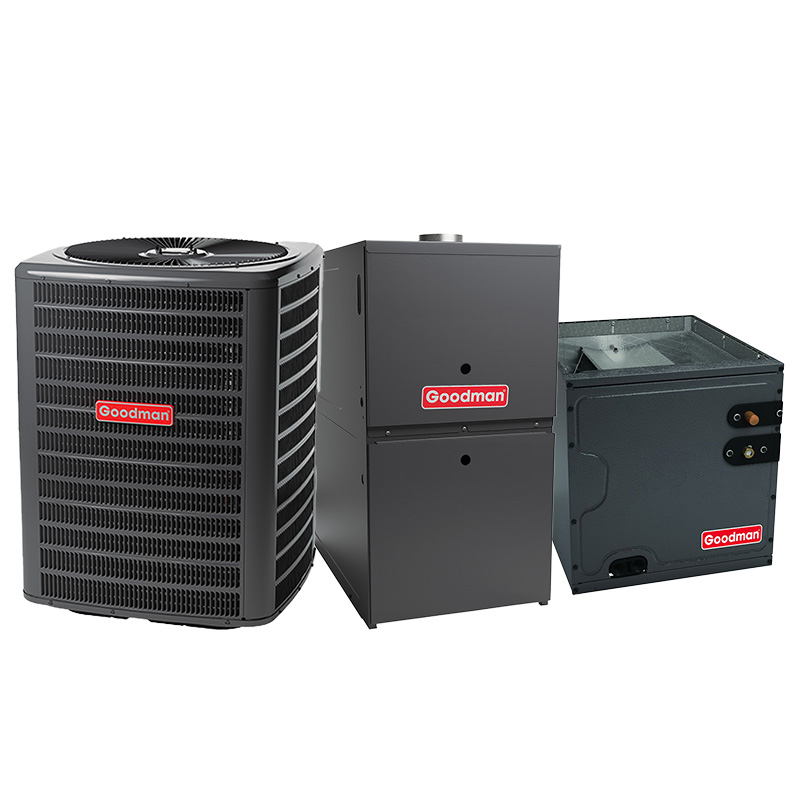
Goodman 2 Ton 14.5 SEER2 AC & Gas Furnace System – Two Stage Variable-Speed, 80000 BTU Gas Furnace, 80% AFUE, Upflow, R32
View on AC Direct see your lowest price →Check current price on AC Direct →
Key features
- Two-stage compressor for quieter operation and better humidity control on mild days
- Variable-speed ECM blower motor reduces energy use and evens out airflow
- 14.5 SEER2 efficiency meets current federal minimums and improves on aging 10-13 SEER equipment
- 80,000 BTU gas furnace at 80% AFUE in upflow configuration for basement or closet installs
- R-32 refrigerant with lower global-warming potential than legacy R-410A systems
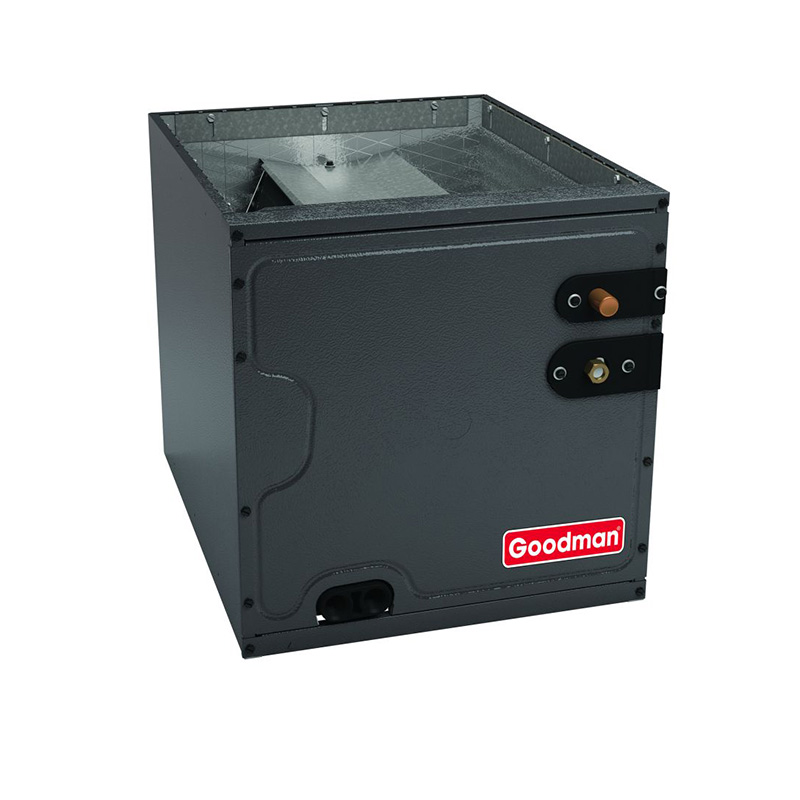
- Factory-matched coil and furnace cabinet designed for straightforward system integration
About this system
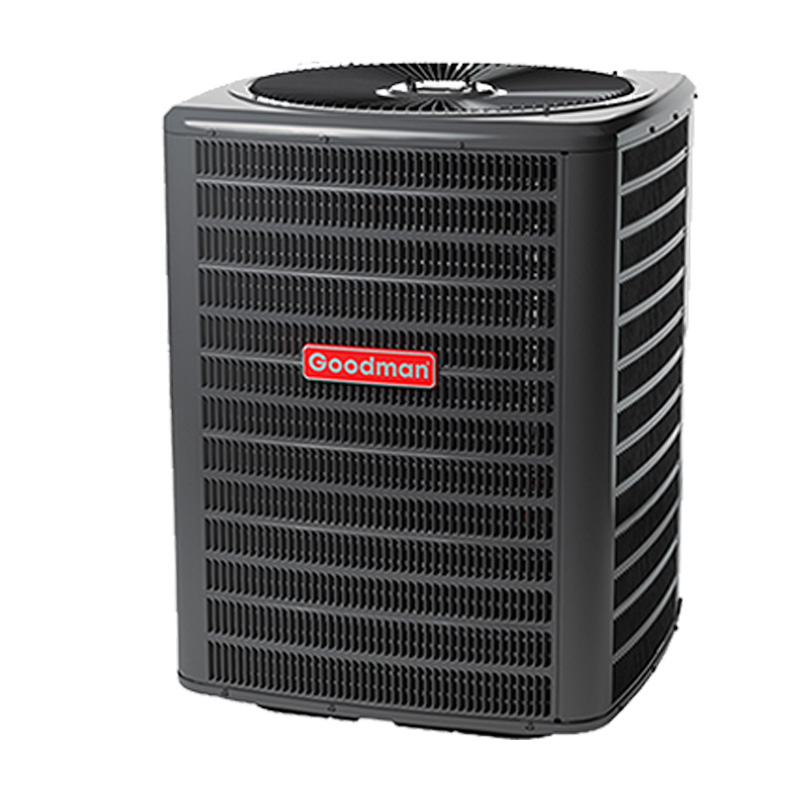
The Goodman 2-ton, 14.5 SEER2 split system pairs a two-stage, variable-speed air conditioner with an 80,000 BTU upflow gas furnace rated at 80% AFUE. The two-stage compressor runs at low capacity most of the time, cycling to full output only on the hottest days. That means longer, quieter cooling runs, better humidity control, and steadier indoor temperatures compared to a single-stage unit of similar efficiency. The variable-speed air handler blower reinforces those gains by matching airflow to demand rather than blasting on and off at one fixed speed.
At 14.5 SEER2 this system clears the federal minimum for most U.S. climate zones but sits at the lower end of the mid-efficiency range. It is a practical choice for homeowners who want meaningful improvement over an aging 10 to 13 SEER unit without paying for top-tier 18 to 20 SEER2 hardware. The 80% AFUE furnace is a standard-efficiency unit, meaning roughly 20 cents of every heating dollar exits through the flue. Buyers in colder northern climates where heating loads are high may want to weigh a 96% AFUE upgrade; in mild or mixed climates the 80% unit is often the economically sensible choice. The system uses R-32 refrigerant, which has a lower global-warming potential than the R-410A it replaces and is increasingly the industry standard going forward.
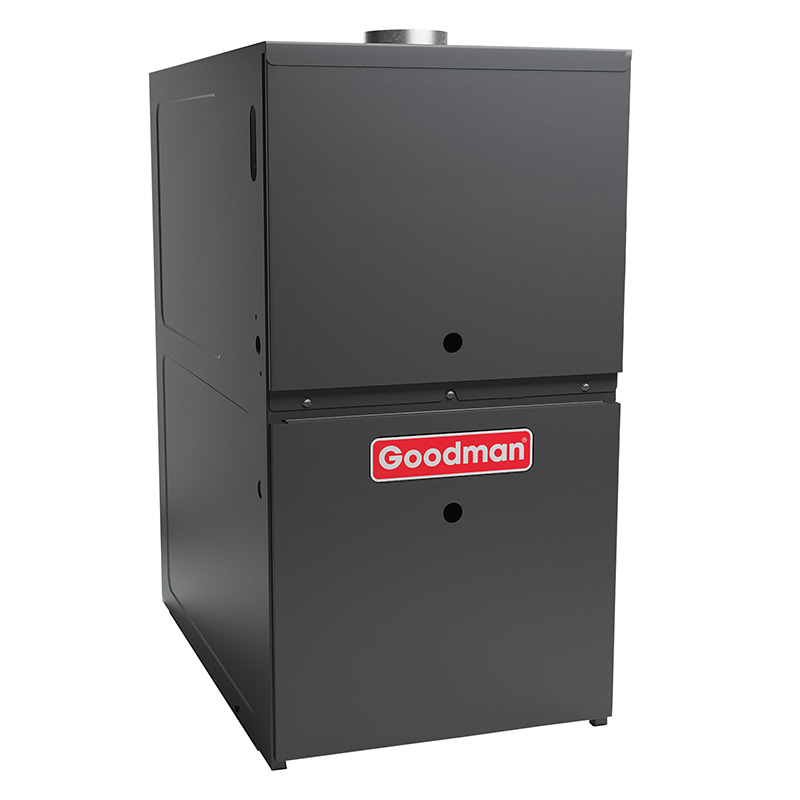
The upflow configuration routes heated or cooled air upward into the supply ductwork, making this unit well suited to basement or ground-level closet installations in homes with overhead duct systems. It is not appropriate for attic or crawlspace applications where a downflow or horizontal unit would be required. As with all Goodman equipment, the final performance and longevity of this system will depend heavily on the quality of the installation, including proper refrigerant charge, duct sizing, and electrical connections.
This Goodman package offers genuine two-stage comfort features at a price point that undercuts comparable Carrier, Trane, and Lennox systems by 15 to 25 percent, making it a reasonable choice for budget-conscious buyers who prioritize upfront cost. The efficiency tier is adequate but not exceptional, and Goodman's real-world track record shows a higher incidence of mid-life repair costs and a shorter average compressor lifespan than premium competitors. If you have a skilled installer and realistic expectations about long-term maintenance costs, this system can deliver solid value.
Overall score is the average of the five ratings above.
What we like
- Two-stage operation improves comfort and dehumidification versus single-stage units at this price
- Variable-speed blower lowers operating noise and reduces energy draw from the air handler
- R-32 refrigerant is future-ready and easier to service as R-410A availability declines
- Lower purchase price than comparable Carrier, Trane, or Lennox systems by roughly 15 to 25 percent
- Upflow furnace cabinet integrates cleanly into basement and main-floor closet duct systems
Trade-offs
- 80% AFUE furnace wastes about 20% of fuel input, a real cost penalty in cold-climate markets
- Compressors average 10 to 14 years versus 15 to 20 years reported for premium-brand units
- Evaporator coil leaks and early refrigerant loss appear in a meaningful share of owner reviews, often tied to install quality
- ConsumerAffairs scores average around 2.5 out of 5, with repair cost complaints concentrating after year 7
What homeowners and pros say about Goodman
Homeowners who have lived with Goodman equipment give it notably split reviews. On Google, dealer-level ratings cluster around 3.8 out of 5 across hundreds of reviews per location, and the most repeated praise is straightforward: the system costs less to buy and it works. On ConsumerAffairs, where frustrated owners are more likely to post, the brand averages around 2.5 out of 5, and the recurring complaint is not about early failure but about repair bills that start stacking up somewhere past the seven-year mark. Dual-run capacitor failures are the most commonly cited issue and are generally inexpensive to fix, but evaporator coil leaks also appear with enough frequency in owner reports to warrant attention, and compressor longevity averaging 10 to 14 years falls short of the 15 to 20 years owners of premium-brand equipment typically report.
HVAC technicians who work on Goodman equipment regularly tend to hold a measured view. They acknowledge that the hardware is serviceable and the parts are widely available, but they are consistent on one point: install quality determines almost everything about how this brand performs over time. A properly charged system with correct duct sizing and clean electrical connections tends to run without drama for years. A rushed or careless install amplifies every weak point the brand already carries. For this specific two-stage, variable-speed system, that advice carries extra weight because the two-stage compressor and ECM blower require accurate commissioning to deliver the comfort and efficiency advantages they are designed to provide. The R-32 refrigerant charge in particular needs to be set precisely, since the minority of owners who report refrigerant loss in the first year are almost always dealing with an install or charge issue rather than a factory defect.
Sources: ConsumerAffairs Goodman owner reviews, AHRI Directory of Certified Product Performance, U.S. DOE appliance and equipment efficiency standards, Goodman product specification sheets.
What it costs to run
At 14.5 SEER2, cooling this 2-ton system for a typical 1200-hour cooling season at the U.S. average electricity rate of $0.17/kWh works out to roughly $338 per year in cooling, about $27 less per year than a minimum-efficiency 13.4 SEER2 unit of the same size. Your real cost depends on your climate and local rate.
Method: (24,000 BTU/hr ÷ 14.5 SEER2) × 1200 hours ÷ 1000 × $0.17/kWh. Rate source: U.S. EIA average; cooling hours: moderate-climate estimate.
How it compares
| Brand | Comparable model | SEER2 | Stage | Price position |
|---|---|---|---|---|
| Goodman | 2-Ton 14.5 SEER2 Two-Stage Variable-Speed with 80k BTU 80% AFUE Furnace | 14.5 | Two-stage | Value pick |
| Carrier | Comfort 14 (CA14NA) with 58MXA furnace | 14.3-14.5 | Single-stage | Typically 15 to 25 percent more than Goodman |
| Trane | XR14 (4TTR4) with S8X1 furnace | 14.3-14.5 | Single-stage | Typically 15 to 25 percent more than Goodman |
| Lennox | Merit 14ACX with ML180 furnace | 14.3-14.5 | Single-stage | Typically 15 to 25 percent more than Goodman |
Competitor rows are comparable single-stage units at similar efficiency; price is relative position, not a quote.
Questions about this system
Will this 2-ton unit be enough for my home, or do I need a larger size?
Two tons handles roughly 900 to 1,200 square feet in an average-insulated home, but the right size depends on a Manual J load calculation that accounts for your climate, insulation, windows, and ceiling height. Installing an oversized unit causes short-cycling, poor humidity control, and accelerated wear, so resist guessing and ask your installer to run the numbers.
Is an 80% AFUE furnace worth it, or should I upgrade to a higher-efficiency unit?
In mixed or warm climates where heating runs are short, the payback period on a 95 to 97% AFUE furnace can stretch beyond 10 years, so 80% is often the economical choice. In northern climates with long heating seasons, the 15 to 20 percentage point fuel savings of a high-efficiency furnace typically pays back the upgrade cost faster and reduces long-term operating costs meaningfully.
What is the most common repair this system will need, and how much does it cost?
Dual-run capacitor failure is the most frequently reported issue on Goodman equipment and typically runs between 300 and 600 dollars including labor. It is a relatively quick fix, but owners should budget for it, especially after year five or six of service.
Does the R-32 refrigerant require any special handling compared to R-410A?
R-32 is mildly flammable and requires technicians to be certified and equipped to work with A2L refrigerants, which most licensed HVAC contractors are now trained for. It operates at similar pressures to R-410A, so existing recovery equipment and gauges often work with minor adaptations, but confirm your installer is R-32 certified before scheduling service.
How does Goodman's warranty compare to Trane, Carrier, and Lennox on this type of system?
Goodman offers a 10-year parts warranty on registered equipment, which is competitive with the major brands at this efficiency tier. The key detail is registration: you typically must register the unit within 60 days of installation to qualify for the full term, and the warranty covers parts only, not labor, which can be a significant out-of-pocket cost if a compressor or coil fails outside the labor coverage window of your installer's own guarantee.
Specifications
| Cooling capacity | 2 Ton |
| Efficiency | 14.5 SEER2 |
| Furnace output | 80000 BTU |
| Furnace efficiency | 80% AFUE |
| Configuration | Upflow |
| Refrigerant | R-32 |