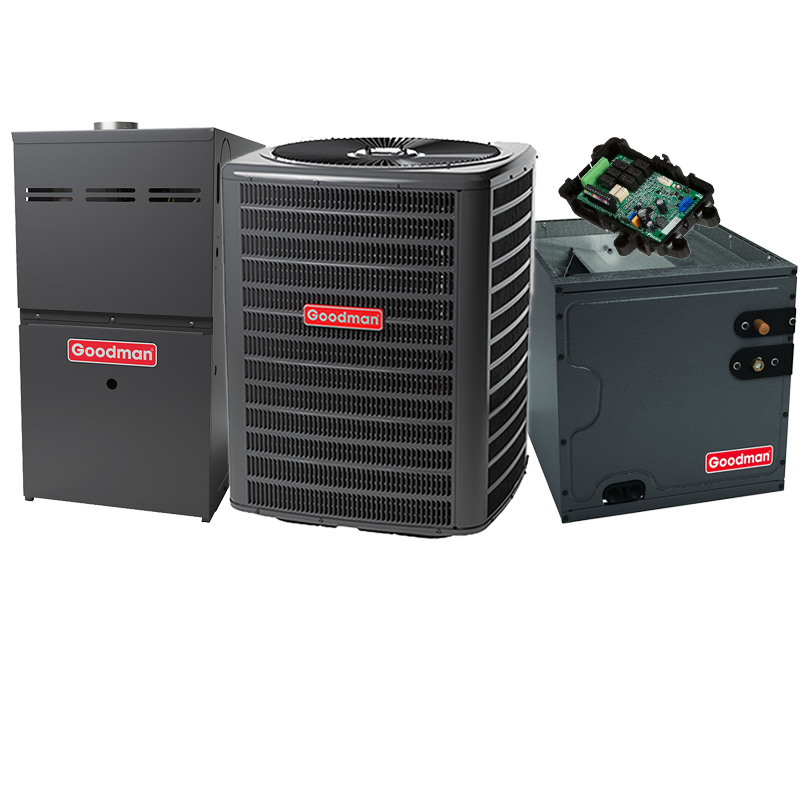
Goodman 2 Ton 14 SEER2 60000 BTU 80% Two-Stage Gas Furnace With R32 Air Conditioner Condenser And Coil System – Upflow
View on AC Direct see your lowest price →Check current price on AC Direct →
Key features
- Two-stage 60,000 BTU gas furnace rated at 80% AFUE for moderate heating efficiency
- 14 SEER2 cooling efficiency meets current federal minimum standards
- R-32 refrigerant, a lower global-warming-potential replacement for R-410A
- Factory-matched condenser, evaporator coil, and furnace for simplified permitting
- Upflow configuration suits basements, utility closets, and alcoves with overhead ductwork
- Two-stage heating operation reduces temperature swings and short-cycling versus single-stage
About this system
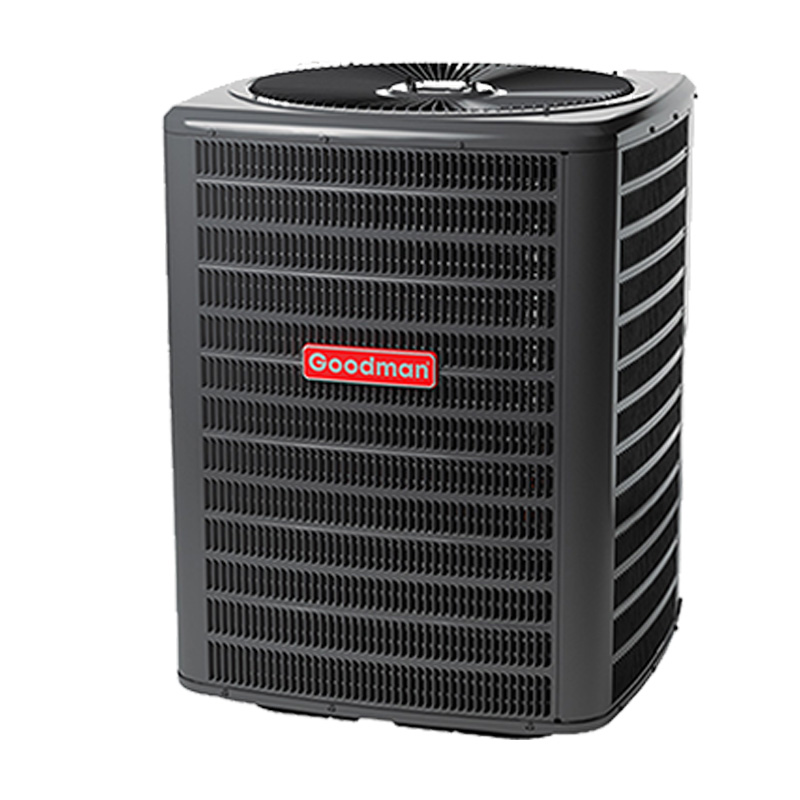
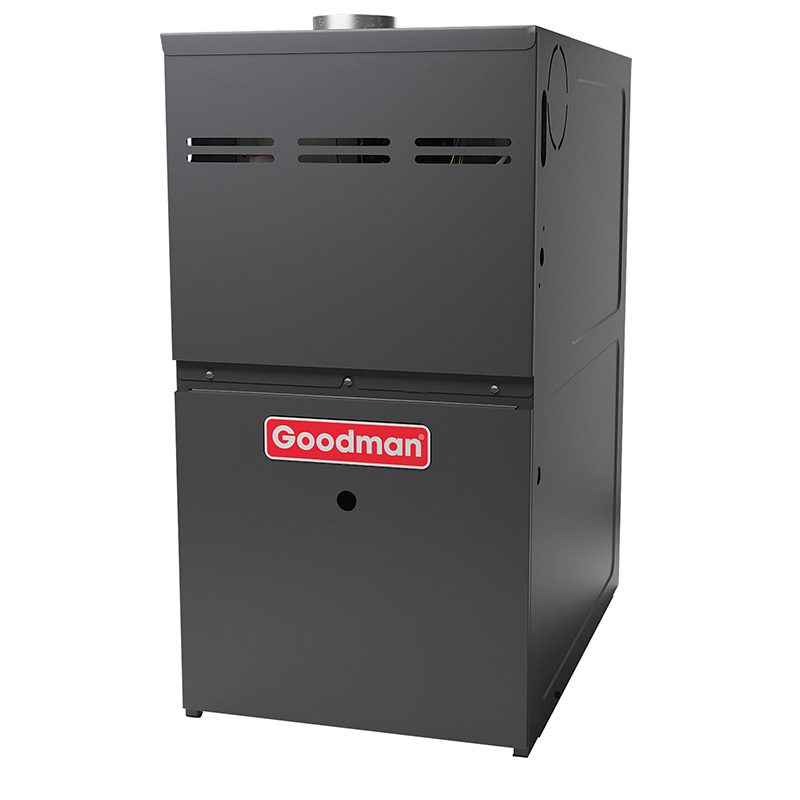
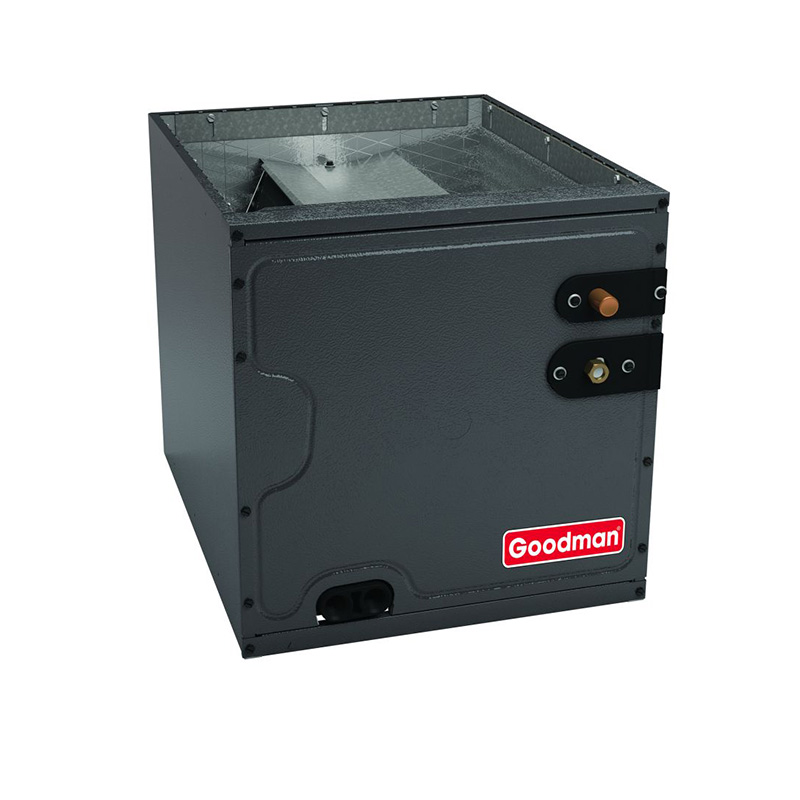
This Goodman bundle pairs a 2-ton, 14 SEER2 R-32 air conditioner condenser and matched evaporator coil with a 60,000 BTU, 80% AFUE two-stage gas furnace in an upflow configuration. The package is aimed at homeowners replacing aging equipment in smaller to mid-size homes, typically in the 800 to 1,200 square foot range depending on climate zone, who want a complete matched system without paying premium-brand prices. Buying the condenser, coil, and furnace together as a factory-matched set simplifies permitting and helps ensure the components are rated to work together from day one.
The two-stage furnace is a meaningful upgrade over single-stage models. It runs on a lower fire rate most of the time, which smooths out temperature swings, reduces short-cycling, and is generally quieter than a unit that always fires at full capacity. The 14 SEER2 efficiency rating sits at the current federal minimum for many regions, so it meets code but does not exceed it. R-32 refrigerant is a lower global-warming-potential alternative to R-410A and is increasingly standard in new equipment. The upflow configuration means the furnace pulls return air from the bottom and discharges conditioned air upward, which is the most common arrangement for systems installed in a basement, closet, or utility room with ductwork above.
This Goodman bundle is a competent, budget-conscious choice for homeowners who want a complete matched system and are willing to accept entry-level efficiency ratings. The two-stage furnace adds real comfort value at this price point, but the 14 SEER2 rating and Goodman's documented repair history after year seven mean buyers should weigh long-term ownership costs honestly before committing.
Overall score is the average of the five ratings above.
What we like
- Factory-matched system reduces compatibility guesswork and simplifies installation paperwork
- Two-stage furnace provides better comfort and quieter operation than single-stage at similar prices
- R-32 refrigerant is future-oriented as R-410A is phased out
- Priced roughly 15 to 25 percent below comparable Trane, Carrier, and Lennox systems
- Upflow design fits the most common residential ductwork layouts with no modification
Trade-offs
- 14 SEER2 is the minimum allowed in most regions, so energy savings versus higher-efficiency options are limited
- 80% AFUE furnace means one in five BTUs of gas is lost as exhaust, a real cost in cold climates
- Dual-run capacitor failures and evaporator coil leaks are documented recurring issues in owner reviews
- Compressor lifespan averages 10 to 14 years versus 15 to 20 years for premium-brand compressors
What homeowners and pros say about Goodman
Homeowners who have bought Goodman equipment tend to split into two camps. Those who had a careful install and kept up with annual maintenance often report years of trouble-free operation and point to the lower upfront cost as a clear win. Those who had a rushed installation or skipped maintenance are more likely to show up in complaint channels. Goodman holds a roughly 2.5 out of 5 on ConsumerAffairs, a platform that attracts frustrated owners disproportionately, where the recurring story is repair bills climbing after roughly year seven. On Google dealer reviews the picture is more balanced, with scores around 3.8 out of 5 across multiple locations and affordability as the most frequently cited reason buyers chose the brand.
HVAC technicians who service Goodman equipment regularly point to two failure modes worth planning for on any system like this one. Dual-run capacitors are the most common callout, usually in the $300 to $600 repair range and not a catastrophic fix, but a sign that annual inspections pay for themselves. Evaporator coil leaks appear in a notable share of owner accounts and are a more serious repair. On the refrigerant circuit side, a small percentage of owners report leaks within the first year, which technicians generally attribute to charge or installation error rather than a manufacturing defect. Compressor longevity runs roughly 10 to 14 years in documented owner experience, shorter than the 15 to 20 years often seen with Trane, Carrier, or Lennox compressors. None of these are reasons to automatically rule out a Goodman system, but they are real factors to weigh against the upfront savings.
Sources: ConsumerAffairs Goodman owner reviews, AHRI Directory of Certified Product Performance, U.S. DOE appliance and equipment efficiency standards, Goodman product specification sheets.
What it costs to run
At 14 SEER2, cooling this 2-ton system for a typical 1200-hour cooling season at the U.S. average electricity rate of $0.17/kWh works out to roughly $350 per year in cooling, about $15 less per year than a minimum-efficiency 13.4 SEER2 unit of the same size. Your real cost depends on your climate and local rate.
Method: (24,000 BTU/hr ÷ 14 SEER2) × 1200 hours ÷ 1000 × $0.17/kWh. Rate source: U.S. EIA average; cooling hours: moderate-climate estimate.
How it compares
| Brand | Comparable model | SEER2 | Stage | Price position |
|---|---|---|---|---|
| Goodman | 2-Ton 14 SEER2 / 60K BTU 80% Two-Stage Bundle (this system) | 14 | Two-stage furnace, single-stage condenser | Value pick |
| Carrier | Performance 14 Series (24ACC4) with 80% two-stage furnace | 14 | Single-stage condenser, two-stage furnace | Typically 20 to 25 percent more than this Goodman bundle |
| Trane | XR14 condenser with S8X2 80% two-stage furnace | 14 | Single-stage condenser, two-stage furnace | Typically 20 to 30 percent more than this Goodman bundle |
| Lennox | Merit ML14XC1 condenser with ML180UH 80% two-stage furnace | 14 | Single-stage condenser, two-stage furnace | Typically 25 to 35 percent more than this Goodman bundle |
Competitor rows are comparable single-stage units at similar efficiency; price is relative position, not a quote.
Questions about this system
Is 14 SEER2 going to pass a permit inspection in my state?
14 SEER2 meets the current federal minimum for most U.S. climate zones, but a handful of states and some local jurisdictions have set higher minimums. Check with your local building department or HVAC contractor before ordering, because a failed inspection means equipment must be swapped out at your cost.
Why does this system use R-32 instead of R-410A?
R-410A is being phased down under EPA regulations because of its high global-warming potential. R-32 has roughly one-third the climate impact of R-410A and is becoming the industry standard in new residential equipment. It does require certified technicians who have confirmed they are equipped to handle it, so mention this when scheduling service.
What does two-stage heating actually change day to day?
A two-stage furnace runs at a lower fire rate, around 65 to 70 percent of capacity, the majority of the time and only steps up to full output when temperatures drop sharply. In practice this means fewer abrupt on-off cycles, more even room temperatures, and somewhat lower gas consumption on mild days compared to a single-stage unit of the same BTU rating.
Goodman reviews mention capacitor failures a lot. How worried should I be?
Dual-run capacitor failure is the most commonly reported issue in owner accounts, and it is a real pattern. The repair typically costs between $300 and $600 and is a straightforward fix for any HVAC technician. Keeping a service agreement that includes an annual inspection is the most practical way to catch a weakening capacitor before it takes the compressor or blower motor down with it.
Does the matched coil matter, or can I reuse my existing evaporator coil to save money?
Reusing an old coil with a new R-32 condenser is generally not advisable. R-32 operates at different pressures than R-410A, older coils may not be rated for the new refrigerant, and a mismatched system typically will not qualify for the manufacturer warranty. The matched coil in this bundle is the straightforward path to a warranted, code-compliant installation.
Specifications
| Cooling capacity | 2 Ton |
| Efficiency | 14 SEER2 |
| Furnace output | 60000 BTU |
| Configuration | Upflow |
| Refrigerant | R-32 |