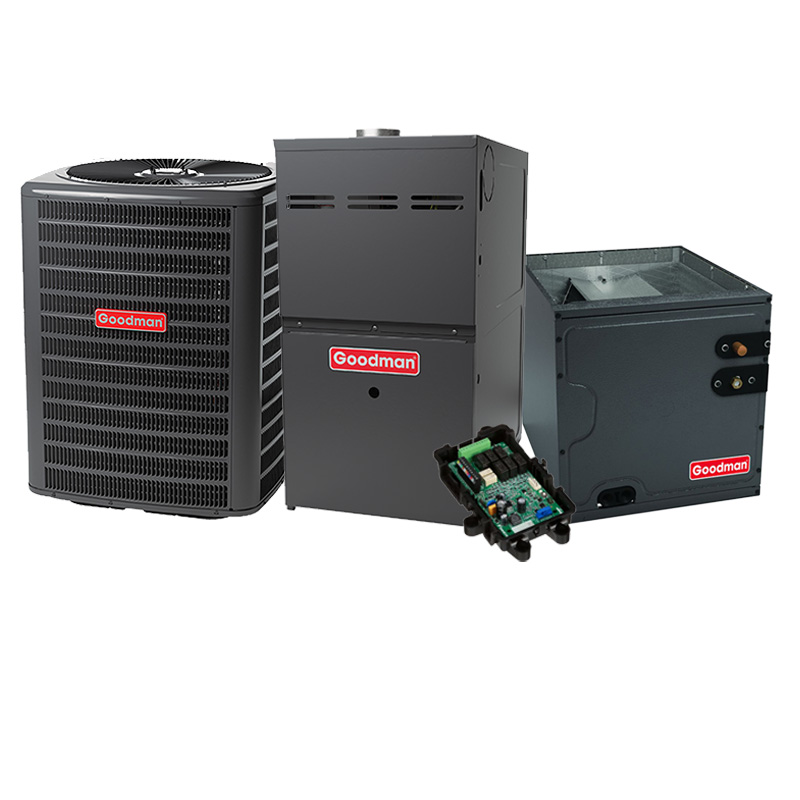
Goodman 2 Ton 14 SEER2 60000 BTU 80% Gas Furnace With R32 Air Conditioning Condenser And Coil System – Upflow
View on AC Direct see your lowest price →Check current price on AC Direct →
Key features
- 2-ton cooling capacity suited to approximately 700 to 1,000 sq ft depending on climate and load
- 14 SEER2 efficiency meets current federal minimums for most U.S. regions
- R-32 refrigerant with lower global warming potential than R-410A
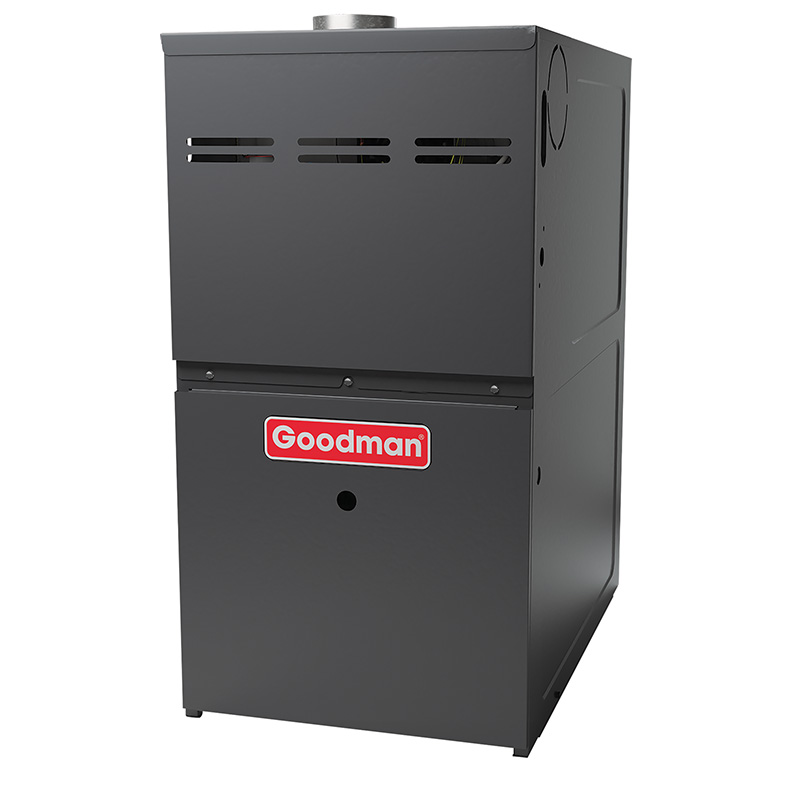
- 60,000 BTU 80% AFUE single-stage gas furnace in upflow configuration
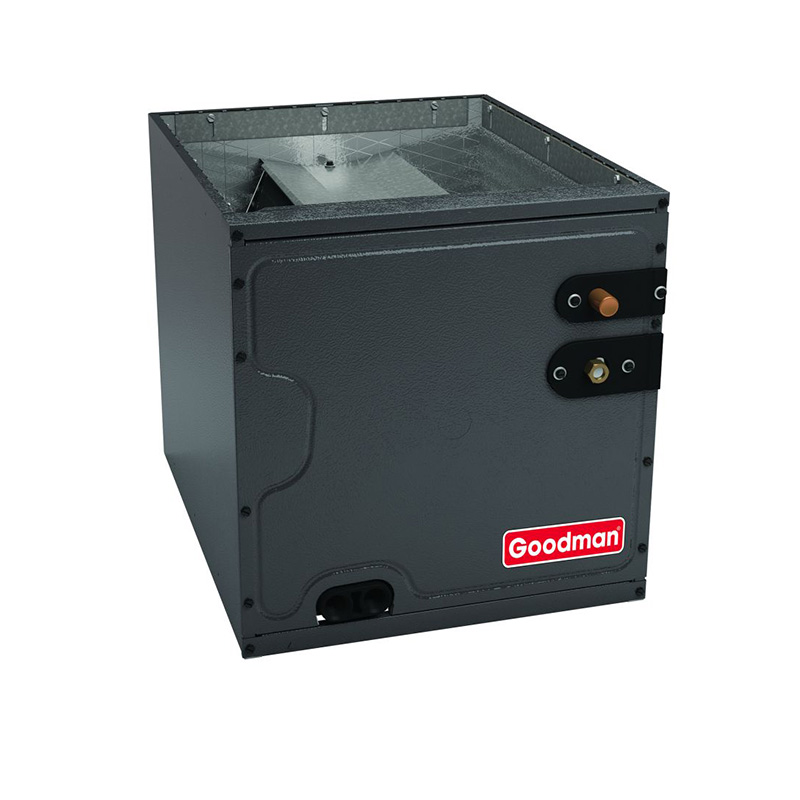
- Matched coil and condenser sold as a system for simplified ARI rating compliance
- Factory-tested components with Goodman's parts warranty on registered systems
About this system
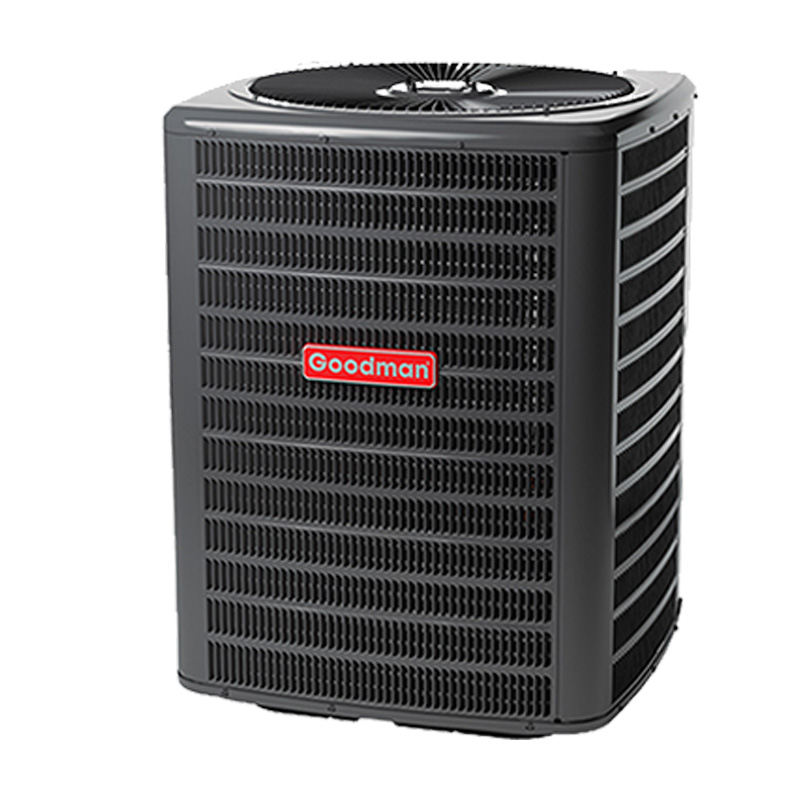
This Goodman upflow system pairs a 2-ton R-32 air conditioning condenser and matching evaporator coil with a 60,000 BTU, 80% AFUE gas furnace, making it a complete ducted split solution for smaller homes or individual zones in the 700 to 1,000 square foot range, depending on local climate and insulation. The 14 SEER2 efficiency rating sits at the current federal minimum floor for most U.S. regions, so it meets code without exceeding it. R-32 refrigerant is a forward-looking choice: it carries a lower global warming potential than the R-410A it replaces and is increasingly the industry standard, which should make future service easier as technicians and parts suppliers adapt.
The upflow configuration means the furnace draws return air from the bottom and discharges conditioned air upward into the supply plenum, the standard arrangement for systems installed in basements, utility closets, or crawl spaces where ductwork runs overhead. The 80% AFUE furnace converts eight of every ten dollars of gas into usable heat, which is a solid baseline but noticeably less efficient than 96% or 97% modulating units that cost more upfront. For homeowners in mild-to-moderate heating climates or those prioritizing lower first cost over long-term gas savings, the tradeoff is often worth it. The system is sold as a matched set, which simplifies ARI certification and helps contractors size refrigerant charge and airflow correctly from the start.
The Goodman 2-ton 14 SEER2 gas-and-cooling system is a straightforward, budget-conscious choice for smaller homes where keeping first costs low matters more than top-tier efficiency or compressor longevity. It delivers adequate performance when installed correctly, but documented failure modes and a compressor lifespan that trails premium brands mean buyers should budget for maintenance and vet their installer carefully. It is not the system to choose if you expect trouble-free operation for 18 to 20 years without any intervention.
Overall score is the average of the five ratings above.
What we like
- Priced 15 to 25 percent below comparable Carrier, Trane, and Lennox systems, reducing upfront cost significantly
- R-32 refrigerant is increasingly standard and easier to service as the industry transitions away from R-410A
- Matched coil and condenser simplify the install and help ensure proper system ratings
- Upflow furnace configuration suits the most common North American basement and utility-closet installations
- Dual-run capacitor failures, the most common reported issue, are typically a low-cost repair in the $300 to $600 range
Trade-offs
- Compressor lifespan averages 10 to 14 years versus 15 to 20 for premium-brand equivalents, meaning earlier potential replacement
- 80% AFUE is the minimum-efficiency tier; homeowners in cold climates will spend more on gas compared to high-efficiency alternatives
- Evaporator coil leaks appear in a meaningful share of owner reviews, a concern that can become costly outside the warranty window
- A minority of owners have reported refrigerant leaks within the first year, typically traced to install or charge issues, underscoring how heavily performance depends on the installing contractor
What homeowners and pros say about Goodman
Homeowners who choose Goodman tend to cite the lower purchase price as the deciding factor, and that sentiment comes through clearly in Google dealer reviews, which average around 3.8 out of 5 across hundreds of locations. Affordability is the most repeated praise, and many owners report years of uneventful service when the system is installed by a careful contractor. The picture on ConsumerAffairs is harder, sitting at roughly 2.5 out of 5, though that platform draws a disproportionate share of frustrated owners. The pattern there is consistent: complaints tend to cluster around year 7 and beyond, when repair costs start to feel steep relative to the original savings.
Among HVAC technicians, Goodman has a mixed but pragmatic reputation. Pros often note that dual-run capacitor failures are the brand’s most common service call, and while that sounds alarming, it is typically a straightforward fix in the $300 to $600 range. More serious concerns include evaporator coil leaks, which show up in enough owner accounts to be worth noting, and a compressor lifespan that averages 10 to 14 years rather than the 15 to 20 years associated with premium brands. A small number of owners have also reported refrigerant leaks in the first year, which technicians generally attribute to installation or charge errors rather than factory defects. The consistent takeaway from the field is that Goodman equipment rewards a skilled install and regular maintenance, and punishes neglect faster than higher-end alternatives.
Sources: ConsumerAffairs Goodman owner reviews, AHRI Directory of Certified Product Performance, U.S. DOE appliance and equipment efficiency standards, Goodman product specification sheets.
What it costs to run
At 14 SEER2, cooling this 2-ton system for a typical 1200-hour cooling season at the U.S. average electricity rate of $0.17/kWh works out to roughly $350 per year in cooling, about $15 less per year than a minimum-efficiency 13.4 SEER2 unit of the same size. Your real cost depends on your climate and local rate.
Method: (24,000 BTU/hr ÷ 14 SEER2) × 1200 hours ÷ 1000 × $0.17/kWh. Rate source: U.S. EIA average; cooling hours: moderate-climate estimate.
How it compares
| Brand | Comparable model | SEER2 | Stage | Price position |
|---|---|---|---|---|
| Goodman | 2-Ton 14 SEER2 R-32 with 60K BTU 80% AFUE Upflow Furnace | 14 | Single-stage | Value pick |
| Carrier | Comfort 14 (24ACC4) with 58MCA 80% AFUE furnace | 14 | Single-stage | 15 to 25 percent above this Goodman system |
| Trane | XR14c with S8X1 80% AFUE furnace | 14 | Single-stage | 15 to 25 percent above this Goodman system |
| Lennox | Merit 14ACX with ML180 80% AFUE furnace | 14 | Single-stage | 15 to 20 percent above this Goodman system |
Competitor rows are comparable single-stage units at similar efficiency; price is relative position, not a quote.
Questions about this system
Is 14 SEER2 going to be legal to install in my state?
14 SEER2 meets the current federal minimum for most U.S. climate regions as of the 2023 DOE standards, but some southern states have a higher minimum for cooling equipment. Check your local jurisdiction before purchasing, and confirm with your installer that this rating qualifies for your specific location.
Why does this system use R-32 instead of R-410A?
R-32 has a lower global warming potential than R-410A and is where the residential HVAC industry is heading as manufacturers phase out older refrigerants. It is handled differently during service and requires technicians with the proper equipment and certification, so confirm your installer is familiar with R-32 before booking.
The specs say upflow. Can I use this system in a horizontal or downflow installation?
No. This furnace and coil are configured specifically for upflow installations where return air enters at the bottom and supply air exits at the top. Using it in a horizontal or downflow application would require a different coil and furnace model. Discuss your mechanical room layout with your contractor before ordering.
What are the real chances I will need a major repair in the first ten years?
Dual-run capacitor failure is the most commonly reported issue with Goodman equipment and is generally inexpensive to fix. Evaporator coil leaks and refrigerant charge problems show up in a notable share of owner feedback. A small percentage of owners have reported refrigerant leaks in year one, which is usually an installation issue rather than a manufacturing defect. Good install quality and annual maintenance are the strongest predictors of avoiding early repairs.
Is the 80% AFUE furnace going to cost me noticeably more to run than a high-efficiency unit?
Compared to a 96% AFUE furnace, an 80% AFUE unit uses roughly 17 percent more gas to produce the same amount of heat. In a mild heating climate that difference may only be a few hundred dollars over several years, but in colder regions with long heating seasons the gap widens. Run the numbers against your local gas rate and estimated heating hours to decide whether the upfront savings justify the ongoing operating cost.
Specifications
| Cooling capacity | 2 Ton |
| Efficiency | 14 SEER2 |
| Furnace output | 60000 BTU |
| Configuration | Upflow |
| Refrigerant | R-32 |