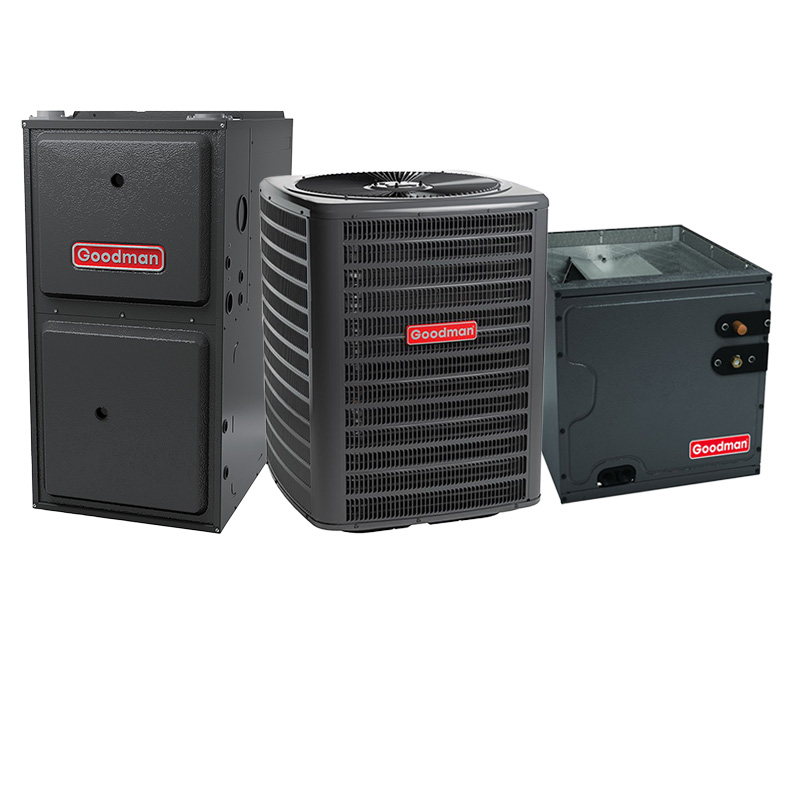
Goodman 2 Ton 14 SEER2 60000 BTU 96% AFUE Two Stage Multi-Speed ECM Gas Furnace System – Upflow | R32
View on AC Direct see your lowest price →Check current price on AC Direct →
Key features
- 2-ton cooling capacity with 14 SEER2 efficiency rating
- 60,000 BTU, 96% AFUE two-stage condensing gas furnace
- Multi-speed ECM blower motor for quieter, lower-electricity operation
- R-32 refrigerant with lower global-warming potential than R-410A
- Upflow air handler configuration for basement or closet installs
- Two-stage gas valve reduces temperature swings and short-cycling
About this system
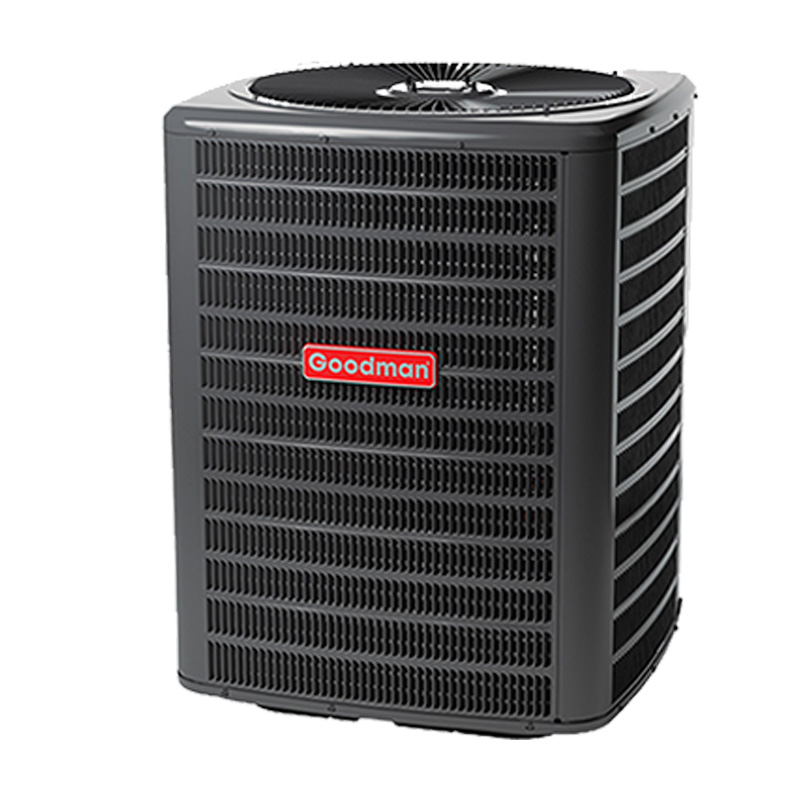
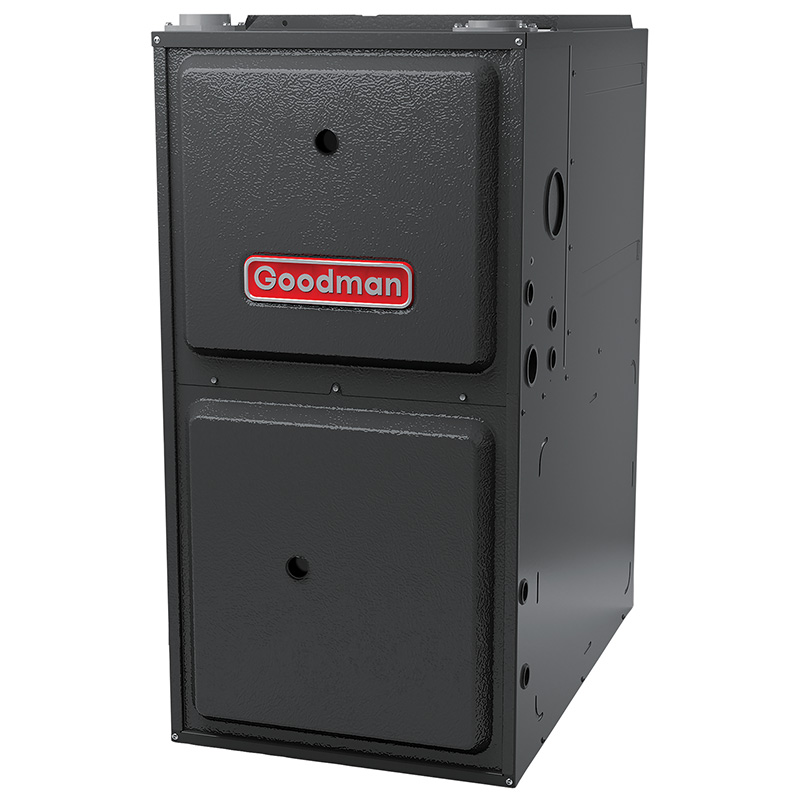
This Goodman package pairs a 2-ton, 14 SEER2-rated R-32 air conditioner with a 60,000 BTU, 96% AFUE two-stage gas furnace in an upflow configuration. The combination is aimed at smaller homes or conditioned spaces in the 800-to-1,200-square-foot range that need both efficient cooling and strong heating performance. The 96% AFUE rating means 96 cents of every dollar spent on gas goes toward heat, placing this furnace in the condensing-efficiency tier alongside premium brands, even if the hardware price stays well below them.
The two-stage gas valve and multi-speed ECM blower motor are meaningful upgrades over single-stage, budget-tier equipment. Two-stage operation lets the furnace run at a lower output on mild days, which reduces temperature swings, cuts cycling noise, and can extend equipment life by avoiding the constant on-off stress of a single-stage unit. The ECM motor draws significantly less electricity than a standard PSC blower and contributes to better humidity control during cooling season. R-32 refrigerant has a lower global-warming potential than the R-410A it replaces and is becoming the new baseline for residential systems.
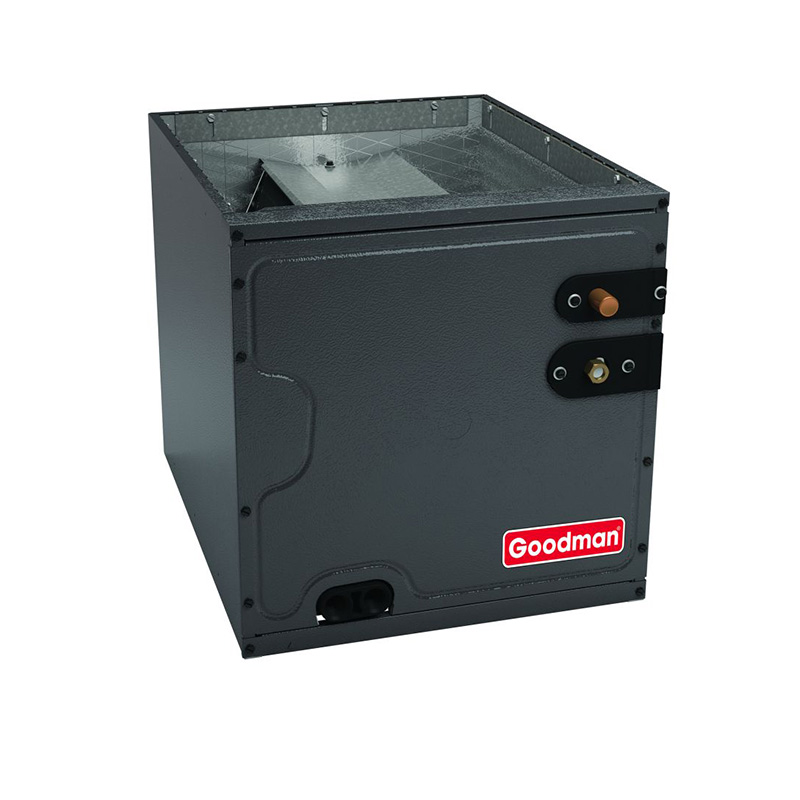
Upflow configuration means supply air exits from the top of the air handler, which suits basements and closet installations where ductwork runs upward into the living space. Because Goodman prices this system 15 to 25 percent below comparable Trane, Lennox, and Carrier equipment, it draws buyers who want above-entry-level features without paying a premium brand markup. That trade-off comes with real caveats around long-term reliability and repair costs that any honest buyer should weigh before purchasing.
This system delivers genuinely good specs for the price: a condensing-efficiency furnace, two-stage operation, and an ECM motor are not features you typically find at Goodman's price point. The honest trade-off is that Goodman's documented reliability record and complaint history after year seven mean the savings at purchase need to be weighed against the real possibility of earlier and more frequent repairs compared to premium brands.
Overall score is the average of the five ratings above.
What we like
- 96% AFUE furnace is condensing-tier efficiency, matching premium brands on fuel savings
- Two-stage gas valve and ECM blower improve comfort and reduce energy use versus single-stage alternatives
- Priced 15 to 25 percent below Carrier, Trane, and Lennox systems with similar specs
- R-32 refrigerant is the new industry standard with a better environmental profile
- Two-stage operation reduces blower noise and temperature overshoot on mild days
Trade-offs
- Dual-run capacitors are the most commonly reported failure point, typically surfacing within the first decade
- Evaporator coil leaks appear in a meaningful share of owner reviews and can be costly to address
- Compressor lifespan averages 10 to 14 years, shorter than the 15 to 20 years reported for premium brands
- ConsumerAffairs rating sits around 2.5 out of 5, with recurring complaints about rising repair costs after roughly year seven
What homeowners and pros say about Goodman
Homeowners who post about Goodman equipment tend to land in two camps. Those who had a skilled installer and kept up with annual maintenance often report years of uneventful operation and point to the upfront savings as the reason they would buy Goodman again. Those who encountered problems focus on repair costs that started mounting after the seven-year mark, a pattern consistent with the brand’s ConsumerAffairs rating of roughly 2.5 out of 5, a channel that skews toward complaints but still reflects a real subset of the ownership experience. On Google dealer reviews, where the full range of customers weighs in, Goodman locations average around 3.8 out of 5, with affordability cited most often as the reason for a positive rating.
HVAC technicians are candid about where Goodman equipment tends to let owners down. Dual-run capacitor failures are the most frequently cited repair call, and while the fix is relatively inexpensive at 300 to 600 dollars, it is common enough that experienced techs recommend building a service contract into the ownership plan. Evaporator coil leaks appear in a meaningful share of owner reports and are a more expensive problem to address. On compressor lifespan, Goodman averages 10 to 14 years in field data, which is shorter than the 15 to 20 years associated with premium brands. Pros consistently say install quality is the single biggest variable in how any Goodman unit performs, which means the contractor you choose matters as much as the equipment itself.
Sources: ConsumerAffairs Goodman owner reviews, AHRI Directory of Certified Product Performance, U.S. DOE appliance and equipment efficiency standards, Goodman product specification sheets.
What it costs to run
At 14 SEER2, cooling this 2-ton system for a typical 1200-hour cooling season at the U.S. average electricity rate of $0.17/kWh works out to roughly $350 per year in cooling, about $15 less per year than a minimum-efficiency 13.4 SEER2 unit of the same size. Your real cost depends on your climate and local rate.
Method: (24,000 BTU/hr ÷ 14 SEER2) × 1200 hours ÷ 1000 × $0.17/kWh. Rate source: U.S. EIA average; cooling hours: moderate-climate estimate.
How it compares
| Brand | Comparable model | SEER2 | Stage | Price position |
|---|---|---|---|---|
| Goodman | 2-Ton 14 SEER2 / 96% AFUE Two-Stage ECM Gas Furnace System (this unit) | 14 | Two-stage | Value pick |
| Carrier | Performance Series 14 / 96% AFUE (24ACC4 / 59TP6) | 14 | Single-stage | Typically 15 to 25 percent more than this Goodman system |
| Trane | XR14 / S9V2 96% AFUE Two-Stage | 14 | Two-stage | Typically 15 to 25 percent more than this Goodman system |
| Lennox | Merit ML14 / 96% AFUE (ML195) | 14 | Single-stage | Typically 15 to 25 percent more than this Goodman system |
Competitor rows are comparable single-stage units at similar efficiency; price is relative position, not a quote.
Questions about this system
What size home is a 2-ton, 60,000 BTU system appropriate for?
A 2-ton cooling system is generally sized for roughly 800 to 1,200 square feet in a moderate climate, though the correct size depends on insulation, ceiling height, window area, and local climate. The 60,000 BTU furnace is on the lower end of residential heating output and suits smaller, well-insulated spaces. A proper Manual J load calculation by your installer is the only way to confirm this system is the right fit for your home.
Does the R-32 refrigerant in this system require any special handling by my HVAC technician?
Yes. R-32 is mildly flammable (classified A2L) and requires technicians to use R-32-compatible tools and follow updated safety protocols. Most licensed HVAC technicians in the US are completing or have completed training on A2L refrigerants as the industry transitions away from R-410A. Confirm your installer is current on R-32 handling before work begins.
What is Goodman's warranty on this system and what does it actually cover?
Goodman typically offers a 10-year parts limited warranty on registered systems, which covers the compressor, heat exchanger, and other key components for parts cost only. Labor costs for repairs are not covered under the manufacturer warranty, so a service call that involves a failed part will still carry a labor charge. Registration must be completed within a set window after installation to activate the full 10-year term; check current Goodman documentation for exact requirements.
How likely are capacitor failures and what do they cost to fix?
Dual-run capacitor failure is the most commonly reported repair on Goodman equipment, and it can happen within the first several years of operation. The good news is it is among the least expensive HVAC repairs, typically running 300 to 600 dollars depending on your market and the technician's rates. Keeping a service agreement that includes an annual checkup can catch a weakening capacitor before it fails and leaves you without cooling or heating.
Is upflow the right configuration for my installation, and can this system be converted?
Upflow means the blower pulls return air in at the bottom and pushes conditioned air out the top, which works well when the furnace sits in a basement or lower-level closet and the supply ductwork runs upward. If your ductwork runs downward from a main-floor installation, you would need a downflow or horizontal configuration instead. Some Goodman air handlers support multiple orientations, but confirm with your installer before purchase since modifying the configuration after the fact is not always straightforward.
Specifications
| Cooling capacity | 2 Ton |
| Efficiency | 14 SEER2 |
| Furnace output | 60000 BTU |
| Furnace efficiency | 96% AFUE |
| Configuration | Upflow |
| Refrigerant | R-32 |