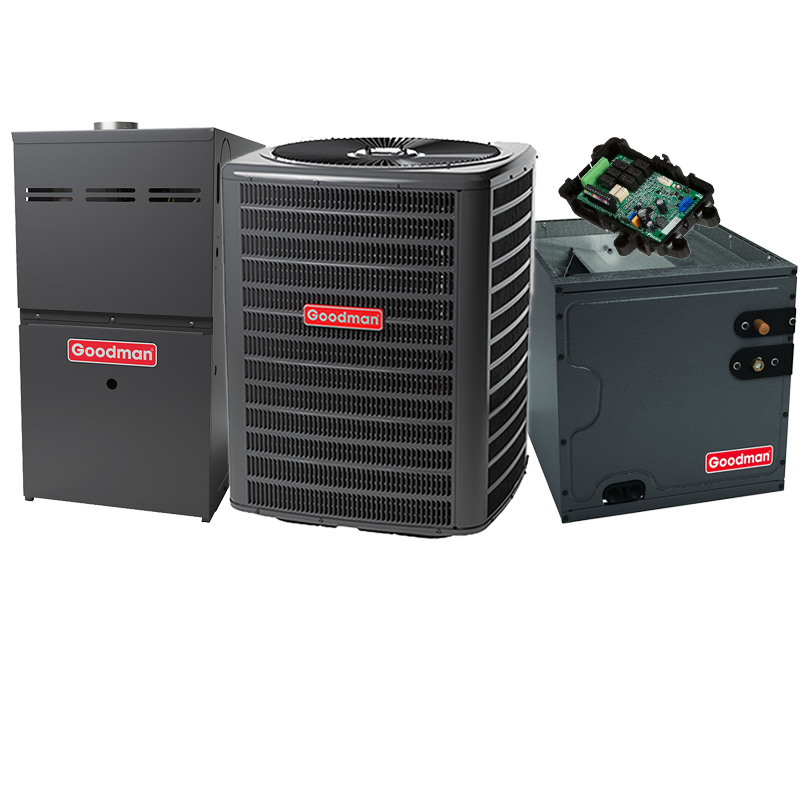
Goodman 2 Ton 14 SEER2 80000 BTU 80% Two-Stage Gas Furnace With R32 Air Conditioner Condenser And Coil System – Upflow
View on AC Direct see your lowest price →Check current price on AC Direct →
Key features
- 2-ton, 14 SEER2 cooling efficiency meets current federal minimum standards
- 80,000 BTU two-stage gas furnace runs on low fire roughly 80% of the time for quieter, steadier heat
- 80% AFUE rating meets federal minimums; suitable for mild to moderate heating climates
- R-32 refrigerant charge with lower global warming potential than R-410A
- Upflow configuration designed for basement or ground-level utility closet installations
- Matched coil and condenser sold as a system for verified ARI comfort rating
About this system
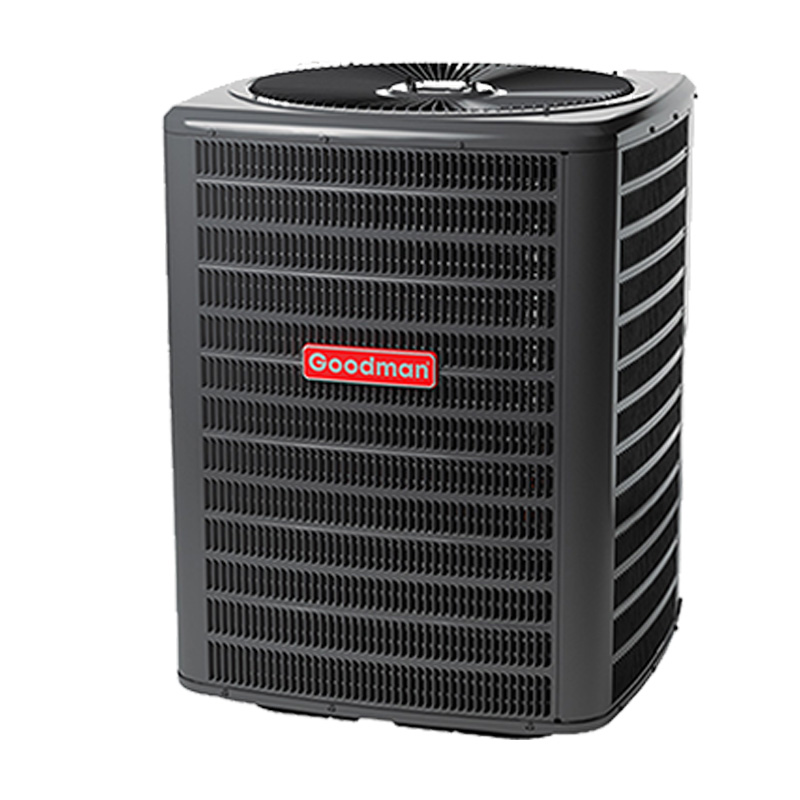
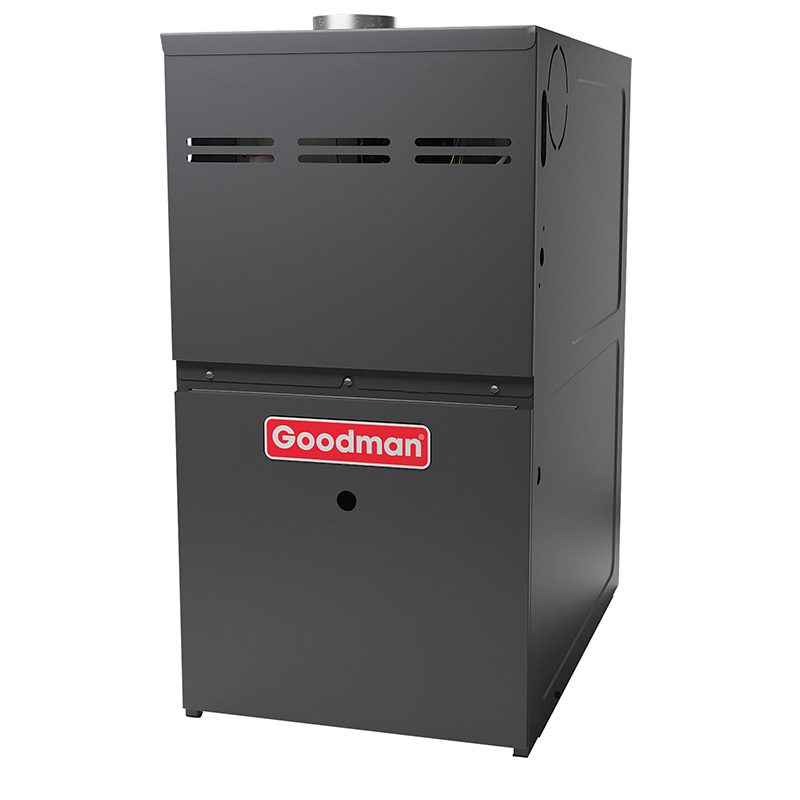
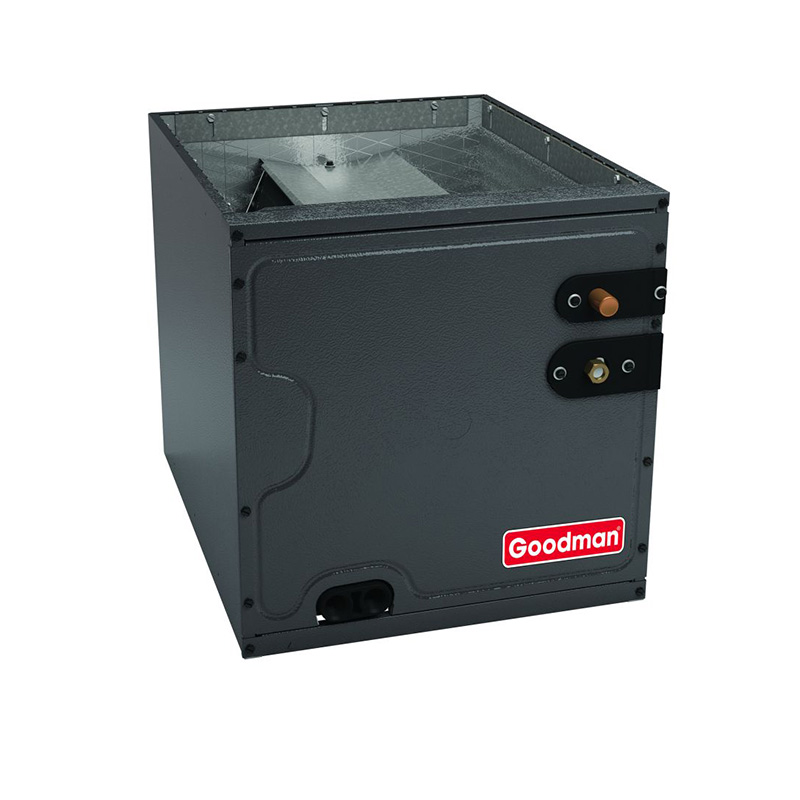
This Goodman bundle pairs a 2-ton, 14 SEER2 R-32 air conditioner condenser and matching evaporator coil with an 80,000 BTU, 80% AFUE two-stage gas furnace in an upflow configuration. It is sized for homes roughly in the 900 to 1,200 square foot range, depending on climate, insulation, and local heat load. The two-stage furnace is a meaningful upgrade over single-stage models: running on low fire the majority of the time, it cycles less aggressively, holds temperature more evenly, and tends to run quieter on ordinary heating days. R-32 refrigerant carries a lower global warming potential than the R-410A it replaces, and is increasingly common in new equipment as the industry moves away from older blends.
The upflow furnace orientation suits homes where the air handler sits in a basement or utility closet with supply ductwork running up through the floor system. The 80% AFUE rating means 20 cents of every heating dollar exits through the flue, which is the federal minimum for most of the country and a reasonable choice in mild to moderate climates. Homeowners in colder northern climates who run their furnace heavily from November through March may find a 96% AFUE unit pays back the price difference in fuel savings within a few years. For moderate climates, the cost gap rarely closes quickly enough to justify the higher upfront spend.
This Goodman system gives budget-conscious buyers a functional, code-compliant heating and cooling solution at a price point that undercuts Carrier, Trane, and Lennox by a meaningful margin. The two-stage furnace adds genuine comfort value over entry-level single-stage competitors at similar prices, but long-term ownership costs depend heavily on install quality and a willingness to budget for component repairs after year seven. It is a reasonable choice when cost is the primary driver and expectations are set accordingly.
Overall score is the average of the five ratings above.
What we like
- Priced 15 to 25 percent below comparable Trane, Carrier, and Lennox systems
- Two-stage furnace operation improves temperature consistency and reduces cycling noise
- R-32 refrigerant is the forward-looking industry standard with a lower environmental footprint
- Matched system components simplify warranty claims and efficiency verification
- 14 SEER2 meets current federal minimum requirements without overpaying for efficiency gains that rarely pencil out in mild climates
Trade-offs
- Compressor lifespan averages 10 to 14 years versus 15 to 20 years for premium-brand equipment
- Evaporator coil leaks and capacitor failures are among the most documented owner complaints post-warranty
- 80% AFUE furnace will cost more to operate than a 96% unit in high-heating-load climates
- A minority of owners report refrigerant leaks in the first year, often traceable to install or initial charge quality
What homeowners and pros say about Goodman
Homeowners who purchase Goodman equipment tend to split fairly predictably in their feedback. On Google dealer review aggregates, the brand sits around 3.8 out of 5, where the most consistent praise is straightforward: the price made the project possible. Buyers who stretched to fill a budget gap, replace a failed system before winter, or outfit a rental property without overspending generally report satisfaction in the first few years of ownership. The affordability advantage over Carrier, Trane, and Lennox is real and documented, typically running 15 to 25 percent below comparable configurations.
The longer-term picture is more complicated. On ConsumerAffairs, where the audience skews toward owners motivated to post by a problem, Goodman scores around 2.5 out of 5, and the recurring theme is repair costs that begin accumulating after roughly year seven. The failure modes cited most often are not obscure: dual-run capacitor failures are the single most common complaint, a repair that usually runs 300 to 600 dollars and is not unique to Goodman, but is documented with notable frequency here. Evaporator coil leaks appear in a meaningful share of owner accounts, and compressor lifespan tends to average 10 to 14 years rather than the 15 to 20 years owners of premium-brand equipment more often report. HVAC technicians consistently point to install quality as the largest variable in how long any Goodman system actually lasts, which means choosing a experienced, licensed installer matters more here than it might with a premium brand that has tighter factory tolerances.
Sources: ConsumerAffairs Goodman owner reviews, AHRI Directory of Certified Product Performance, U.S. DOE appliance and equipment efficiency standards, Goodman product specification sheets.
What it costs to run
At 14 SEER2, cooling this 2-ton system for a typical 1200-hour cooling season at the U.S. average electricity rate of $0.17/kWh works out to roughly $350 per year in cooling, about $15 less per year than a minimum-efficiency 13.4 SEER2 unit of the same size. Your real cost depends on your climate and local rate.
Method: (24,000 BTU/hr ÷ 14 SEER2) × 1200 hours ÷ 1000 × $0.17/kWh. Rate source: U.S. EIA average; cooling hours: moderate-climate estimate.
How it compares
| Brand | Comparable model | SEER2 | Stage | Price position |
|---|---|---|---|---|
| Goodman | This System (2-ton 14 SEER2 + 80k BTU 80% Two-Stage) | 14 | Two-stage furnace / single-stage condenser | Value pick |
| Carrier | Performance 14 (24ACC4) with 58MXA two-stage furnace | 14 | Two-stage furnace / single-stage condenser | Moderately higher than Goodman, typically 15 to 22 percent more |
| Trane | XR14c condenser with S8X2 two-stage furnace | 14 | Two-stage furnace / single-stage condenser | Higher than Goodman, typically 18 to 25 percent more |
| Lennox | ML14XC1 condenser with ML196E two-stage furnace | 14 | Two-stage furnace / single-stage condenser | Higher than Goodman, typically 20 to 28 percent more |
Competitor rows are comparable single-stage units at similar efficiency; price is relative position, not a quote.
Questions about this system
Will this system qualify for any federal tax credits?
As of 2025, the Inflation Reduction Act efficiency tax credit requires a minimum of 15 SEER2 for split-system air conditioners and 97% AFUE or a heat pump for heating credits. This system at 14 SEER2 and 80% AFUE does not meet those thresholds. Check with a tax professional and the ENERGY STAR database for current qualifying equipment before purchasing.
Is a two-stage furnace worth it over a single-stage at this price point?
For most households, yes. A two-stage furnace runs on low fire the large majority of heating hours, which means less abrupt temperature swings, less blower noise during normal operation, and fewer on-off cycles that wear components. The price premium over a comparable Goodman single-stage is modest and the comfort difference is noticeable, particularly in shoulder-season weather.
What is the R-32 refrigerant and does it change service costs?
R-32 is a single-component refrigerant with a lower global warming potential than R-410A, and it is now widely stocked by HVAC distributors. Technician familiarity is growing quickly. Service costs for leak repair or recharge are broadly similar to R-410A work, though you should confirm your local service contractor is equipped to handle R-32 before purchasing.
How often do the capacitors actually fail, and what does it cost to fix?
Dual-run capacitors are the most commonly reported repair on Goodman condensing units, and many owners encounter at least one failure over the life of the system. The repair is typically straightforward, and documented cost ranges run from about 300 to 600 dollars including a service call. It is not a reason to avoid the equipment, but it is worth keeping that number in a maintenance budget.
Is the upflow configuration compatible with my current ductwork?
Upflow furnaces are designed for installations where the supply air exits from the top of the unit and feeds ductwork running overhead or up through the floor system, which is the standard setup in most basements and ground-level utility closets. If your existing furnace is already an upflow model, this unit will generally fit the same footprint, though you should verify cabinet dimensions and flue size with your installer before ordering.
Specifications
| Cooling capacity | 2 Ton |
| Efficiency | 14 SEER2 |
| Furnace output | 80000 BTU |
| Configuration | Upflow |
| Refrigerant | R-32 |