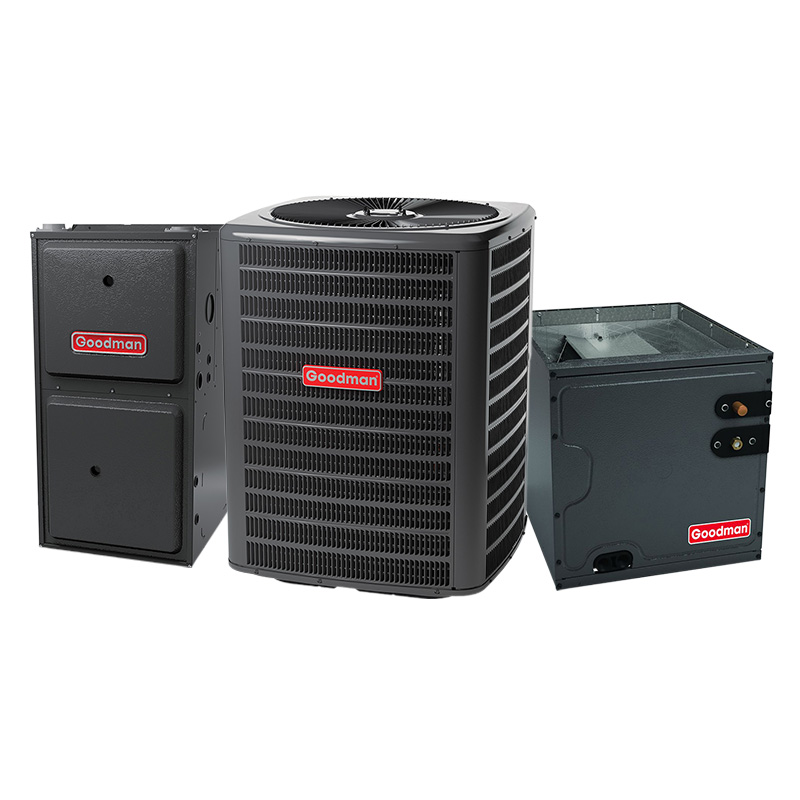
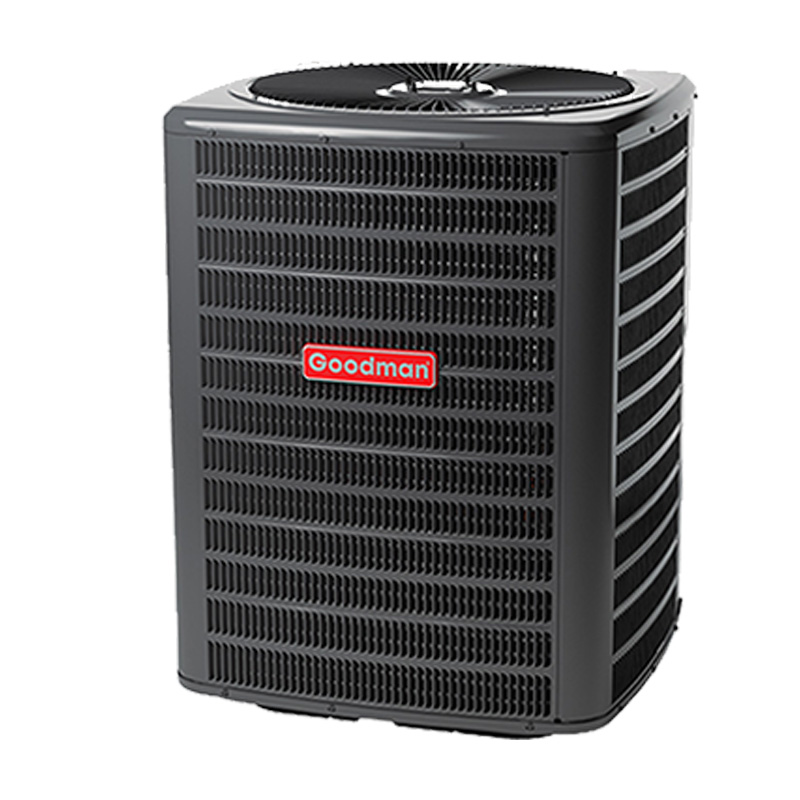
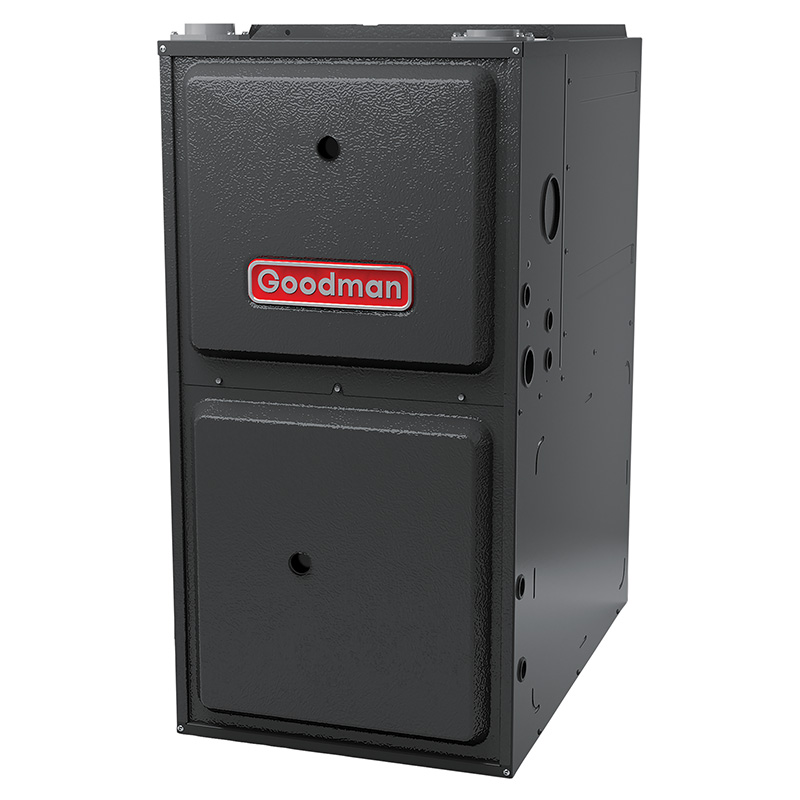
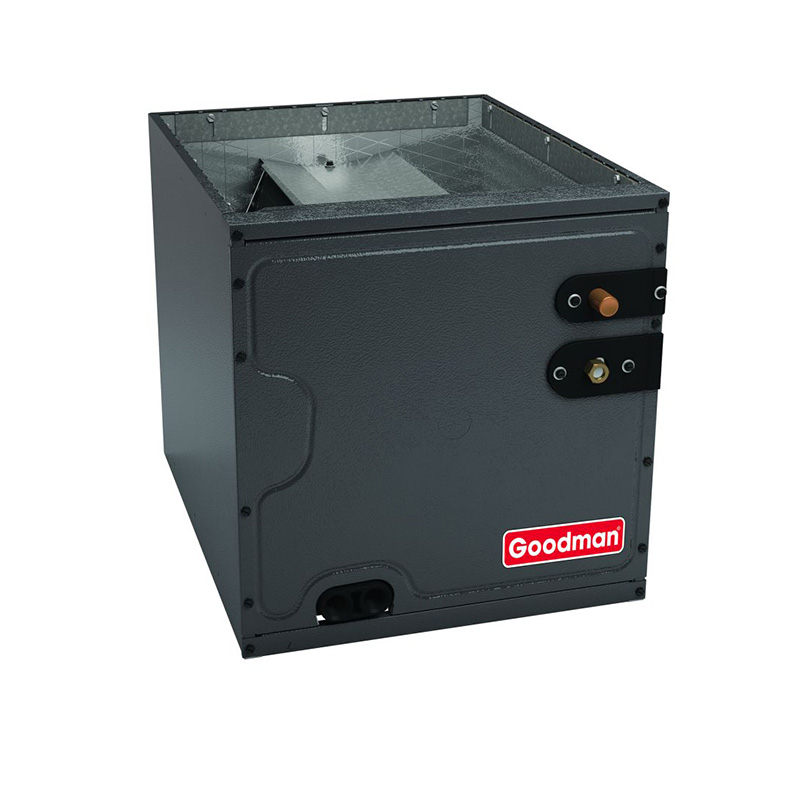
Goodman 2 Ton 14 SEER2 AC & Gas Furnace System – Multi-Speed, 60000 BTU Gas Furnace, 92% AFUE, Upflow, R32
View on AC Direct see your lowest price →Check current price on AC Direct →
Key features
- 2-ton cooling capacity with 14 SEER2 efficiency rating
- 60,000 BTU gas furnace at 92% AFUE for moderate fuel savings
- Multi-speed blower motor for quieter operation and improved airflow
- R-32 refrigerant with lower global warming potential than R-410A
- Upflow configuration only, requiring vertical installation in basement or utility closet
- Goodman's 10-year parts limited warranty with registered installation
About this system
The Goodman GLXS3BN2410D pairs a 2-ton, 14 SEER2 air conditioner with a 60,000 BTU, 92% AFUE upflow gas furnace in a split system suited to smaller homes and condominiums in the 800-to-1,200-square-foot range, depending on local climate and insulation. The R-32 refrigerant charge is a meaningful detail: R-32 carries a lower global warming potential than R-410A and is increasingly common as the industry phases out older refrigerants, though it does require that your installer hold the appropriate certification and use compatible components. The multi-speed furnace blower gives the system a bit more flexibility than a fixed-speed unit, allowing it to ramp down during mild weather for quieter operation and more even airflow distribution.
At 14 SEER2 and 92% AFUE, this system sits at the federal minimum efficiency threshold for most northern U.S. climate zones and just above the minimum for southern regions. That means lower purchase cost but higher monthly energy bills compared to 16 SEER2 or higher equipment. Homeowners replacing an aging 80% AFUE furnace will see a real reduction in gas consumption, but buyers already running a 96% unit will notice little change. The upflow configuration means the furnace must sit vertically in a basement, closet, or utility room with ductwork running upward, so confirming your home’s layout before ordering is essential.
The Goodman GLXS3BN2410D is a budget-conscious entry point into a matched split system, delivering code-compliant efficiency without the premium price tag of Trane or Carrier. Its long-term reliability is meaningfully tied to installation quality and the luck of the draw on components, particularly capacitors and evaporator coils. For buyers with a limited upfront budget and access to a skilled installer, it is a defensible choice; for buyers prioritizing longevity over initial savings, the math deserves a closer look.
Overall score is the average of the five ratings above.
What we like
- Purchase price typically 15 to 25 percent below comparable Carrier, Trane, and Lennox systems
- 92% AFUE furnace offers a genuine efficiency upgrade over older 80% units
- R-32 refrigerant is more environmentally responsible than R-410A
- Multi-speed blower improves comfort and reduces operating noise versus single-speed
- 10-year registered parts warranty is competitive for the value tier
Trade-offs
- Dual-run capacitors are the most frequently reported failure, typically appearing after year 7 at a cost of $300 to $600 per service call
- Evaporator coil leaks appear in a notable share of owner reports and can be costly to address
- Compressor lifespan averages 10 to 14 years, shorter than the 15 to 20 years reported for premium brands
- A minority of owners report refrigerant leaks in the first year, most often traced to installation or initial charge errors
What homeowners and pros say about Goodman
Homeowners who share feedback on Goodman systems tend to cluster at the poles. On ConsumerAffairs, where the platform skews toward people motivated by frustration, Goodman sits at roughly 2.5 out of 5 stars, with the recurring theme being repair costs that begin accumulating around year seven. The most cited culprit is the dual-run capacitor, a component that fails often enough to feel like a scheduled event rather than a surprise, typically costing $300 to $600 per visit. Evaporator coil leaks also surface with enough frequency in owner accounts to be a genuine consideration, not a rare edge case. Compressor longevity is another area where the brand trails premium competitors, with averages in the 10-to-14-year range compared to 15-to-20 years for Trane or Carrier. A smaller subset of owners report refrigerant leaks within the first year, but technicians generally attribute those to installation or initial charging errors rather than hardware defects.
Google dealer reviews tell a more moderate story, with Goodman-installing contractors averaging around 3.8 out of 5 across hundreds of location-level reviews. The most consistent praise is straightforward: the price is lower, and for many buyers that is the deciding factor. HVAC professionals who work on Goodman units tend to describe them as serviceable equipment whose lifespan is disproportionately shaped by how well the system was installed and commissioned. A properly charged, correctly sized Goodman installed by a careful technician will outperform a careless install of a premium brand. For this 2-ton, 14 SEER2 package with an R-32 charge, that installer-dependency is especially relevant, since R-32 systems require additional handling competency that not every local contractor has fully absorbed yet.
Sources: ConsumerAffairs Goodman owner reviews, AHRI Directory of Certified Product Performance, U.S. DOE appliance and equipment efficiency standards, Goodman product specification sheets.
What it costs to run
At 14 SEER2, cooling this 2-ton system for a typical 1200-hour cooling season at the U.S. average electricity rate of $0.17/kWh works out to roughly $350 per year in cooling, about $15 less per year than a minimum-efficiency 13.4 SEER2 unit of the same size. Your real cost depends on your climate and local rate.
Method: (24,000 BTU/hr ÷ 14 SEER2) × 1200 hours ÷ 1000 × $0.17/kWh. Rate source: U.S. EIA average; cooling hours: moderate-climate estimate.
How it compares
| Brand | Comparable model | SEER2 | Stage | Price position |
|---|---|---|---|---|
| Goodman | GLXS3BN2410D | 14 | Single-stage | Value pick |
| Carrier | Comfort 14 Series (24ACC4) | 14 | Single-stage | Typically 15 to 25 percent more than Goodman |
| Trane | XR14 Series | 14 | Single-stage | Typically 15 to 25 percent more than Goodman |
| Lennox | Merit 14ACX Series | 14 | Single-stage | Typically 15 to 25 percent more than Goodman |
Competitor rows are comparable single-stage units at similar efficiency; price is relative position, not a quote.
Questions about this system
Is this system compatible with my existing ductwork if I'm replacing an older R-410A system?
The duct sizing is based on airflow capacity, which at 2 tons is unlikely to require changes if your existing ducts were properly sized for a 2-ton unit. However, R-32 requires dedicated R-32 compatible components and a contractor certified to handle it, so your existing copper line set should be inspected and flushed before reuse, and any R-410A-specific components cannot carry over.
What does 'upflow' mean and how do I know if my home qualifies?
Upflow means the furnace draws return air in at the bottom and discharges heated or cooled air out the top, sending it into ductwork that runs upward through the home. This configuration fits basements, first-floor utility closets, and crawlspace installations where the air handler sits below the living space. If your existing system is a horizontal or downflow unit, this model is not a direct replacement.
How often should I expect to replace the capacitor, and what does that typically cost?
Goodman dual-run capacitors are the most commonly reported service item on their AC units, with failures most often appearing after roughly seven years of use. A capacitor replacement is generally a straightforward repair that runs $300 to $600 including labor, and keeping a service contract or scheduling annual tune-ups can catch a weakening capacitor before it causes a compressor shutdown.
Will I actually save money on heating bills with the 92% AFUE furnace?
If you are replacing an 80% AFUE furnace, you can expect to use roughly 12 to 15 percent less natural gas for the same heat output, which translates to real savings over a heating season. If you already have a 95% or 96% AFUE unit, the efficiency gain is negligible and the upgrade savings will not be meaningful.
Does the 10-year warranty cover labor costs if a part fails?
Goodman's 10-year registered limited warranty covers the cost of replacement parts only, not labor. Depending on your contractor and geographic market, labor for a warranty repair can run $150 to $400 or more per visit, so budgeting for those potential costs or purchasing an extended labor warranty through your installer is worth considering.
Specifications
| Cooling capacity | 2 Ton |
| Efficiency | 14 SEER2 |
| Furnace output | 60000 BTU |
| Furnace efficiency | 92% AFUE |
| Configuration | Upflow |
| Refrigerant | R-32 |
| Model | GLXS3BN2410D |