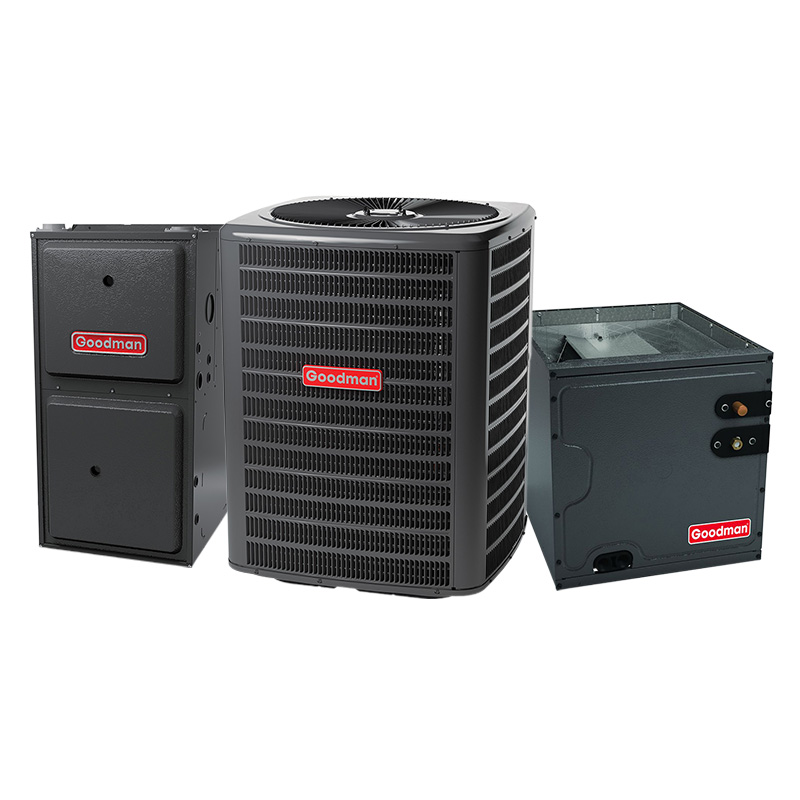
Goodman 2 Ton 14 SEER2 AC & Gas Furnace System – Multi-Speed, 80000 BTU Gas Furnace, 92% AFUE, Upflow, R32
View on AC Direct see your lowest price →Check current price on AC Direct →
Key features
- 2-ton cooling capacity, suited to smaller homes and well-insulated spaces up to roughly 1,100 sq ft
- 14 SEER2 efficiency meets current federal minimum standards for most U.S. climate zones
- 92% AFUE gas furnace delivers meaningful heating savings over 80% AFUE baseline models
- Multi-speed blower motor improves humidity control and reduces operating noise at lower loads
- R-32 refrigerant with a lower global warming potential than the R-410A it replaces
- Upflow configuration designed for basement or closet installs with overhead duct systems
About this system
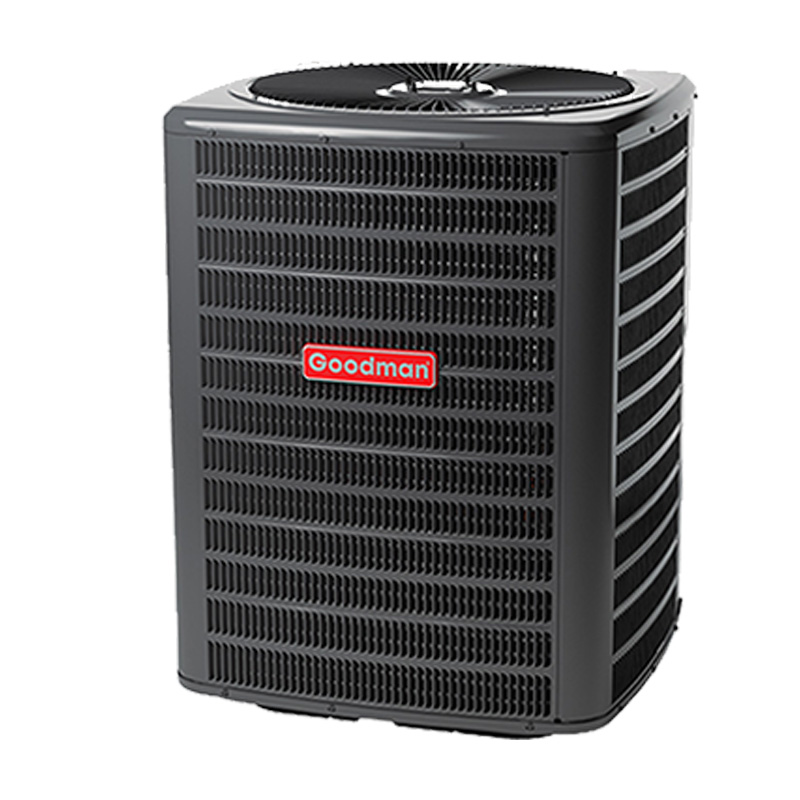
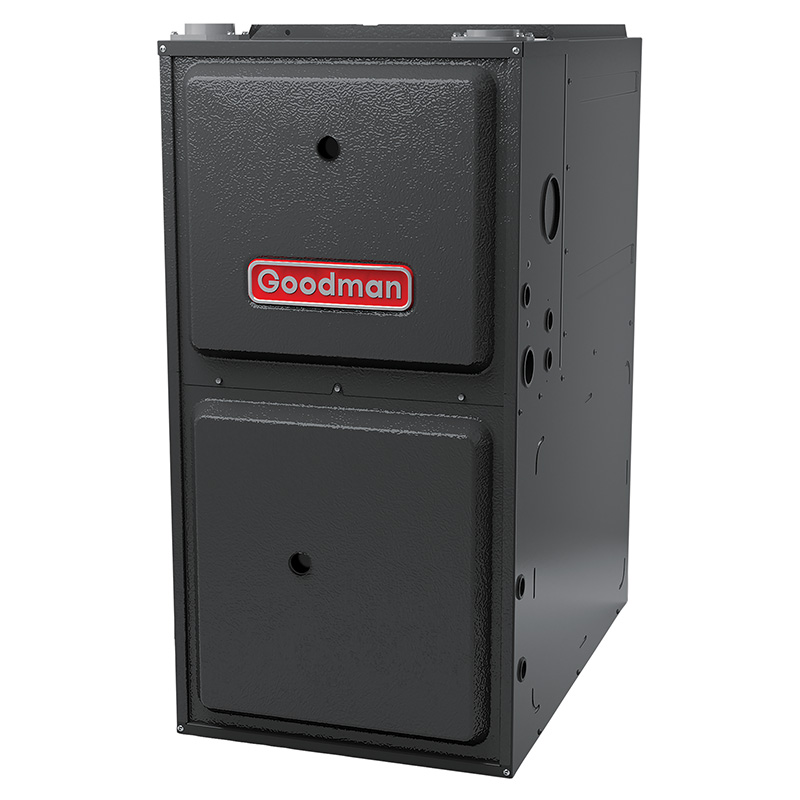
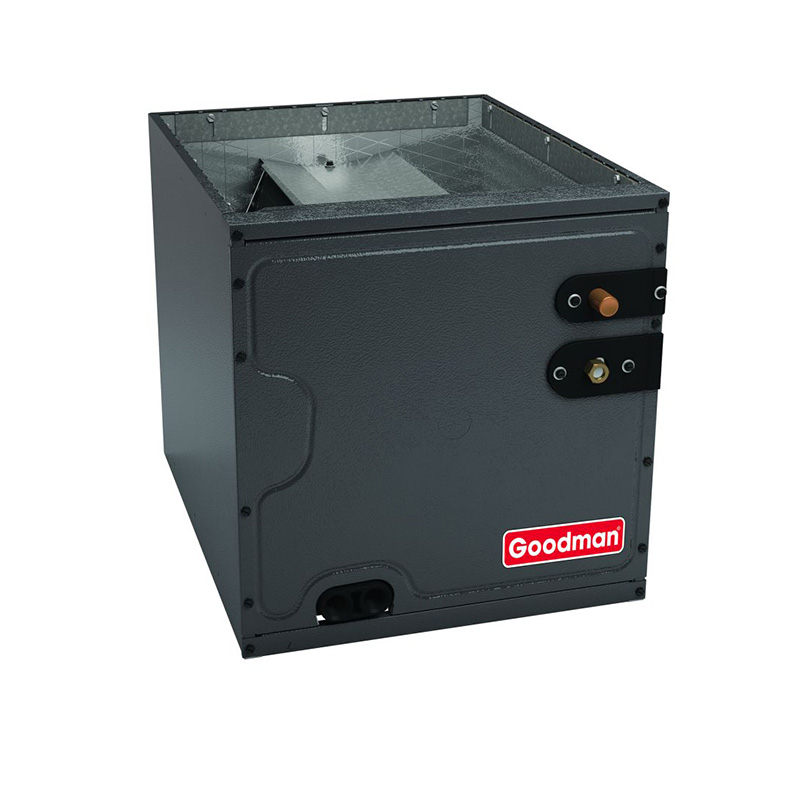
The Goodman GLXS3BN2410D pairs a 2-ton, 14 SEER2 air conditioner with an 80,000 BTU, 92% AFUE upflow gas furnace into a matched split system. At 2 tons, it is sized for smaller homes typically in the 700-to-1,100 square foot range, though accurate Manual J load calculations for your specific space and climate zone should always drive the final sizing decision. The 14 SEER2 rating sits at the current federal minimum efficiency threshold for most U.S. regions, meaning it meets code but does not deliver the operating-cost savings of a 16- or 18-SEER2 system. The 92% AFUE furnace is a meaningful step above the 80% AFUE baseline and will convert 92 cents of every dollar of gas into usable heat, reducing heating bills noticeably versus entry-level single-stage furnaces.
This system uses R-32 refrigerant, a newer low-global-warming-potential option that is becoming the industry standard as R-410A is phased out. R-32 requires technicians who are certified and equipped to handle it, so confirming your installer’s familiarity with R-32 before signing a contract is worth the conversation. The upflow configuration means the furnace discharges warm air from the top, which suits installations where the unit sits in a basement, closet, or utility room with ductwork running overhead. The multi-speed furnace blower gives better humidity control and quieter part-load operation compared to a fixed-speed motor, which is a genuine comfort advantage for a system at this price point.
The GLXS3BN2410D is a functional, honestly priced entry into the matched split-system category, well suited to budget-conscious buyers who accept that long-term costs and reliability lean heavily on installation quality and ongoing maintenance. The 92% AFUE furnace and multi-speed blower are genuine strengths at this price point, but the 14 SEER2 cooling efficiency is minimal by today's standards, and Goodman's documented track record of capacitor failures, evaporator coil leaks, and shorter-than-premium compressor life are real considerations. It is not a system to buy and ignore.
Overall score is the average of the five ratings above.
What we like
- Priced 15 to 25 percent below comparable Carrier, Trane, and Lennox equipment, lowering the upfront barrier
- 92% AFUE furnace meaningfully cuts heating costs versus 80% AFUE alternatives in the same price tier
- Multi-speed blower improves comfort and humidity management over fixed-speed motors common at this price
- R-32 refrigerant positions the system for compatibility with near-term regulatory and service requirements
- Replacement parts, including the commonly needed dual-run capacitor, are widely stocked and relatively inexpensive
Trade-offs
- 14 SEER2 is the efficiency floor for most regions, so operating costs will be higher than mid- or high-efficiency alternatives over a 10-plus-year ownership period
- Compressor lifespan averages 10 to 14 years versus 15 to 20 years typical of premium brands, raising the odds of a major repair or replacement before budget brands catch up on payback
- Evaporator coil leaks appear in a meaningful share of owner feedback, and dual-run capacitor failures are the most commonly reported repair, typically appearing after year 7
- Performance is highly sensitive to installation quality, meaning a rushed or inexperienced install can shorten the system's useful life considerably
What homeowners and pros say about Goodman
Homeowners who leave feedback on Goodman equipment tend to sort into two groups: those who got a careful install and have had years of quiet, uneventful operation, and those who ran into repair bills around or after the seven-year mark and feel the savings on day one did not hold up over time. On ConsumerAffairs, Goodman scores roughly 2.5 out of 5, a channel that skews toward dissatisfied owners, where climbing repair costs after year 7 come up repeatedly. Google dealer reviews land closer to 3.8 out of 5, and there the most consistent praise is straightforward: the price made the purchase possible. The gap between those two scores reflects the reality that Goodman equipment is not equally good in all installations.
HVAC technicians who service Goodman regularly point to dual-run capacitor failure as the most predictable maintenance event, usually a relatively inexpensive fix in the 300-to-600-dollar range but a reminder that the system is not maintenance-free. Evaporator coil leaks show up in a notable share of owner accounts and carry a higher repair cost. On the compressor side, industry experience puts Goodman compressors in the 10-to-14-year range on average, compared to 15 to 20 years for premium brands, which is a real factor in total ownership cost for buyers planning a long stay. A small number of owners also report refrigerant leaks in the first year, and technicians generally attribute those to installation or charge errors rather than a manufacturing defect in the unit itself. The bottom line from both camps is consistent: the brand rewards attentive installation and regular maintenance, and punishes neglect more quickly than higher-priced alternatives.
Sources: ConsumerAffairs Goodman owner reviews, AHRI Directory of Certified Product Performance, U.S. DOE appliance and equipment efficiency standards, Goodman product specification sheets.
What it costs to run
At 14 SEER2, cooling this 2-ton system for a typical 1200-hour cooling season at the U.S. average electricity rate of $0.17/kWh works out to roughly $350 per year in cooling, about $15 less per year than a minimum-efficiency 13.4 SEER2 unit of the same size. Your real cost depends on your climate and local rate.
Method: (24,000 BTU/hr ÷ 14 SEER2) × 1200 hours ÷ 1000 × $0.17/kWh. Rate source: U.S. EIA average; cooling hours: moderate-climate estimate.
How it compares
| Brand | Comparable model | SEER2 | Stage | Price position |
|---|---|---|---|---|
| Goodman | GLXS3BN2410D | 14 | Single-stage | Value pick |
| Carrier | Comfort 14 Series (24ACC4) | 14 | Single-stage | Typically 15 to 25 percent more than this Goodman system |
| Trane | XR14 Series | 14-15 | Single-stage | Typically 15 to 25 percent more than this Goodman system |
| Lennox | Merit 14ACX Series | 14 | Single-stage | Typically 15 to 25 percent more than this Goodman system |
Competitor rows are comparable single-stage units at similar efficiency; price is relative position, not a quote.
Questions about this system
Is a 2-ton unit the right size for my home, or should I go up to 2.5 tons?
Tonnage should be determined by a Manual J load calculation, not square footage rules of thumb alone. A 2-ton unit is generally appropriate for well-insulated homes in the 700-to-1,100 square foot range, but ceiling height, window area, insulation levels, and local climate all affect the answer. Ask your installer to show you the load calculation before agreeing on sizing.
Does my technician need special certification or equipment to work with R-32 refrigerant?
Yes. R-32 is mildly flammable and requires technicians to use R-32-rated tools and follow specific handling procedures. Not all HVAC contractors are currently equipped for it, so confirm R-32 experience before scheduling installation or any future service call.
What is the most likely repair I will face, and roughly what does it cost?
The dual-run capacitor is the most commonly reported failure point on Goodman equipment and typically runs between 300 and 600 dollars including labor. Evaporator coil leaks are the next most-discussed issue in owner feedback and are more expensive to address. Keeping up with annual tune-ups catches early signs of both.
How does 14 SEER2 affect my electricity bill compared to a higher-efficiency system?
A 16 or 18 SEER2 system will use measurably less electricity per cooling hour, and the gap compounds over a decade or more of ownership. If your home runs the AC heavily from late spring through early fall, the operating-cost savings of a higher-efficiency unit may offset its higher purchase price within several years. For lightly loaded climates or part-time cooling needs, the payback period extends considerably.
What does the warranty cover, and are there conditions I need to meet to keep it valid?
Goodman typically offers a 10-year parts warranty on registered equipment, but warranty terms require registration within a set window after installation and, in most cases, installation by a licensed contractor. Review the warranty documentation for this specific model because conditions vary, and failing to register or using an unlicensed installer can reduce coverage to a shorter base period.
Specifications
| Cooling capacity | 2 Ton |
| Efficiency | 14 SEER2 |
| Furnace output | 80000 BTU |
| Furnace efficiency | 92% AFUE |
| Configuration | Upflow |
| Refrigerant | R-32 |
| Model | GLXS3BN2410D |