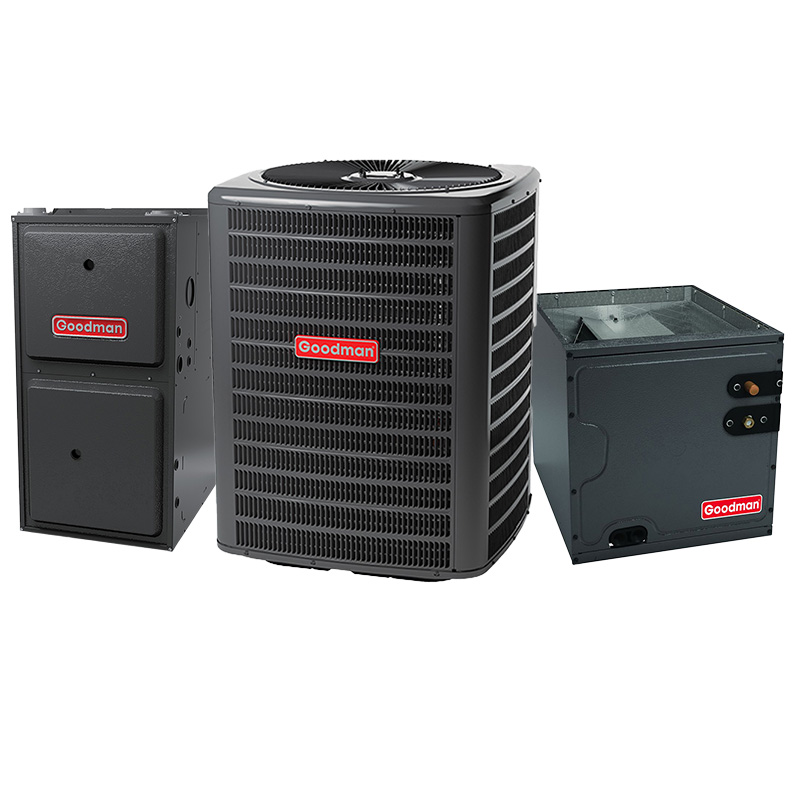
Goodman 2 Ton 14 SEER2 AC With 60000 BTU 96% AFUE 2-Stage Variable-Speed ECM Gas Furnace System – Upflow | R32
View on AC Direct see your lowest price →Check current price on AC Direct →
Key features
- 2-ton cooling capacity rated at 14 SEER2, meeting current federal minimum efficiency standards
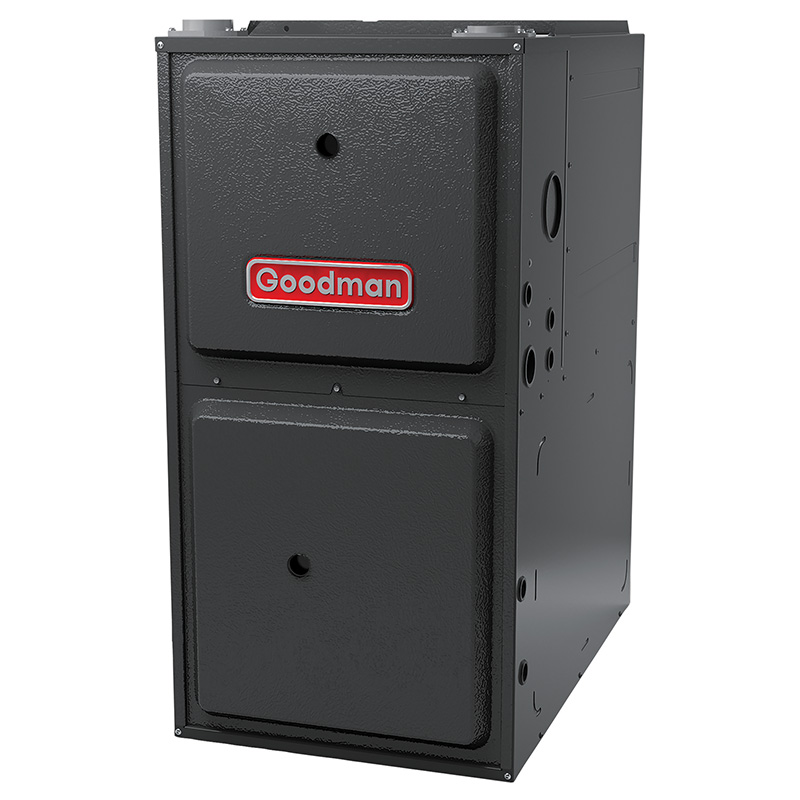
- 60,000 BTU two-stage gas furnace operates at reduced fire for most conditions, full fire on demand
- 96% AFUE furnace rating means roughly 96 cents of every fuel dollar becomes usable heat
- Variable-speed ECM blower motor reduces electricity use and supports longer, quieter run cycles
- R-32 refrigerant with lower global-warming potential than R-410A
- Upflow configuration designed for basement or closet installs with bottom-return, top-supply airflow
About this system
This Goodman 2-ton, 14 SEER2 system pairs a straightforward cooling capacity with a genuinely capable gas furnace. The 60,000 BTU, 96% AFUE two-stage furnace with a variable-speed ECM blower is the real headline here. Two-stage heating means the furnace runs at a lower fire most of the time, cycling up only when temperatures drop sharply, which reduces temperature swings and keeps indoor air more consistent than a single-stage unit can. The ECM motor adjusts airflow continuously rather than blasting at one fixed speed, which cuts blower electricity costs and helps maintain steadier humidity levels through longer, quieter run cycles.
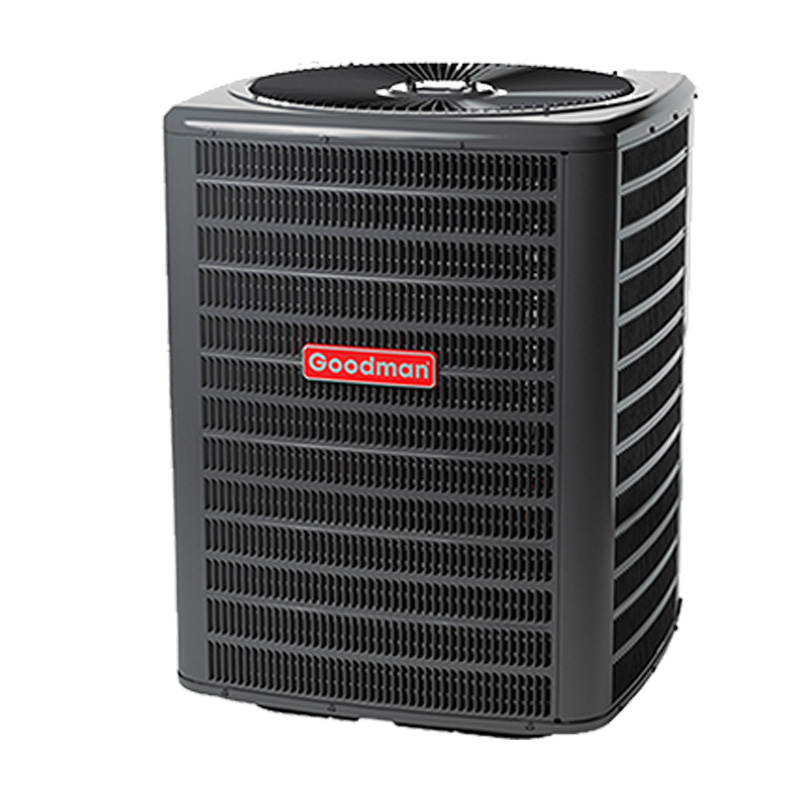
The 14 SEER2 cooling side sits at the entry tier for new efficiency standards, meeting current federal minimums for most U.S. regions. That is honest to say out loud: it is not a high-efficiency cooling system, and buyers in hot climates who run their AC from April through October may find the operating cost gap between 14 SEER2 and a 17 or 18 SEER2 unit meaningful over time. Where this system finds its footing is in moderate climates or situations where the furnace sees far heavier use than the AC, making the 96% AFUE the more impactful efficiency number. R-32 refrigerant is a lower global-warming-potential alternative to R-410A and is now widely stocked, though it does require technicians to verify their equipment certifications before handling it.
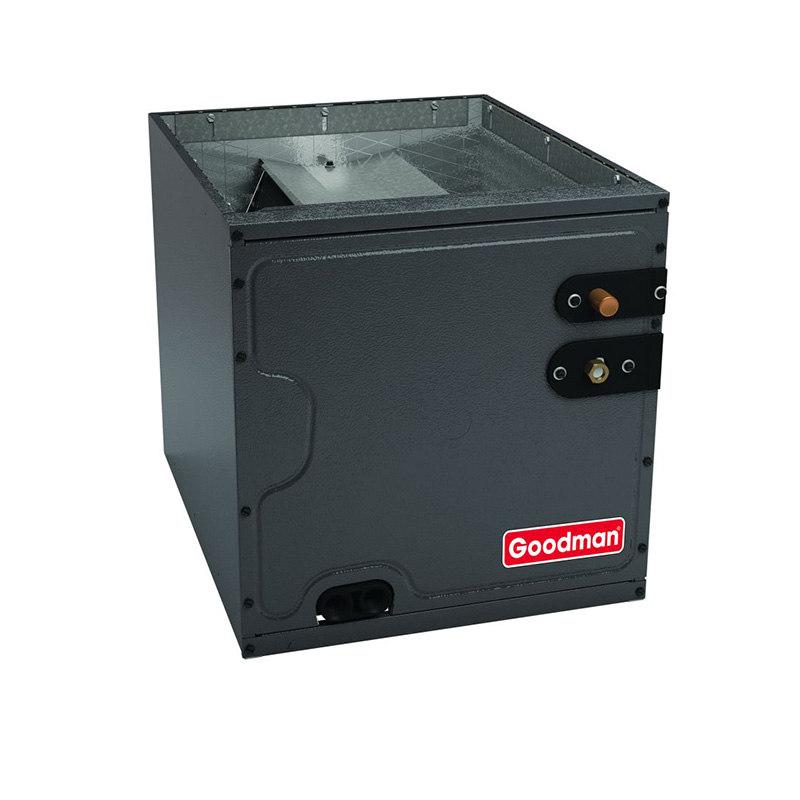
The upflow configuration suits homes with the air handler in a basement or closet where supply air rises into the living space, which is the most common setup in northern and midwestern construction. This is not a universal fit: slab homes, attic installs, or horizontal applications require a different configuration entirely, so confirming your existing ductwork layout before ordering matters.
This system makes the most sense when heating is the dominant load and budget is a real constraint. The furnace specs are genuinely strong for the price tier, but the 14 SEER2 cooling efficiency is a floor, not a ceiling, and Goodman's documented reliability record means install quality and a solid parts warranty matter more here than with premium brands.
Overall score is the average of the five ratings above.
What we like
- 96% AFUE two-stage furnace delivers strong heating efficiency at a value price point
- Variable-speed ECM blower improves comfort and lowers blower operating costs versus PSC motors
- R-32 refrigerant is widely available and has lower environmental impact than R-410A
- Priced roughly 15 to 25 percent below comparable Carrier, Trane, and Lennox systems
- Two-stage furnace operation reduces temperature swings and supports quieter part-load performance
Trade-offs
- 14 SEER2 is the minimum efficiency tier; operating costs will be higher than mid- or high-efficiency cooling alternatives in hot climates
- Dual-run capacitors and evaporator coil leaks are the most documented failure points in owner experience
- Compressor lifespan averages 10 to 14 years, shorter than the 15 to 20 years reported for premium brands
- A minority of owners report refrigerant leaks in the first year, most often tied to installation or initial charge issues rather than equipment defect
What homeowners and pros say about Goodman
Homeowners who browse Goodman reviews encounter a split picture. On Google dealer reviews the brand averages around 3.8 out of 5 across a wide range of locations, with affordability consistently cited as the reason buyers chose it and, in many cases, stayed satisfied. The ConsumerAffairs profile is rougher, sitting around 2.5 out of 5, though that channel tends to attract owners who had problems rather than those who did not. The recurring pattern in critical reviews is repair costs rising after roughly year seven, which tracks with the documented failure modes: dual-run capacitor failures are the most commonly reported issue and are generally inexpensive to fix, but evaporator coil leaks show up in a meaningful share of owner accounts and carry a higher repair cost. A smaller number of owners report refrigerant leaks within the first year, and most evidence points to installation or initial charge quality rather than a factory defect.
HVAC technicians who work on Goodman equipment regularly tend to describe it as acceptable hardware that lives or dies by who puts it in and how well the refrigerant charge is set at startup. The compressor lifespan averaging 10 to 14 years versus the 15 to 20 years more often seen with Trane or Carrier is a real trade-off worth naming, particularly for buyers who plan to stay in a home long term. For this specific system, the furnace is the stronger half of the package: a 96% AFUE two-stage unit with a variable-speed ECM blower is a genuinely capable piece of equipment at a price point that premium brands do not match. Buyers who register their warranty promptly, use a licensed installer with documented R-32 experience, and plan for potential capacitor or coil service after the midpoint of the system’s life are the ones who tend to get the most out of it.
Sources: ConsumerAffairs Goodman owner reviews, AHRI Directory of Certified Product Performance, U.S. DOE appliance and equipment efficiency standards, Goodman product specification sheets.
What it costs to run
At 14 SEER2, cooling this 2-ton system for a typical 1200-hour cooling season at the U.S. average electricity rate of $0.17/kWh works out to roughly $350 per year in cooling, about $15 less per year than a minimum-efficiency 13.4 SEER2 unit of the same size. Your real cost depends on your climate and local rate.
Method: (24,000 BTU/hr ÷ 14 SEER2) × 1200 hours ÷ 1000 × $0.17/kWh. Rate source: U.S. EIA average; cooling hours: moderate-climate estimate.
How it compares
| Brand | Comparable model | SEER2 | Stage | Price position |
|---|---|---|---|---|
| Goodman | 2 Ton 14 SEER2 with 60K BTU 96% AFUE 2-Stage ECM Gas Furnace (Upflow, R-32) | 14 | Two-stage furnace / single-stage cooling | Value pick |
| Carrier | Performance 14 Series (24ACC4) | 14 | Single-stage | Typically 15 to 25 percent more than Goodman |
| Trane | XR14c | 14 | Single-stage | Typically 15 to 25 percent more than Goodman |
| Lennox | Merit ML14XC1 | 14 | Single-stage | Typically 15 to 25 percent more than Goodman |
Competitor rows are comparable single-stage units at similar efficiency; price is relative position, not a quote.
Questions about this system
Is 14 SEER2 going to cost me significantly more to run than a higher-efficiency unit?
In a cooling-dominant climate running the AC five or more months a year, the gap between 14 SEER2 and a 17 or 18 SEER2 system can translate to a real annual dollar difference on your utility bill. In heating-dominant climates where the AC runs a shorter season, the 96% AFUE furnace is the more impactful number and the efficiency trade-off on the cooling side matters less.
What does the two-stage furnace actually do differently in daily use?
On most days the furnace fires at its lower stage, which runs longer and more quietly while keeping room temperatures more even than a single-stage unit that blasts on and off. It steps up to full capacity only when the thermostat demand calls for it, such as on the coldest days or after a setback period.
My technician mentioned R-32 requires special handling. Is that a problem?
R-32 is mildly flammable and requires technicians to confirm their certification and that their recovery equipment is rated for it before servicing. It is increasingly common and most HVAC companies in urban and suburban markets are already set up for it, but it is worth confirming with your service provider before scheduling work.
What is the most likely repair I should budget for down the road with a Goodman system?
The dual-run capacitor is the most frequently reported failure, and it is generally a straightforward, low-cost repair in the $300 to $600 range when done by a technician. Evaporator coil leaks are the next most common documented issue and are more expensive to address, which is one reason maintaining your warranty registration is worth doing immediately after installation.
Will this unit work in my home if I have a horizontal or downflow setup?
No. This specific system is configured for upflow only, meaning it is designed for installs where return air enters from the bottom and conditioned air exits from the top. A horizontal attic install or downflow application requires a different model, and forcing an upflow unit into another orientation will cause airflow and drainage problems.
Specifications
| Cooling capacity | 2 Ton |
| Efficiency | 14 SEER2 |
| Furnace output | 60000 BTU |
| Furnace efficiency | 96% AFUE |
| Configuration | Upflow |
| Refrigerant | R-32 |