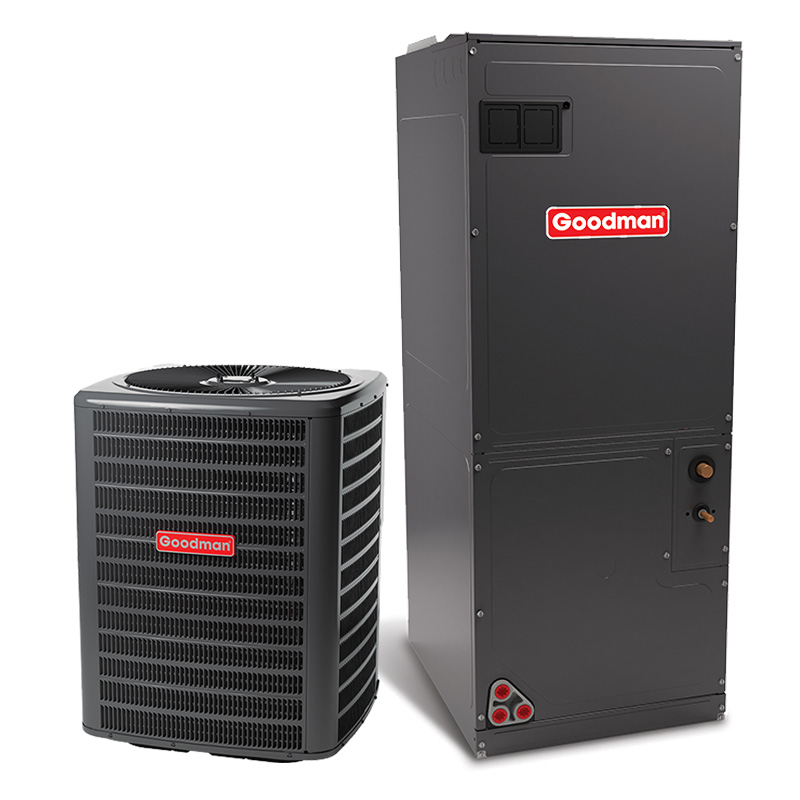
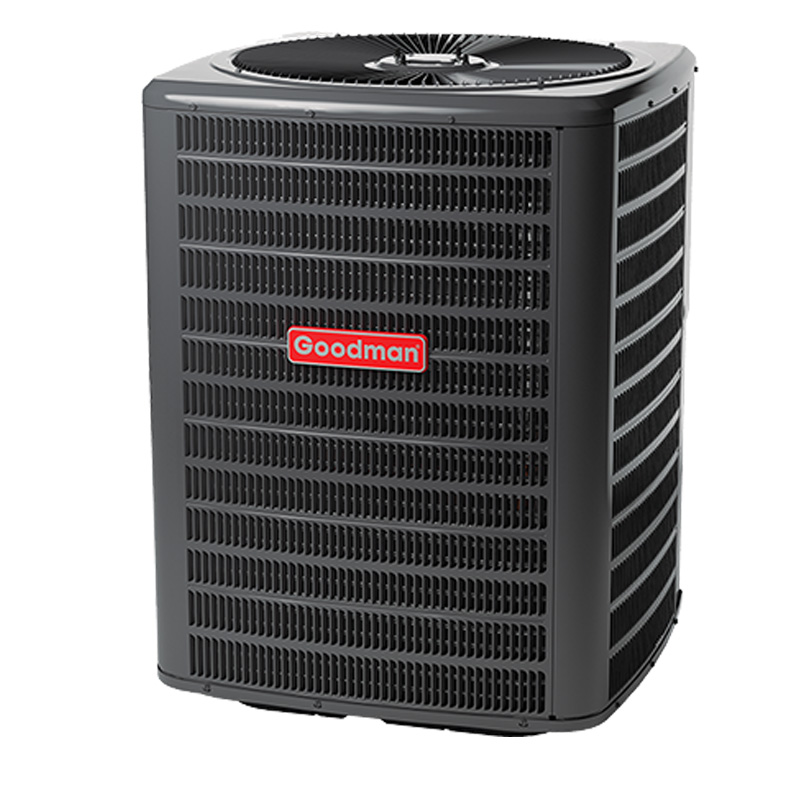
Goodman 2 Ton 14 SEER2 R32 Cooling Only System
View on AC Direct see your lowest price →Check current price on AC Direct →
Key features
- 2-ton cooling capacity suited for approximately 800 to 1,100 sq ft
- 14 SEER2 efficiency meets current federal minimum standards
- R-32 refrigerant with lower global warming potential than R-410A
- Single-stage scroll compressor for straightforward, proven operation
- Cooling-only configuration pairs with any existing heating source
- Factory-tested cabinet with baked enamel finish for corrosion resistance
About this system
The Goodman 2 Ton 14 SEER2 Cooling Only system is a straightforward, no-frills air conditioner built for smaller homes, condos, and additions in the 800 to 1,100 square foot range where heating is handled separately by a furnace or heat strip already in place. The 14 SEER2 rating sits right at the federal minimum efficiency threshold for most U.S. climate zones, meaning you get code-compliant performance without paying for efficiency tiers you may never fully recover in energy savings. It is not a flashy system, and it is not designed to be.
One of the more notable aspects of this unit is its use of R-32 refrigerant, a lower-global-warming-potential alternative to the R-410A that dominated the market for the past two decades. R-32 operates at similar pressures and is easier to recover and recycle, which matters both environmentally and from a long-term serviceability standpoint as the industry shifts away from older refrigerants. For a budget system, this is a genuinely forward-looking spec choice. Single-stage operation means the compressor is either fully on or fully off, so expect some cycling and modest humidity control compared to two-stage or variable-speed alternatives.
This system suits first-time homeowners, rental property owners, or buyers replacing an aging unit on a tight timeline who need reliable baseline cooling without a premium price tag. If your installation contractor is experienced and your refrigerant charge is set precisely, this unit can deliver solid years of service. If either of those conditions is missing, the risk profile climbs noticeably.
The Goodman 2 Ton 14 SEER2 R-32 system delivers entry-level cooling at a price point 15 to 25 percent below comparable Carrier, Trane, and Lennox equipment, making it a reasonable choice for budget-conscious buyers who prioritize upfront cost. Performance is competent for the efficiency tier, but single-stage operation and a documented history of capacitor failures and evaporator coil leaks mean ownership costs past year seven can erode those initial savings. The value calculation holds best when installation is done by a careful, experienced technician.
Overall score is the average of the five ratings above.
What we like
- Significantly lower upfront cost than comparable Carrier, Trane, or Lennox units
- R-32 refrigerant is environmentally preferable and increasingly industry-standard
- Simple single-stage design means fewer electronic components that can fail
- Widely available parts and large national installer network ease servicing
- Straightforward cooling-only setup integrates cleanly with existing heating systems
Trade-offs
- Dual-run capacitors are the most commonly reported failure, typically surfacing within the first several years
- Evaporator coil leaks appear in a meaningful share of owner reports, a more costly repair than a capacitor swap
- Compressor lifespan averages 10 to 14 years versus 15 to 20 years for premium-brand competitors
- Single-stage operation provides limited humidity control and more on-off cycling than two-stage or variable systems
What homeowners and pros say about Goodman
Homeowners who have lived with a Goodman cooling system tend to have polarized opinions that track closely with two variables: what they paid and how good their installer was. On Google dealer reviews, Goodman equipment averages around 3.8 out of 5 stars, and the most consistent praise centers on affordability and getting a working system up and running without stretching a budget. On ConsumerAffairs, the score drops to roughly 2.5 out of 5, a channel that skews toward frustrated owners rather than satisfied ones. The recurring theme there is repair costs that begin accumulating after roughly year seven, which aligns with the brand’s documented failure patterns. Dual-run capacitor replacements are the most commonly reported issue and are generally a low-cost fix, but evaporator coil leaks also show up in a meaningful share of owner accounts and are considerably more expensive to address. Compressor longevity tends to land in the 10 to 14 year range on Goodman equipment, noticeably shorter than the 15 to 20 years owners of premium-brand systems more often report.
HVAC technicians tend to view Goodman units pragmatically. They note that the equipment performs reasonably well when installed correctly and that the large installed base means parts are easy to source. The concern they raise most consistently is that Goodman’s performance ceiling is more sensitive to installation quality than premium brands, meaning a slightly off refrigerant charge or an undersized line set will show up in comfort complaints or shortened component life sooner than it might on a Trane or Carrier of comparable tonnage. For this specific 2 ton 14 SEER2 R-32 unit, the R-32 refrigerant is a legitimate forward-looking choice that technicians generally view positively. The bottom line from the field is that Goodman is a workable budget option when paired with a careful installer, and a liability when it is not.
Sources: ConsumerAffairs Goodman owner reviews, AHRI Directory of Certified Product Performance, U.S. DOE appliance and equipment efficiency standards, Goodman product specification sheets.
What it costs to run
At 14 SEER2, cooling this 2-ton system for a typical 1200-hour cooling season at the U.S. average electricity rate of $0.17/kWh works out to roughly $350 per year in cooling, about $15 less per year than a minimum-efficiency 13.4 SEER2 unit of the same size. Your real cost depends on your climate and local rate.
Method: (24,000 BTU/hr ÷ 14 SEER2) × 1200 hours ÷ 1000 × $0.17/kWh. Rate source: U.S. EIA average; cooling hours: moderate-climate estimate.
How it compares
| Brand | Comparable model | SEER2 | Stage | Price position |
|---|---|---|---|---|
| Goodman | GSX14 / GSXN4 R-32 Series | 14 | Single-stage | Value pick |
| Carrier | Comfort 14 (24ACC4) Series | 14 | Single-stage | Typically 15 to 25 percent more than Goodman |
| Trane | XR14 Series | 14 | Single-stage | Typically 15 to 25 percent more than Goodman |
| Lennox | Merit ML14XC1 Series | 14 | Single-stage | Typically 15 to 25 percent more than Goodman |
Competitor rows are comparable single-stage units at similar efficiency; price is relative position, not a quote.
Questions about this system
Is 14 SEER2 going to cost me significantly more to run than a higher-efficiency unit?
Compared to a 16 or 18 SEER2 system, a 14 SEER2 unit will use more electricity per hour of cooling, but the actual dollar difference depends heavily on your local utility rates, climate, and how many hours the system runs annually. In moderate climates, the payback period on a higher-efficiency unit can exceed ten years, so for a budget system with a shorter expected service life the 14 SEER2 tier often makes financial sense.
What does cooling only mean, and do I need anything else installed with this system?
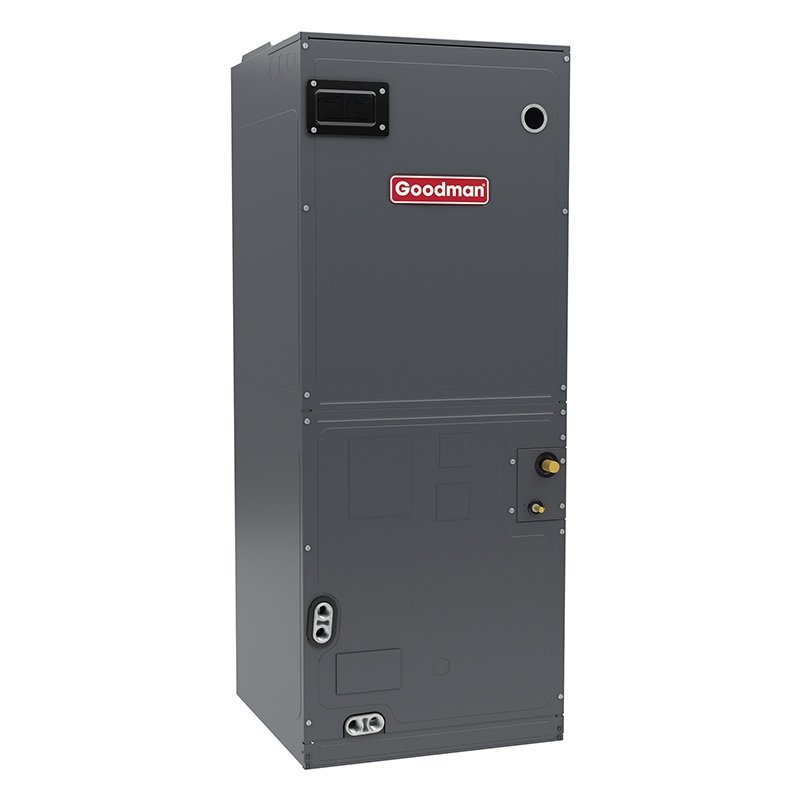
Cooling only means this unit handles air conditioning but has no heating function built in. You will need a separate furnace, air handler, or electric heat strip already in place, along with an evaporator coil matched to this condenser. Your installer will confirm compatibility with your existing indoor equipment before commissioning the system.
How common are the capacitor failures I keep reading about in Goodman reviews?
Dual-run capacitor failure is the most frequently reported repair on Goodman condensing units, and it is not unique to Goodman. Capacitors are a wear item on any air conditioner and are susceptible to heat cycling over time. The good news is that a capacitor replacement is typically a straightforward repair in the $300 to $600 range and does not indicate broader system failure.
Should I be concerned about refrigerant leaks with R-32?
R-32 itself is not inherently more leak-prone than R-410A. However, a minority of Goodman owners across refrigerant types have reported refrigerant leaks in the first year of ownership, and the documented pattern points to installation or initial charge issues rather than a factory defect. Insisting on a documented leak check and refrigerant weight-in at installation reduces this risk substantially.
What warranty comes with this Goodman system, and are there conditions I should know about?
Goodman typically offers a 10-year parts limited warranty when the unit is registered online within a required window after installation, dropping to a shorter term if registration is missed. The warranty covers parts but not labor, which can be a significant out-of-pocket cost on repairs like an evaporator coil or compressor replacement. Confirm the current registration window and labor coverage terms with your dealer before purchase.
Specifications
| Cooling capacity | 2 Ton |
| Efficiency | 14 SEER2 |
| Refrigerant | R-32 |