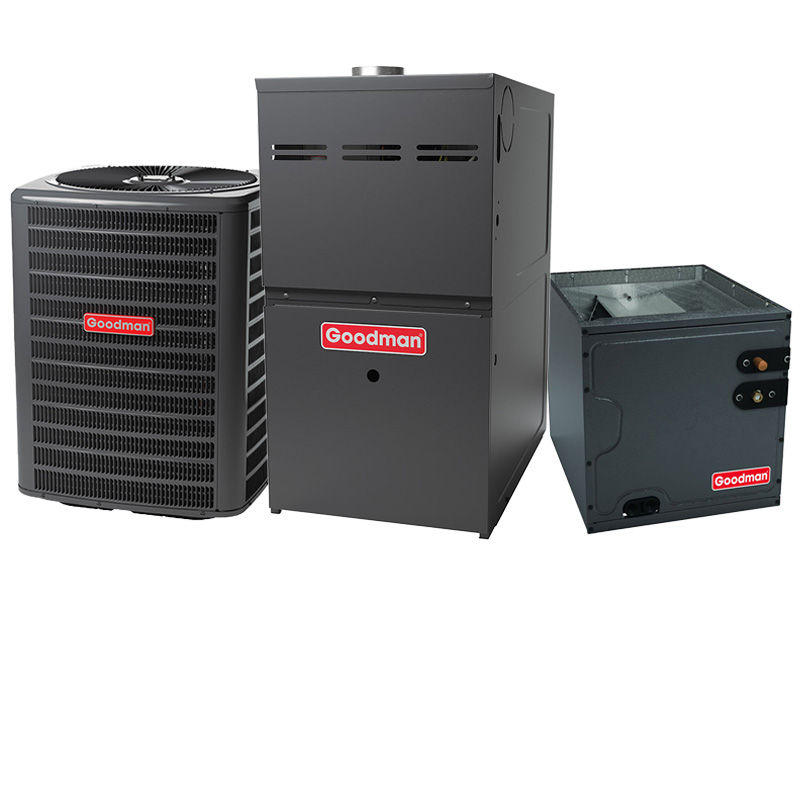
Goodman 2 Ton 15.2 SEER2 80000 BTU 80% AFUE Multi-Speed ECM Gas Furnace System – Upflow | R32
View on AC Direct see your lowest price →Check current price on AC Direct →
Key features
- 15.2 SEER2 cooling efficiency, meeting 2023 federal standards with modest headroom
- 80,000 BTU output at 80% AFUE, suitable for moderate-to-cold climates in smaller homes
- Multi-speed ECM blower motor for improved airflow control and lower blower electricity use
- R-32 refrigerant with a lower global-warming potential than R-410A
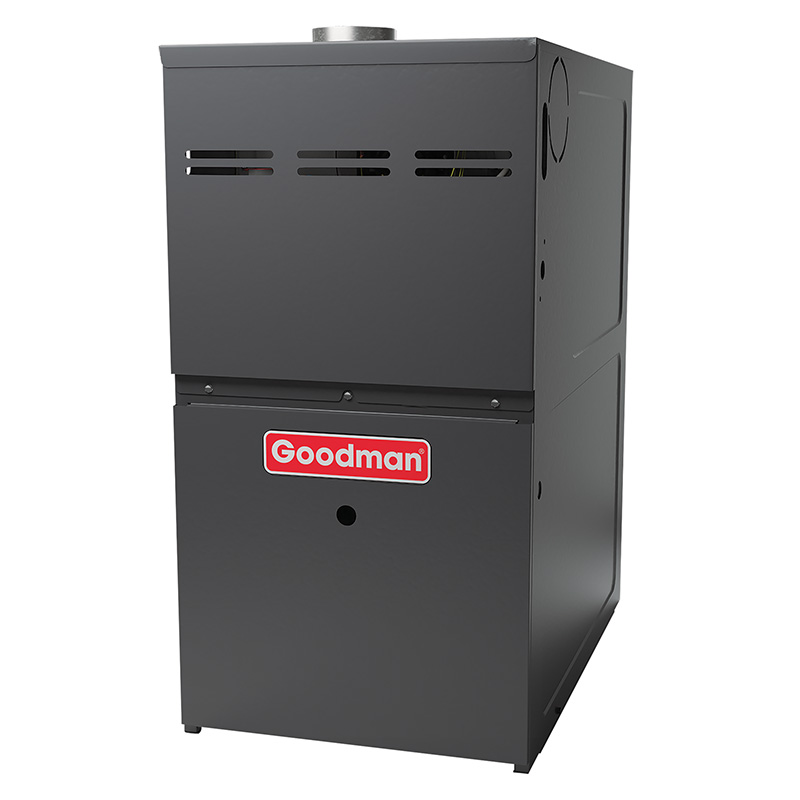
- Upflow configuration for basement or utility-closet installations with overhead duct systems
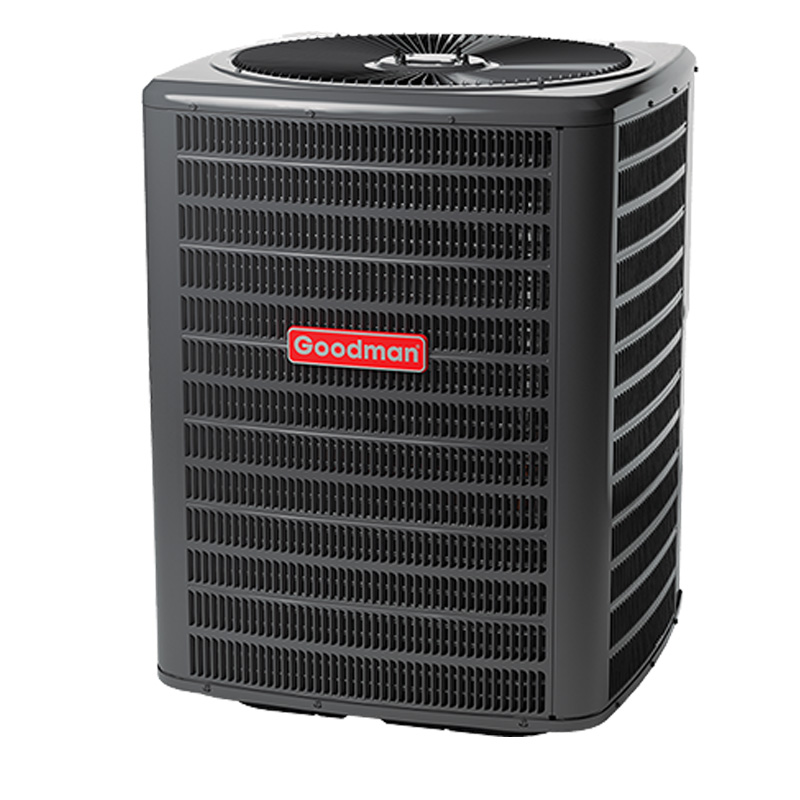
- 2-ton (24,000 BTU) cooling capacity, typically appropriate for 900 to 1,200 square feet
About this system
The Goodman 2-ton, 15.2 SEER2 upflow system pairs a straightforward cooling unit with an 80,000 BTU, 80% AFUE gas furnace to cover homes in roughly the 900 to 1,200 square-foot range, depending on local climate and insulation quality. The 15.2 SEER2 rating lands just above the 2023 federal minimum for most U.S. regions, meaning it meets code comfortably without reaching the efficiency ceiling of higher-end equipment. The furnace side runs at 80% AFUE, so one-fifth of the fuel it burns exits as exhaust rather than heat, a real consideration if you live where winters are long and gas prices climb.
This system uses R-32 refrigerant, a lower-global-warming-potential option that is increasingly common as the industry moves away from R-410A. The multi-speed ECM blower motor adjusts airflow to match demand, which reduces electricity consumption compared to a fixed-speed motor and tends to improve humidity control and comfort consistency. Upflow configuration means the furnace pulls return air from the bottom and discharges conditioned air upward, the standard setup for a basement or closet installation where ductwork runs through the ceiling or floors above. Anyone comparing this unit to Trane, Lennox, or Carrier alternatives at similar efficiency will find Goodman priced noticeably lower, though that gap comes with trade-offs in expected component longevity that are worth understanding before buying.
This Goodman bundle delivers code-compliant efficiency and a lower upfront cost than comparable Carrier, Trane, or Lennox systems, making it a workable choice for budget-conscious buyers who want a new system installed without overpaying for brand prestige. The trade-off is a realistic expectation of shorter compressor life and a higher chance of component repairs after year seven compared to premium alternatives. If the lower price is used to budget for a service contract or a capacitor replacement fund, the value proposition holds up.
Overall score is the average of the five ratings above.
What we like
- Purchase price runs 15 to 25 percent below comparable Carrier, Trane, and Lennox systems
- 15.2 SEER2 meets current federal efficiency minimums across most U.S. climate zones
- ECM multi-speed blower reduces operating costs and improves comfort compared to single-speed alternatives
- R-32 refrigerant is forward-compatible as the industry phases out higher-GWP refrigerants
- Upflow design is straightforward for most licensed installers, keeping labor costs predictable
Trade-offs
- 80% AFUE means significant fuel waste compared to 95% or 96% AFUE condensing furnaces; notable in cold climates
- Compressor lifespan averages 10 to 14 years versus 15 to 20 years seen in premium brands
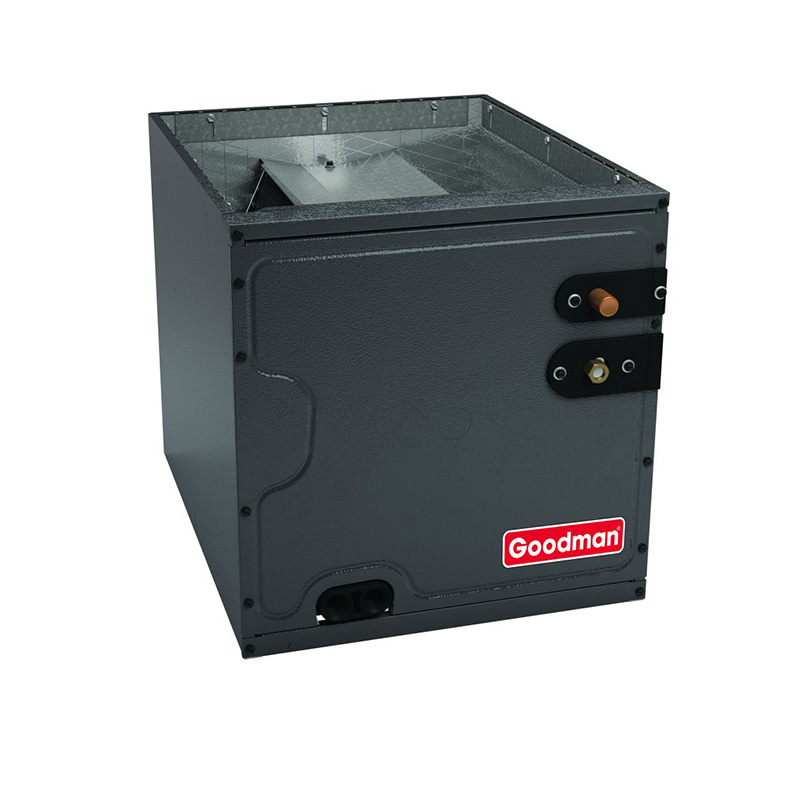
- Dual-run capacitors are the most frequently reported failure point, and evaporator coil leaks appear in a meaningful share of owner reports
- ConsumerAffairs scores average around 2.5 out of 5, with recurring complaints about repair costs climbing after roughly year seven
What homeowners and pros say about Goodman
Homeowners who chose Goodman equipment most often point to the lower purchase price as the deciding factor, and dealer-level Google reviews reflect that, averaging around 3.8 out of 5 stars where affordability is the praise that comes up most consistently. On channels like ConsumerAffairs, however, the picture is less flattering: Goodman scores roughly 2.5 out of 5 there, a platform that skews toward people who had a problem worth writing about. The recurring pattern in those complaints is not early catastrophic failure but rather repair costs that start accumulating after roughly year seven, which lines up with documented compressor lifespan data showing Goodman compressors averaging 10 to 14 years compared to 15 to 20 years in premium-brand equipment.
HVAC technicians who work on Goodman units frequently note that install quality has an outsized effect on how the equipment performs and how long it lasts. The two most commonly cited component failures are dual-run capacitors, which are a relatively low-cost repair in the 300 to 600 dollar range, and evaporator coil leaks, which are more disruptive and expensive. A smaller but notable share of owners have reported refrigerant leaks within the first year, an issue technicians generally attribute to installation or initial charge problems rather than a manufacturing defect in the unit itself. For a 2-ton, 15.2 SEER2 upflow system like this one, the honest summary from the field is: buy it with eyes open, invest in a quality installation, and budget for component service after the warranty window closes.
Sources: ConsumerAffairs Goodman owner reviews, AHRI Directory of Certified Product Performance, U.S. DOE appliance and equipment efficiency standards, Goodman product specification sheets.
What it costs to run
At 15.2 SEER2, cooling this 2-ton system for a typical 1200-hour cooling season at the U.S. average electricity rate of $0.17/kWh works out to roughly $322 per year in cooling, about $43 less per year than a minimum-efficiency 13.4 SEER2 unit of the same size. Your real cost depends on your climate and local rate.
Method: (24,000 BTU/hr ÷ 15.2 SEER2) × 1200 hours ÷ 1000 × $0.17/kWh. Rate source: U.S. EIA average; cooling hours: moderate-climate estimate.
How it compares
| Brand | Comparable model | SEER2 | Stage | Price position |
|---|---|---|---|---|
| Goodman | GSXH5/GMVC8 Series (this system) | 15.2 | Multi-speed | Value pick |
| Carrier | Comfort 14 (24ACC4) with 58SB0 furnace | 15.2 | Single-stage | Typically 15 to 25 percent more than this Goodman system |
| Trane | XR15 (4TTR5) with S8X1 furnace | 15.0–15.5 | Single-stage | Typically 15 to 25 percent more than this Goodman system |
| Lennox | Merit ML15XC1 with ML180UH furnace | 15.2 | Single-stage | Typically 15 to 25 percent more than this Goodman system |
Competitor rows are comparable single-stage units at similar efficiency; price is relative position, not a quote.
Questions about this system
Is 80% AFUE good enough, or should I upgrade to a higher-efficiency furnace?
80% AFUE meets code in most U.S. regions but leaves meaningful money on the table if you heat frequently. In climates with long winters, stepping up to a 95% or 96% AFUE condensing furnace typically recovers the cost difference in fuel savings within a few years. If you live in the South or a mild climate, 80% AFUE is a more defensible choice.
What does R-32 refrigerant mean for me as a homeowner, and will it be easy to service?
R-32 has a lower global-warming potential than R-410A and is being adopted broadly across the industry, so it will not become an obscure refrigerant. Most licensed HVAC technicians are already trained and certified to handle it. If you ever need a recharge, the cost should be comparable to R-410A service today.
How likely am I to have a capacitor or coil problem, and what would that cost?
Dual-run capacitor failures are the most commonly reported issue in Goodman equipment and are among the least expensive HVAC repairs, typically running between 300 and 600 dollars including labor. Evaporator coil leaks appear in a meaningful share of owner reviews and are more expensive to address, often reaching into the thousands depending on whether the coil needs replacing. Keeping a service agreement in place after the warranty period is a practical step.
Does the 2-ton size fit my house, and how do I know if it is right?
Two tons of cooling handles roughly 900 to 1,200 square feet in an average home, but the only reliable answer comes from a Manual J load calculation performed by your HVAC contractor before the system is ordered. Oversizing is a common mistake that hurts humidity control and shortens equipment life, so push your installer to run the numbers rather than guess based on the old unit's size.
How does the ECM multi-speed blower affect my utility bill compared to a standard blower motor?
ECM motors are significantly more efficient than the PSC motors found in lower-cost systems, using considerably less electricity during the long hours the blower runs for air circulation and humidity control. The practical benefit shows up most on monthly electric bills in humid climates where the blower runs nearly continuously in shoulder seasons. It also tends to run quieter at lower speeds, which most homeowners notice quickly.
Specifications
| Cooling capacity | 2 Ton |
| Efficiency | 15.2 SEER2 |
| Furnace output | 80000 BTU |
| Furnace efficiency | 80% AFUE |
| Configuration | Upflow |
| Refrigerant | R-32 |