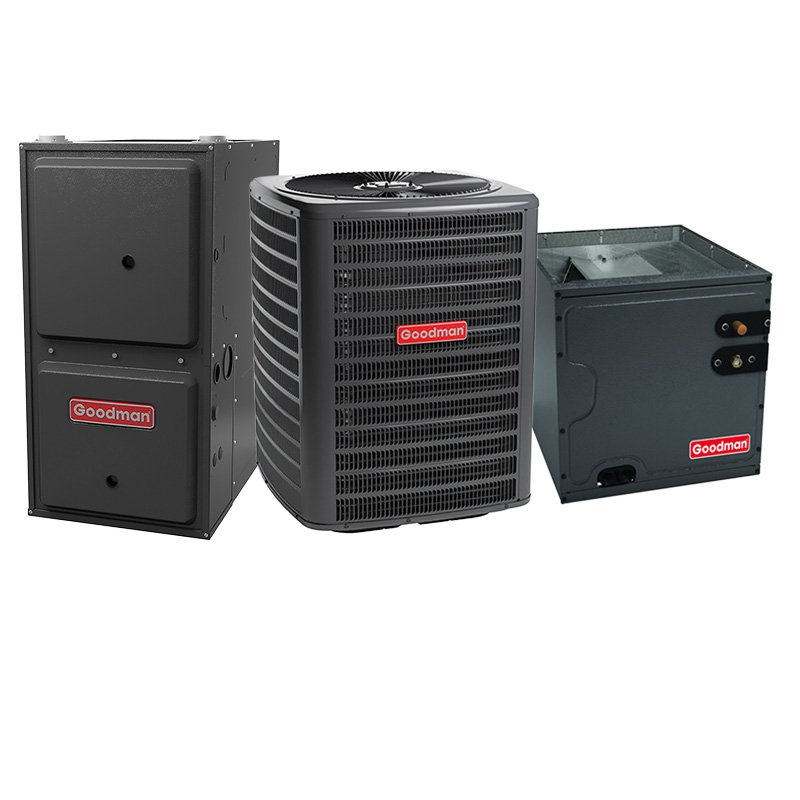
Goodman 2 Ton 15.2 SEER2 80000 BTU 80% AFUE Two Stage Multi-Speed ECM Gas Furnace System – Low NOX For California Downflow | R32
View on AC Direct see your lowest price →Check current price on AC Direct →
Key features
- 15.2 SEER2 two-stage cooling for improved humidity control and energy efficiency vs. single-stage
- 80,000 BTU 80% AFUE two-stage gas furnace with multi-speed ECM blower motor
- Downflow configuration for homes with under-floor or crawlspace duct systems
- R-32 refrigerant with lower global warming potential, meets current California regulations
- California Low NOX certified for compliance in South Coast and other restricted air districts
- Two-stage furnace operation reduces short-cycling and lowers noise on mild-weather calls
About this system
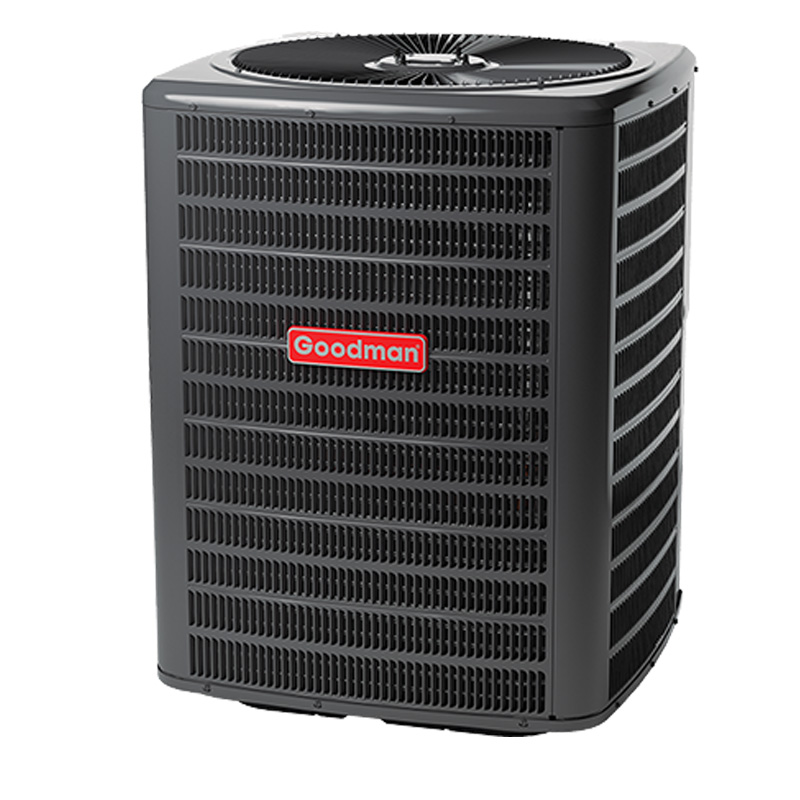
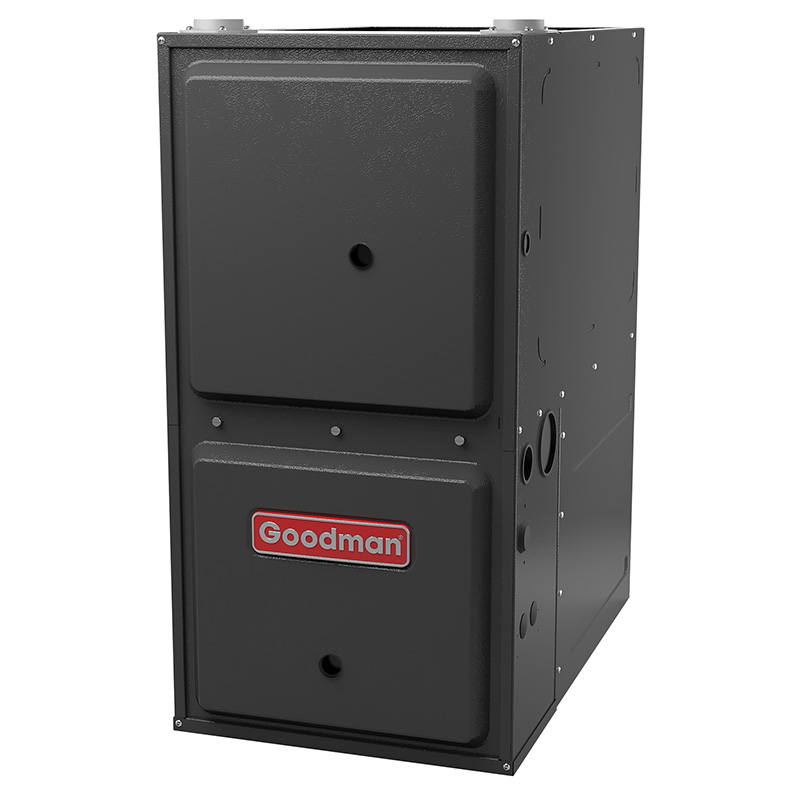
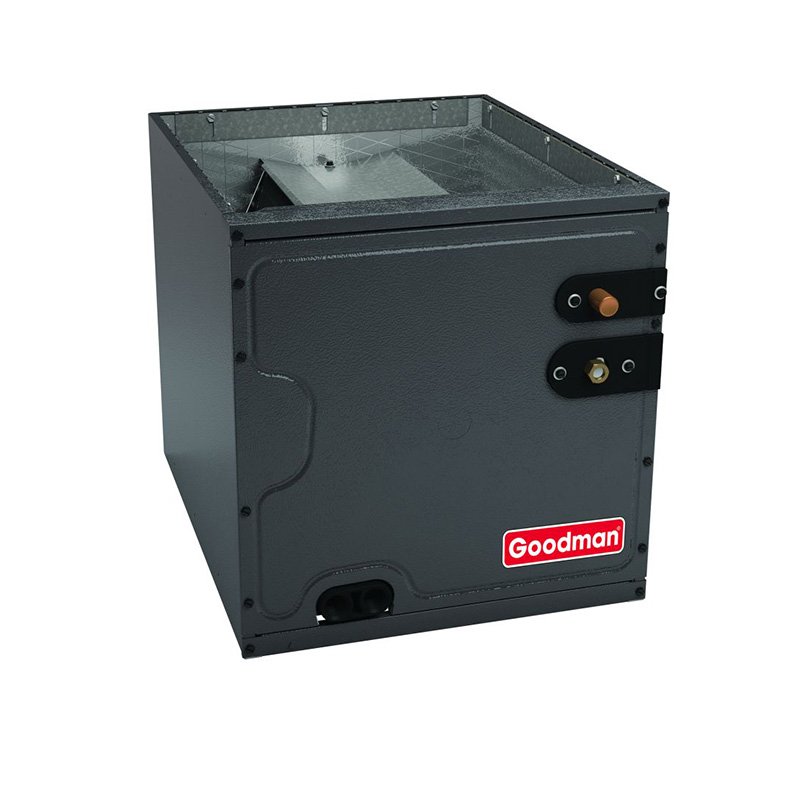
The Goodman GLXS4BA2410 pairs a 2-ton, 15.2 SEER2 R-32 air conditioner with an 80,000 BTU, 80% AFUE two-stage gas furnace in a downflow configuration designed specifically for California Low NOX compliance. R-32 refrigerant carries a significantly lower global warming potential than the R-410A it replaces, making this system forward-compatible with tightening environmental regulations. The downflow cabinet discharges conditioned air downward, a layout common in homes where ductwork runs under the floor or in a crawlspace, so confirming your existing duct configuration before purchasing is essential.
The two-stage furnace operates at a reduced capacity on milder days and ramps to full output only when temperatures demand it, which reduces short-cycling, improves humidity control, and cuts heating bills compared to a single-stage unit. The ECM (electronically commutated motor) blower draws considerably less electricity than a standard PSC motor and runs quietly at lower speeds. At 80% AFUE, this furnace falls into the standard-efficiency tier rather than the high-efficiency condensing category, meaning every fifth BTU of gas input goes up the flue. Homeowners in climates with very long or very cold heating seasons may want to weigh the upgrade to a 96% or higher AFUE unit against their annual gas costs.
This system suits moderate climates, budget-conscious homeowners replacing aging equipment in homes with existing downflow duct systems, and buyers who prefer to allocate savings toward a strong installation or an extended service contract. It is not the best fit for extreme cold regions where a higher-AFUE furnace would pay back quickly, or for anyone expecting the long compressor life associated with premium brands.
The GLXS4BA2410 delivers a solid mid-tier efficiency package at a price point that is genuinely 15 to 25 percent below comparable Carrier, Trane, and Lennox configurations, making it a reasonable choice for cost-focused buyers who invest in a skilled installer and a service contract. The two-stage furnace and ECM blower are real comfort upgrades over the base tier, but the 80% AFUE furnace and Goodman's documented compressor and coil reliability history mean long-term ownership costs can narrow that upfront savings gap. Buyers who plan to stay in their home more than ten years should factor likely component replacements into the total cost calculation.
Overall score is the average of the five ratings above.
What we like
- Purchase price typically 15 to 25 percent below Trane, Carrier, and Lennox equivalents
- Two-stage furnace and ECM motor improve comfort and humidity control versus single-stage systems
- R-32 refrigerant meets current and near-future California environmental regulations
- Low NOX certification satisfies California South Coast AQMD and similar air district requirements
- Dual-run capacitor failures, the most common documented repair, are generally a low-cost fix in the $300 to $600 range
Trade-offs
- 80% AFUE puts 20% of gas input up the flue; homeowners in cold climates will see a meaningful efficiency gap versus 96%+ units
- Compressor lifespan averages 10 to 14 years versus 15 to 20 years for premium brands, a real long-term cost consideration
- Evaporator coil leaks appear in a meaningful share of owner reviews, with replacement costs that can rival a compressor repair
- A minority of owners report refrigerant leaks in year one; while often an install or charge issue, it reflects quality-control variability that makes installer selection critical
What homeowners and pros say about Goodman
Homeowners who research Goodman quickly encounter a split picture. On ConsumerAffairs, the brand scores roughly 2.5 out of 5, a channel where dissatisfied owners are more likely to post and where the recurring theme is repair costs climbing after about year seven. Capacitor failures, coil leaks, and compressor issues in the ten-to-fourteen-year window are the specific complaints that appear most often. On Google dealer reviews, the picture is more measured, with scores around 3.8 out of 5 across locations, where affordability is consistently the most praised attribute. Neither score signals a premium reliability story, but the Google number reflects a broader sample that includes owners who are content with what they paid and what they received.
HVAC professionals tend to have a pragmatic view of this particular system. They point out that the two-stage furnace and ECM blower represent genuine upgrades over base-tier equipment, and that the R-32 refrigerant and Low NOX certification make it the correct spec for California installations going forward. The consistent professional caution is that Goodman’s performance ceiling is set almost entirely by installation quality. A rushed or undertrained install on a Goodman unit will surface problems faster than the same treatment applied to a Trane or Carrier, because tighter factory tolerances on premium brands leave less margin for errors in refrigerant charge, airflow setup, and electrical connections. The specific failure modes to watch for over the ownership period are dual-run capacitor wear, evaporator coil integrity, and compressor longevity, all of which are meaningfully shorter on average than what premium brands document. For buyers who pair this system with a skilled installer and a service agreement, it represents a workable value proposition. For buyers who treat installation as an afterthought, those documented failure modes will arrive on schedule.
Sources: ConsumerAffairs Goodman owner reviews, AHRI Directory of Certified Product Performance, U.S. DOE appliance and equipment efficiency standards, Goodman product specification sheets.
What it costs to run
At 15.2 SEER2, cooling this 2-ton system for a typical 1200-hour cooling season at the U.S. average electricity rate of $0.17/kWh works out to roughly $322 per year in cooling, about $43 less per year than a minimum-efficiency 13.4 SEER2 unit of the same size. Your real cost depends on your climate and local rate.
Method: (24,000 BTU/hr ÷ 15.2 SEER2) × 1200 hours ÷ 1000 × $0.17/kWh. Rate source: U.S. EIA average; cooling hours: moderate-climate estimate.
How it compares
| Brand | Comparable model | SEER2 | Stage | Price position |
|---|---|---|---|---|
| Goodman | GLXS4BA2410 (this system) | 15.2 | two-stage | Value pick |
| Carrier | Comfort 15 Series (24ACC636) | 15.2 | single-stage | Typically 15 to 25 percent more than this Goodman |
| Trane | XR15 Series (4TTR5024) | 15.2 | single-stage | Typically 15 to 25 percent more than this Goodman |
| Lennox | Merit 14ACX Series | 15.0–15.2 | single-stage | Typically 15 to 25 percent more than this Goodman |
Competitor rows are comparable single-stage units at similar efficiency; price is relative position, not a quote.
Questions about this system
Does this system qualify for the California utility rebates available to R-32 or higher-SEER2 equipment?
Many California utilities offer rebates tied to SEER2 minimums and refrigerant type, and R-32 systems are increasingly favored. You should verify current rebate thresholds directly with your utility and check the California Energy Commission database, since eligibility rules and dollar amounts change regularly and Goodman lists this model on its California-compliant product line.
My existing ductwork is set up for downflow. Is this system a straightforward drop-in replacement?
A downflow furnace cabinet will match your existing orientation, but cabinet dimensions, flue pipe diameter, gas line sizing, and electrical connections all need to be confirmed against your current setup. A licensed HVAC contractor should verify compatibility before you order, particularly if your existing unit was a different tonnage or a different brand with different footprint dimensions.
What is the most likely repair I will face in the first ten years, and roughly what does it cost?
Based on documented owner experience, dual-run capacitor failure is the most commonly reported issue and is typically a straightforward, low-cost repair in the $300 to $600 range including labor. Evaporator coil leaks are the second most frequently noted problem and carry a substantially higher repair bill, which is one reason a parts-and-labor extended warranty is worth considering at purchase.
Why does Goodman specify 80% AFUE rather than a higher-efficiency condensing furnace in this package?
An 80% AFUE furnace vents through a traditional B-vent or metal flue, which keeps installation straightforward in homes where no PVC condensate drain or secondary vent is available. Condensing furnaces (90%+) require PVC venting and a condensate management system, adding installation complexity and cost. If your home already has the infrastructure or you are doing a full renovation, a condensing furnace would reduce annual gas bills, and that trade-off is worth pricing out with your contractor.
How important is the installer for a Goodman system compared to a premium brand?
Critically important. HVAC technicians consistently cite installation quality as the single biggest variable in how long a Goodman system lasts and how efficiently it runs. The documented first-year refrigerant leak minority in owner reviews is typically attributed to improper charging or connection practices rather than the equipment itself, so hiring an experienced, licensed contractor and verifying they perform a proper startup procedure is not optional with this brand.
Specifications
| Cooling capacity | 2 Ton |
| Efficiency | 15.2 SEER2 |
| Furnace output | 80000 BTU |
| Furnace efficiency | 80% AFUE |
| Configuration | Downflow |
| Refrigerant | R-32 |
| Model | GLXS4BA2410 |