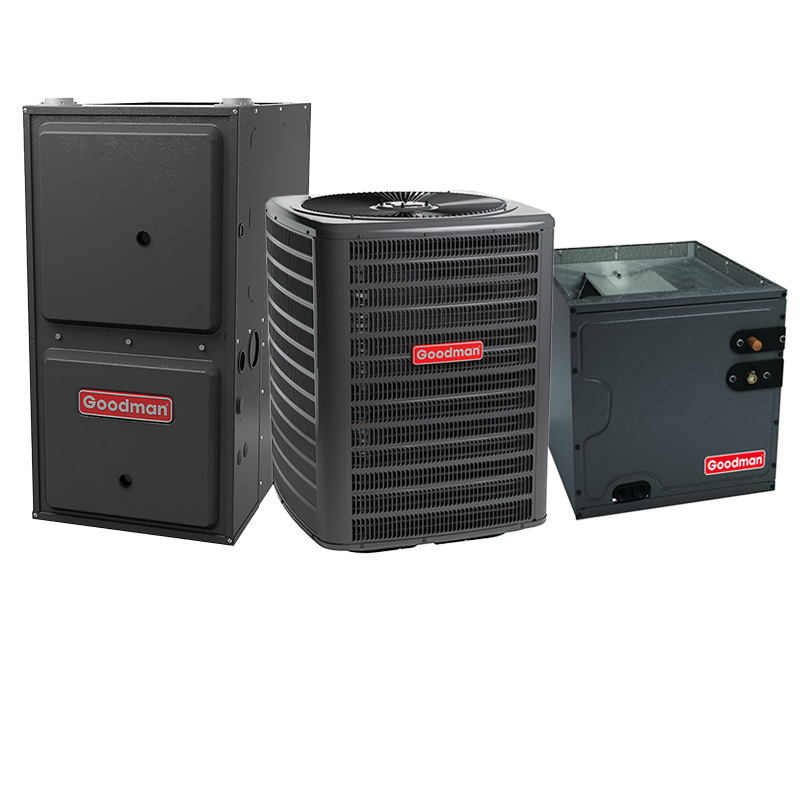
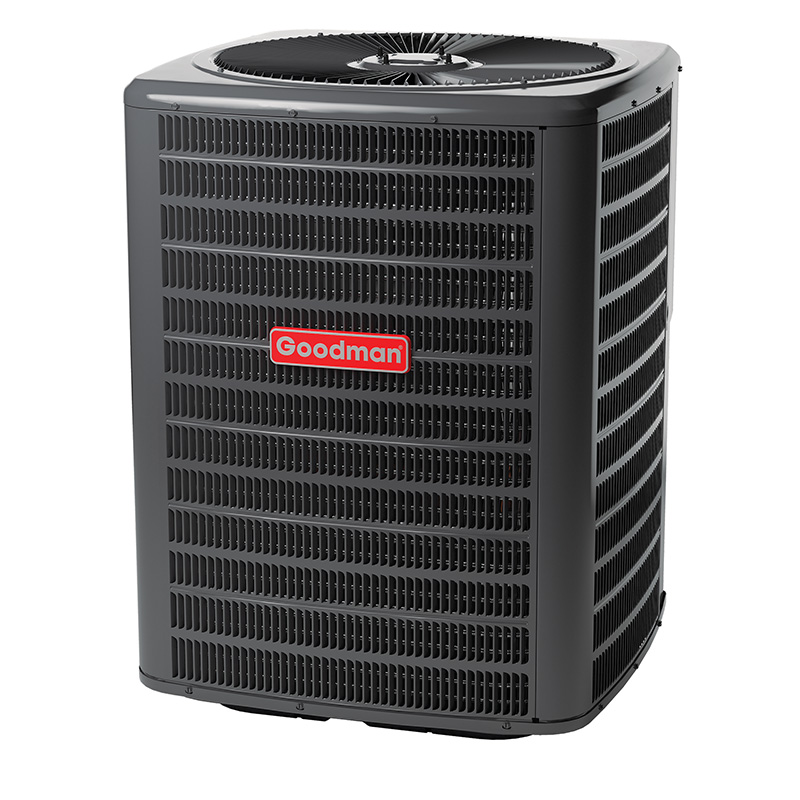
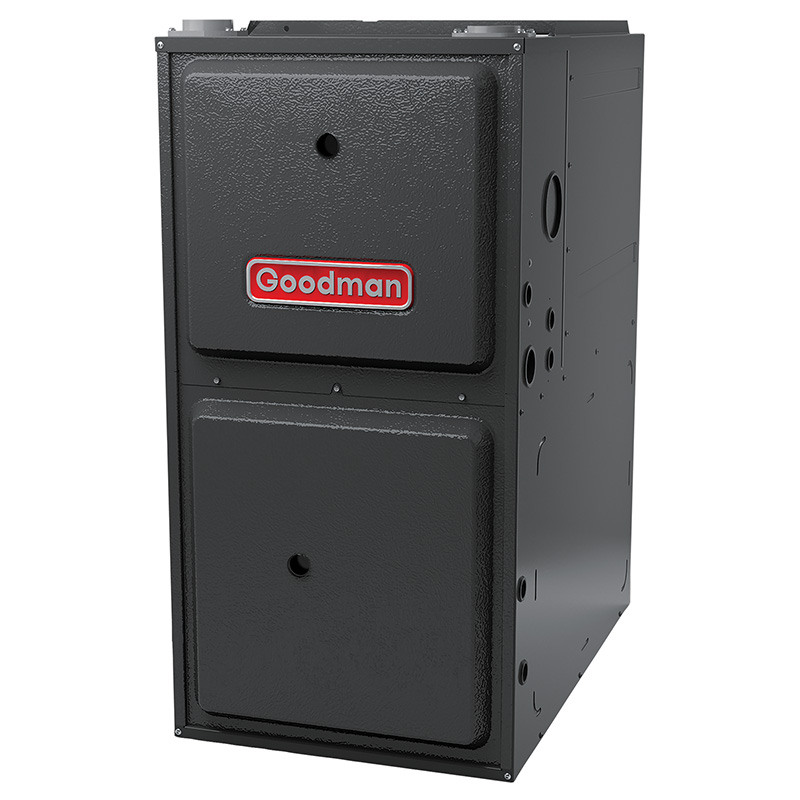
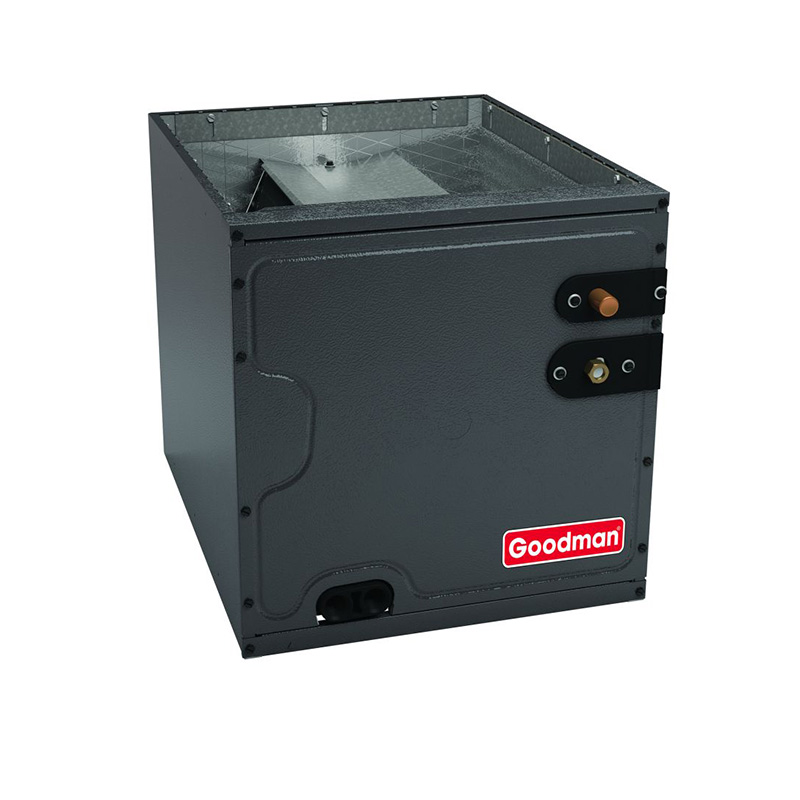
Goodman 2 Ton 15.2 SEER2 R32 AC System with 40,000 BTU 96% AFUE Gas Furnace – California & Colorado Ultra Low NOx, Upflow, Multi-Speed ECM
View on AC Direct see your lowest price →Check current price on AC Direct →
Key features
- 15.2 SEER2 cooling efficiency meets current federal minimums with modest room above them
- 96% AFUE condensing furnace loses roughly 4% of fuel energy to exhaust
- R-32 refrigerant with global warming potential approximately two-thirds lower than R-410A
- Multi-speed ECM blower motor reduces fan electricity use versus single-speed PSC motors
- Ultra Low NOx rated for California and Colorado air-quality compliance
- Upflow configuration discharges air upward, compatible with overhead duct systems
About this system
The Goodman 2-ton, 15.2 SEER2 air conditioner paired with a 40,000 BTU, 96% AFUE gas furnace is a straightforward whole-system solution sized for smaller homes, condominiums, and well-insulated spaces in the 700 to 1,000 square foot range, depending on climate and envelope. The upflow configuration means the furnace sits on the floor and discharges conditioned air upward into the ductwork, which suits the majority of homes with duct systems running through the ceiling or attic. The multi-speed ECM blower motor is a meaningful upgrade over a standard PSC motor: it uses significantly less electricity during the long fan-only and low-demand cycles that make up most of a system’s annual run time, and it delivers more consistent airflow across a range of static pressures.
The switch to R-32 refrigerant is notable. R-32 has a global warming potential roughly two-thirds lower than the R-410A it replaces, and it operates at higher efficiency in part because it transfers heat more effectively per unit of mass. It does require technicians who are certified to handle it, so confirming your installer has current R-32 credentials before scheduling is worth doing. The 96% AFUE rating puts this furnace solidly in the condensing tier, meaning only about four cents of every fuel dollar is lost up the flue. For California and Colorado buyers, the Ultra Low NOx certification clears the strict sub-14 ng/J NOx thresholds required in those states, so there are no permit or air-quality compliance headaches at the job site.
This system delivers honest, code-compliant performance at a price point that undercuts Trane, Lennox, and Carrier by a meaningful margin, and the 96% AFUE furnace and ECM blower are genuinely good specs for the money. The trade-off is a brand track record that includes documented capacitor failures, evaporator coil leak reports, and compressor longevity that tends to run shorter than premium competitors, so buyers should treat installation quality and a solid maintenance plan as non-negotiable. For budget-conscious homeowners who can vet a skilled installer, it is a reasonable value; for those who want to minimize long-term service risk and can absorb a higher upfront cost, premium brands carry a stronger reliability history.
Overall score is the average of the five ratings above.
What we like
- Purchase price typically runs 15 to 25 percent below comparable Carrier, Trane, and Lennox systems
- 96% AFUE furnace is at the top of the condensing category, limiting ongoing fuel costs
- Multi-speed ECM blower reduces electrical consumption during the fan cycles that dominate annual run hours
- R-32 refrigerant lowers environmental impact and is the direction the industry is heading
- Ultra Low NOx certification satisfies California and Colorado permit requirements without add-on equipment
Trade-offs
- Dual-run capacitors are the most frequently reported failure point and, while usually a low-cost fix, are a recurring maintenance item
- Evaporator coil leaks appear in a meaningful share of owner reports, which can mean refrigerant loss and repair bills beyond a simple capacitor swap
- Compressor lifespan averages 10 to 14 years versus 15 to 20 years reported for premium-brand compressors
- A minority of owners report refrigerant leaks in the first year, typically traced to install or initial charge quality rather than the equipment itself
What homeowners and pros say about Goodman
Homeowners who have lived with Goodman equipment reflect a split experience that shows up clearly in the ratings: a ConsumerAffairs score of roughly 2.5 out of 5 and a Google dealer score of around 3.8 out of 5 tell somewhat different stories, and both are worth understanding. The ConsumerAffairs number is pulled down by people who sought out a review platform specifically because something went wrong, and the recurring theme in those complaints is repair costs that escalate after the seven-year mark. The Google dealer score, drawn from a broader population that includes satisfied customers, lands closer to the industry average and most often cites affordability as the reason for the positive rating. Neither number suggests this is a premium-reliability product, but neither suggests it is unusually failure-prone when installed and maintained correctly.
HVAC technicians are candid about where Goodman systems tend to give trouble. Dual-run capacitors are the most commonly cited service call, a repair that is usually straightforward and inexpensive but that some owners report needing more than once over a system’s life. Evaporator coil leaks show up frequently enough in owner accounts to be a known risk rather than an outlier, and compressor longevity averaging 10 to 14 years falls noticeably short of the 15 to 20 years technicians associate with Trane, Carrier, and Lennox compressors. The first-year refrigerant leak reports are worth noting too, though technicians generally attribute those to charge or installation errors rather than component defects. The consistent professional advice for this brand is straightforward: hire a skilled installer, do not skip annual maintenance, and keep the capacitor and coil on your watch list.
Sources: ConsumerAffairs Goodman owner reviews, AHRI Directory of Certified Product Performance, U.S. DOE appliance and equipment efficiency standards, Goodman product specification sheets.
What it costs to run
At 15.2 SEER2, cooling this 2-ton system for a typical 1200-hour cooling season at the U.S. average electricity rate of $0.17/kWh works out to roughly $322 per year in cooling, about $43 less per year than a minimum-efficiency 13.4 SEER2 unit of the same size. Your real cost depends on your climate and local rate.
Method: (24,000 BTU/hr ÷ 15.2 SEER2) × 1200 hours ÷ 1000 × $0.17/kWh. Rate source: U.S. EIA average; cooling hours: moderate-climate estimate.
How it compares
| Brand | Comparable model | SEER2 | Stage | Price position |
|---|---|---|---|---|
| Goodman | This system (15.2 SEER2 R-32 AC + 96% AFUE ECM Furnace) | 15.2 | Single-stage | Value pick |
| Carrier | Comfort Series (24ACC / 58CVA pairing) | 15.2 | Single-stage | Typically 15 to 25 percent more than this Goodman system |
| Trane | XR15 / S9V2 pairing | 15.2 | Single-stage | Typically 15 to 25 percent more than this Goodman system |
| Lennox | Merit Series (ML15 / ML196 pairing) | 15.2 | Single-stage | Typically 15 to 25 percent more than this Goodman system |
Competitor rows are comparable single-stage units at similar efficiency; price is relative position, not a quote.
Questions about this system
Does my installer need a special certification to work with R-32 refrigerant on this system?
Yes. R-32 is classified as a mildly flammable refrigerant (A2L), and EPA Section 608 certification alone is not sufficient in all jurisdictions. Confirm that your installing technician has completed R-32 or A2L-specific handling training before the job starts, as improper handling affects both safety and warranty coverage.
Will this system pass California or Colorado air-quality inspections without any modifications?
Yes, the Ultra Low NOx rating on this furnace is specifically engineered to meet the sub-14 ng/J NOx limits enforced by California's South Coast and San Joaquin air districts and similar Colorado requirements, so no additional NOx reduction equipment or permits beyond standard installation are needed.
What is the most likely repair I should budget for over the first ten years?
Based on documented failure patterns for Goodman equipment, the dual-run capacitor is the single most common service call, typically costing 300 to 600 dollars including labor. Evaporator coil leaks are the second most cited issue and are generally more expensive to address, so keeping up with annual maintenance and refrigerant pressure checks is practical insurance.
Is 15.2 SEER2 worth upgrading from, or is this the sweet spot for a 2-ton system?
15.2 SEER2 meets the current federal minimum for many regions and sits just above it, which means you are not leaving obvious efficiency on the table, but you are also not at the top of what is available. For a 2-ton system in a mild climate or a well-insulated home, the payback period on a 17 or 18 SEER2 upgrade is often 8 to 12 years, so this tier is a reasonable stopping point unless utility rates in your area are unusually high.
How important is installer quality with a Goodman system compared to a premium brand?
Critically important. HVAC technicians who work on Goodman equipment consistently note that installation quality is the dominant factor in how long the system lasts and how efficiently it runs, more so than with premium brands that tend to be more tolerant of minor setup variables. Proper refrigerant charge, correct duct sizing, and accurate airflow commissioning are not optional extras on a Goodman installation.
Specifications
| Cooling capacity | 2 Ton |
| Efficiency | 15.2 SEER2 |
| Furnace output | 40,000 BTU |
| Furnace efficiency | 96% AFUE |
| Configuration | Upflow |
| Refrigerant | R-32 |