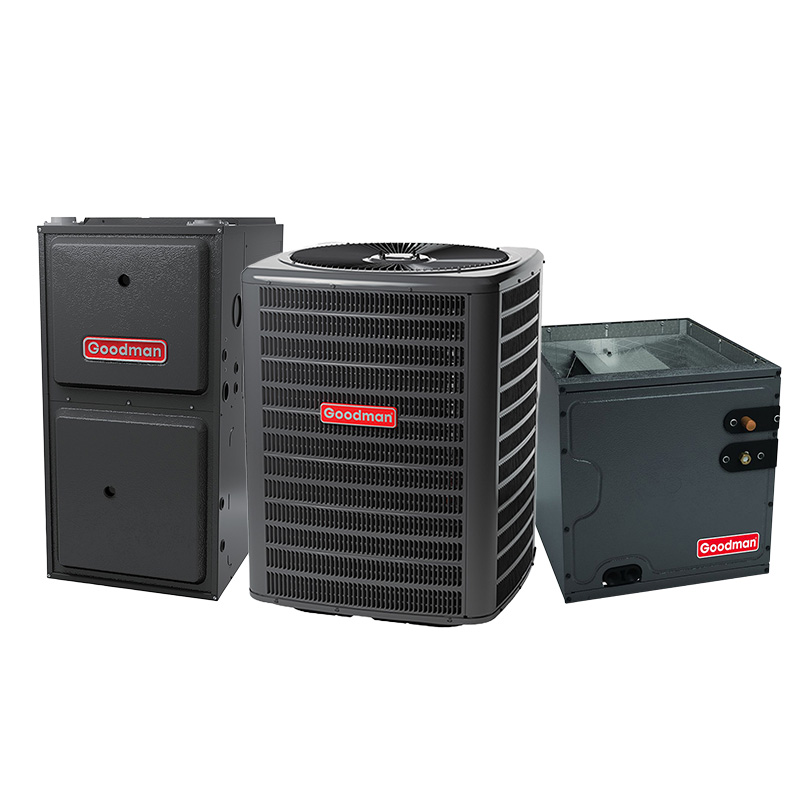
Goodman 2 Ton 15.2 SEER2 AC & Gas Furnace System – Modulating Variable-Speed, 80000 BTU Gas Furnace, 97% AFUE, Upflow, R32
View on AC Direct see your lowest price →Check current price on AC Direct →
Key features
- 15.2 SEER2 variable-speed cooling with R-32 refrigerant
- 97% AFUE modulating gas furnace reduces fuel waste to roughly 3 percent
- Variable-speed ECM blower motor for quieter operation and improved dehumidification
- Upflow configuration designed for basement or utility-closet installations
- 80,000 BTU heating capacity suited to mid-sized homes in moderate to cold climates
- R-32 refrigerant has roughly 68 percent lower global warming potential than R-410A
About this system
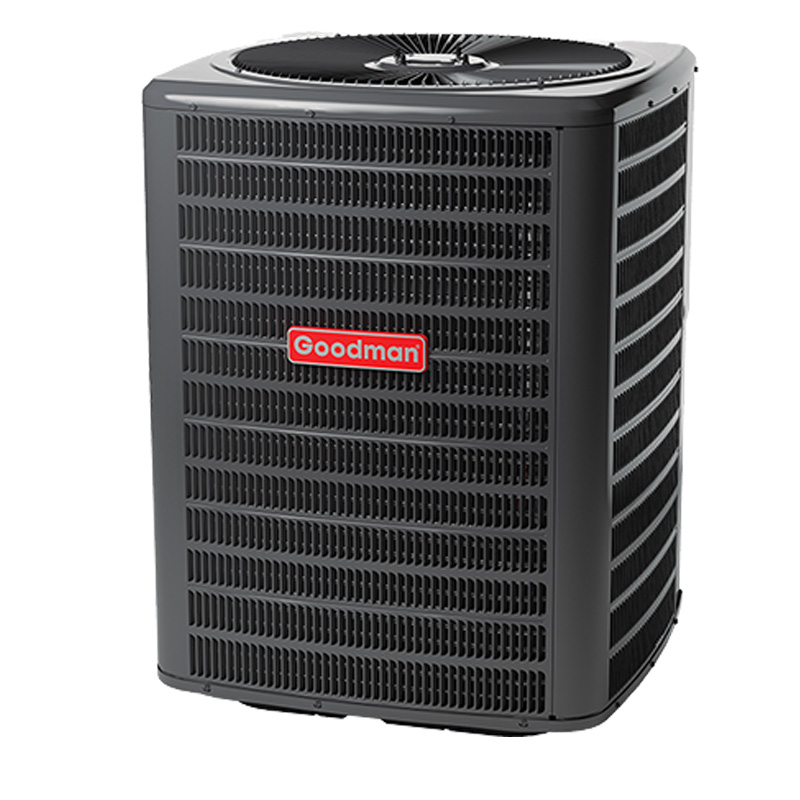
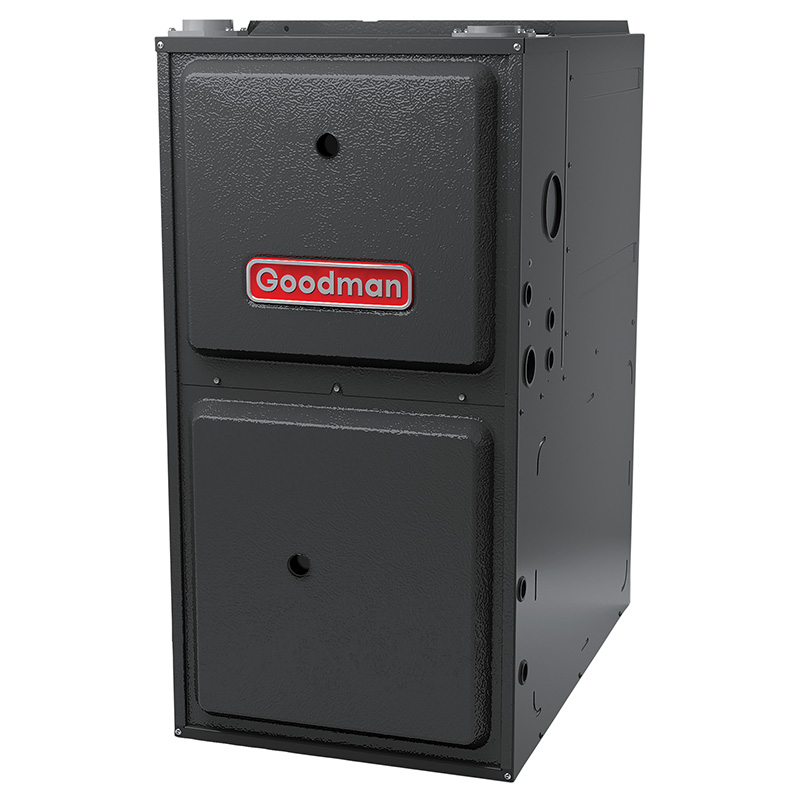
The Goodman GLXS5BA2410D pairs a 2-ton, 15.2 SEER2 variable-speed air conditioner with an 80,000 BTU, 97% AFUE modulating gas furnace in an upflow configuration. That AFUE rating sits at the top of the high-efficiency gas tier, meaning roughly 97 cents of every dollar spent on gas goes toward heating your home rather than exhausting out the flue. The modulating burner and variable-speed blower work together to hold indoor temperatures within a narrow band, which also helps with humidity control during cooling season. R-32 refrigerant carries a lower global warming potential than the older R-410A it replaces, and many utilities offer rebates for systems that meet or exceed the equipment class this unit falls into.
This setup suits a homeowner replacing an aging single-stage or two-stage system in a house with an existing upflow duct layout and a gas supply. At 2 tons it is sized for roughly 800 to 1,200 square feet of well-insulated space, though a proper Manual J load calculation by your installer is the only reliable sizing method. The variable-speed motor runs at lower speeds most of the time, which reduces blower noise, extends run cycles for better dehumidification, and cuts fan electricity use compared with PSC-motor furnaces. Buyers drawn to this system are typically weighing upfront savings against long-term operating cost, and this combination delivers strong efficiency without the price premium of Trane, Lennox, or Carrier equivalents.
This Goodman bundle delivers genuinely high efficiency at a price point that undercuts comparable variable-speed systems from premium brands by 15 to 25 percent, making it a strong choice for budget-conscious buyers who can secure a skilled installer. The trade-off is a documented history of component failures after year 7 and compressor longevity that trails premium competitors, so it rewards buyers who budget for periodic maintenance. If long-term reliability and manufacturer support are the top priority and cost is secondary, premium alternatives deserve a serious look.
Overall score is the average of the five ratings above.
What we like
- 97% AFUE is among the highest available for gas furnaces, lowering annual heating bills meaningfully
- Variable-speed and modulating operation improve comfort and humidity control versus single-stage systems
- Purchase price is typically 15 to 25 percent below Carrier, Trane, and Lennox equivalents at similar efficiency
- R-32 refrigerant positions the system well for evolving environmental regulations and may qualify for utility rebates
- ECM blower motor reduces fan electricity consumption compared with standard PSC motors
Trade-offs
- Dual-run capacitors are the most frequently reported failure point, typically requiring a $300 to $600 service call, often appearing after year 5 to 7
- Evaporator coil leaks show up in a meaningful share of owner reviews, which can mean refrigerant loss and costly repairs
- Compressor lifespan averages 10 to 14 years versus 15 to 20 years reported for premium-brand compressors
- A minority of owners report refrigerant leaks within the first year, usually tied to install quality rather than the equipment itself, underscoring the need for a certified, experienced technician
What homeowners and pros say about Goodman
Homeowners who have lived with Goodman equipment for several years tend to split into two camps. Those who had a careful installation by an experienced technician often report years of solid, quiet performance and point to the lower purchase price as genuine savings. Those who ran into problems more often trace the trouble back to rushed installs, missed refrigerant charges, or deferred maintenance rather than a factory defect, though evaporator coil leaks and capacitor failures do show up as real, recurring complaints in owner forums. Goodman’s ConsumerAffairs score of around 2.5 out of 5 reflects that complaint-heavy channel, while Google dealer reviews averaging around 3.8 out of 5 paint a more balanced picture, with affordability coming up again and again as the reason buyers chose the brand.
HVAC technicians who service a wide range of brands tend to describe Goodman as reliable enough when installed correctly, but they are quick to flag the dual-run capacitor as a near-certain eventual repair, the evaporator coil as a component worth inspecting at every tune-up, and the compressor as something that realistically may not reach the 15-to-20-year life of premium brands. For this specific system, the modulating furnace and variable-speed blower add mechanical complexity compared with basic single-stage Goodman units, which means installation precision matters even more. Pros who work with these systems regularly advise confirming refrigerant charge carefully at startup and registering the warranty without delay, since labor costs are entirely out-of-pocket after any failure.
Sources: ConsumerAffairs Goodman owner reviews, AHRI Directory of Certified Product Performance, U.S. DOE appliance and equipment efficiency standards, Goodman product specification sheets.
What it costs to run
At 15.2 SEER2, cooling this 2-ton system for a typical 1200-hour cooling season at the U.S. average electricity rate of $0.17/kWh works out to roughly $322 per year in cooling, about $43 less per year than a minimum-efficiency 13.4 SEER2 unit of the same size. Your real cost depends on your climate and local rate.
Method: (24,000 BTU/hr ÷ 15.2 SEER2) × 1200 hours ÷ 1000 × $0.17/kWh. Rate source: U.S. EIA average; cooling hours: moderate-climate estimate.
How it compares
| Brand | Comparable model | SEER2 | Stage | Price position |
|---|---|---|---|---|
| Goodman | GLXS5BA2410D | 15.2 | Variable | Value pick |
| Carrier | Comfort 15 (24ACC6) | 15+ | Single-stage | Typically 15 to 25 percent more than Goodman |
| Trane | XR15 | 15+ | Single-stage | Typically 15 to 25 percent more than Goodman |
| Lennox | Merit 14ACX | ~14.3 to 15 | Single-stage | Typically 15 to 25 percent more than Goodman |
Competitor rows are comparable single-stage units at similar efficiency; price is relative position, not a quote.
Questions about this system
Does the 97% AFUE rating actually make a noticeable difference on my gas bill compared with an 80% furnace?
In a cold climate where the furnace runs heavily, upgrading from 80% to 97% AFUE can cut heating fuel use by roughly 17 percent, which adds up over a full heating season. The payback period depends on local gas prices, your climate zone, and how well the home is insulated, so it is worth running the numbers against your current bills before purchase.
What does R-32 refrigerant mean for me as an owner, and will it be hard to service?
R-32 is a single-component refrigerant that many technicians find easier to handle than R-410A blends, and its lower environmental impact is driving broader industry adoption. As of now, most certified HVAC technicians can service R-32 systems, but it is worth confirming your local service providers are equipped before you commit, particularly in rural areas where technician availability may be limited.
Goodman has mixed reviews online. How worried should I be about long-term reliability?
Goodman's ConsumerAffairs score sits around 2.5 out of 5, though that channel skews toward dissatisfied owners. Google dealer reviews average around 3.8 out of 5, where affordability is the most common praise. The documented failure modes to watch for are dual-run capacitor failures (a relatively inexpensive fix), evaporator coil leaks, and compressor longevity that averages 10 to 14 years versus 15 to 20 for premium brands. Budgeting for a capacitor replacement at some point after year 5 is a reasonable expectation.
Is this system compatible with my existing upflow duct system, or will I need new ductwork?
The furnace is designed for upflow installations, so it should connect to an existing upflow plenum and duct layout without reconfiguration. However, ducts sized for a different tonnage or with significant leakage can undermine the variable-speed system's efficiency and comfort benefits, so having your installer do a duct assessment during the quote process is worthwhile.
What is the warranty on this system, and what does it actually cover?
Goodman typically offers a 10-year parts warranty when the equipment is registered within 60 days of installation by a licensed contractor, covering the compressor, heat exchanger, and other functional components. The warranty does not cover labor, refrigerant, or failures attributed to improper installation, which is a meaningful gap given that install quality is the single biggest variable in how long a Goodman system lasts. Verifying registration was completed by your installer shortly after the job is done is strongly advised.
Specifications
| Cooling capacity | 2 Ton |
| Efficiency | 15.2 SEER2 |
| Furnace output | 80000 BTU |
| Furnace efficiency | 97% AFUE |
| Configuration | Upflow |
| Refrigerant | R-32 |
| Model | GLXS5BA2410D |