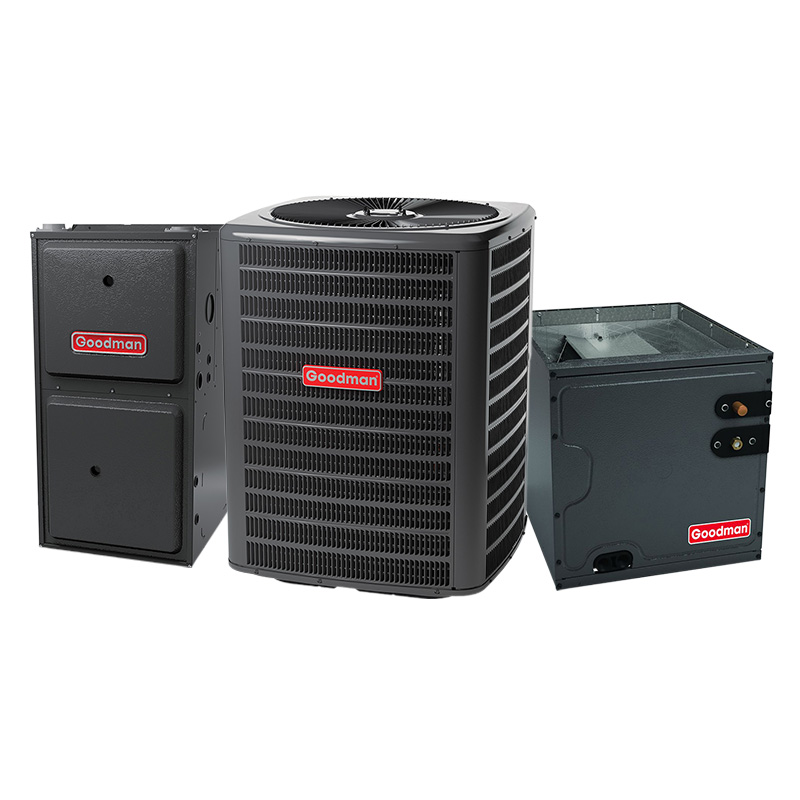
Goodman 2 Ton 15.2 SEER2 AC & Gas Furnace System – Multi-Speed, 60000 BTU Gas Furnace, 92% AFUE, Upflow, R32
View on AC Direct see your lowest price →Check current price on AC Direct →
Key features
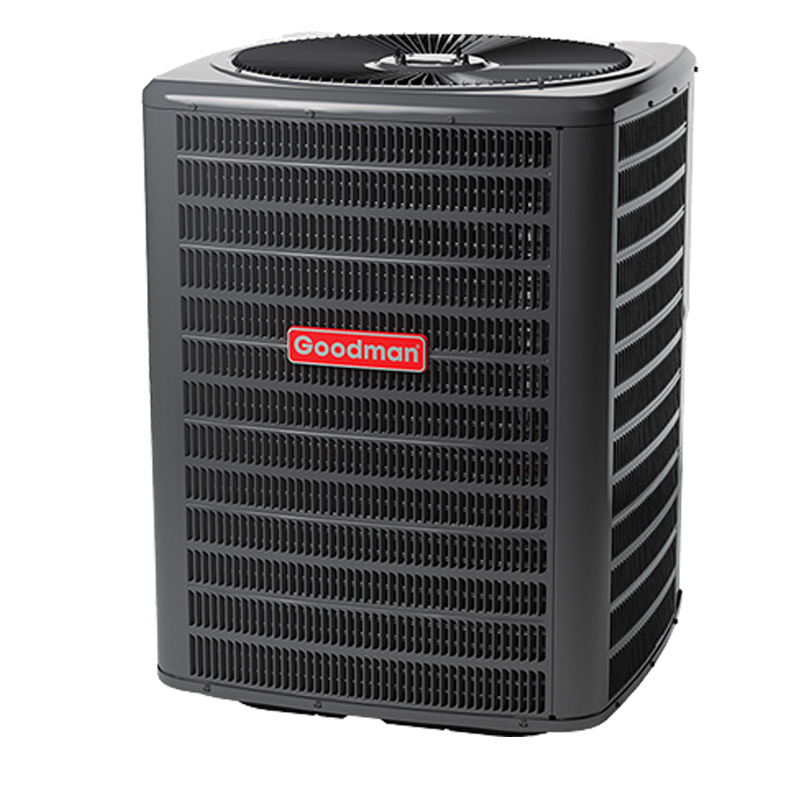
- 15.2 SEER2 single-stage cooling on a 2-ton (24,000 BTU) outdoor unit
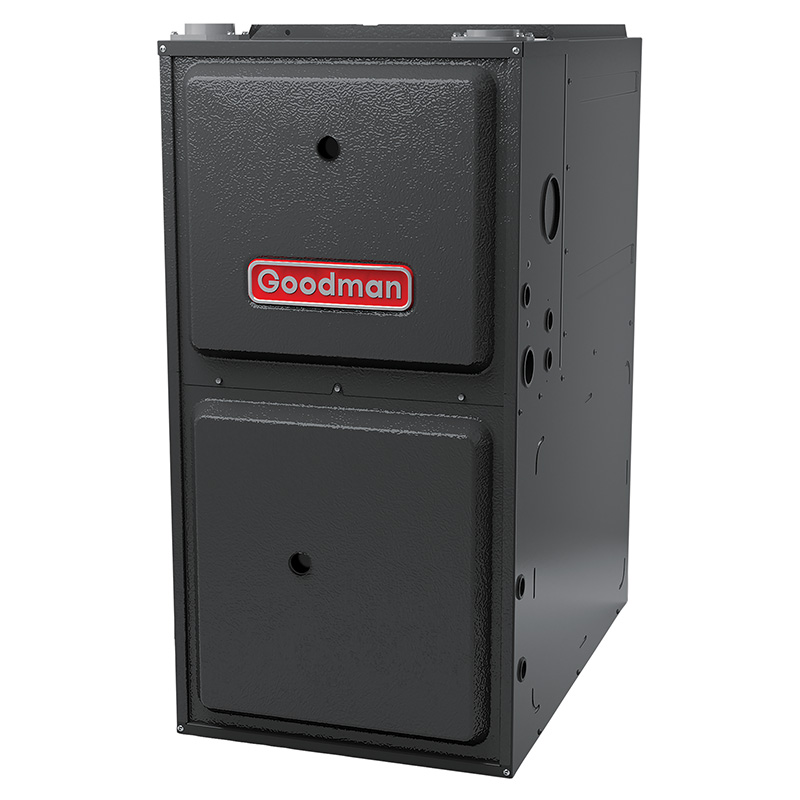
- 92% AFUE upflow gas furnace with 60,000 BTU input capacity
- Multi-speed ECM blower motor for improved airflow consistency and humidity management
- R-32 refrigerant: lower global warming potential than R-410A, improved heat-transfer efficiency
- Upflow configuration suits basement and closet installations with overhead duct runs
- Factory-matched system design for straightforward AHRI-certified efficiency verification
About this system
The Goodman GLXS4BA2410 pairs a 2-ton, 15.2 SEER2 single-stage air conditioner with a 60,000 BTU upflow gas furnace rated at 92% AFUE. That efficiency combination sits just above the current federal minimum for most U.S. climate zones, which means lower operating costs than older 80% AFUE systems without the premium price tag of 96% or 98% condensing units. The R-32 refrigerant charge is a meaningful step forward: R-32 has a global warming potential roughly 70% lower than the R-410A it replaces, and its higher energy density can support slightly better heat transfer in the coil.
This system is sized for smaller homes, typically in the 800 to 1,200 square foot range depending on local climate, insulation levels, and window area. The multi-speed furnace blower helps with comfort distribution and humidity control compared to a fixed-speed motor, though it is not a variable-speed unit, so it will not modulate as smoothly as higher-tier equipment. Upflow configuration means the air handler sits in a basement or closet with ductwork running overhead, which is the most common residential layout. Buyers who want competent, code-compliant heating and cooling without paying for premium-brand markups will find this system worth a close look, provided they invest in a skilled installer.
The Goodman GLXS4BA2410 delivers above-minimum efficiency and a modern refrigerant at a price point that typically undercuts comparable Carrier, Trane, and Lennox equipment by 15 to 25 percent. It is a workable choice for budget-conscious buyers, but documented reliability concerns, including capacitor failures, evaporator coil leaks, and a compressor lifespan that averages shorter than premium competitors, mean that long-term cost of ownership depends heavily on installer quality and a solid maintenance plan. It is not the right fit for buyers who prize low lifetime repair costs above all else.
Overall score is the average of the five ratings above.
What we like
- Purchase price is typically 15 to 25 percent below equivalent Carrier, Trane, and Lennox systems
- 92% AFUE furnace meaningfully reduces heating fuel costs compared to 80% AFUE equipment
- R-32 refrigerant is more environmentally responsible and increasingly well-supported by technicians
- Multi-speed blower improves comfort and dehumidification over basic single-speed alternatives
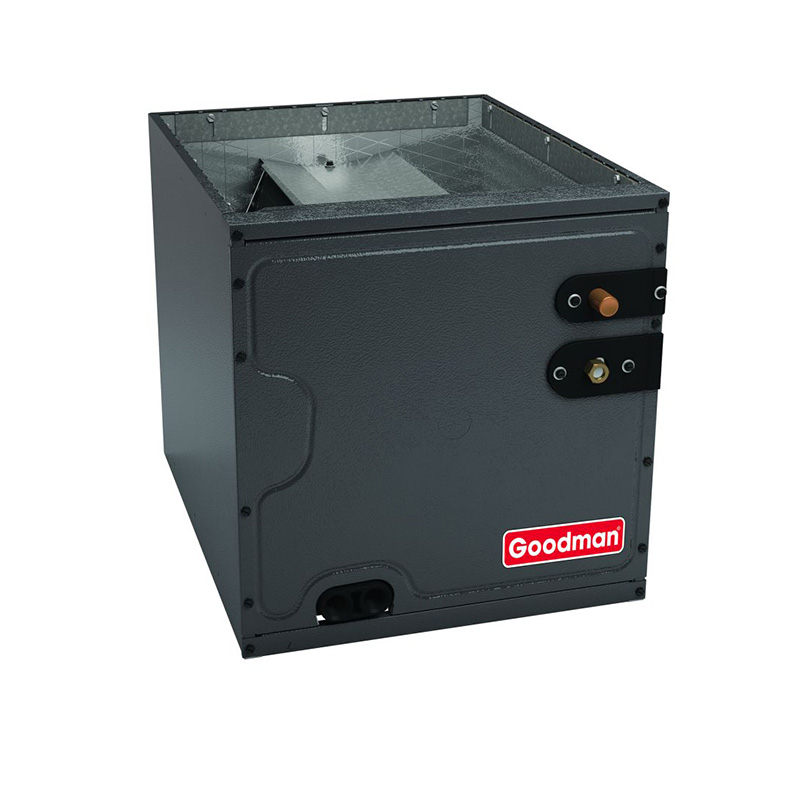
- Factory-matched coil and outdoor unit simplify AHRI efficiency certification for permits and rebates
Trade-offs
- Dual-run capacitors are the most frequently reported failure point, typically requiring a 300 to 600 dollar repair
- Evaporator coil leaks appear in a meaningful share of owner reviews, a potentially costly mid-life repair
- Compressor lifespan averages 10 to 14 years versus 15 to 20 years for premium-brand compressors
- A minority of owners report refrigerant leaks within the first year, most often tied to installation or initial charge issues rather than equipment defects
What homeowners and pros say about Goodman
Homeowners who have lived with Goodman equipment long enough to form a real opinion tend to land in one of two camps. Those who had a skilled installer and kept up with annual maintenance often report years of uneventful service and point to the lower purchase price as a genuine win. Those who ran into problems tend to describe the same pattern that surfaces in Goodman’s roughly 2.5 out of 5 ConsumerAffairs score: the system ran fine for several years, then repair bills started stacking up. The most commonly named culprits are dual-run capacitor failures, which are relatively inexpensive repairs in the 300 to 600 dollar range, and evaporator coil leaks, which are not. Google dealer reviews tell a somewhat more favorable story, averaging around 3.8 out of 5, where the most frequent praise is straightforward: the price was right and the system does what it is supposed to do.
HVAC technicians are more measured in their assessments. Many will install Goodman without hesitation for clients on a tight budget, while noting that the compressors tend to average 10 to 14 years of life compared to 15 to 20 years in premium-brand units. They are also candid that a meaningful minority of first-year refrigerant leak reports trace back to installation or initial charge problems rather than equipment coming out of the factory defective. For this specific system, the R-32 refrigerant is a genuine forward-looking feature that technicians generally view as a responsible choice, and the multi-speed blower earns quiet approval as a step above the bare-minimum blower setups found on cheaper equipment. The consensus: Goodman is a reasonable bet when the installer is experienced, the warranty registration is completed on time, and the homeowner is not expecting premium-brand longevity at a value-brand price.
Sources: ConsumerAffairs Goodman owner reviews, AHRI Directory of Certified Product Performance, U.S. DOE appliance and equipment efficiency standards, Goodman product specification sheets.
What it costs to run
At 15.2 SEER2, cooling this 2-ton system for a typical 1200-hour cooling season at the U.S. average electricity rate of $0.17/kWh works out to roughly $322 per year in cooling, about $43 less per year than a minimum-efficiency 13.4 SEER2 unit of the same size. Your real cost depends on your climate and local rate.
Method: (24,000 BTU/hr ÷ 15.2 SEER2) × 1200 hours ÷ 1000 × $0.17/kWh. Rate source: U.S. EIA average; cooling hours: moderate-climate estimate.
How it compares
| Brand | Comparable model | SEER2 | Stage | Price position |
|---|---|---|---|---|
| Goodman | GLXS4BA2410 | 15.2 | Single-stage | Value pick |
| Carrier | Comfort 15 Series (24ACC636) | 15.2 | Single-stage | Typically 15 to 25 percent more than Goodman |
| Trane | XR15 Series (4TTR5024) | 15.2 | Single-stage | Typically 15 to 25 percent more than Goodman |
| Lennox | Merit 14ACX Series | 15.0 | Single-stage | Typically 15 to 25 percent more than Goodman |
Competitor rows are comparable single-stage units at similar efficiency; price is relative position, not a quote.
Questions about this system
Is R-32 refrigerant hard to find a technician for?
R-32 is growing rapidly in the U.S. residential market following the phase-down of R-410A, and most HVAC service companies are equipping their technicians to handle it. In a major metro area you are unlikely to have trouble finding service, though in very rural areas it is worth confirming your preferred technician has R-32 recovery equipment before you buy.
What size home is a 2-ton, 60,000 BTU system actually right for?
A rough rule of thumb places 2-ton cooling at about 800 to 1,200 square feet, but actual sizing depends on your climate zone, insulation, ceiling height, and window area. The 60,000 BTU furnace is on the modest end of mid-size homes. A Manual J load calculation by your installer is the only reliable way to confirm this system is not undersized or oversized for your specific house.
Goodman has low ConsumerAffairs scores. Should I be worried?
Goodman carries roughly a 2.5 out of 5 on ConsumerAffairs, a platform where dissatisfied owners are far more likely to write reviews than satisfied ones. The recurring complaint theme is rising repair costs after year 7, which aligns with the documented capacitor and coil failure patterns. Google dealer reviews average around 3.8 out of 5, where affordability is the most common praise. Taking both signals together, the equipment is not unusually failure-prone in early years, but budget for potential repairs as it ages.
Does Goodman's warranty cover parts and labor?
Goodman's registered warranty typically covers parts for 10 years on covered components, but labor is not included from the factory. That means a coil leak or capacitor failure after year one comes with a parts credit but you still pay the technician's time. Some dealers offer extended labor warranties as an add-on, which is worth pricing out at the time of purchase.
How important is installer quality with a Goodman system specifically?
Very important, more so than with premium brands that have tighter factory tolerances and more robust quality control. Technicians consistently cite install quality as the single biggest factor in how long a Goodman system performs reliably. The first-year refrigerant leak reports in owner reviews are most often attributed to improper charging or line set issues at installation, not defective equipment. Choosing a licensed, experienced installer and confirming they pressure-test and verify refrigerant charge is not optional on this brand.
Specifications
| Cooling capacity | 2 Ton |
| Efficiency | 15.2 SEER2 |
| Furnace output | 60000 BTU |
| Furnace efficiency | 92% AFUE |
| Configuration | Upflow |
| Refrigerant | R-32 |
| Model | GLXS4BA2410 |