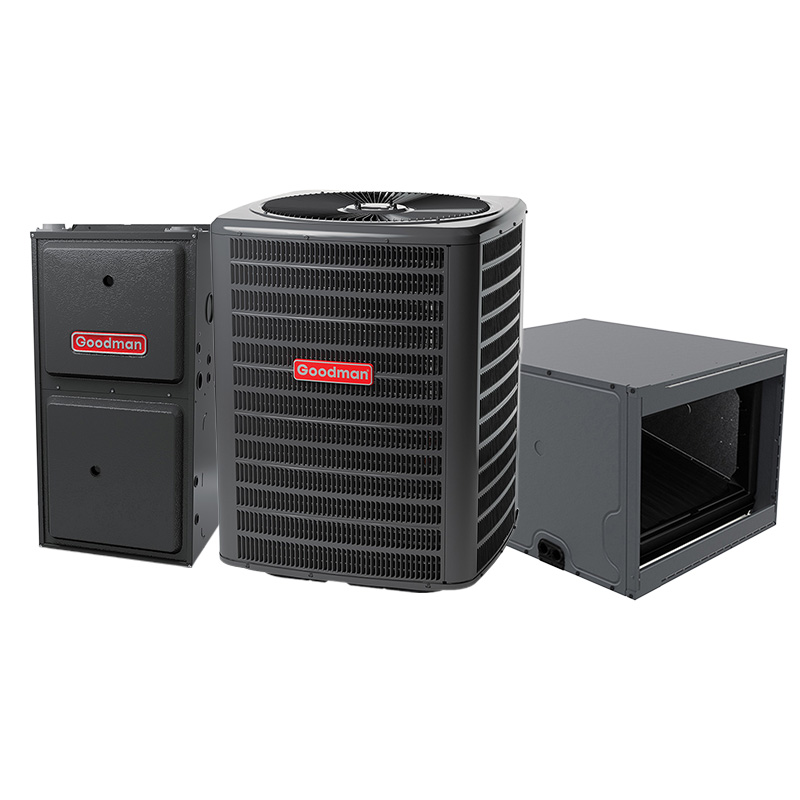
Goodman 2 Ton 15.2 SEER2 AC & Gas Furnace System – Multi-Speed, 80000 BTU Gas Furnace, 92% AFUE, Horizontal, R32
View on AC Direct see your lowest price →Check current price on AC Direct →
Key features
- 2-ton single-stage cooling rated at 15.2 SEER2 with R-32 refrigerant
- 80,000 BTU gas furnace at 92% AFUE for mid-efficiency heating
- Multi-speed blower motor for more consistent airflow than single-speed
- Horizontal cabinet orientation designed for attic or crawl-space installs
- R-32 refrigerant has roughly 68% lower global-warming potential than R-410A
- Factory-installed filter drier helps protect the refrigerant circuit during initial operation
About this system
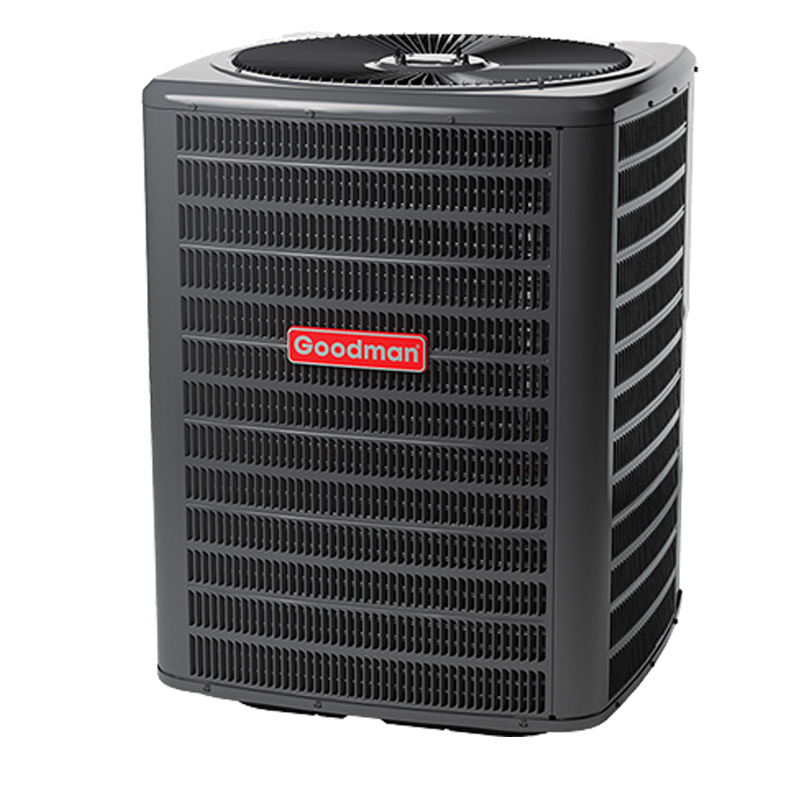
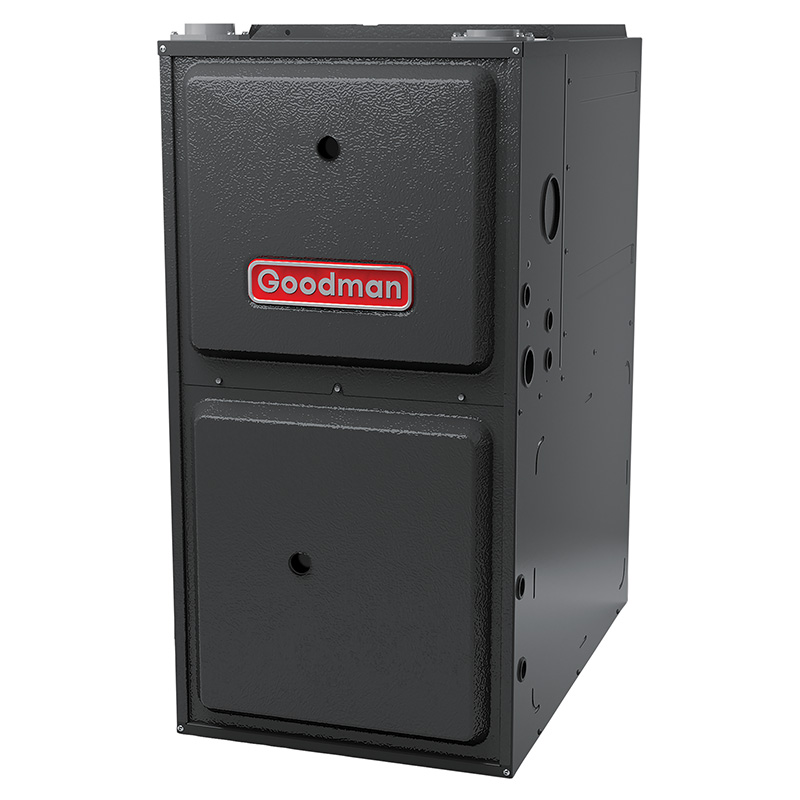
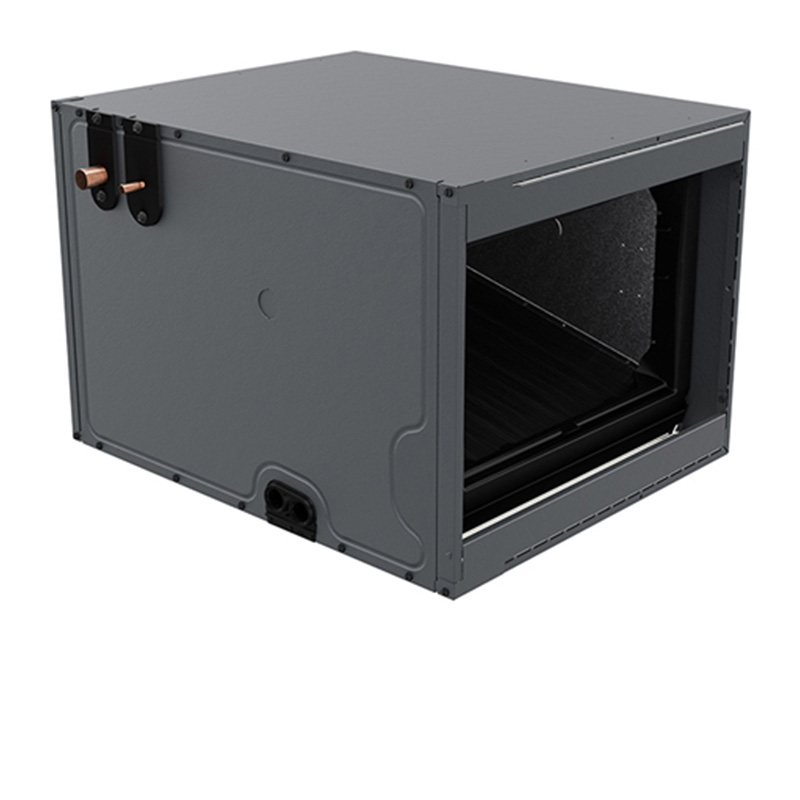
The Goodman GLXS4BA2410 pairs a 2-ton, 15.2 SEER2 single-stage air conditioner with an 80,000 BTU, 92% AFUE multi-speed gas furnace in a horizontal configuration, making it a practical fit for crawl-space or attic installations where upflow units simply will not fit. R-32 refrigerant gives this system a lower global-warming-potential footprint than older R-410A equipment, and the multi-speed blower helps even out airflow and humidity control more than a single-speed motor would, though it still falls short of the comfort consistency that variable-speed systems deliver.
At 15.2 SEER2 and 92% AFUE, this system sits comfortably in the mid-efficiency tier. It exceeds federal minimums by a meaningful margin, and the 92% AFUE furnace means only about 8 cents of every heating dollar escapes up the flue. That said, buyers in cold climates looking for maximum heating savings may want to weigh 96% AFUE options, and those in hot, humid regions who run air conditioning heavily might find the efficiency gains of a 17+ SEER2 system worth the added cost over time. For a modestly sized home in a mixed climate, this combination is a sensible, budget-conscious choice.
The Goodman GLXS4BA2410 offers a credible entry into mid-efficiency HVAC at a price point that is hard to match from premium brands, but buyers should go in clear-eyed about the brand's real reliability record and budget for likely component service after year seven. It is a reasonable system when installed by an experienced technician and backed by a solid labor warranty; it becomes a frustrating one when cut-rate installation shortcuts are taken.
Overall score is the average of the five ratings above.
What we like
- Priced roughly 15 to 25 percent below comparable Carrier, Trane, and Lennox systems
- 92% AFUE furnace meaningfully reduces heating fuel waste versus 80% AFUE alternatives
- R-32 refrigerant is lower-impact and increasingly well-supported by technicians
- Multi-speed blower improves humidity management and reduces hot and cold spots versus single-speed
- Horizontal configuration directly addresses homes where vertical installation is not an option
Trade-offs
- Dual-run capacitors are the most frequently reported failure point and often need replacement around or before year seven
- Evaporator coil leaks appear in a notable share of owner feedback, which can mean refrigerant loss and expensive repair bills
- Compressor lifespan averages 10 to 14 years, shorter than the 15 to 20 years typically seen from premium-brand compressors
- A minority of first-year owners report refrigerant leaks, most of which trace back to installation quality rather than the equipment itself
What homeowners and pros say about Goodman
Homeowners who have lived with a Goodman system share a recognizable pattern in reviews: satisfaction early on, followed by growing frustration with repair frequency as the system ages past the seven-year mark. On ConsumerAffairs, Goodman scores around 2.5 out of 5, a rating that reflects a platform where unhappy owners are far more motivated to write than satisfied ones, but the recurring theme of climbing repair costs in years seven through ten is real and consistent enough to take seriously. Google dealer reviews paint a more balanced picture, with scores around 3.8 out of 5 across locations, where affordability and acceptable performance are the most common points of praise from buyers who went in with realistic expectations.
Among HVAC professionals, the consensus on Goodman tends to be that the equipment itself is adequate but unforgiving of poor installation. The documented failure modes back that up: dual-run capacitors are the most reported component failure and are a relatively low-cost fix, but evaporator coil leaks represent a more expensive problem that shows up in a meaningful share of owner histories. Compressor longevity averaging 10 to 14 years versus the 15 to 20 years seen from premium brands is the clearest long-term trade-off. Technicians consistently point to the horizontal configuration adding a layer of install complexity that rewards experienced hands, making contractor selection arguably as important as the equipment choice itself for this particular system.
Sources: ConsumerAffairs Goodman owner reviews, AHRI Directory of Certified Product Performance, U.S. DOE appliance and equipment efficiency standards, Goodman product specification sheets.
What it costs to run
At 15.2 SEER2, cooling this 2-ton system for a typical 1200-hour cooling season at the U.S. average electricity rate of $0.17/kWh works out to roughly $322 per year in cooling, about $43 less per year than a minimum-efficiency 13.4 SEER2 unit of the same size. Your real cost depends on your climate and local rate.
Method: (24,000 BTU/hr ÷ 15.2 SEER2) × 1200 hours ÷ 1000 × $0.17/kWh. Rate source: U.S. EIA average; cooling hours: moderate-climate estimate.
How it compares
| Brand | Comparable model | SEER2 | Stage | Price position |
|---|---|---|---|---|
| Goodman | GLXS4BA2410 | 15.2 | Single-stage | Value pick |
| Carrier | Comfort 15 (24ACC6) | 15.2 | Single-stage | Typically 15 to 25 percent more than Goodman |
| Trane | XR15 | 15.2 | Single-stage | Typically 15 to 25 percent more than Goodman |
| Lennox | Merit 14ACX | 15.2 | Single-stage | Typically 15 to 25 percent more than Goodman |
Competitor rows are comparable single-stage units at similar efficiency; price is relative position, not a quote.
Questions about this system
What does the horizontal configuration actually mean, and can this unit be installed in any other orientation?
Horizontal means the furnace cabinet is designed to lie on its side, with airflow moving laterally through the heat exchanger. This is the required orientation for attic platforms and certain crawl-space setups. Installing a horizontal-only cabinet in an upflow or downflow position is not supported by Goodman and would void the warranty.
Why does this system use R-32 instead of R-410A, and does that affect service costs?
Goodman transitioned to R-32 as part of the broader industry shift away from higher-global-warming-potential refrigerants. R-32 is A2L classified, meaning it is mildly flammable, and technicians need proper training and equipment to handle it safely. Most established HVAC contractors are already equipped for R-32 work, but it is worth confirming with your installer before service calls.
What are the most common repairs I should budget for over the life of this system?
Dual-run capacitor replacement is the single most frequently reported service item on Goodman AC units, typically costing between 300 and 600 dollars including labor. Evaporator coil leaks are a secondary concern and can run significantly more. Setting aside a small annual repair fund after year five is a reasonable approach.
Does Goodman's parts warranty cover the compressor and heat exchanger, and for how long?
Goodman offers a 10-year parts limited warranty on registered equipment, which includes the compressor and heat exchanger. Registration must be completed within a set window after installation, so do not skip that step. Labor is not covered by the manufacturer warranty, which is why choosing an installer who offers their own labor warranty matters.
Is 15.2 SEER2 efficient enough to qualify for federal or utility rebates?
Federal tax credits under the Inflation Reduction Act require a minimum of 15.2 SEER2 for split systems in most regions, so this unit sits right at that threshold and may qualify. Utility rebate programs vary widely by provider and location, so check your utility's current program requirements directly before purchase since minimums and incentive amounts change.
Specifications
| Cooling capacity | 2 Ton |
| Efficiency | 15.2 SEER2 |
| Furnace output | 80000 BTU |
| Furnace efficiency | 92% AFUE |
| Configuration | Horizontal |
| Refrigerant | R-32 |
| Model | GLXS4BA2410 |