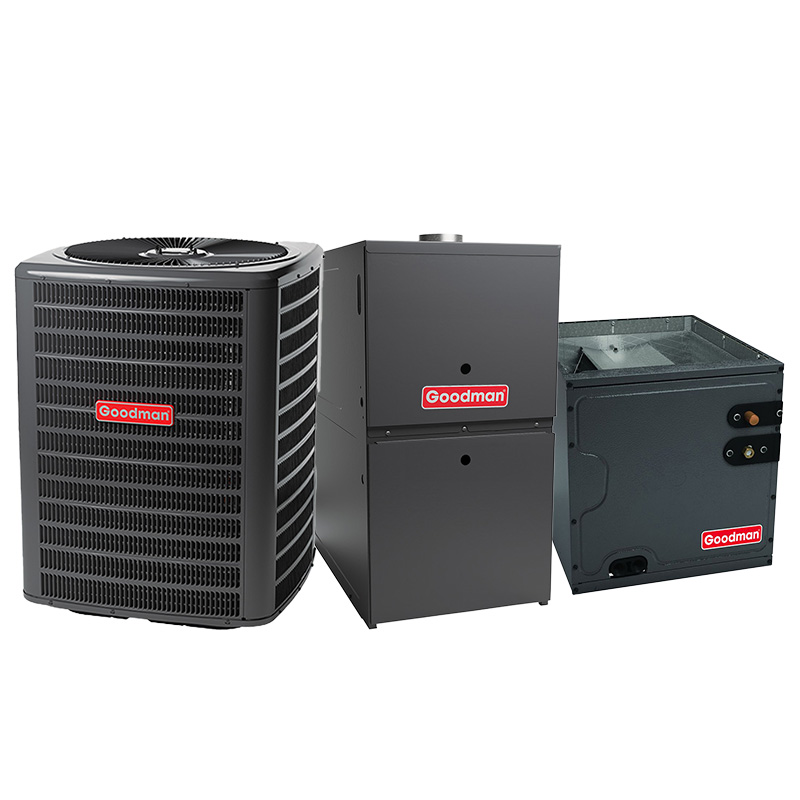
Goodman 2 Ton 15.2 SEER2 AC & Gas Furnace System – Two Stage Variable-Speed 80000 BTU Gas Furnace, 80% AFUE, Upflow, R32
View on AC Direct see your lowest price →Check current price on AC Direct →
Key features
- Two-stage compressor runs at low or high capacity to reduce short-cycling and improve humidity control
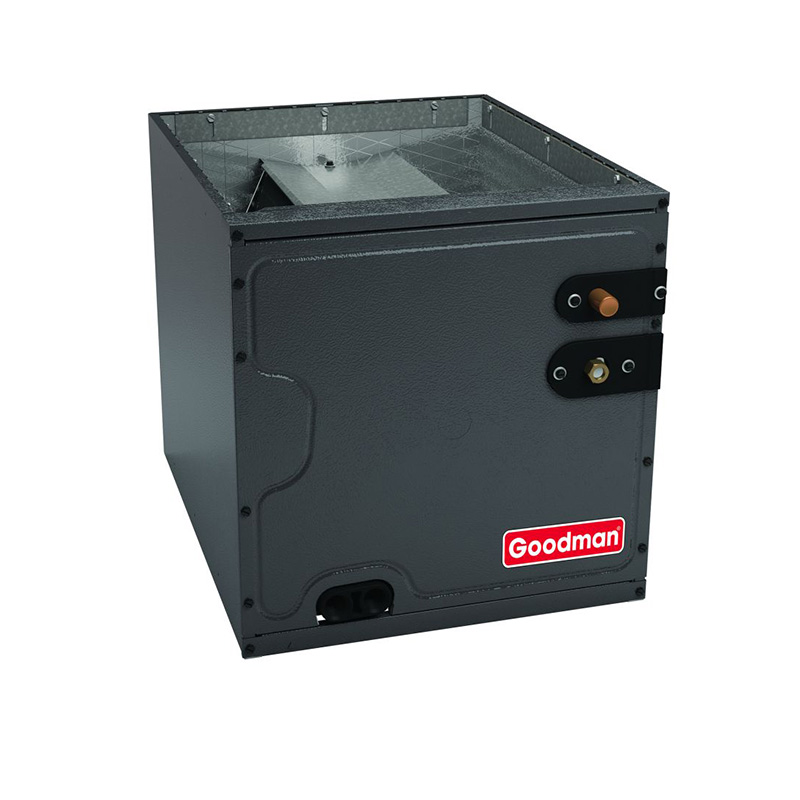
- Variable-speed ECM air handler motor lowers operating noise and improves airflow consistency
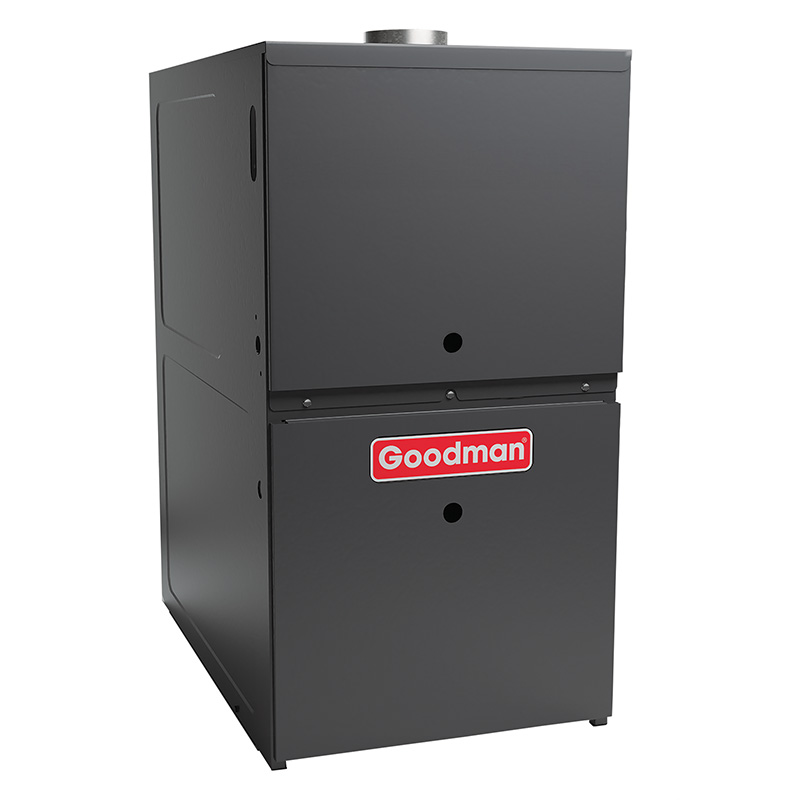
- 80,000 BTU upflow gas furnace rated at 80% AFUE for moderate-climate heating applications
- R-32 refrigerant offers lower global-warming potential than legacy R-410A systems
- 15.2 SEER2 seasonal efficiency exceeds current federal minimums for most U.S. regions
- Upflow cabinet orientation designed for basement or utility-closet installations with overhead ductwork
About this system
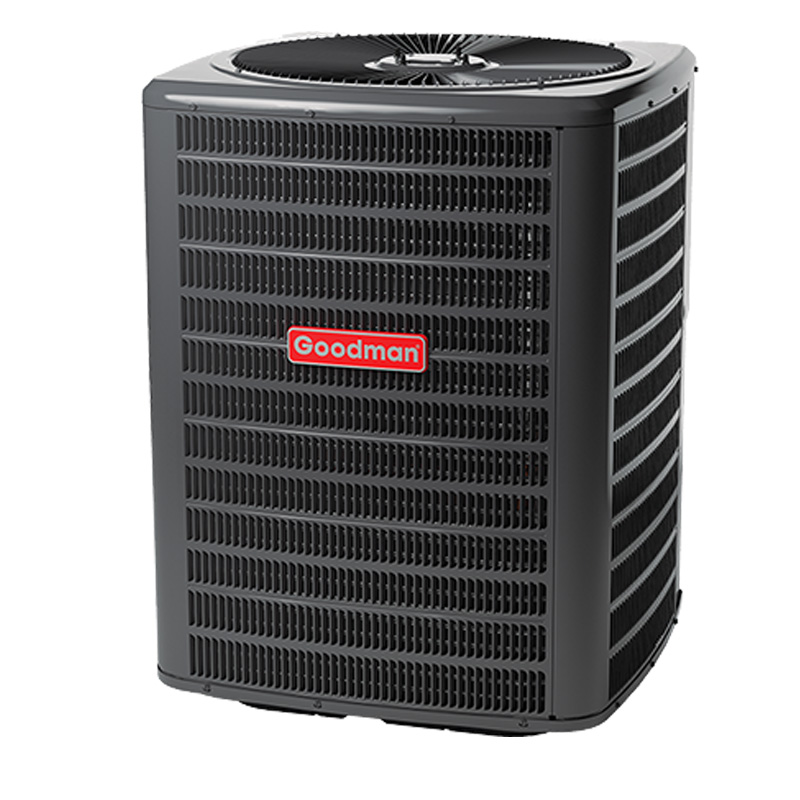
The Goodman 2-ton 15.2 SEER2 system pairs a two-stage, variable-speed air conditioner with an 80,000 BTU upflow gas furnace rated at 80% AFUE. The two-stage compressor is the standout feature at this price tier: it runs on low capacity during mild weather, which reduces short-cycling, lowers humidity, and softens utility bills compared with single-stage units. The variable-speed air handler further extends those benefits by moving air more quietly and consistently. R-32 refrigerant carries a lower global-warming potential than the R-410A it replaces and is now the industry standard on new residential equipment.
At 15.2 SEER2 the system sits just above the federal minimums that took effect in 2023, so it is efficient enough to satisfy most homeowners without pushing into premium-tier pricing. The 80% AFUE furnace captures four out of every five BTUs of fuel as usable heat, which is adequate for mild to moderate climates but leaves efficiency on the table compared with 96% or higher condensing furnaces common in colder regions. The upflow configuration means warm air exits the top of the cabinet, making this unit suited to basements, crawl-space installations, or utility closets where ductwork runs above the unit.
This system suits cost-conscious homeowners replacing aging equipment who want two-stage comfort without paying Carrier, Trane, or Lennox prices. It is a reasonable fit for climates with moderate heating loads where 80% AFUE is acceptable, and for homes where quality installation is confirmed, since Goodman’s real-world longevity tracks closely with how carefully the system is commissioned.
This system delivers genuine two-stage comfort at a price point that undercuts comparable premium-brand equipment by 15 to 25 percent, making it a sensible choice for budget-focused buyers willing to accept a shorter expected compressor lifespan and the possibility of repair costs climbing after year seven. The 80% AFUE furnace is a limitation in cold climates, and long-term reliability depends heavily on installation quality. Buyers who confirm a meticulous install and budget for a capacitor replacement somewhere in the first decade are likely to get solid value.
Overall score is the average of the five ratings above.
What we like
- Two-stage operation reduces humidity and short-cycling without stepping up to a much higher price
- Variable-speed air handler improves comfort and lowers sound levels versus single-speed alternatives
- R-32 refrigerant is current-generation and will not face the supply or regulatory pressures of R-410A
- Priced 15 to 25 percent below comparable Carrier, Trane, and Lennox configurations, freeing budget for a quality installation
- 15.2 SEER2 efficiency satisfies federal minimums with moderate headroom, keeping operating costs reasonable in mixed climates
Trade-offs
- 80% AFUE furnace wastes one-fifth of fuel as exhaust heat, a meaningful ongoing cost in cold climates where 95%+ units pay back quickly
- Compressor lifespan averages 10 to 14 years against 15 to 20 years typical of premium brands, meaning earlier replacement is probable
- Dual-run capacitor failures are the most commonly documented issue and typically surface within the first decade, adding service call costs even when the fix itself is modest
- Evaporator coil leaks and first-year refrigerant issues appear in a notable share of owner reports, often tied to install or charge quality rather than the unit itself, but still the owner's problem to manage
What homeowners and pros say about Goodman
Homeowners who review Goodman equipment on ConsumerAffairs give it roughly 2.5 out of 5 stars, and the pattern in those reviews is consistent: the first several years tend to go smoothly, but repair bills start climbing around year seven or eight. The two most documented failure points are dual-run capacitors, which are a relatively low-cost fix in the $300 to $600 range but still an unwelcome service call, and evaporator coil leaks, which show up in a meaningful share of longer-term owner accounts and can be more disruptive to repair. A minority of owners also report refrigerant leaks within the first year, a problem that technicians generally attribute to install or charge quality rather than a defect in the equipment itself. On Google, dealer-aggregated reviews land closer to 3.8 out of 5, and the most repeated theme there is straightforward: buyers feel they got a functional system at a price that left room in the budget for other home priorities.
HVAC technicians tend to echo that dealer-level sentiment with some important caveats. The consistent professional view is that Goodman’s performance ceiling is high when the system is installed carefully, but that the brand’s tolerances leave less margin for sloppy commissioning than a Trane or Carrier unit might. They also note that the compressor in a Goodman system realistically averages 10 to 14 years of service life, versus 15 to 20 years that premium-brand compressors more commonly achieve. For this specific 2-ton, two-stage configuration, the variable-speed air handler draws genuine praise from field technicians because it reduces the short-cycling and coil stress that accelerates wear in single-stage systems. The honest consensus: Goodman is a workable, budget-sound choice when the installation is done right and the buyer goes in understanding what the long-term ownership curve looks like.
Sources: ConsumerAffairs Goodman owner reviews, AHRI Directory of Certified Product Performance, U.S. DOE appliance and equipment efficiency standards, Goodman product specification sheets.
What it costs to run
At 15.2 SEER2, cooling this 2-ton system for a typical 1200-hour cooling season at the U.S. average electricity rate of $0.17/kWh works out to roughly $322 per year in cooling, about $43 less per year than a minimum-efficiency 13.4 SEER2 unit of the same size. Your real cost depends on your climate and local rate.
Method: (24,000 BTU/hr ÷ 15.2 SEER2) × 1200 hours ÷ 1000 × $0.17/kWh. Rate source: U.S. EIA average; cooling hours: moderate-climate estimate.
How it compares
| Brand | Comparable model | SEER2 | Stage | Price position |
|---|---|---|---|---|
| Goodman | GSXH5 / GMVC8 Series (this system) | 15.2 | two-stage / variable-speed | Value pick |
| Carrier | Performance 15 (24ACC6 / 58TP Series) | 15.2 | single-stage | Typically 15 to 25 percent more than this Goodman system |
| Trane | XR15 / S8X1 Series | 15.0–15.5 | single-stage | Typically 15 to 25 percent more than this Goodman system |
| Lennox | Merit 16ACX / ML180 Series | 15.0–16.0 | single-stage | Typically 15 to 25 percent more than this Goodman system |
Competitor rows are comparable single-stage units at similar efficiency; price is relative position, not a quote.
Questions about this system
Is 80% AFUE good enough for a cold-winter climate like the Midwest or Northeast?
It meets the legal minimum for most of the northern U.S., but 80% AFUE means 20% of your fuel cost goes out the flue. In climates with long heating seasons, a 95% or 96% AFUE condensing furnace typically pays back the price difference in three to six years through lower gas bills, so 80% AFUE is more cost-effective in moderate or southern climates.
What does two-stage mean in practice, and is it worth it over a single-stage unit?
A two-stage compressor runs at a lower capacity setting during mild conditions, which means longer, gentler cycles rather than frequent full-blast starts and stops. In practice this improves humidity removal, reduces temperature swings, and lowers sound levels. For most homeowners it is worth the modest price step up from single-stage, especially in humid climates.
Why does Goodman have mixed reviews, and should that concern me?
Goodman scores around 2.5 out of 5 on ConsumerAffairs, a channel that over-represents unhappy owners, with repair costs after roughly year seven as the recurring complaint. Google dealer reviews land closer to 3.8 out of 5, where affordability is the most frequent praise. The mixed picture reflects a real trade-off: lower upfront cost but a shorter expected lifespan and documented failure modes including capacitor failures and evaporator coil leaks. If installation is thorough, many owners are satisfied; if corners are cut during commissioning, problems tend to show up earlier.
What is R-32 refrigerant and does it cost more to service than R-410A?
R-32 is a single-component refrigerant with a lower global-warming potential than R-410A, and it is now widely stocked by HVAC distributors, so supply is not a concern. Technicians who are EPA-certified for HFC refrigerants can work with it, though some equipment and procedures differ from R-410A work. Service pricing is broadly comparable, and R-32 should remain available and reasonably priced as R-410A is phased down.
What is the warranty on this Goodman system, and what does it actually cover?
Goodman typically offers a 10-year parts warranty on registered residential equipment, which covers the compressor, heat exchanger, and other components but does not cover labor costs, refrigerant, or service fees. Registration must usually be completed within a set window after installation to activate the full term. Labor for a capacitor replacement or coil repair, for example, comes out of pocket regardless of the parts coverage.
Specifications
| Cooling capacity | 2 Ton |
| Efficiency | 15.2 SEER2 |
| Furnace output | 80000 BTU |
| Furnace efficiency | 80% AFUE |
| Configuration | Upflow |
| Refrigerant | R-32 |