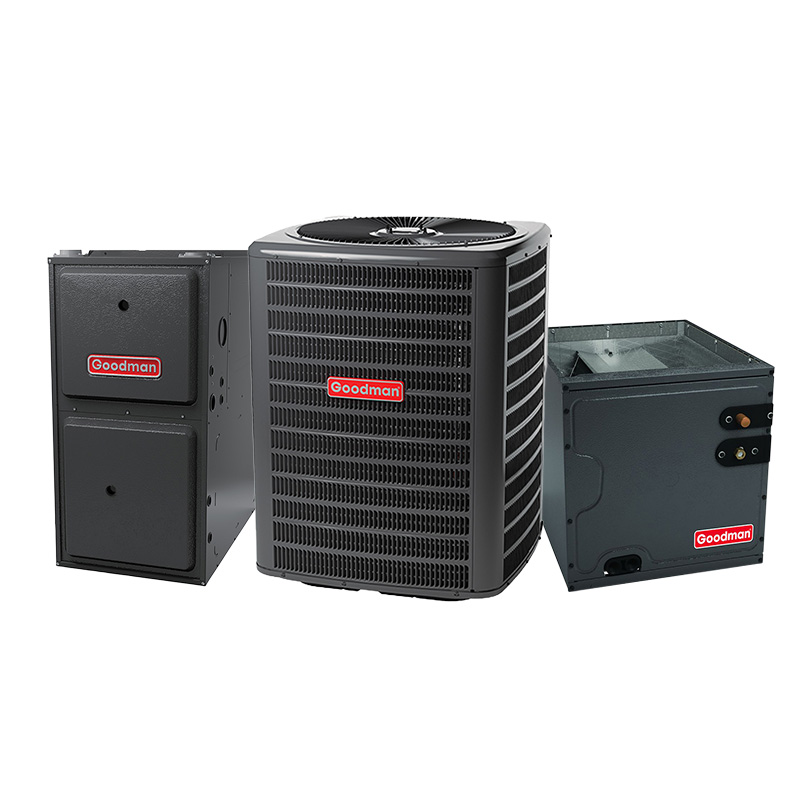
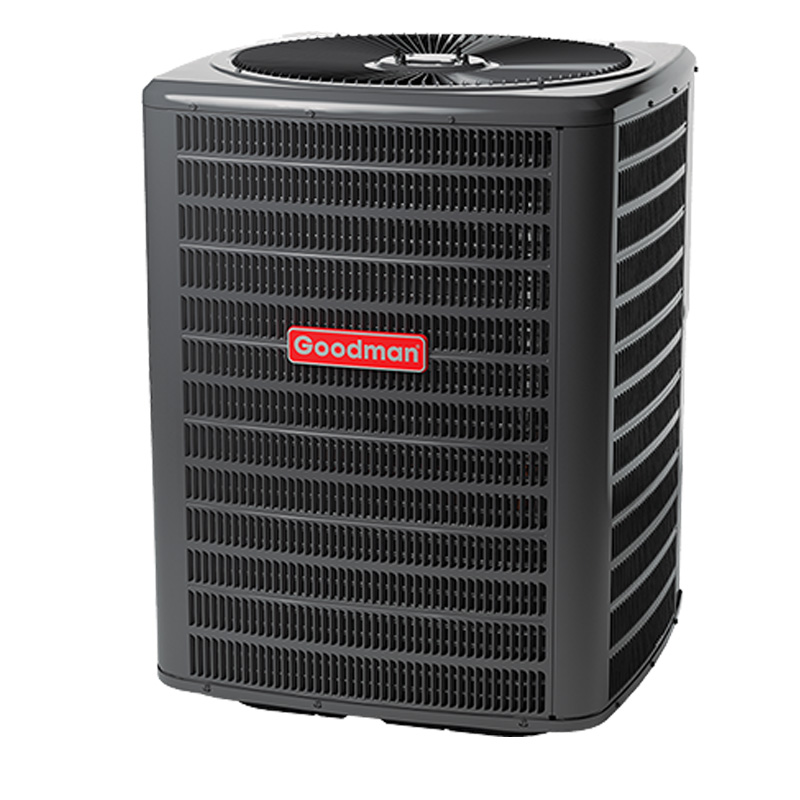
Goodman 2 Ton 15.2 SEER2 Dual Fuel Heat Pump & Gas Furnace Hybrid System – Modulating Variable-Speed, 80000 BTU Gas Furnace, 97% AFUE, Upflow, R32
View on AC Direct see your lowest price →Check current price on AC Direct →
Key features
- 15.2 SEER2 variable-speed heat pump with R-32 refrigerant
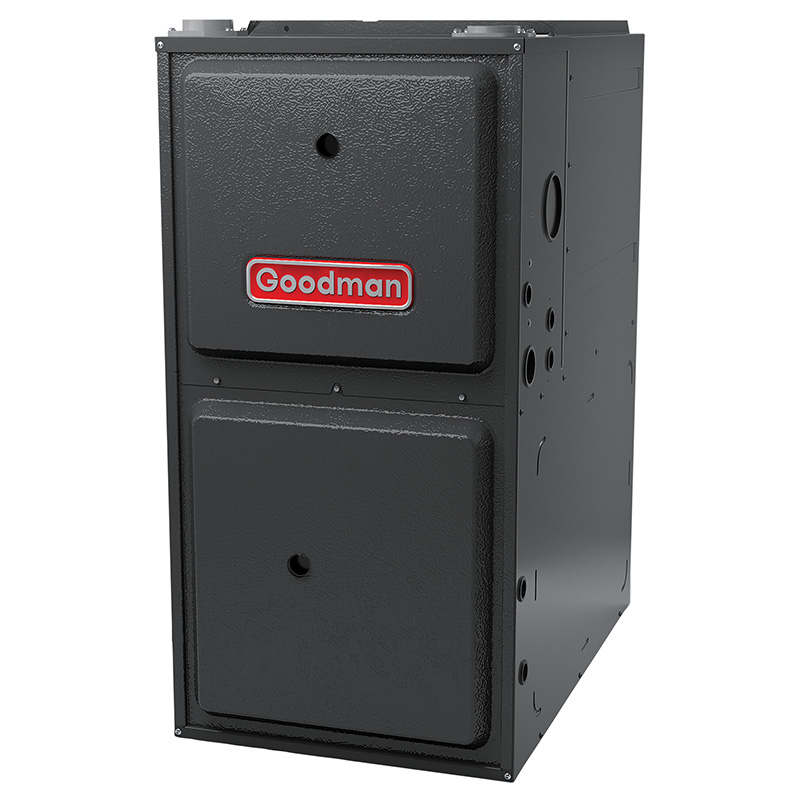
- 97% AFUE modulating gas furnace, 80,000 BTU upflow configuration
- Dual fuel controls automatically switch between heat pump and gas heat at a user-set outdoor temperature crossover point
- Modulating gas valve delivers precise heat output for consistent room temperatures and quieter cycling
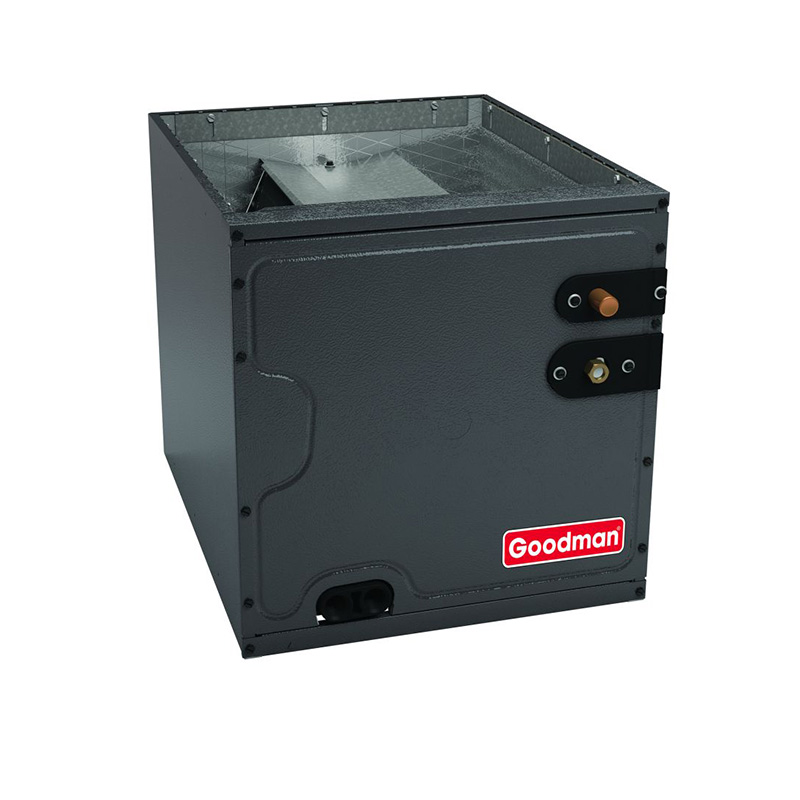
- Variable-speed ECM blower motor improves dehumidification and reduces energy use during fan operation
- R-32 refrigerant offers lower global warming potential and slightly improved efficiency versus R-410A
About this system
The Goodman GLZS4BA2410 is a 2-ton dual fuel hybrid system pairing a 15.2 SEER2 variable-speed heat pump with an 80,000 BTU, 97% AFUE modulating gas furnace in an upflow configuration. Dual fuel means the system automatically switches between electric heat pump operation and gas furnace heat depending on outdoor temperature, letting the heat pump handle mild days efficiently while the furnace takes over when temperatures drop below the heat pump’s economic crossover point. That combination can lower annual heating costs compared to running either technology alone, which makes this setup genuinely practical in climates with cold winters but not extreme cold.
The modulating furnace and variable-speed air handler are the mechanical highlights here. A modulating gas valve adjusts heat output in small increments rather than cycling on and off at full blast, which means steadier indoor temperatures, quieter operation, and less wasted fuel. Variable-speed blower motor technology also improves humidity control and air distribution. R-32 refrigerant is the other notable spec: it has a lower global warming potential than the R-410A it replaces and operates at slightly higher efficiency under real-world conditions. This system suits homeowners in mixed-climate zones who want a long-term efficiency investment without paying premium-brand prices, provided they have access to a qualified installer who knows dual fuel controls.
The GLZS4BA2410 delivers genuinely high-efficiency dual fuel heating and cooling at a price 15 to 25 percent below comparable Carrier, Trane, and Lennox systems, and its modulating variable-speed equipment is the right technology for owners who want comfort and fuel savings over a long run. The trade-off is that Goodman's real-world reliability record is average at best, and this system's complexity means install quality matters even more than it does on simpler single-stage equipment. Buyers who prioritize upfront savings and have access to a skilled installer will get solid value; those who want minimal long-term worry may find the premium brands worth the premium.
Overall score is the average of the five ratings above.
What we like
- 97% AFUE modulating furnace is among the highest efficiency tiers available, reducing gas consumption meaningfully on cold days
- Dual fuel operation lets the system automatically choose the cheaper energy source based on outdoor temperature, lowering annual heating bills
- Variable-speed blower and modulating gas valve together produce noticeably steadier temperatures and better dehumidification than single-stage systems
- R-32 refrigerant is a forward-looking refrigerant choice with lower environmental impact and good thermodynamic performance
- Priced 15 to 25 percent below comparable Trane, Carrier, and Lennox dual fuel systems, making high-end technology more accessible
Trade-offs
- Goodman compressors average 10 to 14 years in service versus 15 to 20 years for premium brands, which matters on a system this complex
- Dual run capacitor failures are the most commonly reported repair event, typically costing $300 to $600, and recur across Goodman's product line
- Evaporator coil leaks appear in a meaningful share of owner reviews, and a minority of owners report refrigerant leaks within the first year
- Dual fuel systems require precise setup of the outdoor temperature lockout, correct refrigerant charge, and proper thermostat integration; errors at install compound all of the above reliability risks
What homeowners and pros say about Goodman
Homeowners who choose Goodman equipment tend to land in two camps: those who are satisfied with the upfront savings and report years of uneventful operation, and those who encounter repair costs that erode the initial price advantage. On ConsumerAffairs, Goodman scores around 2.5 out of 5, a rating that reflects a channel where frustrated owners are more likely to write than satisfied ones, but the recurring pattern in those complaints is repair costs climbing after roughly year 7, which tracks with the documented compressor lifespan of 10 to 14 years versus 15 to 20 for premium brands. Google dealer reviews tell a more balanced story at around 3.8 out of 5, where affordability is consistently the most cited reason for choosing Goodman over the alternatives.
HVAC professionals who work on Goodman equipment regularly point to install quality as the single biggest variable in how these systems perform long-term. That observation matters more on a dual fuel modulating system than on a straightforward single-stage unit, because the controls integration, refrigerant charge, and crossover lockout settings all require careful attention. The documented failure modes that show up across Goodman’s heat pump line, including dual run capacitor failures (a common and usually inexpensive fix in the $300 to $600 range), evaporator coil leaks, and a minority of first-year refrigerant leaks that typically trace back to install or charge issues, are worth factoring into the total cost of ownership picture rather than treating the purchase price as the only number that matters.
Sources: ConsumerAffairs Goodman owner reviews, AHRI Directory of Certified Product Performance, U.S. DOE appliance and equipment efficiency standards, Goodman product specification sheets.
What it costs to run
At 15.2 SEER2, cooling this 2-ton system for a typical 1200-hour cooling season at the U.S. average electricity rate of $0.17/kWh works out to roughly $322 per year in cooling, about $43 less per year than a minimum-efficiency 13.4 SEER2 unit of the same size. Your real cost depends on your climate and local rate.
Method: (24,000 BTU/hr ÷ 15.2 SEER2) × 1200 hours ÷ 1000 × $0.17/kWh. Rate source: U.S. EIA average; cooling hours: moderate-climate estimate.
How it compares
| Brand | Comparable model | SEER2 | Stage | Price position |
|---|---|---|---|---|
| Goodman | GLZS4BA2410 (Dual Fuel Hybrid, Modulating Variable-Speed) | 15.2 | Variable-speed / Modulating | Value pick |
| Carrier | Infinity 16 Heat Pump with Infinity Gas Furnace (dual fuel pairing) | Up to 16+ SEER2 depending on configuration | Variable-speed / Modulating | Typically 15 to 25 percent more than Goodman |
| Trane | XV18 Heat Pump with XC95m Gas Furnace (dual fuel pairing) | Up to 18 SEER2 depending on configuration | Variable-speed / Modulating | Typically 15 to 25 percent more than Goodman |
| Lennox | XP21 Heat Pump with SL297V Gas Furnace (dual fuel pairing) | Up to 21 SEER2 depending on configuration | Variable-speed / Modulating | Typically 15 to 25 percent more than Goodman |
Competitor rows are comparable single-stage units at similar efficiency; price is relative position, not a quote.
Questions about this system
At what outdoor temperature does the system switch from heat pump to gas heat, and can I adjust it?
The crossover temperature, often called the balance point or lockout setting, is typically configured in the thermostat during installation and is adjustable. A common starting point is around 35 to 40 degrees Fahrenheit, where gas heat becomes more cost-effective than running the heat pump, but your installer should set it based on your local utility rates and climate rather than leaving it at a factory default.
Is R-32 refrigerant harder or more expensive to service than R-410A?
R-32 requires technicians with proper certification and equipment rated for its slightly higher operating pressures, and not every HVAC technician in every market has caught up with tooling for it yet. In most metro areas it is not a problem, but in rural areas it is worth confirming your service contractors are equipped before you buy.
What does Goodman's warranty actually cover on this system, and are there conditions?
Goodman typically offers a 10-year parts warranty on registered residential equipment, which requires registration within a set window after installation. The warranty covers parts but not labor, so a compressor replacement in year 8 still means a significant labor bill out of pocket. Verify current warranty terms directly with Goodman at time of purchase, as coverage details can change.
The documented failure modes mention capacitor failures and coil leaks. How worried should I be?
Dual run capacitor failure is the most commonly reported repair across Goodman's heat pump line and is a relatively quick, low-cost fix in the $300 to $600 range when caught promptly. Evaporator coil leaks are more disruptive and costly. These are not universal failures, but they are frequent enough that budgeting for at least one repair in the first decade is realistic, and keeping up with annual maintenance gives you the best chance of catching issues early.
Does this system work as a standalone heat pump if gas is unavailable or too expensive temporarily?
Yes, the heat pump side operates independently, and the dual fuel thermostat allows you to lock the system into heat pump-only mode if needed. However, at 2 tons and 15.2 SEER2, heating capacity alone may be insufficient in very cold weather, so heat pump-only operation works best as a temporary adjustment rather than a permanent change in cold climates.
Specifications
| Cooling capacity | 2 Ton |
| Efficiency | 15.2 SEER2 |
| Furnace output | 80000 BTU |
| Furnace efficiency | 97% AFUE |
| Configuration | Upflow |
| Refrigerant | R-32 |
| Model | GLZS4BA2410 |