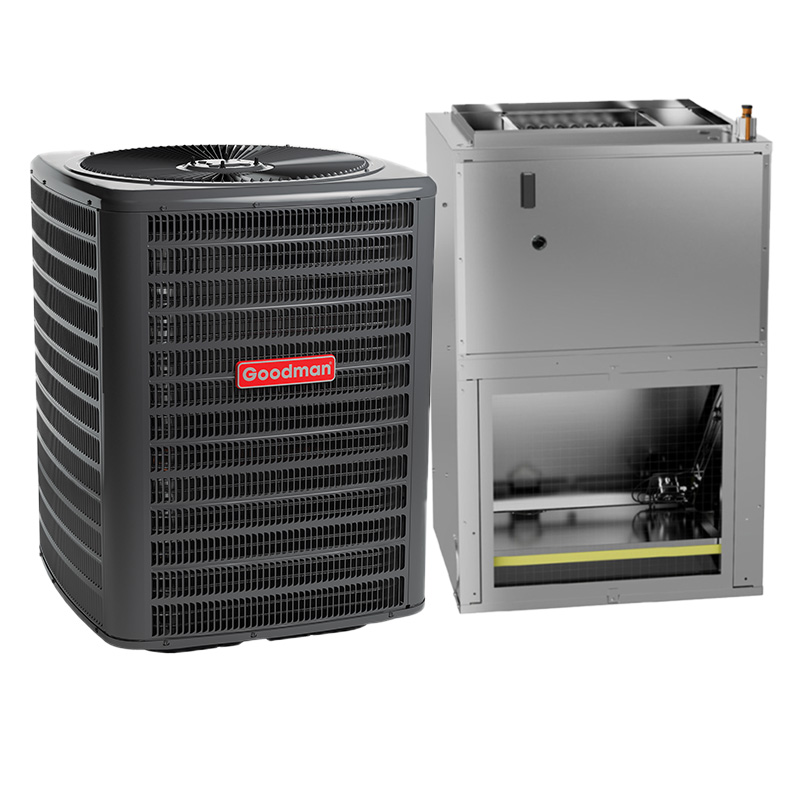
Goodman 2 Ton 15.2 SEER2 R32 Heat Pump Split System With 10kW Heater Built-In Wall-Mounted Air Handler
View on AC Direct see your lowest price →Check current price on AC Direct →
Key features
- 2-ton capacity, suited for spaces up to roughly 1,000 square feet depending on load
- 15.2 SEER2 efficiency rating, meeting current federal minimum standards
- R-32 refrigerant with a global warming potential about 68 percent lower than R-410A
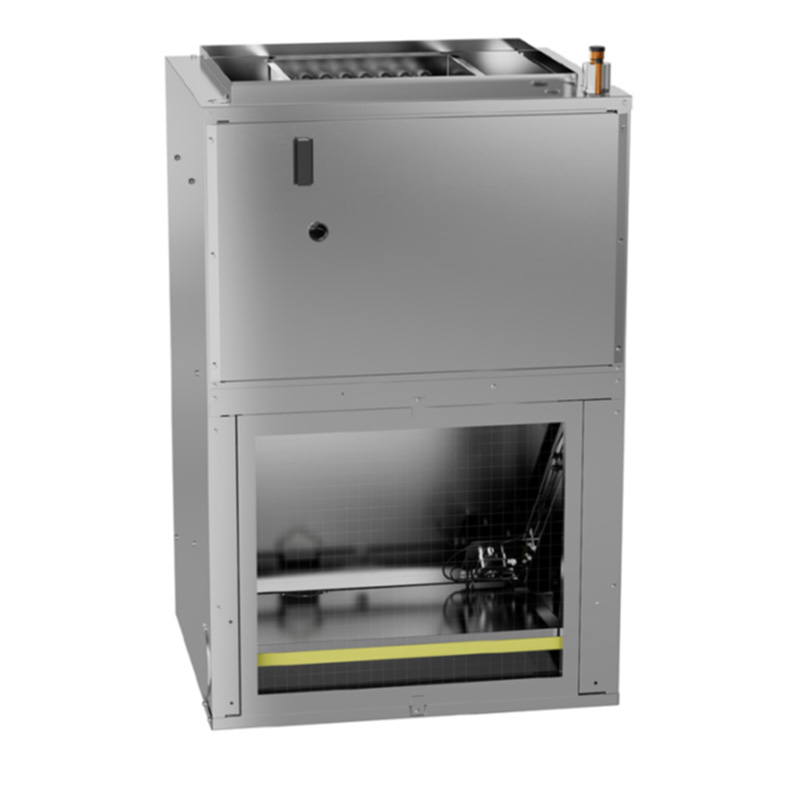
- Wall-mounted air handler for installations where floor or ceiling space is limited
- 10 kW electric strip heater built into the air handler for backup and emergency heat
- Single-stage compressor operation at one fixed output speed
About this system
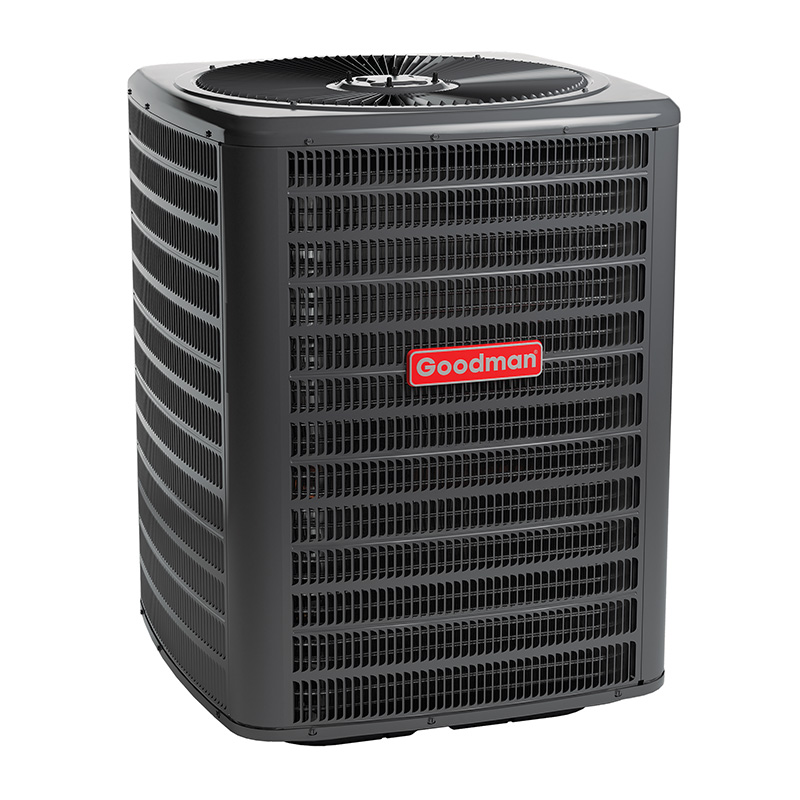
The Goodman 2-ton 15.2 SEER2 R-32 heat pump split system pairs an outdoor heat pump condenser with a wall-mounted air handler that has a 10 kW electric heater built in. That combination makes it a realistic all-in-one comfort solution for smaller homes, condos, additions, or rooms that need both heating and cooling without a separate furnace. At 2 tons, it is sized for roughly 800 to 1,100 square feet of well-insulated space, though your actual load calculation should drive that number. The wall-mount configuration is particularly useful where ceiling or closet space for a conventional air handler is limited.
A 15.2 SEER2 rating sits at the entry tier of the current federal minimum standards landscape, comfortably meeting the 2023 regional efficiency floors for most of the country. R-32 refrigerant is a meaningful step forward: it has a global warming potential roughly 68 percent lower than R-410A and operates at higher efficiency per unit of refrigerant charge, which also means smaller line sets and less total refrigerant by weight. The 10 kW strip heater covers backup and emergency heat duties, which is especially important in climates where outdoor temps regularly drop below the heat pump’s efficient operating range. This is a single-stage system, meaning the compressor runs at one speed, so it cycles on and off rather than modulating output the way a variable-speed unit would.
Goodman occupies the value end of the residential HVAC market, typically priced 15 to 25 percent below Trane, Lennox, and Carrier for comparable capacity and efficiency. That price gap is real and meaningful for budget-conscious buyers, but it comes with acknowledged trade-offs in compressor longevity and component reliability that are worth understanding before you buy.
This Goodman system delivers an honest entry-level heat pump package at a price point that is hard to argue with for budget-focused buyers who need a wall-mount configuration. The R-32 refrigerant transition and 15.2 SEER2 efficiency are appropriate for the price tier, and the built-in 10 kW heater removes the need for a separate backup heat source. The brand's documented reliability history means you should budget for potential component repairs after year seven, and the quality of your installation will matter as much as the equipment itself.
Overall score is the average of the five ratings above.
What we like
- Priced 15 to 25 percent below comparable Trane, Lennox, and Carrier systems, lowering upfront cost
- R-32 refrigerant reduces environmental impact and requires less total refrigerant charge than R-410A
- Wall-mount air handler opens up installation options where conventional handlers cannot fit
- 10 kW backup strip heater is integrated, eliminating a separate purchase for supplemental heat
- 15.2 SEER2 meets current federal efficiency minimums, keeping operating costs reasonable for an entry-tier unit
Trade-offs
- Single-stage operation means the compressor cycles fully on and off, which is less precise for humidity control and comfort compared to variable-speed systems
- Compressor lifespan averages 10 to 14 years based on brand history, shorter than the 15 to 20 years often seen with premium brands
- Dual-run capacitor failures are the most commonly reported repair issue, typically adding a 300 to 600 dollar service call after the first few years
- A minority of owners have reported refrigerant leaks within the first year, most often tied to installation quality rather than a factory defect
What homeowners and pros say about Goodman
Homeowners reviewing Goodman equipment through ConsumerAffairs give the brand roughly 2.5 out of 5 stars, a score shaped heavily by the fact that complaint-driven platforms attract frustrated owners more than satisfied ones. The recurring theme in those reviews is repair costs that start climbing after about year seven of ownership, with dual-run capacitor failures and evaporator coil leaks cited most often. Google dealer reviews tell a more balanced story, averaging around 3.8 out of 5 across hundreds of reviews per dealership location, where the most common praise centers on affordability and the ability to get a working system installed for significantly less than premium-brand alternatives.
Among HVAC technicians, Goodman carries a reputation as equipment that can perform well when installed correctly but that leaves little margin for a sloppy setup. Pros who service Goodman units regularly point to capacitor swaps as routine calls and note that compressor lifespan on these systems tends to land in the 10 to 14 year range rather than the 15 to 20 years more commonly seen with Trane or Carrier compressors. For this specific wall-mount configuration using R-32, technicians familiar with the refrigerant transition note that a precise charge is important, and that any refrigerant leak reported in the first year is almost always an installation or charge issue rather than a factory problem. The honest takeaway from owners and pros alike is that Goodman represents a real trade-off: lower cost now in exchange for a shorter expected service life and a higher likelihood of mid-cycle repairs.
Sources: ConsumerAffairs Goodman owner reviews, AHRI Directory of Certified Product Performance, U.S. DOE appliance and equipment efficiency standards, Goodman product specification sheets.
What it costs to run
At 15.2 SEER2, cooling this 2-ton system for a typical 1200-hour cooling season at the U.S. average electricity rate of $0.17/kWh works out to roughly $322 per year in cooling, about $43 less per year than a minimum-efficiency 13.4 SEER2 unit of the same size. Your real cost depends on your climate and local rate.
Method: (24,000 BTU/hr ÷ 15.2 SEER2) × 1200 hours ÷ 1000 × $0.17/kWh. Rate source: U.S. EIA average; cooling hours: moderate-climate estimate.
How it compares
| Brand | Comparable model | SEER2 | Stage | Price position |
|---|---|---|---|---|
| Goodman | 2-Ton 15.2 SEER2 R-32 Heat Pump with Wall-Mount Air Handler and 10 kW Heater | 15.2 | Single-stage | Value pick |
| Carrier | Performance Series (24ACC6 / FB4C air handler pairing) | 15 to 16 | Single-stage | Typically 15 to 25 percent more than Goodman |
| Trane | XR15 heat pump with TAM7 air handler | 15 to 16 | Single-stage | Typically 15 to 25 percent more than Goodman |
| Lennox | Merit Series (ML14XP1 / CBX32MV air handler pairing) | 15 to 16 | Single-stage | Typically 15 to 25 percent more than Goodman |
Competitor rows are comparable single-stage units at similar efficiency; price is relative position, not a quote.
Questions about this system
Is 15.2 SEER2 efficient enough to keep my electric bills reasonable, or should I pay more for a higher-rated system?
15.2 SEER2 meets current federal minimums and will run more efficiently than an older system you are replacing, but it sits at the lower end of today's market. If you are in a climate with long cooling seasons or high electricity rates, stepping up to an 18 or 20 SEER2 unit will save more on bills over time and may offset the higher upfront cost. For moderate climates or limited budgets, 15.2 SEER2 is a reasonable choice.
Will the 10 kW built-in heater be enough to heat my space, or do I need additional heat sources?
The 10 kW strip heater is designed primarily as backup and emergency heat for when outdoor temperatures fall below the heat pump's efficient operating range, not as a primary heat source running continuously. For most climates where the heat pump carries the main heating load, 10 kW of strip heat is adequate backup for a 2-ton system. In very cold climates where the strip heat runs frequently, your electric bills will reflect that, since resistance heat is less efficient than the heat pump itself.
What does switching to R-32 refrigerant mean for me as an owner, and will it affect future service costs?
R-32 is being adopted broadly across the industry, so availability of the refrigerant for future service should not be a concern. It requires less refrigerant by weight than R-410A for the same capacity, which can slightly reduce the cost of recharging if a leak occurs. Your technician will need certification to handle it, but that is standard practice for any refrigerant type.
How likely am I to face a capacitor or coil failure, and what does that cost?
Dual-run capacitor failure is the most commonly reported repair on Goodman equipment, typically surfacing after the first few years of operation. The repair usually runs 300 to 600 dollars including parts and labor, and it is a straightforward fix for any HVAC technician. Evaporator coil leaks show up in a meaningful share of owner reports and are a more expensive repair, so it is worth asking your installer about extended parts warranty coverage before the job.
How critical is the installer choice for a system like this, and what should I ask before hiring someone?
HVAC technicians consistently point to installation quality as the single biggest factor in how long a Goodman system lasts and how well it performs. For this specific system, proper refrigerant charge, correct line set sizing for R-32, accurate load calculation to confirm 2 tons is the right size, and secure wall-mount installation are all critical. Ask any contractor for their experience with wall-mount air handlers and R-32 systems specifically, and verify they will pull permits and perform a commissioning checklist.
Specifications
| Cooling capacity | 2 Ton |
| Efficiency | 15.2 SEER2 |
| Refrigerant | R-32 |