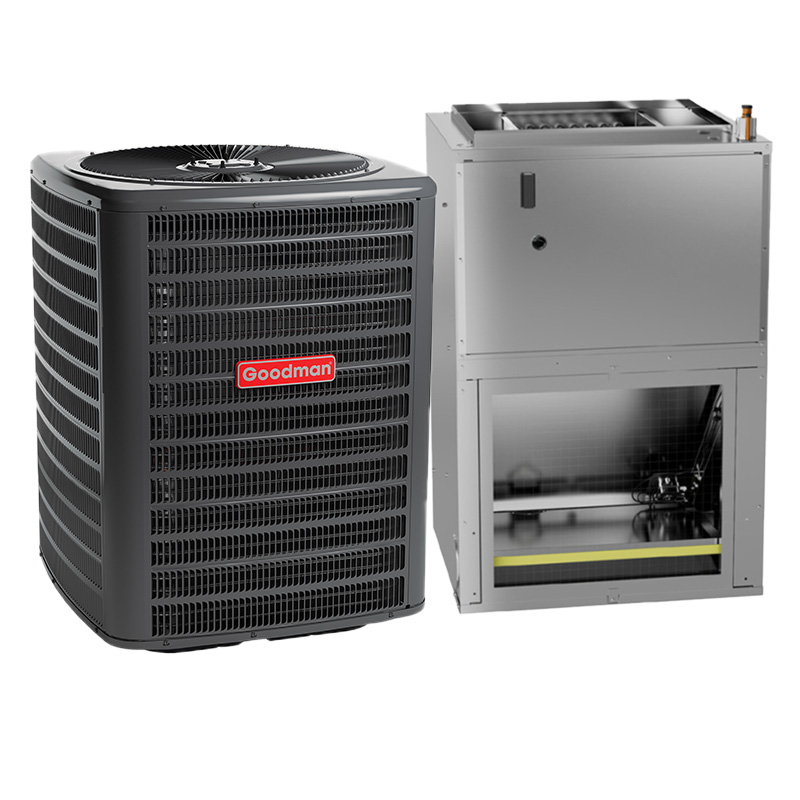
Goodman 2 Ton 15.2 SEER2 R32 Heat Pump Split System With 5kW Heater Built-In Wall-Mounted Air Handler
View on AC Direct see your lowest price →Check current price on AC Direct →
Key features
- 15.2 SEER2 efficiency, meeting current federal minimums with moderate operating cost savings
- R-32 refrigerant with lower global warming potential than R-410A
- Wall-mounted air handler eliminates the need for existing ductwork
- 5 kW electric resistance backup heater built into the air handler
- 2-ton capacity suitable for spaces roughly 700 to 1,100 square feet
- Split system configuration requires professional installation and line set connection
About this system
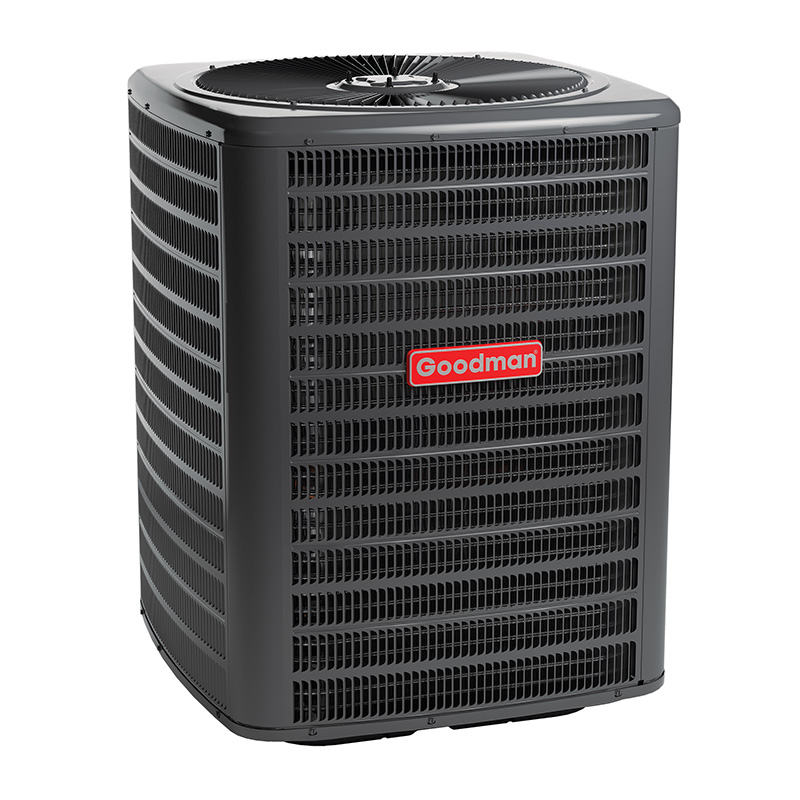
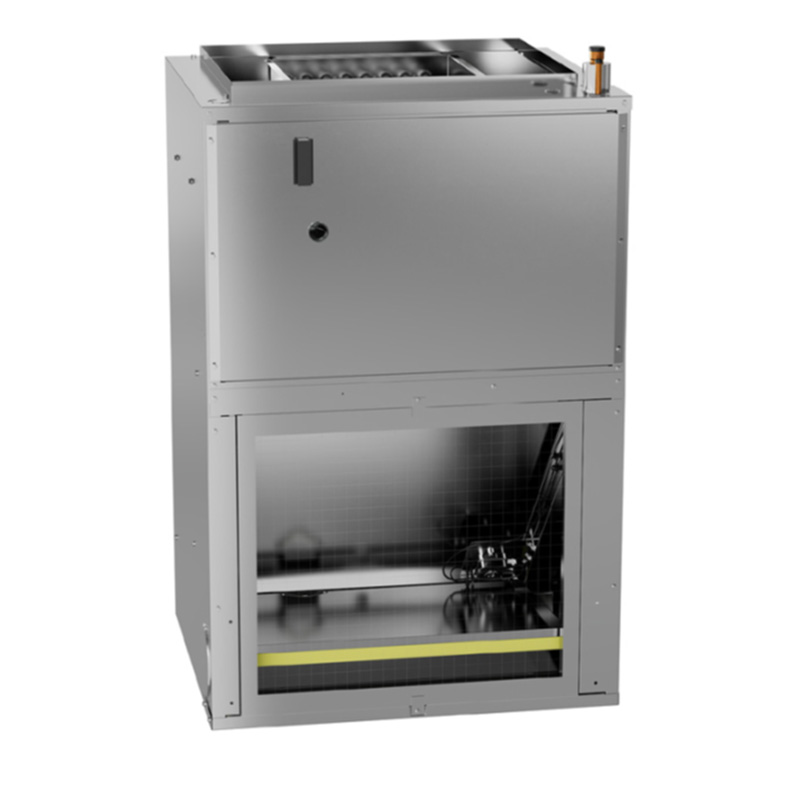
The Goodman 2-ton 15.2 SEER2 R-32 heat pump split system pairs an outdoor heat pump condenser with a wall-mounted air handler that has a 5 kW electric heater built in. At 2 tons, this system is sized for smaller spaces, typically 700 to 1,100 square feet depending on insulation, ceiling height, and climate zone. The wall-mounted air handler makes it a practical choice for add-on rooms, converted garages, workshops, or homes without existing ductwork infrastructure, since no central duct system is required.
The 15.2 SEER2 rating lands just above the current federal minimum efficiency standards, which means real-world operating costs will be lower than an older R-22 or low-SEER R-410A system it might replace, but meaningfully higher than variable-speed or two-stage systems rated at 18 SEER2 and above. R-32 refrigerant is a notable specification here: it has a lower global warming potential than R-410A, is increasingly common in new equipment, and requires technicians who are certified to handle it. The 5 kW backup heater provides supplemental heat during cold snaps when outdoor temperatures drop below the heat pump’s efficient operating range, which is a standard and sensible inclusion for a heat pump system in most U.S. climate zones.
This Goodman system delivers a functional, code-compliant heat pump solution at a price point that is hard to match among name-brand equipment, making it a reasonable choice for budget-conscious buyers who prioritize upfront cost over long-term peace of mind. Efficiency is modest rather than impressive, and Goodman's documented track record puts compressor longevity and coil reliability below what premium brands typically deliver. The value proposition holds up best when installation is done by an experienced technician and the owner is prepared to absorb a possible repair in the 7-to-10-year window.
Overall score is the average of the five ratings above.
What we like
- Purchase price typically 15 to 25 percent below comparable Carrier, Trane, and Lennox systems
- Wall-mounted air handler opens up installation in spaces without ductwork
- R-32 refrigerant is lower-GWP and increasingly well-supported by HVAC technicians
- 5 kW backup heat provides reliable supplemental warmth without adding a separate strip heater
- 15.2 SEER2 efficiency exceeds the federal minimum, reducing operating costs versus older low-efficiency equipment
Trade-offs
- Compressor lifespan averages 10 to 14 years versus 15 to 20 years for premium-brand compressors
- Evaporator coil leaks appear in a meaningful share of owner reports, particularly in the mid-life window
- Dual-run capacitor failures are the most common service call, typically adding a 300 to 600 dollar repair cost
- A minority of owners report refrigerant leaks within the first year, usually traced to install or charge issues, underlining how heavily performance depends on technician quality
What homeowners and pros say about Goodman
Homeowners discussing Goodman equipment online tend to split into two camps: those who are satisfied with the lower purchase price and have had uneventful early years, and those who ran into repair costs after the 7-year mark and feel the savings eroded. On ConsumerAffairs, Goodman scores around 2.5 out of 5, a figure that reflects a complaint-heavy platform but also points to a real pattern of owners facing repair bills in the second half of the system’s life. The most consistent theme in those reviews is climbing costs after roughly year 7, which aligns with the documented failure modes: dual-run capacitor replacements in the 300 to 600 dollar range, evaporator coil leaks that can be more expensive to address, and compressors that average 10 to 14 years rather than the 15 to 20 years premium brands tend to reach.
HVAC technicians who work on Goodman equipment regularly will often point out that the brand’s reputation is closely tied to how well it was installed. Google dealer reviews average around 3.8 out of 5 across dealer locations, and the most common praise is affordability, not trouble-free operation. Pros note that a Goodman unit installed carefully by an experienced technician, with a correct refrigerant charge and proper line set work, can perform reliably for a decade or more, while a rushed install amplifies the brand’s known weak points, particularly refrigerant leaks in the first year and premature coil issues. For this specific wall-mount system, where line set routing and mounting position add installation variables, technician quality matters even more than it does for a standard split with an attic air handler.
Sources: ConsumerAffairs Goodman owner reviews, AHRI Directory of Certified Product Performance, U.S. DOE appliance and equipment efficiency standards, Goodman product specification sheets.
What it costs to run
At 15.2 SEER2, cooling this 2-ton system for a typical 1200-hour cooling season at the U.S. average electricity rate of $0.17/kWh works out to roughly $322 per year in cooling, about $43 less per year than a minimum-efficiency 13.4 SEER2 unit of the same size. Your real cost depends on your climate and local rate.
Method: (24,000 BTU/hr ÷ 15.2 SEER2) × 1200 hours ÷ 1000 × $0.17/kWh. Rate source: U.S. EIA average; cooling hours: moderate-climate estimate.
How it compares
| Brand | Comparable model | SEER2 | Stage | Price position |
|---|---|---|---|---|
| Goodman | 2-Ton 15.2 SEER2 R-32 Wall-Mount Heat Pump Split System | 15.2 | Single-stage | Value pick |
| Carrier | Performance Series (24ACC / CHV air handler) | 15-16 | Single-stage | Typically 15 to 25 percent more than Goodman |
| Trane | XR15 Series | 15-16 | Single-stage | Typically 15 to 25 percent more than Goodman |
| Lennox | Merit Series (ML15XP1) | 15-16 | Single-stage | Typically 15 to 25 percent more than Goodman |
Competitor rows are comparable single-stage units at similar efficiency; price is relative position, not a quote.
Questions about this system
Does this system work as the sole heat source in cold climates, or do I always need the backup heater?
The heat pump handles most heating demand efficiently down to roughly 25 to 35 degrees Fahrenheit depending on the specific model's low-ambient rating, and the 5 kW backup heater kicks in automatically when outdoor temperatures fall below that threshold or when a large temperature setback needs to be recovered quickly. In very cold climates, you may see the backup heater running frequently, which increases electricity costs, so this system is best suited to moderate heating climates or as supplemental zone heating.
My installer mentioned R-32 requires special handling. Is that a problem for service calls?
R-32 is mildly flammable, classified A2L, which means technicians need specific certification and proper equipment to handle it safely. R-32 is now mainstream enough that most HVAC companies in urban and suburban markets are equipped for it, but in rural areas you should confirm your service technician has A2L certification before scheduling work.
What is the Goodman warranty on this heat pump, and are there conditions I need to meet?
Goodman typically offers a 10-year parts warranty when the unit is registered online within a set window after installation, dropping to a shorter period if registration is missed. The compressor is usually covered under the same 10-year term. Registration and professional installation are generally required to maintain full coverage, so keep your installation paperwork and register promptly.
How often do Goodman capacitors fail, and what does that repair cost?
Dual-run capacitor failure is the most commonly reported service issue across Goodman equipment, often appearing after several years of operation. The repair is straightforward for any HVAC technician and typically runs in the 300 to 600 dollar range including the service call, so it is worth treating it as an expected maintenance cost rather than a catastrophic failure.
Is a wall-mounted air handler more or less efficient than a ceiling or floor unit, and does placement matter?
Wall-mounted handlers distribute conditioned air effectively when placed high on the wall, since cool air falls and warm air rises naturally from that position, but placement relative to obstacles, room layout, and the line set routing to the outdoor unit all affect real-world performance. An experienced installer should assess the room before committing to a mounting location, and poor placement can noticeably reduce comfort even when the equipment itself is functioning correctly.
Specifications
| Cooling capacity | 2 Ton |
| Efficiency | 15.2 SEER2 |
| Refrigerant | R-32 |