Goodman 2 Ton 15 SEER2 AC & Gas Furnace System – Two Stage Variable-Speed 60000 BTU Gas Furnace, 80% AFUE, Horizontal, R32
View on AC Direct see your lowest price →Check current price on AC Direct →
Key features
- Two-stage cooling compressor for steadier temps and improved humidity control vs. single-stage
- Variable-speed air handler motor adjusts airflow continuously to reduce energy use and noise
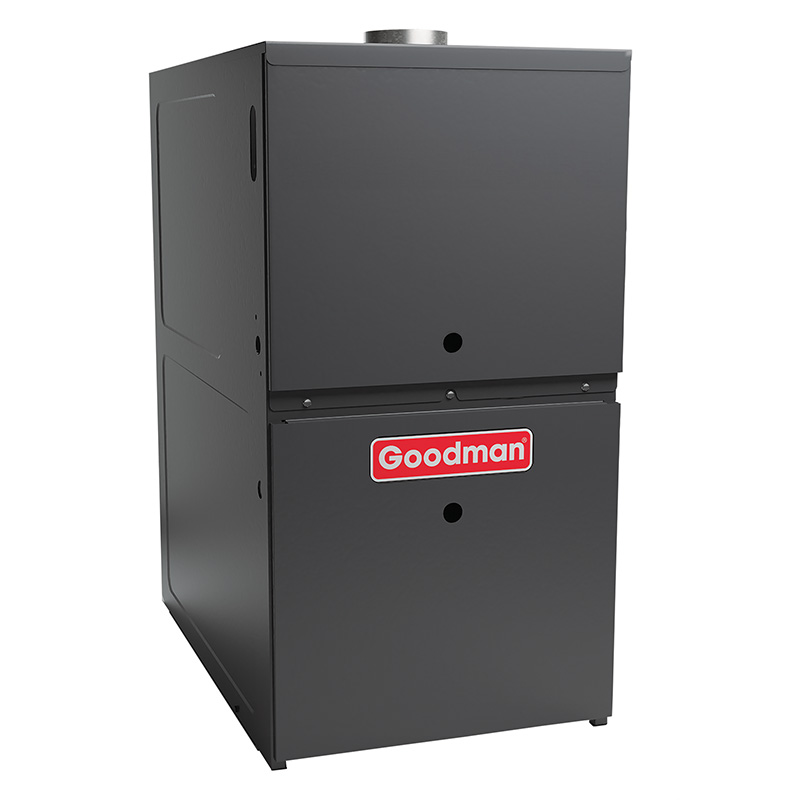
- 60,000 BTU 80% AFUE horizontal gas furnace suited for attic or crawl-space installs
- R-32 refrigerant with lower global-warming potential than outgoing R-410A
- 15 SEER2 efficiency rating meets mid-tier standards above current federal minimums
- B-vent or metal-flue compatible, no condensate drain required for the furnace
About this system
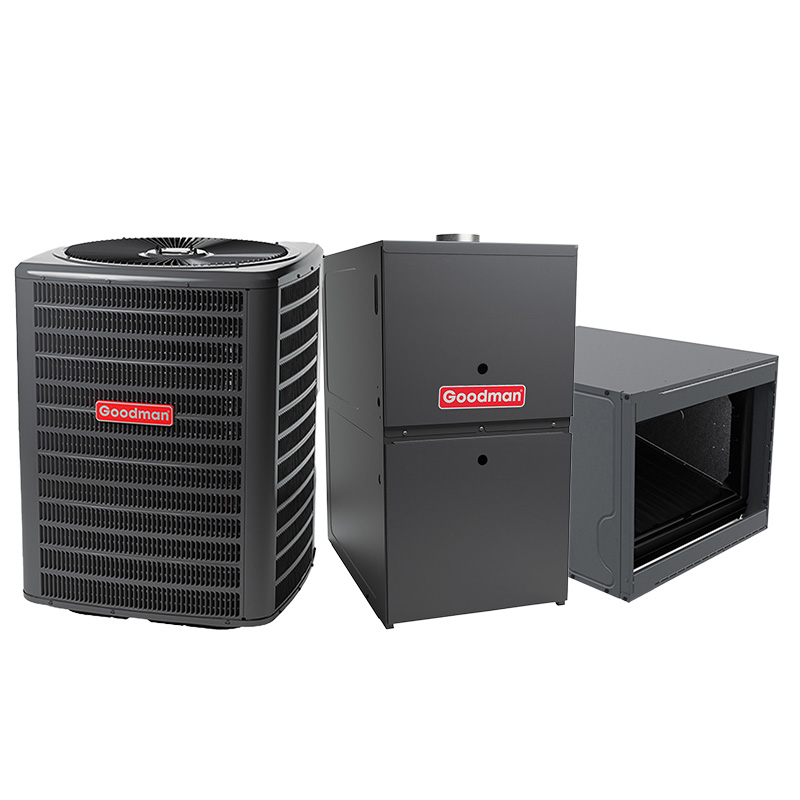
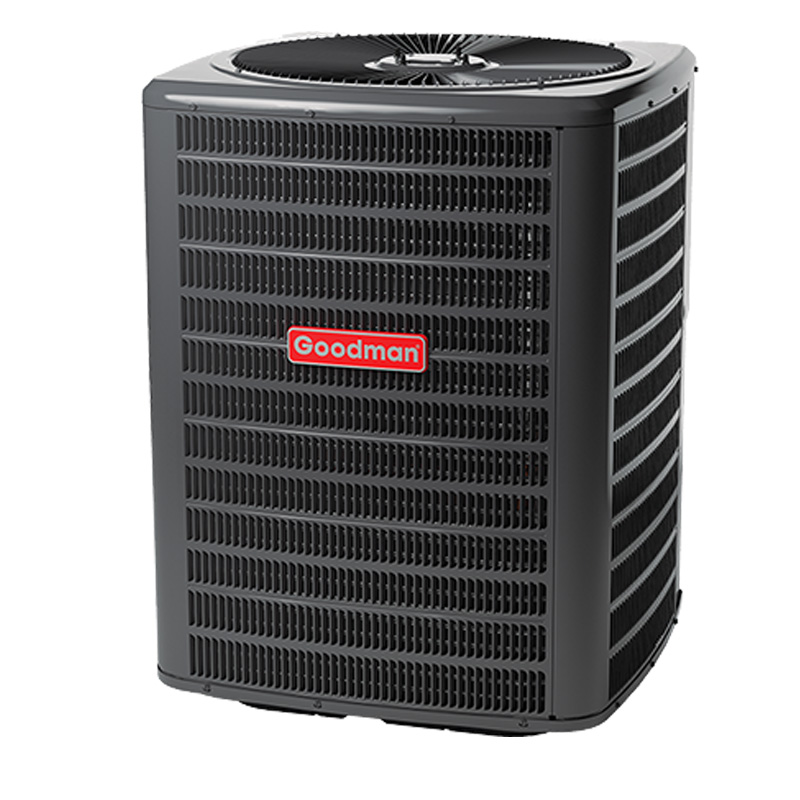
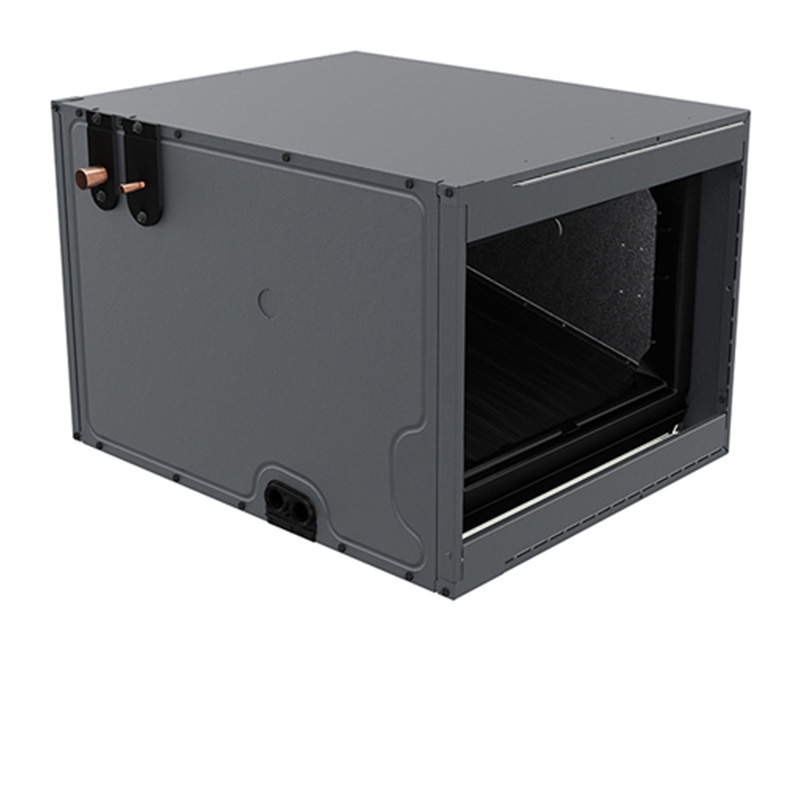
The Goodman 2-ton, 15 SEER2 split system pairs a two-stage air conditioner with a 60,000 BTU, 80% AFUE horizontal gas furnace and a variable-speed air handler. The two-stage cooling compressor runs at a lower capacity on mild days and steps up only when demand rises, which translates to fewer short-cycling events, more consistent temperatures, and better humidity removal compared with a single-stage unit. The horizontal cabinet orientation makes this system a practical choice for attic or crawl-space installations where vertical clearance is limited.
R-32 refrigerant carries a lower global-warming potential than the R-410A it is replacing across the industry, and its higher energy density means the system uses less refrigerant by weight to accomplish the same cooling. At 15 SEER2 the efficiency sits at the entry point of the mid-efficiency tier, comfortably above the federal minimum but well below the 18-plus SEER2 range of premium variable-capacity systems. The 80% AFUE furnace is a straightforward single-flue unit; it is not a condensing furnace, so it does not require a secondary drain or PVC venting, which keeps installation simpler in spaces that already have a B-vent or metal flue. Together these specs suit a homeowner who wants a meaningful step up from a builder-grade replacement without paying for efficiency levels that rarely pencil out in moderate climates or smaller homes.
This configuration is best matched to homes in the 800 to 1,200 square foot range in mixed or heating-dominant climates, or as a zone system in a larger house. The horizontal furnace format limits where it can go, so confirm attic or closet dimensions before ordering. Because Goodman’s performance is well-documented to depend heavily on installation quality, pairing this equipment with an experienced, licensed installer is not optional advice but a practical prerequisite for getting the expected service life out of it.
This Goodman bundle delivers two-stage comfort features and R-32 refrigerant at a price point that sits 15 to 25 percent below equivalent Carrier, Trane, and Lennox packages. The value case is real, but it comes with documented trade-offs in long-term reliability and a repair cost profile that tends to climb after year seven. Buyers who hire a skilled installer and budget for potential capacitor or coil service in the middle years can get solid performance from this system; those who prioritize lowest lifetime cost should factor those repair probabilities in.
Overall score is the average of the five ratings above.
What we like
- Lower upfront cost than comparable two-stage systems from Carrier, Trane, or Lennox
- Two-stage compressor improves comfort and humidity control over single-stage alternatives
- Variable-speed blower reduces operating noise and lowers blower motor energy consumption
- Horizontal furnace configuration opens installation options in attics and tight crawl spaces
- R-32 refrigerant is industry-forward and reduces environmental impact versus R-410A
Trade-offs
- Dual-run capacitors are the most commonly reported failure point, typically arising within the first decade and costing $300 to $600 per service call
- Evaporator coil leaks appear in a meaningful share of owner reports and can be costly to address once the unit is out of warranty
- Compressor lifespan averages 10 to 14 years versus 15 to 20 years documented for premium-brand compressors, meaning earlier replacement is more likely
- 80% AFUE is the lower end of available furnace efficiency; homeowners in cold climates will pay more in gas bills than they would with a 95%+ condensing furnace
What homeowners and pros say about Goodman
Homeowners who post about Goodman equipment tend to cluster at the extremes: those who had a smooth install and years of reliable cooling praise the value, while those who hit coil leaks or compressor problems in year eight or nine express sharp frustration with repair bills that can approach a significant fraction of the original system cost. On ConsumerAffairs, Goodman scores around 2.5 out of 5, a figure that reflects the complaint-heavy nature of that platform but also points to a real pattern of repair costs climbing after roughly year seven. Google reviews aggregated across dealer locations land closer to 3.8 out of 5, where the most common praise is straightforwardly about affordability. The gap between those two scores is informative: buyers who go in with realistic expectations about mid-decade maintenance tend to be more satisfied than those who expect premium-brand longevity at a value price.
HVAC technicians who work on Goodman equipment regularly point to dual-run capacitor failures as the most routine service call, a repair that is inexpensive and quick but a recurring annoyance for some owners. Evaporator coil leaks are a more serious documented failure mode that shows up in a meaningful share of owner accounts, and compressor lifespan averaging 10 to 14 years falls noticeably short of the 15 to 20 years technicians associate with Trane, Carrier, and Lennox compressors. Techs consistently emphasize that installation quality is the single largest variable in how any Goodman unit performs, and a small but documented minority of owners report refrigerant leaks within the first year, most often traced back to an install or charge error rather than a factory defect. For this specific horizontal two-stage bundle, those same patterns apply, and getting a meticulous installer is the most impactful thing a buyer can do to push toward the better end of the Goodman experience.
Sources: ConsumerAffairs Goodman owner reviews, AHRI Directory of Certified Product Performance, U.S. DOE appliance and equipment efficiency standards, Goodman product specification sheets.
What it costs to run
At 15 SEER2, cooling this 2-ton system for a typical 1200-hour cooling season at the U.S. average electricity rate of $0.17/kWh works out to roughly $326 per year in cooling, about $39 less per year than a minimum-efficiency 13.4 SEER2 unit of the same size. Your real cost depends on your climate and local rate.
Method: (24,000 BTU/hr ÷ 15 SEER2) × 1200 hours ÷ 1000 × $0.17/kWh. Rate source: U.S. EIA average; cooling hours: moderate-climate estimate.
How it compares
| Brand | Comparable model | SEER2 | Stage | Price position |
|---|---|---|---|---|
| Goodman | GSZ15 / GMVM96 Two-Stage Bundle | 15 | Two-stage / Variable-speed | Value pick |
| Carrier | Performance 15 Series (24ACC6) | 15 | Single-stage | Typically 15 to 25 percent more than the Goodman bundle |
| Trane | XR15 Series (4TTR5) | 15 | Single-stage | Typically 15 to 25 percent more than the Goodman bundle |
| Lennox | Merit 14ACX / Merit Series | 14-15 | Single-stage | Typically 15 to 25 percent more than the Goodman bundle |
Competitor rows are comparable single-stage units at similar efficiency; price is relative position, not a quote.
Questions about this system
Why does the furnace have to be horizontal, and can it be installed vertically instead?
This particular cabinet is designed and listed for horizontal airflow only, which suits attic or crawl-space installations where the air handler lies on its side. Installing it in a vertical orientation would void the listing and likely cause drainage and airflow problems. If you need a vertical configuration, you would need to select a different furnace model rated for that orientation.
Is R-32 refrigerant safe to handle, and will it be easy to service in the future?
R-32 is mildly flammable (classified A2L), which means EPA regulations require certified technicians to use specific handling procedures, but it is not considered a high-risk refrigerant in normal residential service. Availability is growing as the industry transitions away from R-410A, and within a few years R-32 service is expected to be routine for most HVAC companies. Confirm your local technician is certified for A2L refrigerants before scheduling service.
What does the documented capacitor failure problem actually mean for my maintenance budget?
Dual-run capacitors are the single most commonly reported failure on Goodman AC equipment, and they tend to show up in years five through ten. The repair is relatively straightforward and typically costs $300 to $600 including the service call. Keeping a maintenance contract or scheduling annual tune-ups increases the chance of catching a weakening capacitor before it causes a no-cool situation in peak summer heat.
Does the two-stage compressor really make a difference in a smaller home, or is it overkill for 1,000 square feet?
In a well-insulated smaller home the system will run on its lower stage most of the time, which means longer, quieter cycles that wring more moisture out of the air before shutting off. That humidity control benefit is real even in a compact space and is one of the stronger arguments for two-stage over single-stage at this price tier. The efficiency gain is modest, but the comfort improvement is noticeable.
How does the 80% AFUE furnace compare to a high-efficiency condensing furnace, and should I upgrade?
An 80% AFUE furnace converts 80 cents of every dollar of gas into heat; a 95% or 96% AFUE condensing furnace converts 95 to 96 cents. The condensing unit costs more upfront and requires a PVC flue and condensate drain, adding installation complexity. In mild to moderate climates the payback period on the upgrade can stretch to ten or more years, making the 80% unit reasonable. In climates with long, cold heating seasons the condensing upgrade typically pays back faster and is worth the extra investment.
Specifications
| Cooling capacity | 2 Ton |
| Efficiency | 15 SEER2 |
| Furnace output | 60000 BTU |
| Furnace efficiency | 80% AFUE |
| Configuration | Horizontal |
| Refrigerant | R-32 |