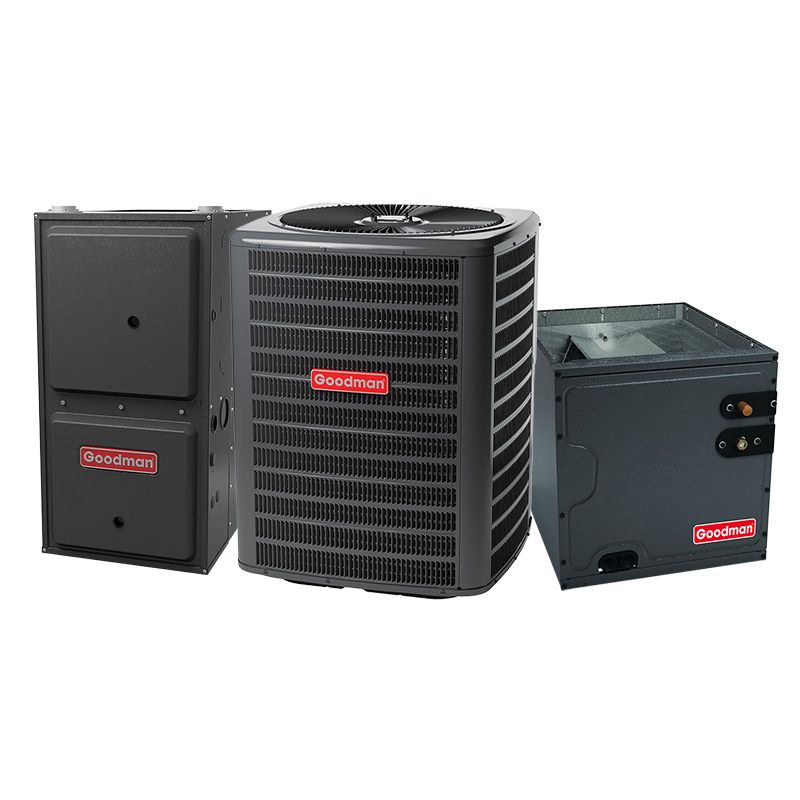
Goodman 2 Ton 16 SEER2 AC & Gas Furnace System – Modulating Variable-Speed, 80000 BTU Gas Furnace, 97% AFUE, Downflow, R32
View on AC Direct see your lowest price →Check current price on AC Direct →
Key features
- 16 SEER2 cooling efficiency, compliant with all current federal minimums
- 97% AFUE modulating gas furnace for precise, fuel-efficient heat output
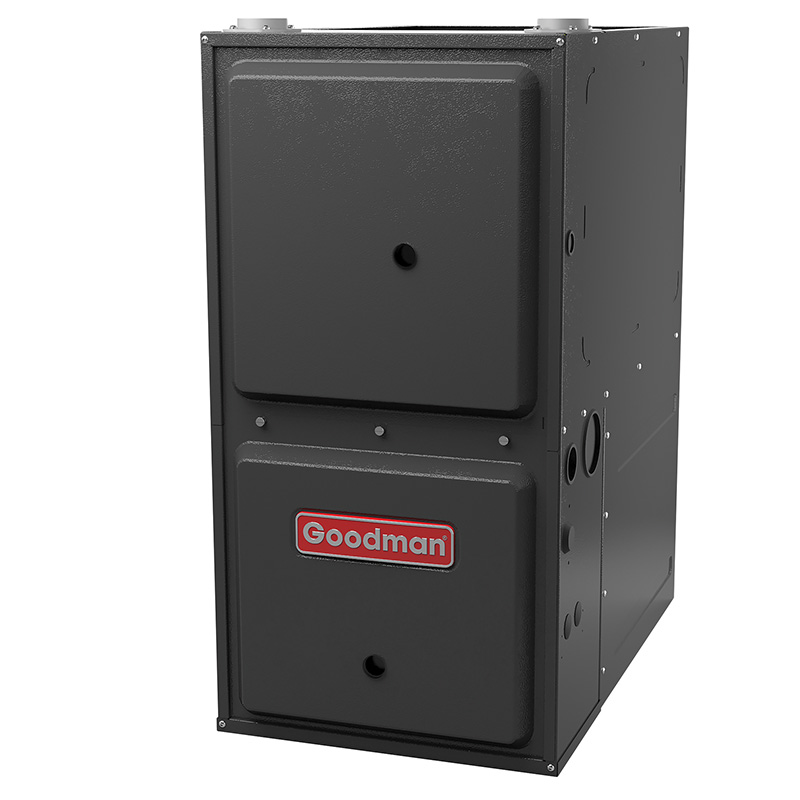
- Downflow configuration for attic or closet installations feeding floor registers
- R-32 refrigerant with lower global warming potential than legacy R-410A
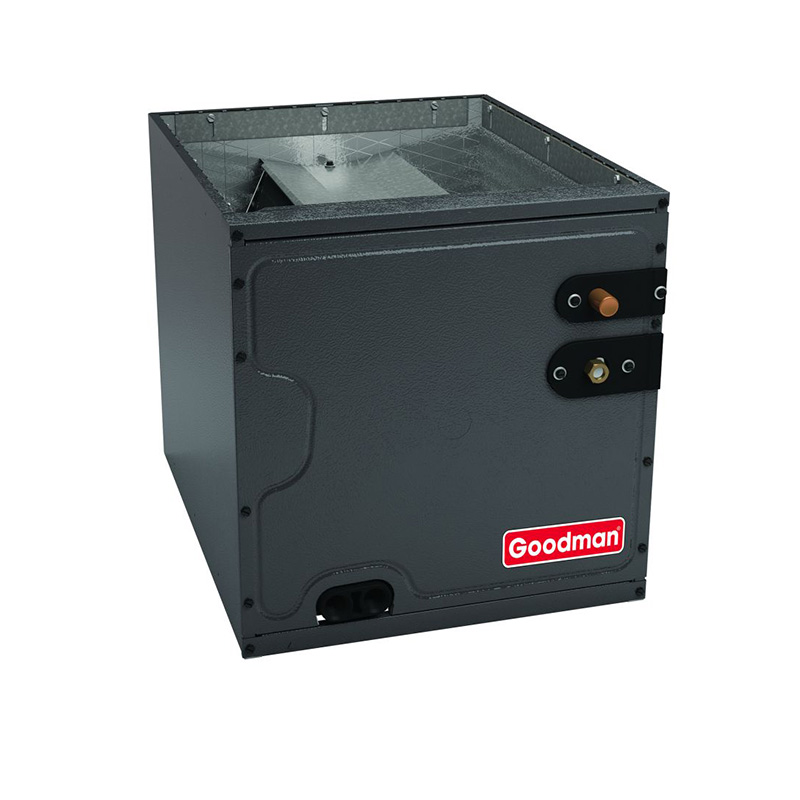
- Variable-speed air handler for quieter operation and longer dehumidification cycles
- 2-ton (24,000 BTU/hr) cooling capacity suited to smaller or well-insulated homes
About this system
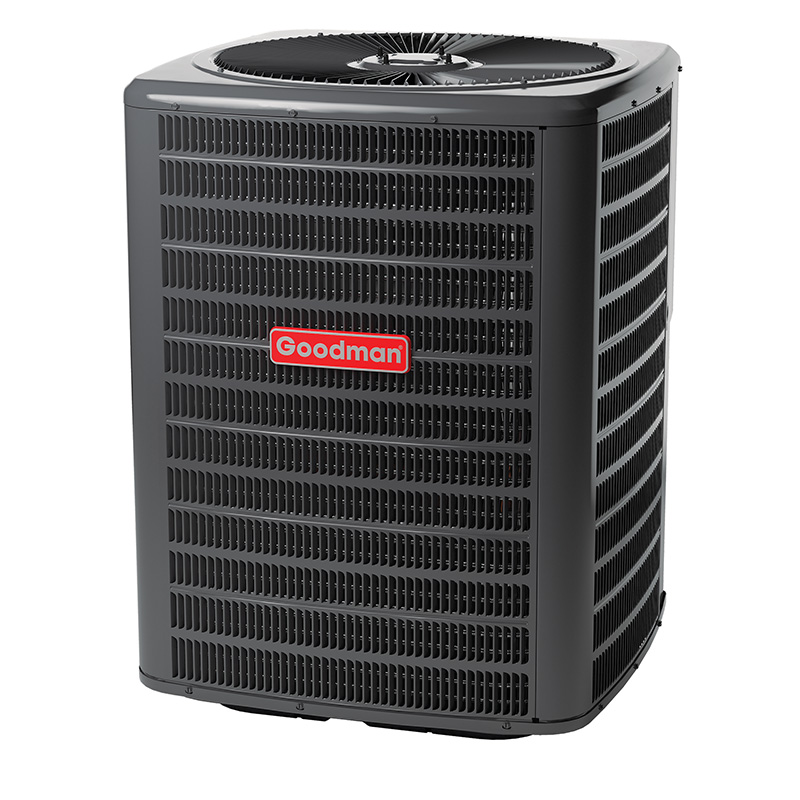
The Goodman GLXS5BA2410D pairs a 2-ton, 16 SEER2 air conditioner with an 80,000 BTU, 97% AFUE modulating gas furnace in a downflow configuration, making it a strong candidate for homes where the air handler sits in an attic, closet, or utility space that feeds conditioned air downward through the floor. The R-32 refrigerant charge is a forward-looking choice: R-32 has a lower global warming potential than the R-410A it replaces, and most refrigerant recovery equipment sold today already supports it. At 16 SEER2, this system clears the federal minimum efficiency threshold in all U.S. climate zones with room to spare, and the modulating furnace adjusts its output in small increments rather than cycling fully on and off, which translates to steadier indoor temperatures and quieter operation on mild heating days.
The 97% AFUE rating means roughly 97 cents of every dollar spent on gas becomes usable heat, a genuinely high-efficiency figure that can shorten payback time versus an 80% furnace in colder climates or high-usage homes. The variable-speed air handler moves air slowly and quietly on low-demand days, which also extends dehumidification time in humid weather. This system suits a 700-to-1,000 square foot zone in a well-insulated home, or a whole modest single-story house, depending on local climate and load calculations. Buyers who prioritize upfront cost savings over brand prestige, and who are willing to invest in quality installation and routine maintenance, are the most likely to get good long-term value here.
This Goodman system delivers genuinely high furnace efficiency and solid cooling performance at a price point that undercuts Carrier, Trane, and Lennox by a meaningful margin. The trade-off is a brand track record that shows higher-than-average component failure rates after year seven, and long-term durability that depends heavily on who installs it. Buyers who budget for quality labor and annual maintenance will get the most from this package.
Overall score is the average of the five ratings above.
What we like
- 97% AFUE furnace is among the highest efficiency ratings available, reducing monthly gas bills in cold climates
- Modulating furnace operation provides more even temperatures and less temperature swing than single-stage units
- Variable-speed blower extends dehumidification contact time, an advantage in humid regions
- R-32 refrigerant is more environmentally responsible and increasingly well-supported by service technicians
- Upfront cost is typically 15 to 25 percent below comparable systems from Trane, Carrier, and Lennox
Trade-offs
- Dual-run capacitors are the most frequently reported failure point and typically need replacement within the first decade
- Evaporator coil leaks appear in a meaningful share of owner reports and can be costly to address out of warranty
- Compressor lifespan averages 10 to 14 years, shorter than the 15 to 20 years commonly reported for premium brands
- A minority of owners report refrigerant leaks within the first year, most often traced to installation or initial charge issues rather than equipment defects
What homeowners and pros say about Goodman
Homeowners reviewing Goodman equipment on ConsumerAffairs give the brand roughly 2.5 out of 5 stars, a score that reflects the platform’s complaint-heavy audience but also a real pattern: repair costs that climb noticeably after year seven. The recurring failure modes documented across owner reviews are not subtle. Dual-run capacitors are the single most reported breakdown, a relatively low-cost fix when caught early but a frustrating one for owners who expected fewer service calls. Evaporator coil leaks show up in enough reports to be considered a genuine risk rather than an isolated fluke, and compressor longevity averaging 10 to 14 years sits measurably below the 15 to 20 years that premium brands tend to achieve. A minority of first-year owners also report refrigerant leaks, which technicians and reviewers alike attribute mostly to installation or initial charge errors rather than factory defects.
Across Google dealer reviews, where buyers who had a smooth experience are more likely to weigh in, Goodman equipment scores around 3.8 out of 5, with affordability as the most consistent point of praise. HVAC professionals who work with Goodman regularly tend to say the same thing: the equipment performs reasonably well when it is installed correctly and maintained on schedule, and it falls short when either of those conditions is missing. For a modulating, variable-speed system like this one, installation complexity is higher than a simple single-stage swap, which makes choosing an experienced, licensed installer especially important. The value case is real, but it requires the owner to hold up their end of the bargain with quality labor and annual service visits.
Sources: ConsumerAffairs Goodman owner reviews, AHRI Directory of Certified Product Performance, U.S. DOE appliance and equipment efficiency standards, Goodman product specification sheets.
What it costs to run
At 16 SEER2, cooling this 2-ton system for a typical 1200-hour cooling season at the U.S. average electricity rate of $0.17/kWh works out to roughly $306 per year in cooling, about $59 less per year than a minimum-efficiency 13.4 SEER2 unit of the same size. Your real cost depends on your climate and local rate.
Method: (24,000 BTU/hr ÷ 16 SEER2) × 1200 hours ÷ 1000 × $0.17/kWh. Rate source: U.S. EIA average; cooling hours: moderate-climate estimate.
How it compares
| Brand | Comparable model | SEER2 | Stage | Price position |
|---|---|---|---|---|
| Goodman | GLXS5BA2410D | 16 | Variable / Modulating | Value pick |
| Carrier | Infinity 16 (24ANB6) | 16 | Two-stage | Typically 15 to 25 percent more than this Goodman system |
| Trane | XR16 series | 16 | Single-stage | Typically 15 to 25 percent more than this Goodman system |
| Lennox | Merit ML16XP1 series | 16 | Single-stage | Typically 15 to 25 percent more than this Goodman system |
Competitor rows are comparable single-stage units at similar efficiency; price is relative position, not a quote.
Questions about this system
Is a downflow furnace the right configuration for my house?
Downflow units discharge air through the bottom and are designed for installations where the equipment sits above the living space, such as an attic or a main-floor closet, and feeds floor-level registers below. If your ductwork returns air at the bottom and supplies it downward, this configuration is correct. If your system is in a basement supplying upflow registers, you need a different cabinet orientation.
How does R-32 refrigerant affect my service costs compared to R-410A?
R-32 is mildly flammable (classified A2L), which means technicians need specific recovery equipment and training to work with it safely. Most newer HVAC service tools already support R-32, and it is increasingly common, so finding a qualified tech should not be difficult. Refrigerant cost and service procedure differences are minor compared to the older R-22 transition, but confirm your installer is certified before booking.
What does the modulating furnace actually do differently from a two-stage unit?
A modulating furnace can adjust its firing rate in small increments across a wide range rather than switching between just two fixed outputs. In practice this means it can run at a low, steady rate on mild days, which reduces temperature swings, lowers noise, and cuts short-cycling. The variable-speed blower works in tandem to move air slowly and quietly during these low-demand periods, which also helps pull more moisture out of the air.
What are the most likely repair costs I should budget for over the first ten years?
Dual-run capacitor failure is the most commonly reported issue with Goodman equipment and typically costs between 300 and 600 dollars to diagnose and replace, a manageable expense. Evaporator coil leaks are a more serious documented failure mode and can cost significantly more, especially once the unit is out of warranty. Budgeting for an annual maintenance visit helps catch capacitor wear and refrigerant charge issues before they escalate.
Does the 97% AFUE furnace require a special venting setup?
Yes. A 97% AFUE furnace is a condensing unit, which means it extracts so much heat from combustion gases that those gases exit as a cool, wet exhaust rather than hot flue gas. It requires PVC or CPVC plastic vent pipes rather than traditional metal flue, and it needs a condensate drain line. If your home currently has a standard 80% furnace with a metal flue, the venting will need to be changed as part of installation, which adds to labor cost.
Specifications
| Cooling capacity | 2 Ton |
| Efficiency | 16 SEER2 |
| Furnace output | 80000 BTU |
| Furnace efficiency | 97% AFUE |
| Configuration | Downflow |
| Refrigerant | R-32 |
| Model | GLXS5BA2410D |