Goodman 2 Ton 16 SEER2 AC & Gas Furnace System – Two Stage Variable-Speed, 40000 BTU Gas Furnace, 96% AFUE, Downflow, R32
View on AC Direct see your lowest price →Check current price on AC Direct →
Key features
- Two-stage compressor runs at low capacity on mild days, reducing short-cycling and improving humidity control
- 96% AFUE downflow gas furnace recovers 96 cents of every dollar of gas burned
- 16 SEER2 efficiency rating meets or exceeds most regional minimum standards and qualifies for federal efficiency incentives
- Variable-speed blower motor adjusts airflow in small increments for quieter operation and more even temperature distribution
- R-32 refrigerant charge with a lower global warming potential than R-410A
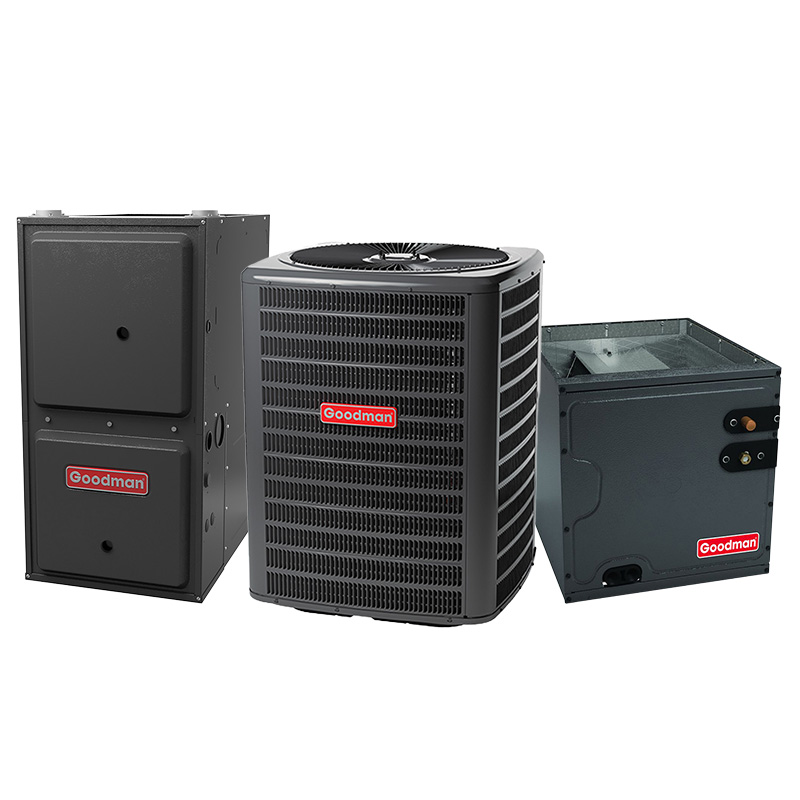
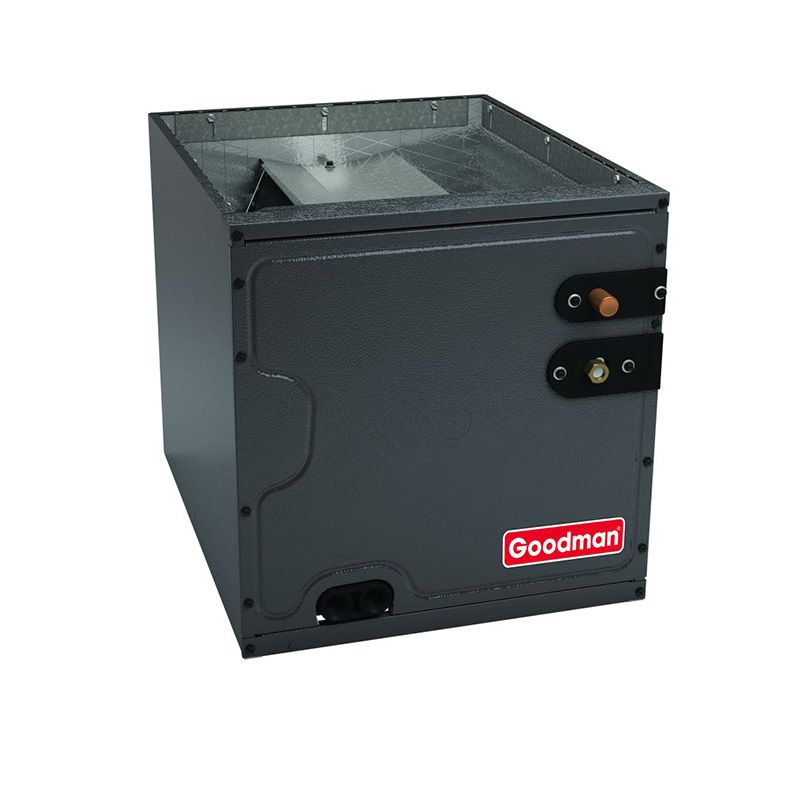
- Factory-matched coil and furnace cabinet designed for downflow installation in crawlspace or platform applications
About this system
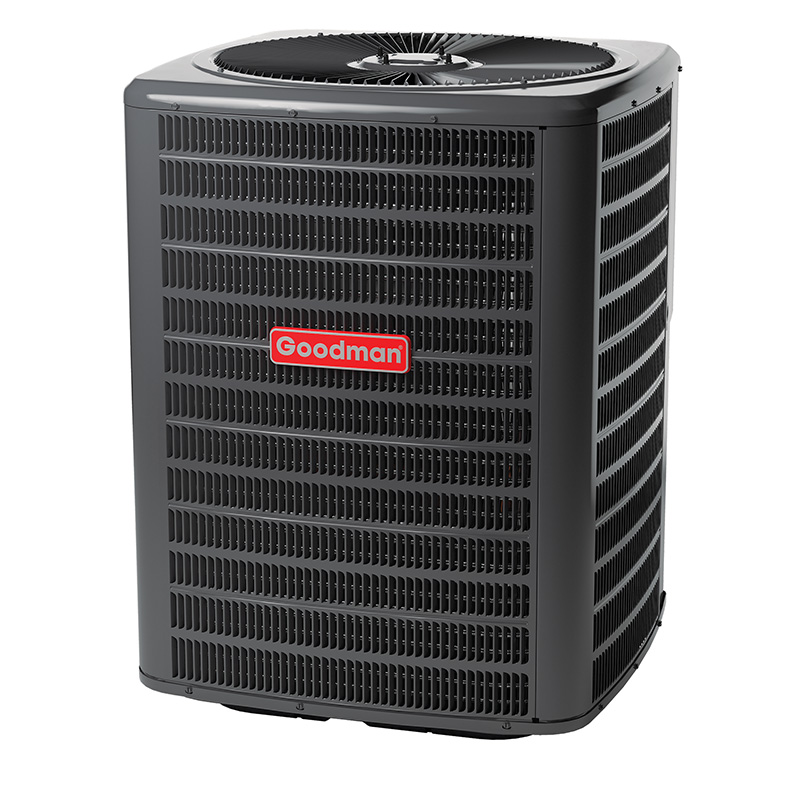
The Goodman 2-ton, 16 SEER2 split system pairs a two-stage air conditioner with a 40,000 BTU, 96% AFUE downflow gas furnace and a variable-speed air handler. For a smaller home or a well-insulated space in the 700-to-1,000-square-foot range, the 2-ton capacity keeps the equipment from short-cycling, which matters for both humidity control and long-term reliability. The two-stage compressor runs at low capacity on mild days and steps up only when the heat load demands it, which translates to longer, quieter run cycles and steadier indoor temperatures compared with a single-stage unit.
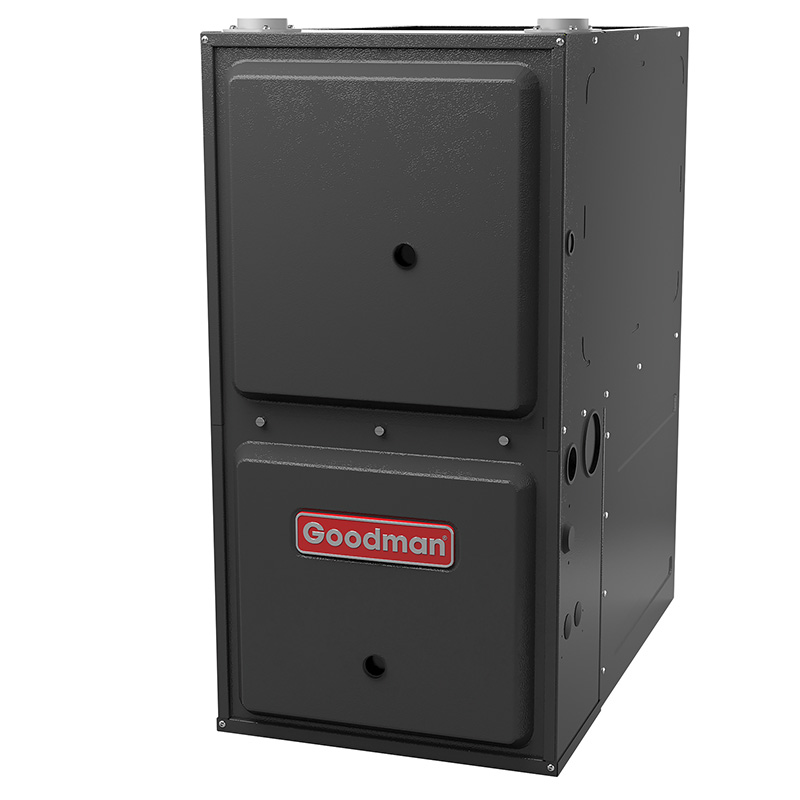
The 96% AFUE furnace recovers 96 cents of heat energy from every dollar of gas burned, putting it in the upper tier of mid-efficiency equipment and making it eligible for federal tax credits under the Inflation Reduction Act guidelines. The downflow configuration means the furnace must be installed so conditioned air exits from the bottom, a layout common in homes with crawlspaces, basement platforms, or utility closets above the living space. R-32 refrigerant carries a lower global warming potential than the R-410A it replaces and requires slightly different handling procedures, so confirming your installer is certified for R-32 equipment before purchase is worth the extra phone call.
Goodman positions this bundle as a capable, no-frills comfort system for homeowners who want genuine two-stage performance without paying Carrier or Trane prices. The trade-off is a brand track record that sits below premium competitors on owner satisfaction surveys, and a compressor lifespan that independent technicians typically estimate at 10 to 14 years rather than the 15 to 20 years associated with higher-end brands. Buyers who prioritize upfront cost savings and who can budget for possible mid-life repairs will find the value proposition reasonable; buyers who want maximum long-term peace of mind may find the premium alternatives worth the price difference.
This Goodman bundle delivers genuine two-stage, 96% AFUE performance at a price point 15 to 25 percent below comparable Carrier, Trane, and Lennox systems, making the upfront math hard to argue with for budget-conscious buyers. The real caveat is that Goodman's owner satisfaction scores sit below the industry average, and documented failure patterns around capacitors, evaporator coil leaks, and a shorter compressor lifespan mean repair costs after year seven are a real planning consideration. Paired with a skilled installer and a service agreement, it is a reasonable value; treated as a set-and-forget purchase, it carries more risk than premium alternatives.
Overall score is the average of the five ratings above.
What we like
- Two-stage operation provides noticeably better humidity control and comfort consistency than single-stage equipment at a similar price
- 96% AFUE furnace sits at the high end of mid-efficiency gas heating and is eligible for current federal tax credits
- Priced 15 to 25 percent below comparable Carrier, Trane, and Lennox systems, leaving budget room for a quality installation or a service agreement
- R-32 refrigerant has a lower environmental impact than R-410A, aligning with tightening EPA regulations on high-GWP refrigerants
- Variable-speed blower reduces noise during low-demand operation and improves air filtration by running longer at lower speeds
Trade-offs
- Compressor lifespan averages 10 to 14 years according to technician reports, compared with 15 to 20 years for premium brands, raising long-term replacement cost considerations
- Evaporator coil leaks are a documented failure mode in owner reviews, and a coil replacement is a significant repair bill
- ConsumerAffairs score of approximately 2.5 out of 5 reflects a pattern of climbing repair costs after roughly year seven
- Downflow-only configuration limits installation flexibility; the furnace cannot be field-converted to upflow or horizontal, so site compatibility must be confirmed before ordering
What homeowners and pros say about Goodman
Homeowners who bought Goodman equipment tend to split into two camps fairly cleanly. Those who had a skilled contractor handle the installation and who stayed current on annual maintenance often report years of uneventful service and appreciate that the upfront cost left room in the budget for other home projects. That sentiment tracks with Google dealer review scores that hover around 3.8 out of 5, where affordability is the praise that appears most consistently. The owners on the other side of the ledger, the ones driving Goodman’s ConsumerAffairs score down to roughly 2.5 out of 5, frequently describe the same two or three problems: a dual-run capacitor that failed and needed replacement, an evaporator coil that developed a refrigerant leak after several years, or a compressor that gave out earlier than expected. Technicians who work on both premium and value-tier equipment regularly note that Goodman compressors tend to average 10 to 14 years in the field, a meaningful gap from the 15 to 20 years associated with Trane, Carrier, and Lennox units.
For this specific two-stage, 96% AFUE downflow system, HVAC professionals generally say the two-stage compressor and variable-speed blower are genuine upgrades over a base single-stage Goodman and that the efficiency specs are legitimate. Their consistent advice is that installation quality matters more with Goodman than it does with premium brands, because the tighter tolerances on two-stage and variable-speed equipment leave less margin for a sloppy refrigerant charge or duct connection. A minority of owners across owner forums have reported refrigerant leaks in the first year, and technicians almost always attribute those early-stage leaks to install or charge errors rather than factory defects. The practical takeaway from both camps is the same: spend the money on a careful, certified installer and register the equipment within 60 days to lock in the 10-year parts warranty, and this system delivers solid two-stage comfort at a price few competitors can match upfront.
Sources: ConsumerAffairs Goodman owner reviews, AHRI Directory of Certified Product Performance, U.S. DOE appliance and equipment efficiency standards, Goodman product specification sheets.
What it costs to run
At 16 SEER2, cooling this 2-ton system for a typical 1200-hour cooling season at the U.S. average electricity rate of $0.17/kWh works out to roughly $306 per year in cooling, about $59 less per year than a minimum-efficiency 13.4 SEER2 unit of the same size. Your real cost depends on your climate and local rate.
Method: (24,000 BTU/hr ÷ 16 SEER2) × 1200 hours ÷ 1000 × $0.17/kWh. Rate source: U.S. EIA average; cooling hours: moderate-climate estimate.
How it compares
| Brand | Comparable model | SEER2 | Stage | Price position |
|---|---|---|---|---|
| Goodman | 2-Ton 16 SEER2 Two-Stage / 96% AFUE Downflow Bundle (this system) | 16 | Two-stage | Value pick |
| Carrier | Performance 16 Series (24ACC6) | 16 | Single-stage | Typically 15 to 25 percent more than this Goodman bundle |
| Trane | XR16 Series | 16 | Single-stage | Typically 15 to 25 percent more than this Goodman bundle |
| Lennox | Merit 16 Series (ML16XC1) | 16 | Single-stage | Typically 15 to 25 percent more than this Goodman bundle |
Competitor rows are comparable single-stage units at similar efficiency; price is relative position, not a quote.
Questions about this system
Is the downflow configuration a hard requirement, or can this furnace be installed in a different orientation?
This specific furnace cabinet is rated for downflow installation only, meaning the air supply exits from the bottom of the unit. It cannot be field-converted to upflow or horizontal. If your mechanical room or utility space requires a different airflow direction, you would need a different furnace model, so confirm the orientation of your existing ductwork before purchasing.
Does my installer need special certification to work with R-32 refrigerant?
R-32 is an A2L refrigerant, meaning it has mild flammability and requires technicians to follow updated EPA and ASHRAE safety handling procedures. Most certified HVAC technicians are or will soon be trained on A2L refrigerants, but it is worth asking your installer directly whether they have completed R-32 or A2L training before scheduling the job.
What is Goodman's warranty on this system, and does it require registration?
Goodman typically offers a 10-year parts warranty on registered equipment, which drops to 5 years if you do not register within 60 days of installation. The compressor usually carries its own 10-year coverage under registration. Always verify current warranty terms on Goodman's website at the time of purchase, since terms can change between model years.
The ConsumerAffairs rating for Goodman is around 2.5 out of 5. Should that change my decision?
ConsumerAffairs is a complaint-skewed channel where dissatisfied owners are far more likely to post than satisfied ones, so the score overstates failure rates. That said, the recurring theme of rising repair costs after roughly year seven is a real pattern worth planning for. Budgeting for a service agreement or setting aside a repair fund is a practical way to manage that risk while still capturing the upfront savings Goodman offers.
How often do the dual-run capacitors fail, and what does that repair typically cost?
Dual-run capacitors are the most commonly reported failure point on Goodman AC systems. The good news is that a capacitor replacement is one of the least expensive HVAC repairs, typically running in the $300 to $600 range including labor. Most homeowners on a regular maintenance schedule will catch a weakening capacitor before it causes a complete system shutdown.
Specifications
| Cooling capacity | 2 Ton |
| Efficiency | 16 SEER2 |
| Furnace output | 40000 BTU |
| Furnace efficiency | 96% AFUE |
| Configuration | Downflow |
| Refrigerant | R-32 |