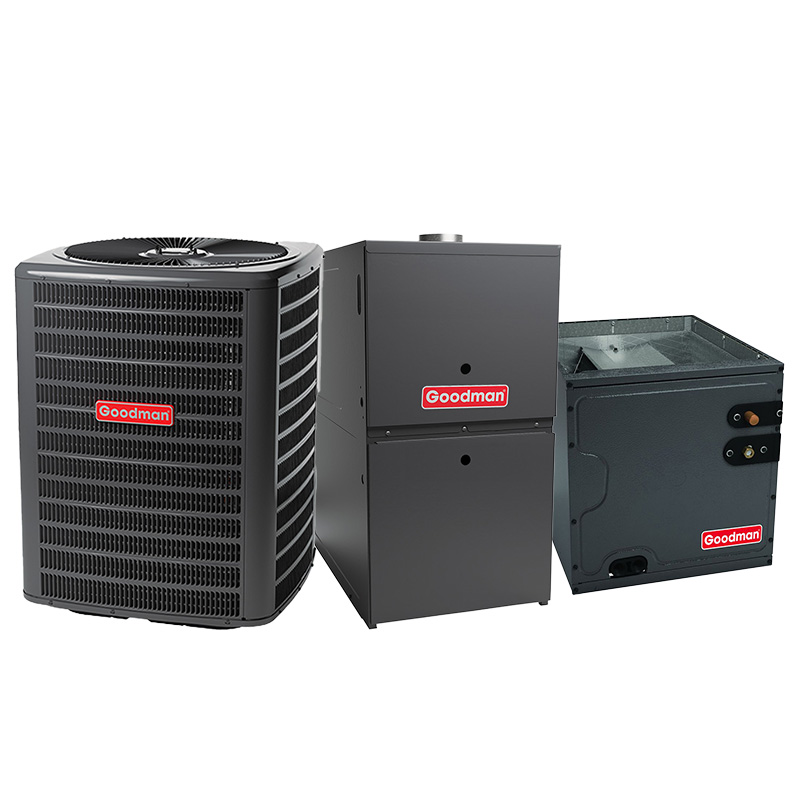
Goodman 2 Ton 16 SEER2 AC & Gas Furnace System – Two Stage Variable-Speed, 80000 BTU Gas Furnace, 80% AFUE, Upflow, R32
View on AC Direct see your lowest price →Check current price on AC Direct →
Key features
- 16 SEER2 two-stage cooling with variable-speed air handler for humidity and comfort control
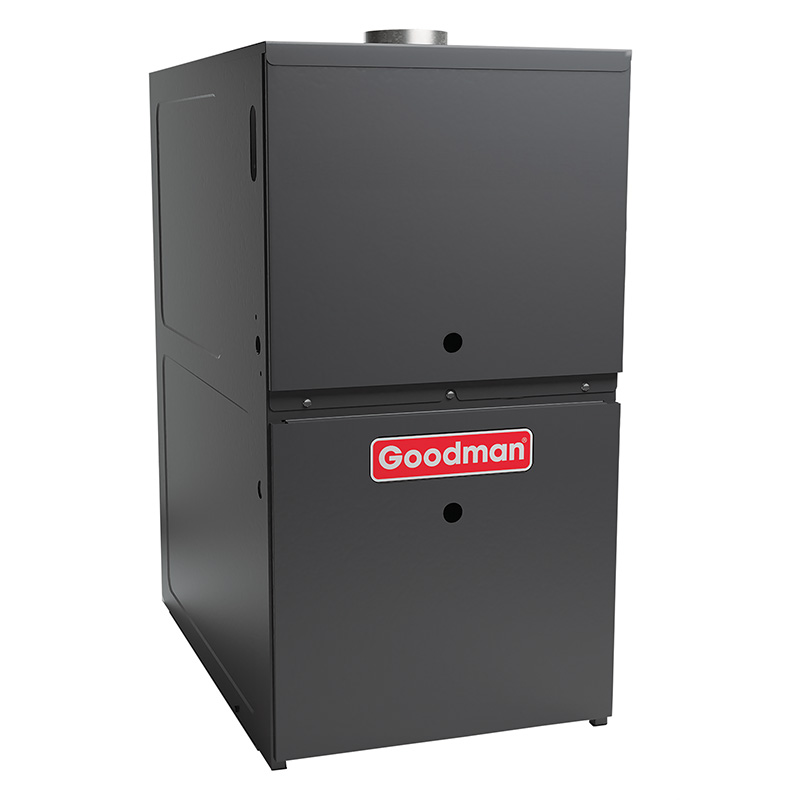
- 80,000 BTU upflow gas furnace rated at 80% AFUE
- R-32 refrigerant with lower global-warming potential than R-410A
- Two-stage compressor reduces short-cycling and part-load energy use
- Variable-speed blower motor operates more quietly than single-speed alternatives
- Upflow cabinet configuration for basement or ground-floor closet installations
About this system
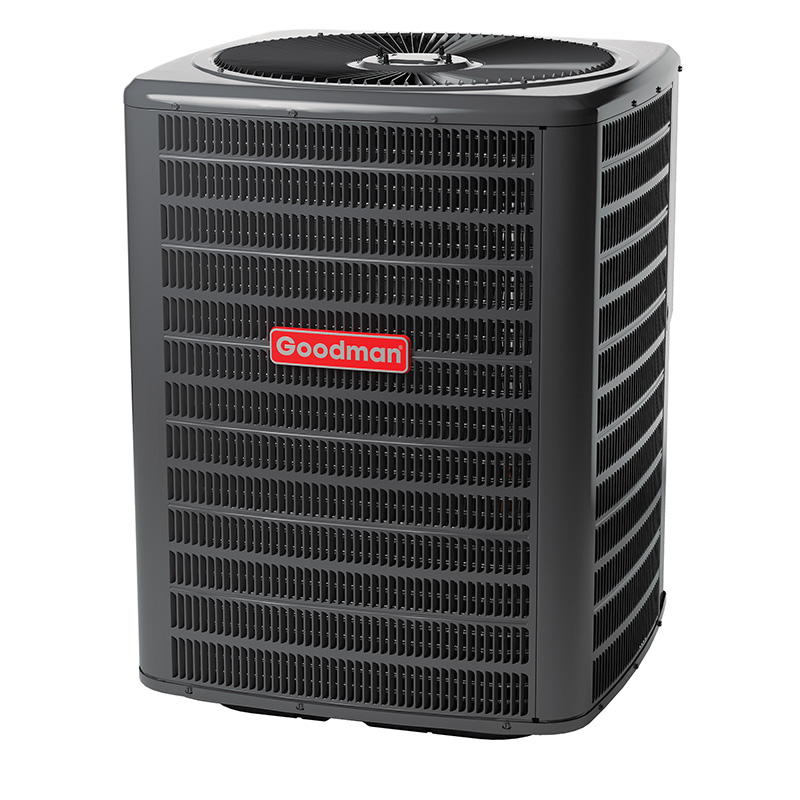
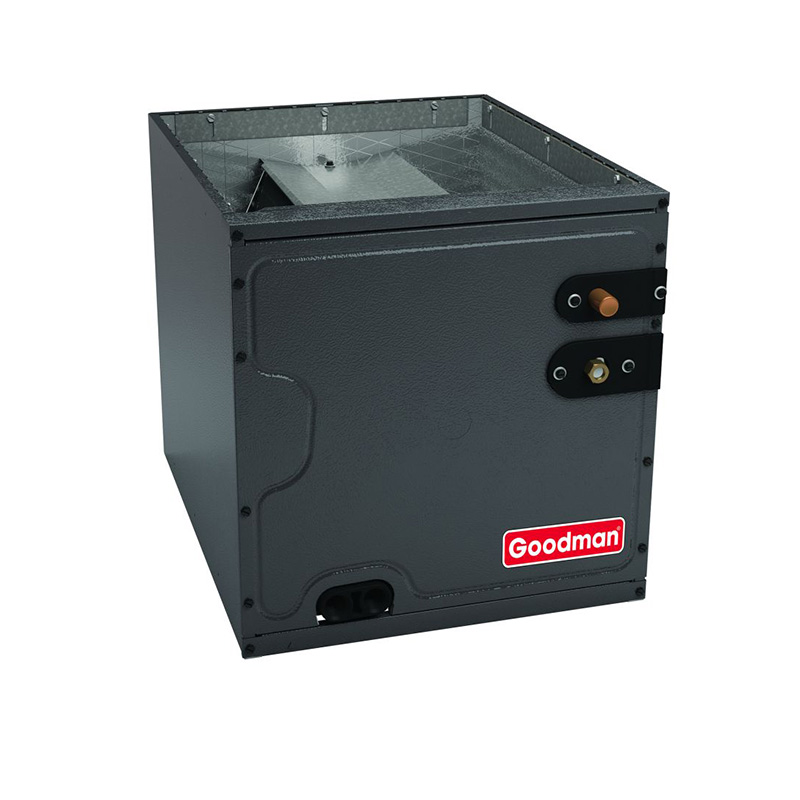
The Goodman 2-ton 16 SEER2 split system pairs a two-stage, variable-speed air conditioner with an 80,000 BTU upflow gas furnace rated at 80% AFUE. The two-stage compressor runs at low capacity during mild weather and steps up only when demand rises, which cuts short-cycling, keeps humidity more even, and uses less electricity than a single-stage unit would during the same season. The variable-speed air handler extends those benefits by matching airflow precisely to what the home needs at any moment, resulting in quieter operation and steadier temperatures compared to single-speed blower setups.
At 16 SEER2, this system sits at the entry point of mid-efficiency territory under the current federal rating standard. That is respectable but not exceptional; homeowners in hot-humid climates or those running the system more than six months a year may find the math eventually favors a higher SEER2 unit. The 80% AFUE furnace is a baseline-efficient gas appliance, meaning one dollar in five spent on gas leaves the home as exhaust. That trade-off keeps the upfront price lower but adds up over a heating season compared to 96% AFUE alternatives. The R-32 refrigerant is a lower global-warming-potential option now appearing in more residential equipment, and it typically requires less refrigerant charge by weight than older R-410A systems. The upflow configuration suits homes where the furnace sits in a basement or a ground-floor utility closet with ducts running up through the living space.
This Goodman bundle delivers a real step up in comfort over single-stage systems at a price that undercuts comparable Carrier, Trane, and Lennox configurations by roughly 15 to 25 percent. The trade-off is a brand track record that shows higher-than-average repair activity after year seven and compressor longevity that trails premium competitors. For buyers who plan to stay in the home ten years or fewer, or who want two-stage performance without premium-brand pricing, the value case is solid provided installation is done by an experienced contractor.
Overall score is the average of the five ratings above.
What we like
- Two-stage cooling meaningfully improves humidity control and comfort over single-stage alternatives
- Variable-speed blower reduces noise and maintains steadier airflow than fixed-speed motors
- R-32 refrigerant is a lower-GWP option with a smaller refrigerant charge by weight
- Priced 15 to 25 percent below comparable Trane, Lennox, and Carrier systems
- Goodman's parts network is wide, so capacitors and other common components are generally easy to source
Trade-offs
- 80% AFUE furnace loses 20% of gas heat as exhaust, a notable efficiency gap versus 96% AFUE options in heating-heavy climates
- Compressor lifespan averages 10 to 14 years versus 15 to 20 for premium-brand compressors, according to documented owner experience
- Dual-run capacitors are the most reported failure point and, while relatively inexpensive to fix, add to long-term service costs after year seven
- A minority of owners report refrigerant leaks in the first year, typically tied to installation or initial charge quality rather than the equipment itself
What homeowners and pros say about Goodman
On ConsumerAffairs, Goodman as a brand scores around 2.5 out of 5, though that platform skews heavily toward owners who had a problem worth writing about. The recurring theme in those reviews is repair costs climbing after roughly year seven, with dual-run capacitor failures and evaporator coil leaks cited most often. Compressor longevity is another honest concern: documented owner experience puts average compressor life at 10 to 14 years for Goodman versus 15 to 20 years for premium-brand counterparts, a gap that matters if you plan to stay in the home long term. A smaller share of owners report refrigerant leaks in the first year, a pattern that technicians generally attribute to installation or initial charge issues rather than a manufacturing defect in the unit itself.
Google dealer reviews tell a more balanced story, with Goodman installations averaging around 3.8 out of 5 across locations where affordability is the most frequently mentioned positive. HVAC professionals tend to position Goodman as a capable brand whose results are heavily tied to who puts it in and how carefully the system is commissioned. For this two-stage, variable-speed configuration specifically, the additional mechanical complexity means that a thorough startup, correct refrigerant charge, and proper airflow setup are even more important than they would be for a basic single-stage unit. Owners who invest in a skilled installer and keep up with annual maintenance report results that align with the mid-range of expectations; those who cut corners on labor or skip service calls tend to be overrepresented in the negative reviews.
Sources: ConsumerAffairs Goodman owner reviews, AHRI Directory of Certified Product Performance, U.S. DOE appliance and equipment efficiency standards, Goodman product specification sheets.
What it costs to run
At 16 SEER2, cooling this 2-ton system for a typical 1200-hour cooling season at the U.S. average electricity rate of $0.17/kWh works out to roughly $306 per year in cooling, about $59 less per year than a minimum-efficiency 13.4 SEER2 unit of the same size. Your real cost depends on your climate and local rate.
Method: (24,000 BTU/hr ÷ 16 SEER2) × 1200 hours ÷ 1000 × $0.17/kWh. Rate source: U.S. EIA average; cooling hours: moderate-climate estimate.
How it compares
| Brand | Comparable model | SEER2 | Stage | Price position |
|---|---|---|---|---|
| Goodman | This system (2-ton 16 SEER2 two-stage, variable-speed, 80K BTU 80% AFUE) | 16 | Two-stage | Value pick |
| Carrier | Performance 16 series (24ACC6 pairing with 59TP6 two-stage furnace) | 16 | Two-stage | Typically 15 to 25 percent more than Goodman |
| Trane | XR16 series (4TTR6 pairing with S9X2 two-stage furnace) | 16 | Two-stage | Typically 15 to 25 percent more than Goodman |
| Lennox | Merit 16 series (ML16XC1 pairing with ML196E two-stage furnace) | 16 | Two-stage | Typically 15 to 25 percent more than Goodman |
Competitor rows are comparable single-stage units at similar efficiency; price is relative position, not a quote.
Questions about this system
Is 80% AFUE good enough for my gas furnace, or should I upgrade to 96%?
Eighty percent AFUE meets federal minimums in most northern states and is sufficient for mild to moderate heating climates. In regions where the furnace runs four or more months per year, a 96% AFUE unit can recover its cost premium within five to eight years in fuel savings. If your winters are short or gas prices are low in your area, 80% AFUE is a reasonable choice.
What does two-stage cooling actually mean for comfort day to day?
A two-stage compressor runs at a lower capacity setting during mild days and switches to full capacity only when outdoor temps or indoor load demands it. In practice this means the system runs longer at lower intensity, which pulls more moisture out of indoor air and avoids the blasts of cold air followed by long off cycles that single-stage units produce. The result is a more even temperature and lower relative humidity.
What are the most likely repairs I should budget for over the life of this system?
Based on documented owner experience with Goodman equipment, dual-run capacitors are the most commonly reported failure and typically cost 300 to 600 dollars to diagnose and replace. Evaporator coil leaks show up in a meaningful share of reviews and are more expensive to address. Budgeting for at least one service call per year after year seven is a reasonable expectation.
Does R-32 refrigerant affect service costs or availability compared to R-410A?
R-32 is increasingly stocked by HVAC distributors and is handled by any technician certified to work with A2L refrigerants, which requires specific equipment and training. Availability is growing but may still be more limited than R-410A in some rural markets. Pricing per pound is currently comparable, though R-32 systems typically require less refrigerant by weight, which can reduce the cost of a recharge.
How much does the quality of the installation actually matter for a Goodman system?
Industry technicians consistently cite installation quality as the single largest factor in how long and how reliably a Goodman unit performs, more so than with premium brands whose tighter tolerances leave less room for installer variation. Refrigerant charge accuracy, duct static pressure, and electrical connections all directly affect compressor life and efficiency. Choosing a licensed contractor with verifiable Goodman experience reduces the risk of first-year refrigerant leaks and premature component wear.
Specifications
| Cooling capacity | 2 Ton |
| Efficiency | 16 SEER2 |
| Furnace output | 80000 BTU |
| Furnace efficiency | 80% AFUE |
| Configuration | Upflow |
| Refrigerant | R-32 |