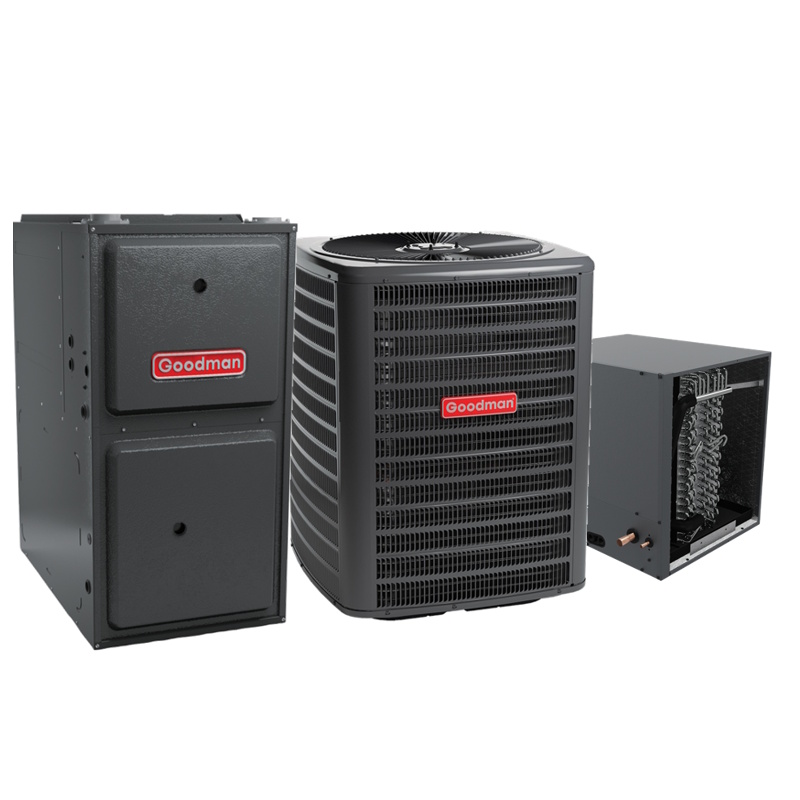
Goodman 2 Ton 17.2 SEER2 80000 BTU 96% Two Stage Variable Speed Gas Hybrid Heat Pump Dual System Horizontal
View on AC Direct see your lowest price →Check current price on AC Direct →
Key features
- 17.2 SEER2 two-stage heat pump compressor for mid-tier cooling efficiency
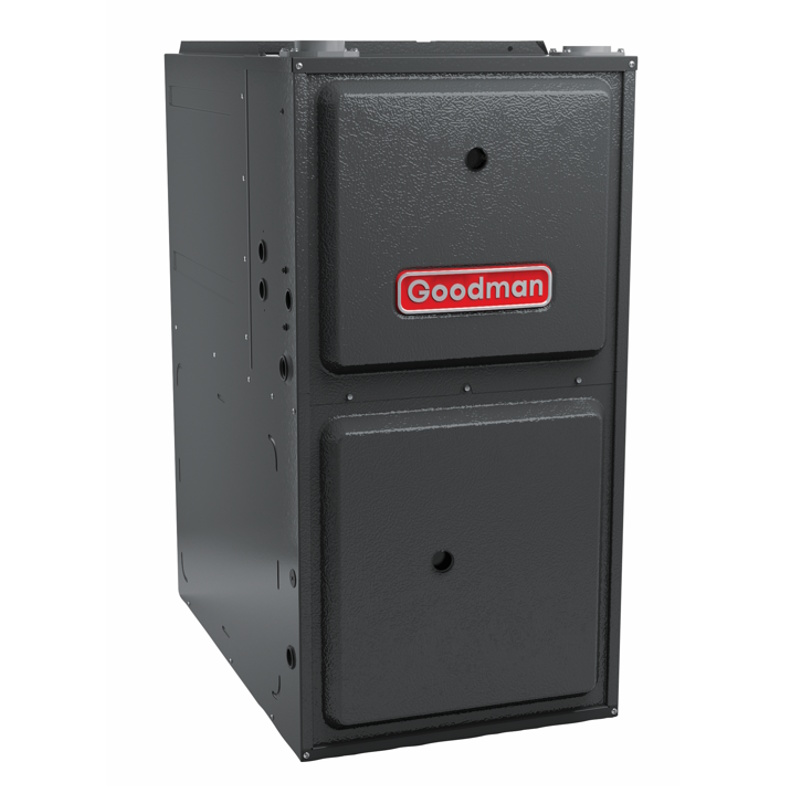
- 80,000 BTU 96% AFUE gas furnace provides dual-fuel backup heating
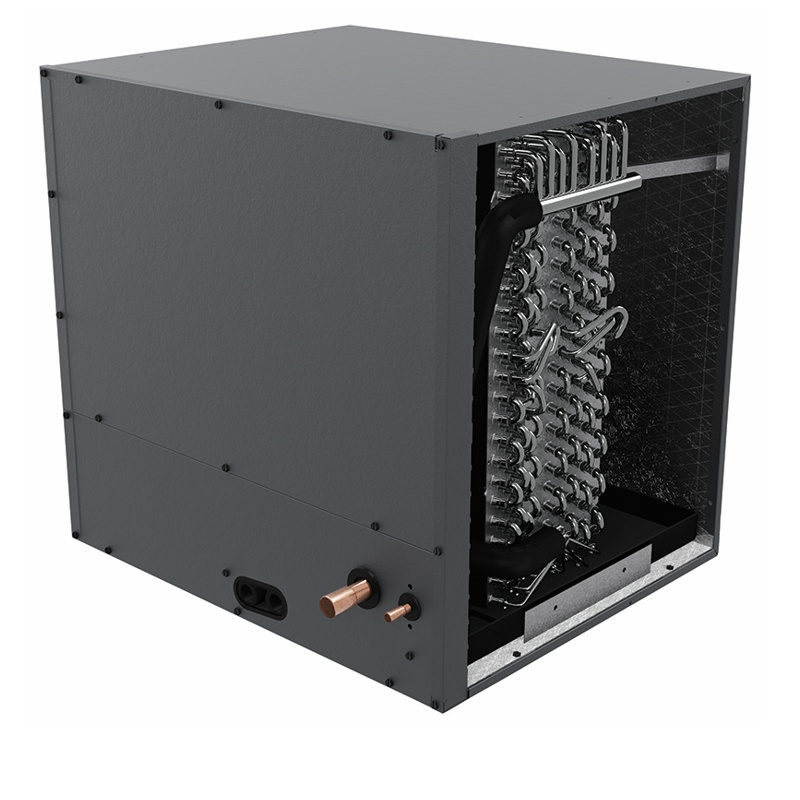
- Variable-speed air handler for quieter operation and better humidity control
- Horizontal configuration designed for attic or crawlspace installations
- Two-stage operation reduces short-cycling and lowers runtime costs versus single-stage
- Dual-fuel logic switches between electric and gas heat based on outdoor temperature
About this system
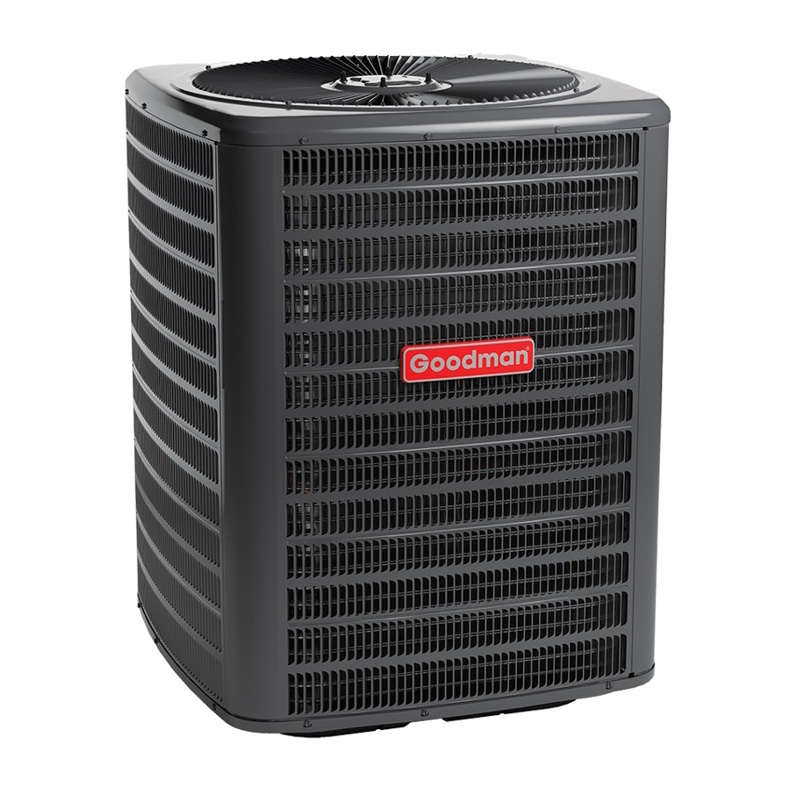
The Goodman GSZC702410 is a 2-ton, 17.2 SEER2 hybrid heat pump dual system configured for horizontal installation. At its core, this is a dual-fuel setup: a two-stage, variable-speed heat pump handles most of the heating and cooling load, then hands off to an 80,000 BTU, 96% AFUE gas furnace when outdoor temps drop too low for the heat pump to operate efficiently. For a smaller home or a zone-controlled addition in a cold climate, that pairing means genuine year-round comfort without the steep operating costs of straight electric resistance backup.
The 17.2 SEER2 rating sits in the upper-mid tier for residential equipment, meaningfully above the federal minimum of 14.3 SEER2 but below the 19-plus range of premium variable-compressor systems. Two-stage compression gives this unit more flexibility than single-stage alternatives: the compressor runs at low capacity during mild weather, reducing short-cycling, evening out humidity control, and trimming electric bills versus a one-speed unit. The variable-speed air handler blends well with that approach, moving air quietly and consistently. The horizontal configuration is suited to attic or crawlspace installations where a vertical unit simply will not fit, and buyers should confirm their available clearance and condensate drainage path before ordering.
This system is best understood as a practical middle-ground product. It is not a budget-tier single-stage box, and it is not a fully variable-compressor flagship. It suits homeowners in mixed or colder climates who want dual-fuel backup, who have a horizontal installation space, and who want higher-than-baseline efficiency without paying Carrier, Trane, or Lennox prices for the same feature set.
The GSZC702410 delivers a capable dual-fuel, two-stage setup at a price point noticeably below comparable Carrier, Trane, and Lennox configurations, making it a reasonable choice for cost-conscious buyers in colder climates who need horizontal installation. The efficiency and feature set are legitimate, but Goodman's documented repair history after year seven and a compressor lifespan that trails premium brands mean total cost of ownership over 15-plus years is less clear-cut than the upfront price suggests. Install quality has an outsized impact on how this unit performs and how long it lasts.
Overall score is the average of the five ratings above.
What we like
- Dual-fuel hybrid setup covers both efficiency and cold-climate reliability in one system
- 17.2 SEER2 is above federal minimums, offering real efficiency gains over entry-level units
- Two-stage compression reduces short-cycling and improves dehumidification versus single-stage
- Variable-speed air handler operates quietly and maintains steadier temperatures
- Upfront cost is typically 15 to 25 percent lower than equivalent Trane, Lennox, or Carrier systems
Trade-offs
- Dual-run capacitors are the most frequently reported failure, usually appearing in years four through eight
- Evaporator coil leaks appear in a meaningful share of owner reports and can be costly to address
- Compressor lifespan averages 10 to 14 years, roughly two to five years shorter than premium-brand counterparts
- Horizontal configuration adds installation complexity and limits which contractors can service it correctly
What homeowners and pros say about Goodman
On ConsumerAffairs, Goodman as a brand scores around 2.5 out of 5, a number shaped heavily by the fact that satisfied owners rarely seek out review platforms while owners dealing with repair bills do. The recurring pattern in those reviews is equipment that runs acceptably for the first six or seven years, then starts accumulating service costs, particularly dual-run capacitor failures and, in a harder-to-predict share of units, evaporator coil leaks that can run well beyond a simple service call. On Google, dealer reviews for Goodman installers average closer to 3.8 out of 5 across hundreds of location-level reviews, where the most consistent praise is straightforward: the price is lower than the competition and the equipment works as expected when installed correctly. For a dual-fuel hybrid system like the GSZC702410, that install-quality caveat carries extra weight, since the system involves both refrigerant circuit work and gas furnace commissioning, as well as correct programming of the switchover logic.
HVAC technicians who work on Goodman equipment tend to hold a pragmatic view: the components are accessible, parts are widely available, and a capacitor swap is not a crisis. Where experienced installers express more caution is around compressor longevity, with Goodman compressors documented to average 10 to 14 years compared to 15 to 20 years for premium-brand counterparts, and around the minority of first-year refrigerant leak reports that typically trace back to install or charge issues rather than factory defects. For this specific horizontal dual-fuel configuration, finding an installer with demonstrated experience on both the heat pump and furnace sides of the system is not optional. Owners who do that homework tend to report outcomes that track much closer to the Google scores than the ConsumerAffairs scores.
Sources: ConsumerAffairs Goodman owner reviews, AHRI Directory of Certified Product Performance, U.S. DOE appliance and equipment efficiency standards, Goodman product specification sheets.
What it costs to run
At 17.2 SEER2, cooling this 2-ton system for a typical 1200-hour cooling season at the U.S. average electricity rate of $0.17/kWh works out to roughly $285 per year in cooling, about $80 less per year than a minimum-efficiency 13.4 SEER2 unit of the same size. Your real cost depends on your climate and local rate.
Method: (24,000 BTU/hr ÷ 17.2 SEER2) × 1200 hours ÷ 1000 × $0.17/kWh. Rate source: U.S. EIA average; cooling hours: moderate-climate estimate.
How it compares
| Brand | Comparable model | SEER2 | Stage | Price position |
|---|---|---|---|---|
| Goodman | GSZC702410 (this system) | 17.2 | Two-stage | Value pick |
| Carrier | Performance 17 Heat Pump (25HPB6) | 17 | Two-stage | Typically 15 to 25 percent more than this Goodman |
| Trane | XR17 Heat Pump (4TWR7) | 17 | Two-stage | Typically 15 to 25 percent more than this Goodman |
| Lennox | Elite EL18XP Heat Pump | 17.5 | Two-stage | Typically 15 to 25 percent more than this Goodman |
Competitor rows are comparable single-stage units at similar efficiency; price is relative position, not a quote.
Questions about this system
At what outdoor temperature does this system switch from heat pump mode to the gas furnace?
The switchover temperature is typically set during installation, often in the range of 30 to 35 degrees Fahrenheit, based on local climate and your contractor's recommendation. The dual-fuel controller compares the cost and efficiency of running the heat pump versus burning gas and triggers the furnace when the heat pump becomes less economical. Your installer should program this threshold specifically for your utility rates and climate zone.
Why does the horizontal configuration matter, and can this unit be installed vertically?
This unit is designed and tested for horizontal airflow, meaning the coil, drain pan, and internal components are oriented for attic or crawlspace installations where ductwork runs laterally. Installing it in a vertical orientation is not recommended and could cause condensate drainage problems or void the warranty. If you need a vertical installation, you should spec a different model.
What is Goodman's warranty on this system, and what does it actually cover?
Goodman typically offers a 10-year parts warranty when the unit is registered within 60 days of installation, covering components including the compressor and coil. Labor is not covered under the manufacturer warranty, which means a compressor replacement in year eight, for example, could still carry a significant labor bill. Always confirm registration requirements with your installer at the time of purchase.
How often do the dual-run capacitors fail on Goodman systems, and what does that repair cost?
Dual-run capacitor failure is the most frequently documented repair on Goodman equipment, and it commonly appears in the four-to-eight year range. The part itself is inexpensive and the repair typically runs between 300 and 600 dollars including a service call. It is a relatively straightforward fix but worth budgeting for as part of your long-term ownership cost.
Does the 2-ton size of the heat pump need to match the 80,000 BTU furnace output exactly?
Not exactly, but a proper Manual J load calculation for your home is essential to confirm both the cooling tonnage and the furnace BTU rating are appropriate for your square footage, insulation, and climate. Oversizing the furnace relative to the heat pump or the home's actual load causes short-cycling, wasted fuel, and accelerated wear. This is a hybrid system where both sides need to be sized thoughtfully, not just the heat pump.
Specifications
| Cooling capacity | 2 Ton |
| Efficiency | 17.2 SEER2 |
| Furnace output | 80000 BTU |
| Configuration | Horizontal |
| Model | GSZC702410 |