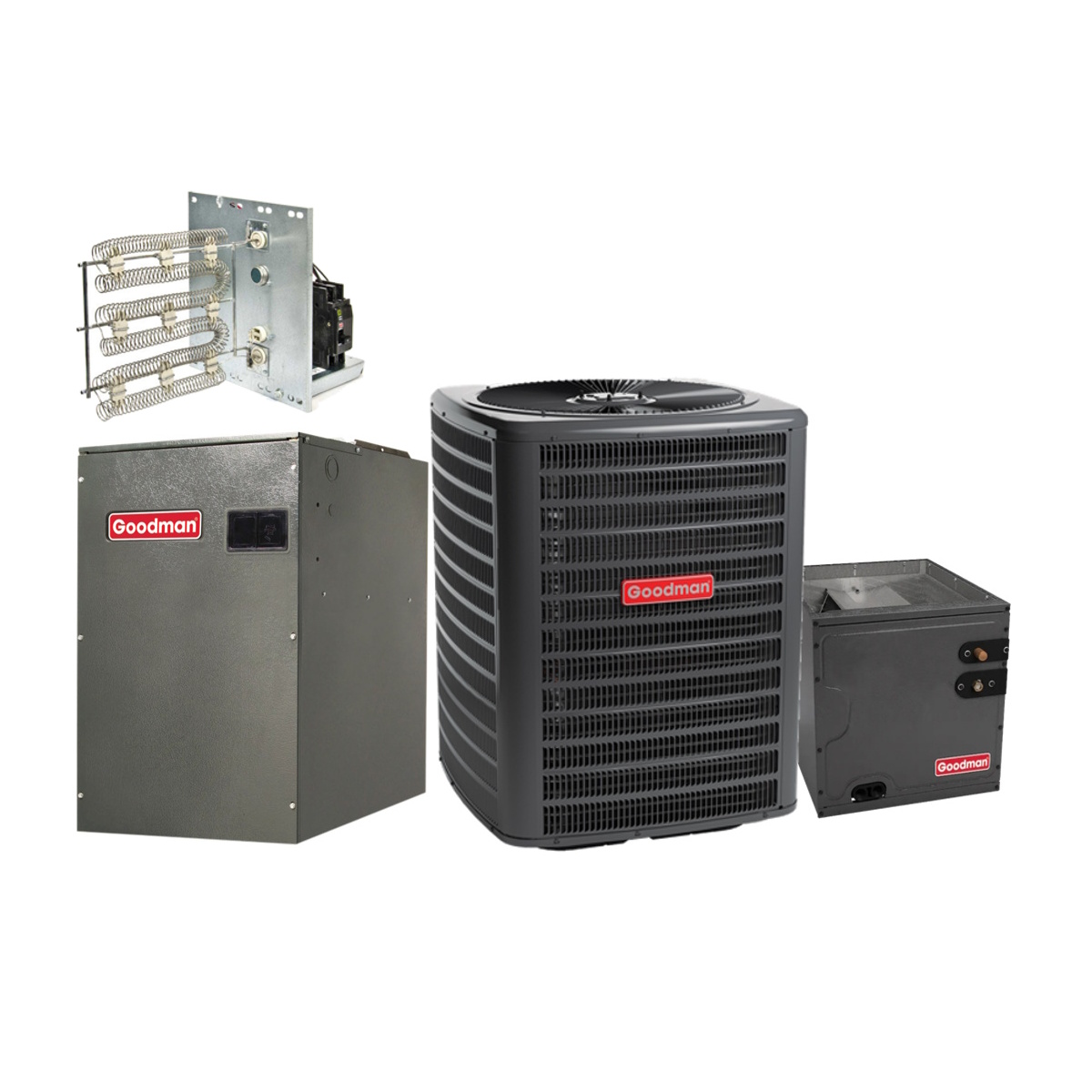
Goodman 2 Ton 17.2 SEER2 Two Stage Electric Heat Split System Upflow With MBVC1201
View on AC Direct see your lowest price →Check current price on AC Direct →
Key features
- Two-stage compressor runs at low or high capacity to match actual cooling demand
- 17.2 SEER2 rated efficiency under current DOE testing standard
- Upflow configuration for installations where air is discharged upward through ductwork above the unit
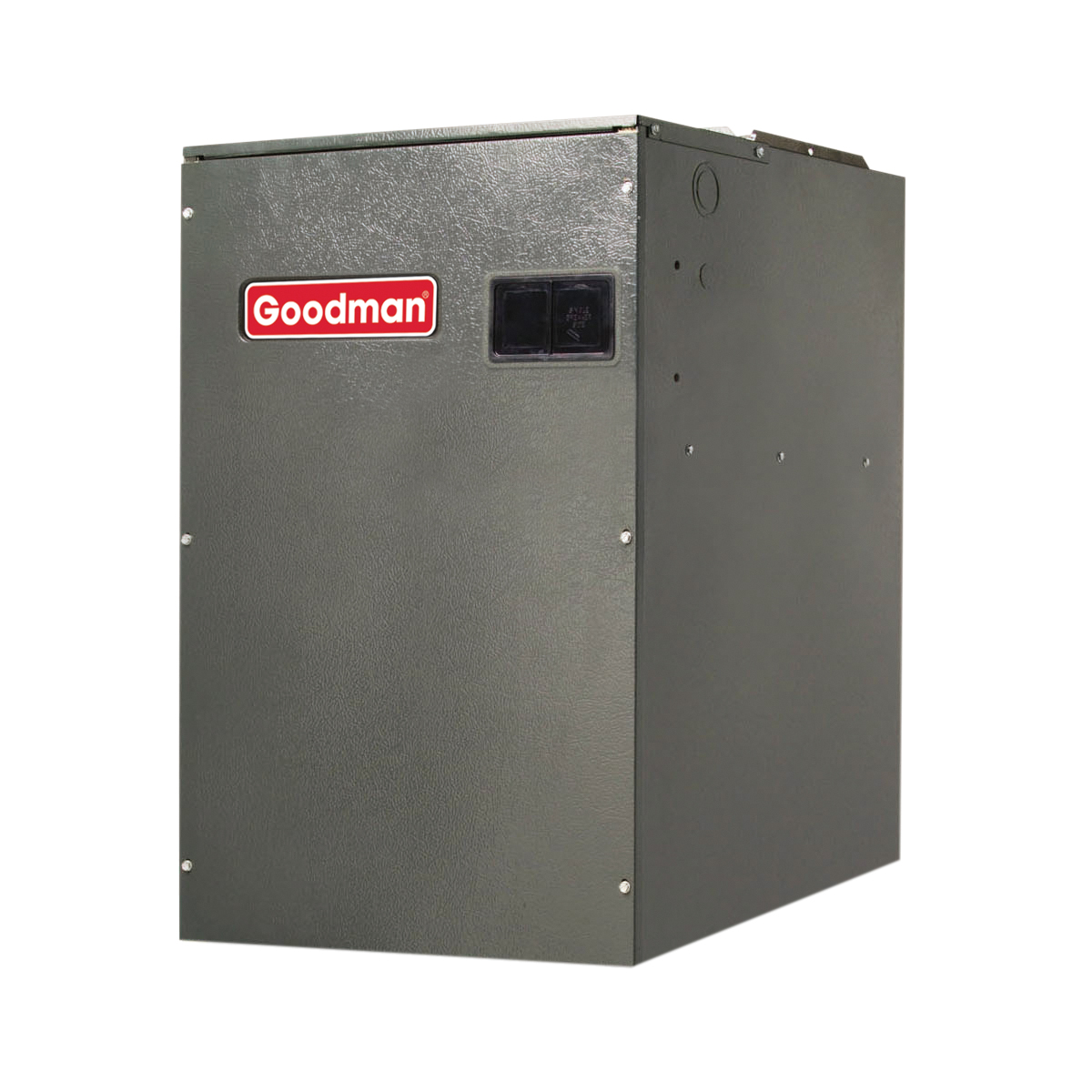
- Paired MBVC1201 variable-speed blower improves humidity control and reduces airflow noise
- Factory-installed filter drier helps protect the refrigerant circuit during initial startup
- Goodman ComfortBridge technology allows communicating control when used with compatible thermostats
About this system
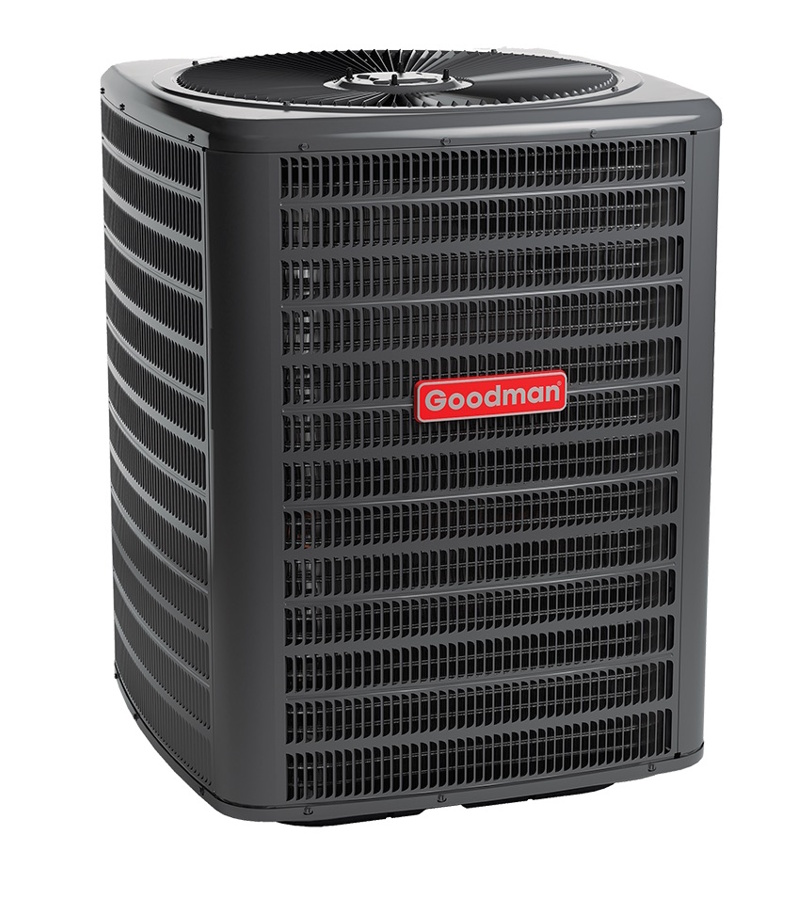
The Goodman GSXC702410 is a 2-ton, 17.2 SEER2 two-stage split system designed for upflow installations, paired here with the MBVC1201 variable-speed air handler. At 2 tons, it is sized for smaller homes, conditioned spaces, or individual zones typically in the 700 to 1,100 square foot range, depending on climate, insulation, and local heat load. The two-stage compressor runs at a reduced capacity during mild weather, which cuts runtime noise, smooths out humidity control compared to single-stage units, and helps the system reach its rated efficiency more often than a unit that only operates at full blast.
The 17.2 SEER2 rating sits solidly in the high-efficiency tier under the current DOE testing standard, meaningfully above the federal minimums for most regions and competitive with two-stage offerings from premium brands. Pairing it with a variable-speed blower like the MBVC1201 is the right move: that blower ramps up gradually rather than cycling on and off at full speed, which further improves dehumidification, lowers airflow noise, and helps the system deliver on its efficiency potential. Be aware that reaching rated efficiency depends heavily on a correct refrigerant charge, proper duct sizing, and a tight installation, factors that matter even more with a two-stage system than a basic single-stage unit.
The GSXC702410 package delivers genuine high-efficiency two-stage performance at a price point that undercuts comparable Carrier, Trane, and Lennox equipment by a meaningful margin. The trade-off is a brand with a real-world reliability record that lags premium competitors, and documented failure modes that buyers should factor into long-term ownership costs. If the installation is done right and you budget for potential mid-life component repairs, this system offers solid efficiency value.
Overall score is the average of the five ratings above.
What we like
- 17.2 SEER2 two-stage efficiency is competitive with premium brand offerings at a lower upfront cost
- Two-stage operation provides noticeably better humidity control than single-stage units in the same price range
- Variable-speed MBVC1201 blower pairing maximizes efficiency potential and reduces airflow noise
- Goodman is typically priced 15 to 25 percent below Trane, Lennox, and Carrier for similar spec levels
- Widely stocked by HVAC distributors, making parts and replacement components relatively easy to source
Trade-offs
- Compressor lifespan averages 10 to 14 years versus 15 to 20 years typical of premium brands, so long-term ownership costs can erode initial savings
- Dual-run capacitor failures are the most commonly reported repair on Goodman units, typically adding a 300 to 600 dollar service call within the first decade
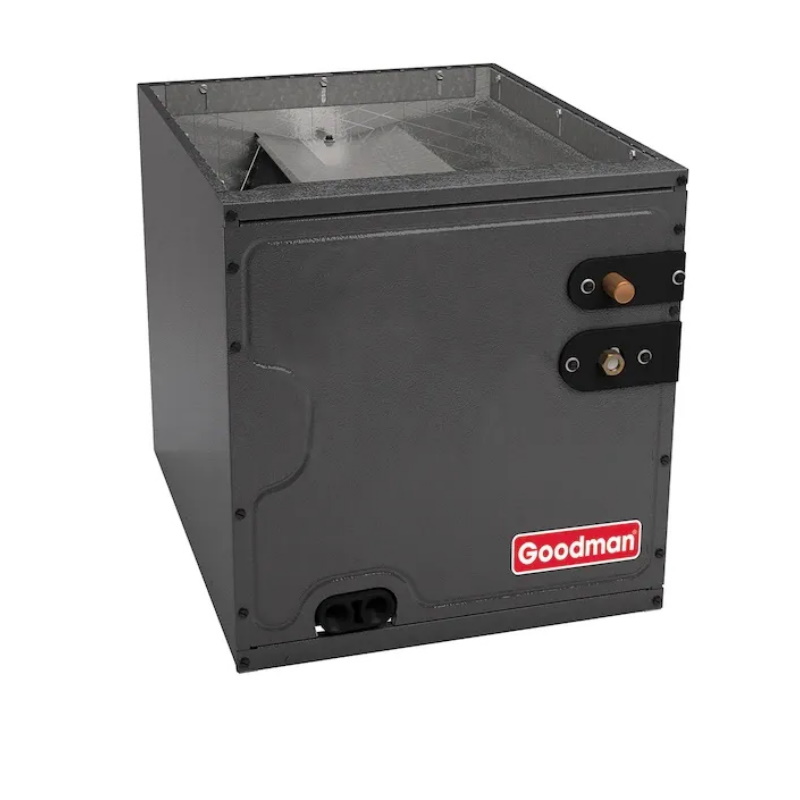
- Evaporator coil leaks show up in a meaningful share of owner reviews and can be a costly mid-life repair
- A minority of owners report refrigerant leaks within the first year, which points to install or factory charge issues and underscores how critical a quality installation is
What homeowners and pros say about Goodman
Homeowners who research Goodman before buying tend to land in two camps, and both camps are worth listening to. On ConsumerAffairs, the brand scores around 2.5 out of 5, a number that reflects a complaint-heavy platform but also flags a real pattern: repair costs that climb after roughly year seven, with capacitor replacements and evaporator coil leaks showing up repeatedly in owner accounts. On Google dealer reviews the picture is more balanced, around 3.8 out of 5 across hundreds of reviews per location, where affordability comes up as the most consistent praise. Neither number should be dismissed as noise. The ConsumerAffairs score is a signal that Goodman ownership can get expensive in the second half of a unit’s life; the Google score suggests that buyers who go in with realistic expectations and a good installer often come out satisfied.
HVAC technicians who service Goodman equipment regularly point to two things. First, the dual-run capacitor is the most common early failure, a relatively low-stakes repair in the 300 to 600 dollar range that most experienced techs can handle quickly. Second, and more significant, is that Goodman compressors tend to average 10 to 14 years of service life against 15 to 20 years for premium brands, which means a homeowner planning to stay put for 15 or more years may find the upfront savings offset by an earlier replacement cycle. For this specific two-stage system, technicians also emphasize that refrigerant charge precision matters more than it does on simpler single-stage units, and a minority of first-year refrigerant leaks on Goodman equipment trace back to the original installation rather than a factory defect. The consistent takeaway from the field: the installer’s quality matters at least as much as the equipment brand itself.
Sources: ConsumerAffairs Goodman owner reviews, AHRI Directory of Certified Product Performance, U.S. DOE appliance and equipment efficiency standards, Goodman product specification sheets.
What it costs to run
At 17.2 SEER2, cooling this 2-ton system for a typical 1200-hour cooling season at the U.S. average electricity rate of $0.17/kWh works out to roughly $285 per year in cooling, about $80 less per year than a minimum-efficiency 13.4 SEER2 unit of the same size. Your real cost depends on your climate and local rate.
Method: (24,000 BTU/hr ÷ 17.2 SEER2) × 1200 hours ÷ 1000 × $0.17/kWh. Rate source: U.S. EIA average; cooling hours: moderate-climate estimate.
How it compares
| Brand | Comparable model | SEER2 | Stage | Price position |
|---|---|---|---|---|
| Goodman | GSXC702410 with MBVC1201 | 17.2 | Two-stage | Value pick |
| Carrier | Performance 17 24ACC6 Series | 17+ | Two-stage | Typically 15 to 25 percent more than this Goodman package |
| Trane | XR17 4TTR7 Series | 17+ | Two-stage | Typically 15 to 25 percent more than this Goodman package |
| Lennox | Merit ML17XC2 Series | 17+ | Two-stage | Typically 15 to 25 percent more than this Goodman package |
Competitor rows are comparable single-stage units at similar efficiency; price is relative position, not a quote.
Questions about this system
Is 2 tons the right size for my home?
Two tons is generally appropriate for conditioned spaces in the 700 to 1,100 square foot range, but the right answer depends on your climate zone, insulation levels, window area, and ceiling height. Oversizing a two-stage unit defeats its efficiency and humidity control advantages, so a proper Manual J load calculation by your installer is worth asking for before purchasing.
What does the two-stage compressor actually do for me day to day?
On mild days the system runs at its lower stage, which means longer, quieter cycles at reduced capacity. This keeps indoor humidity lower than a single-stage unit that short-cycles on and off, and the system reaches its rated efficiency more often because it spends more time running efficiently rather than cycling. On the hottest days it shifts to full capacity to keep up with demand.
How important is the installer for this specific system?
Very important, and especially so for a two-stage system at this efficiency tier. Technicians consistently cite install quality as the single biggest factor in how long a Goodman unit lasts. Improper refrigerant charge is the most common root cause of early refrigerant leaks, and poor duct work can prevent the system from reaching its 17.2 SEER2 rating in real-world use.
What repairs should I budget for over the life of this system?
Dual-run capacitor replacement is the most commonly reported repair on Goodman equipment, typically costing 300 to 600 dollars when it occurs, usually after year five or six. Evaporator coil leaks appear in a meaningful share of owner reviews and can run higher depending on your refrigerant type and labor rates. Goodman compressors tend to average 10 to 14 years, so factor in a potential compressor replacement or system replacement around that window.
Does the MBVC1201 air handler have to be used with this condenser, or can I keep my existing air handler?
The MBVC1201 is included as a matched system here, and Goodman designs these combinations to work together for the rated 17.2 SEER2 efficiency. Using a different air handler may lower the achieved efficiency rating and can affect warranty coverage, so if you are replacing only the outdoor unit and want to keep an existing air handler, confirm the match with your installer before purchase.
Specifications
| Cooling capacity | 2 Ton |
| Efficiency | 17.2 SEER2 |
| Configuration | Upflow |
| Model | GSXC702410 |