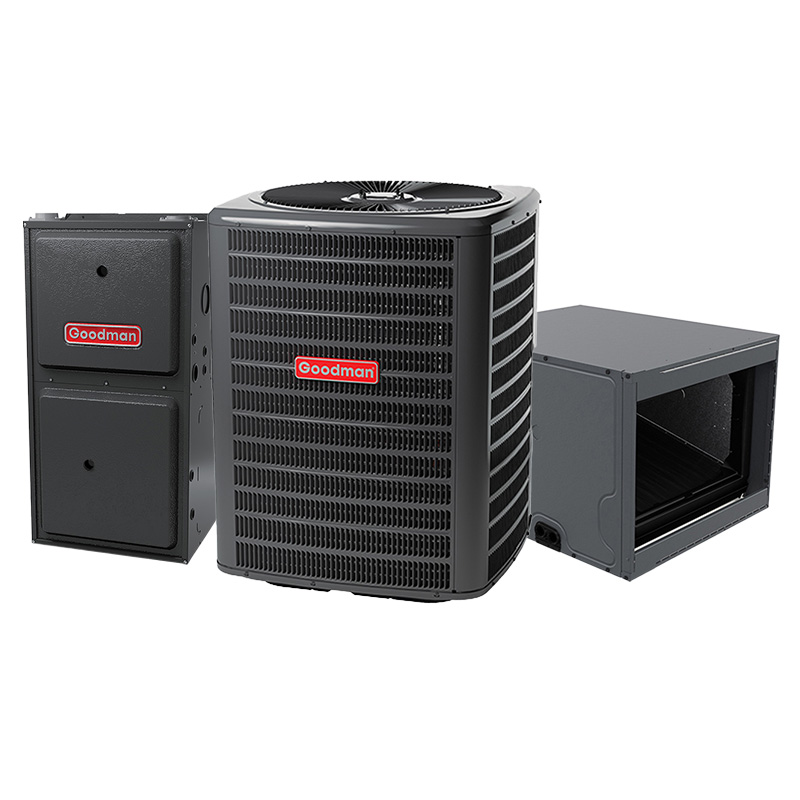
Goodman 2 Ton 17.5 SEER2 AC With 60000 BTU 96% AFUE 2-Stage Variable-Speed ECM Gas Furnace System – Horizontal | 2-Stage High Efficiency AC | R32
View on AC Direct see your lowest price →Check current price on AC Direct →
Key features
- 17.5 SEER2 two-stage compressor for high-efficiency cooling with reduced short-cycling
- 96% AFUE two-stage gas furnace minimizes fuel waste across most heating loads
- Variable-speed ECM blower motor reduces electricity use and operating noise
- Horizontal configuration designed for attic, crawlspace, or side-discharge installations
- R-32 refrigerant with lower global-warming potential than legacy R-410A
- Matched system design allows qualification for utility rebates and potential tax credits
About this system
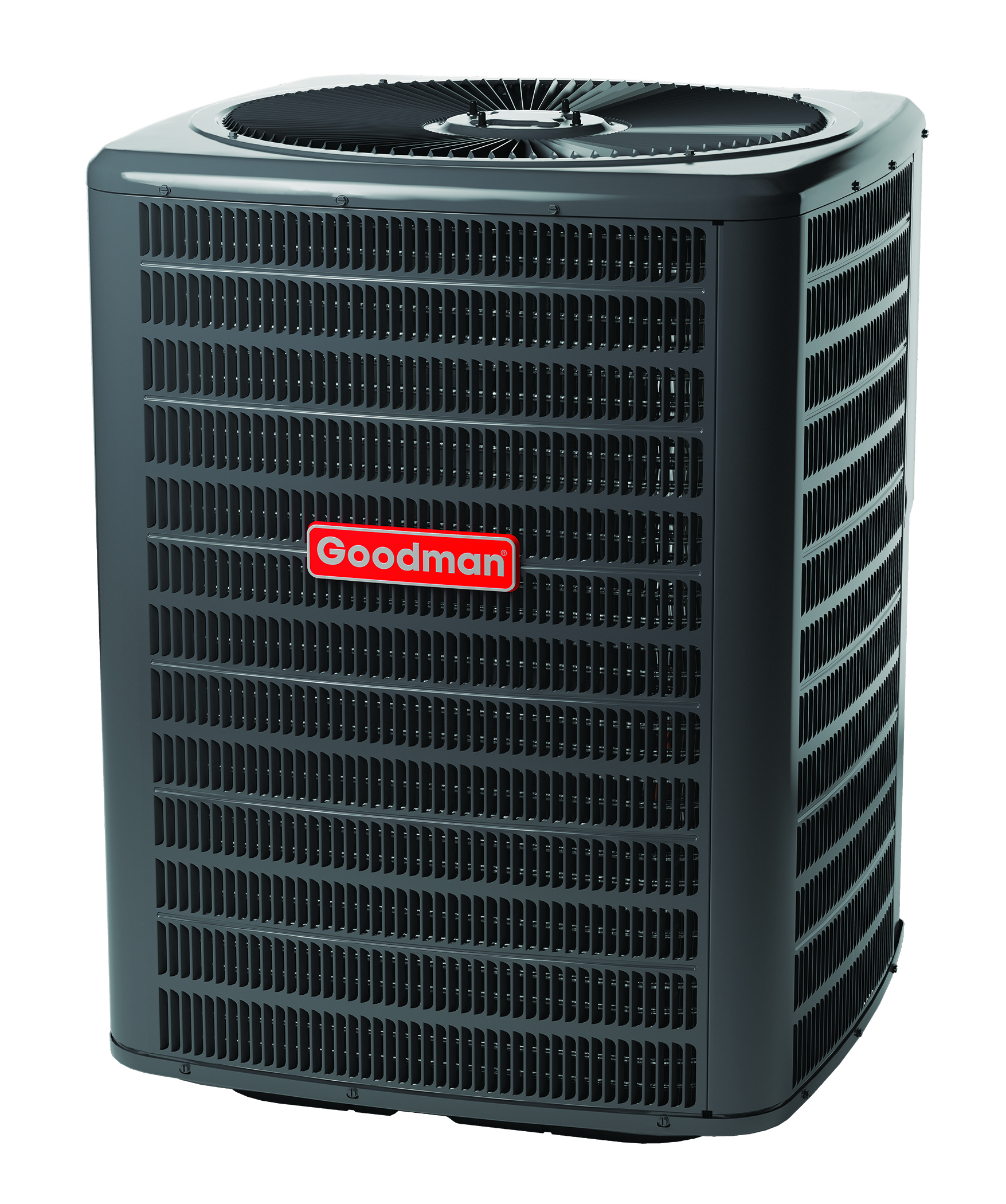
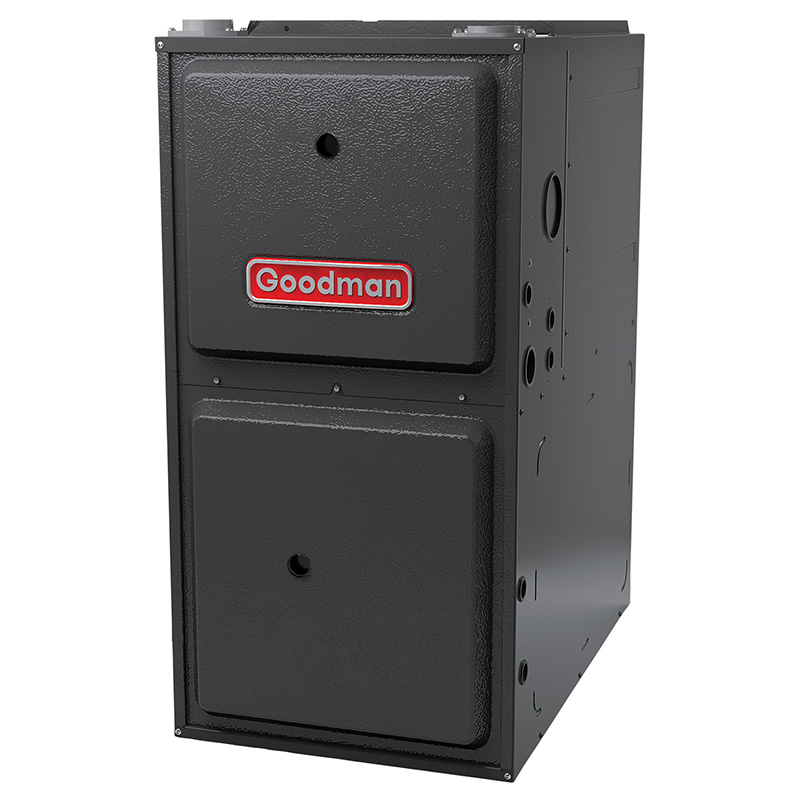
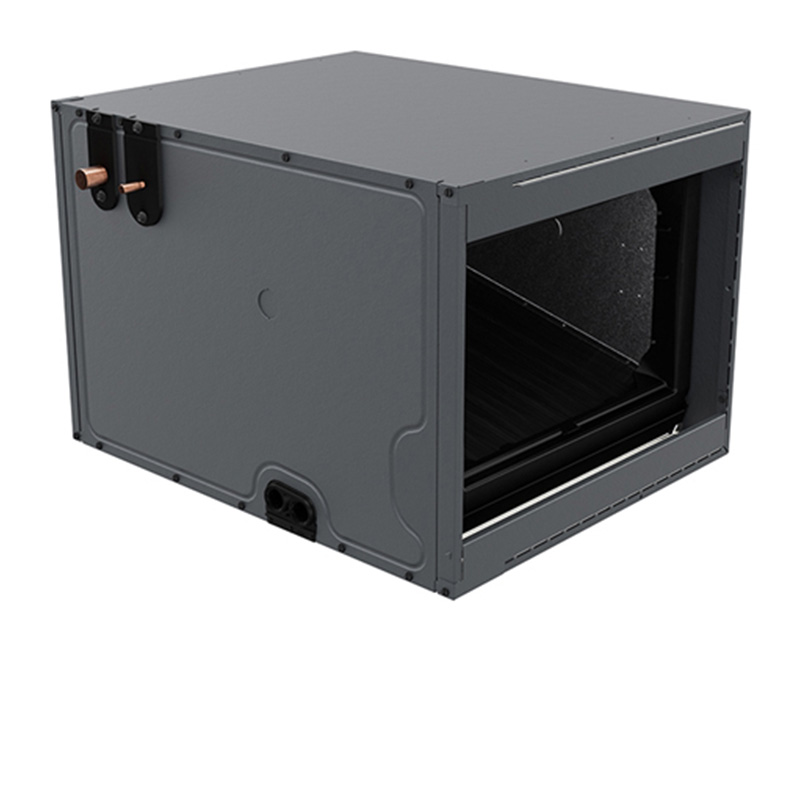
The Goodman GLXT7CA2410 pairs a 2-ton, 17.5 SEER2 two-stage air conditioner with a 60,000 BTU, 96% AFUE two-stage variable-speed ECM gas furnace configured for horizontal installation. That combination makes it a strong candidate for homes where attic or crawlspace installation is required and where the mechanical room cannot accommodate a standard upflow or downflow orientation. The R-32 refrigerant charge is worth noting: R-32 has a lower global-warming potential than R-410A and is becoming the industry standard, which should make future refrigerant availability and recharge costs more manageable over the system’s life.
On paper, 17.5 SEER2 sits comfortably in the high-efficiency tier, and 96% AFUE is near the top of what a non-condensing furnace can achieve before you step up to 98%+ condensing units. The two-stage compressor and two-stage gas valve mean the system runs on a lower capacity setting most of the time, reducing short-cycling, evening out temperatures, and taking some mechanical stress off the compressor. The variable-speed ECM blower motor adds meaningful energy savings on the air-handling side and is quieter at low-speed operation than a single-speed PSC motor. Together, these are specs that would cost noticeably more from Trane, Lennox, or Carrier for roughly the same measured output.
The GLXT7CA2410 delivers a genuinely capable efficiency package at a price point that premium brands cannot match, making it a solid choice for budget-conscious buyers who invest in a thorough professional installation. However, Goodman's documented reliability history, particularly around dual-run capacitors, evaporator coil integrity, and compressor longevity that trails premium competitors, means the savings at purchase need to be weighed against a higher probability of out-of-pocket repair costs after year seven. This is a good system when installed correctly, not a great one on its own merits.
Overall score is the average of the five ratings above.
What we like
- Priced roughly 15 to 25 percent below comparable Carrier, Trane, and Lennox systems at this efficiency tier
- 17.5 SEER2 rating qualifies it for many utility rebates and the federal energy efficiency tax credit
- Two-stage cooling and heating improve comfort and reduce wear compared to single-stage alternatives
- Variable-speed ECM motor lowers blower electricity consumption and reduces airflow noise
- R-32 refrigerant is becoming the industry standard, supporting long-term parts and service availability
Trade-offs
- Compressor lifespan averages 10 to 14 years versus 15 to 20 years reported for premium-brand compressors
- Dual-run capacitors are the most commonly reported failure, typically adding 300 to 600 dollars in repair costs, often before the 10-year mark
- A meaningful share of owner reviews cite evaporator coil leaks, which can be costly if outside the parts warranty window
- Horizontal installation adds complexity; poor installation is the single largest risk factor for long-term reliability with Goodman equipment
What homeowners and pros say about Goodman
Owners and dealers who leave Google reviews for Goodman equipment land around 3.8 out of 5 stars, and the most repeated reason for a positive rating is straightforward: the system delivered comparable efficiency specs at a lower upfront cost than the name-brand alternatives. That price advantage is real and consistent. The ConsumerAffairs picture is less flattering, sitting around 2.5 out of 5, but that channel draws disproportionately from owners who had problems, and the pattern in those complaints is specific: repair bills that start showing up after roughly year seven, not catastrophic early failures across the board.
HVAC technicians who work on Goodman equipment frequently point to dual-run capacitors as the component they replace most often on these systems, a repair that typically runs 300 to 600 dollars and is rarely catastrophic but becomes a frustrating recurring expense. Evaporator coil leaks also surface in a meaningful share of owner accounts and represent a more significant repair. Compressor longevity is the other honest trade-off: Goodman compressors tend to average 10 to 14 years in service, while premium-brand compressors are more commonly cited in the 15 to 20 year range. For the GLXT7CA2410 specifically, the horizontal configuration adds one more variable: technicians consistently note that install quality is the single biggest determinant of how long a Goodman unit lasts, and horizontal attic installs require careful attention to drainage, refrigerant charge, and airflow balance. Get those right, and the efficiency numbers on this system are genuine. Shortcut them, and the cost advantage evaporates quickly.
Sources: ConsumerAffairs Goodman owner reviews, AHRI Directory of Certified Product Performance, U.S. DOE appliance and equipment efficiency standards, Goodman product specification sheets.
What it costs to run
At 17.5 SEER2, cooling this 2-ton system for a typical 1200-hour cooling season at the U.S. average electricity rate of $0.17/kWh works out to roughly $280 per year in cooling, about $85 less per year than a minimum-efficiency 13.4 SEER2 unit of the same size. Your real cost depends on your climate and local rate.
Method: (24,000 BTU/hr ÷ 17.5 SEER2) × 1200 hours ÷ 1000 × $0.17/kWh. Rate source: U.S. EIA average; cooling hours: moderate-climate estimate.
How it compares
| Brand | Comparable model | SEER2 | Stage | Price position |
|---|---|---|---|---|
| Goodman | GLXT7CA2410 | 17.5 | Two-stage | Value pick |
| Carrier | Comfort 17 (24ACC7) | 17 | Two-stage | Typically 15 to 25 percent more than Goodman at this efficiency tier |
| Trane | XR17 | 17 | Two-stage | Typically 15 to 25 percent more than Goodman at this efficiency tier |
| Lennox | Merit ML17XC2 | 17 | Two-stage | Typically 15 to 25 percent more than Goodman at this efficiency tier |
Competitor rows are comparable single-stage units at similar efficiency; price is relative position, not a quote.
Questions about this system
Why does this system use horizontal configuration and can it be installed in other orientations?
Horizontal configuration means the air handler and furnace are designed to lie on their side, which is required for attic platforms and certain crawlspace setups where vertical clearance is limited. Installing a horizontal-rated unit in an upflow or downflow position is not recommended and may void the warranty, so confirm your install location before purchasing.
What does two-stage mean for both the AC and the furnace, and does it actually matter?
Two-stage means the compressor and gas valve each operate at a lower capacity setting (roughly 65 to 70 percent) for mild conditions and a higher setting for peak demand. In practice, the system runs on low stage the majority of the time, which reduces temperature swings, lowers humidity more effectively during cooling season, and puts less wear on components than constant full-capacity cycling.
R-32 refrigerant is newer to residential systems. Is it harder to service?
R-32 requires technicians to use equipment rated for it and to follow slightly different handling procedures compared to R-410A, but it is not significantly harder to service for a qualified technician. As the industry continues shifting away from R-410A, R-32 availability and technician familiarity are both growing, which is a practical advantage for a system you may own for a decade or more.
Goodman's ConsumerAffairs score is only about 2.5 out of 5. Should that concern me?
ConsumerAffairs is a complaint-skewed platform, meaning owners who had smooth experiences rarely post there, so the score reflects the worst outcomes more than the average one. The recurring theme in those reviews is repair costs rising after roughly year seven, which is a real pattern and worth factoring in, but not evidence that every unit fails early. Google dealer reviews for Goodman dealers average around 3.8 out of 5, and affordability is the most consistent praise.
What are the most likely repairs I should budget for over a 10-year ownership period?
Dual-run capacitors are the most commonly documented failure point for Goodman equipment and typically cost 300 to 600 dollars to replace, including labor. Evaporator coil leaks appear in a meaningful share of reviews and can run higher depending on whether the coil is still under the parts warranty. Keeping an annual maintenance agreement in place and asking your technician to inspect the capacitor at each visit is a reasonable way to catch the most common issue before it becomes an emergency call.
Specifications
| Cooling capacity | 2 Ton |
| Efficiency | 17.5 SEER2 |
| Furnace output | 60000 BTU |
| Furnace efficiency | 96% AFUE |
| Configuration | Horizontal |
| Refrigerant | R-32 |
| Model | GLXT7CA2410 |