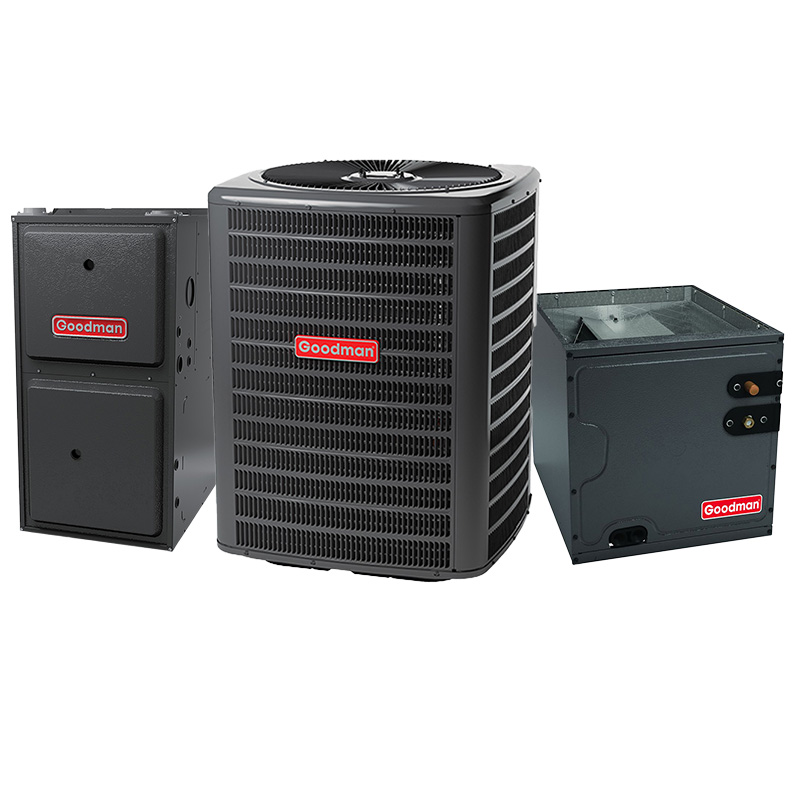
Goodman 2 Ton 17.5 SEER2 AC With 80000 BTU 96% AFUE 2-Stage Variable-Speed ECM Gas Furnace System – Upflow | 2-Stage High Efficiency AC | R32
View on AC Direct see your lowest price →Check current price on AC Direct →
Key features
- 2-ton two-stage AC rated at 17.5 SEER2 for above-minimum efficiency
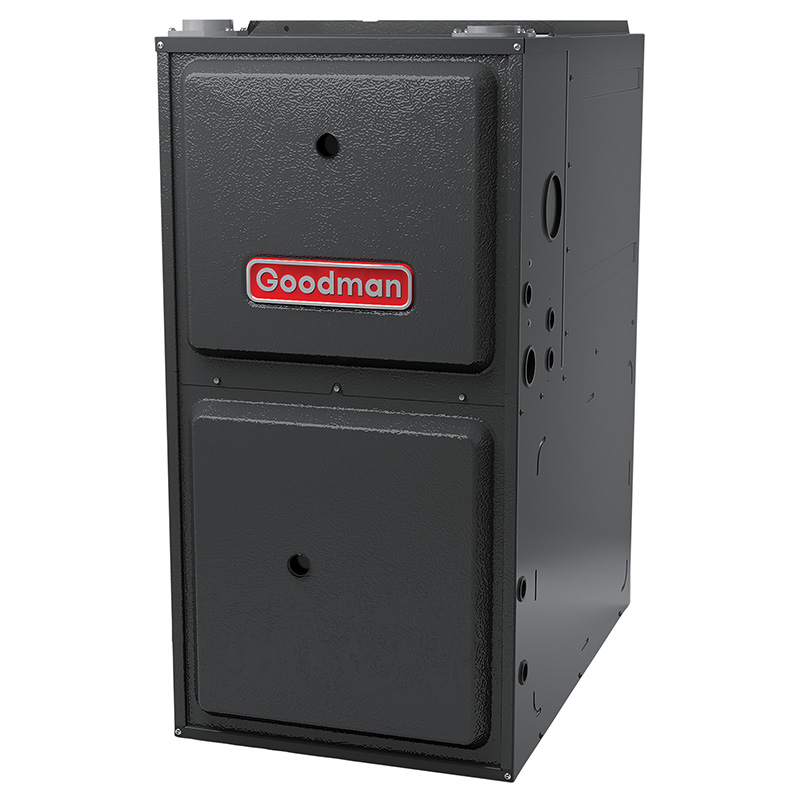
- 80,000 BTU two-stage gas furnace at 96% AFUE for high-efficiency heating
- Variable-speed ECM blower motor reduces energy use and improves humidity control
- R-32 refrigerant with lower global warming potential than R-410A
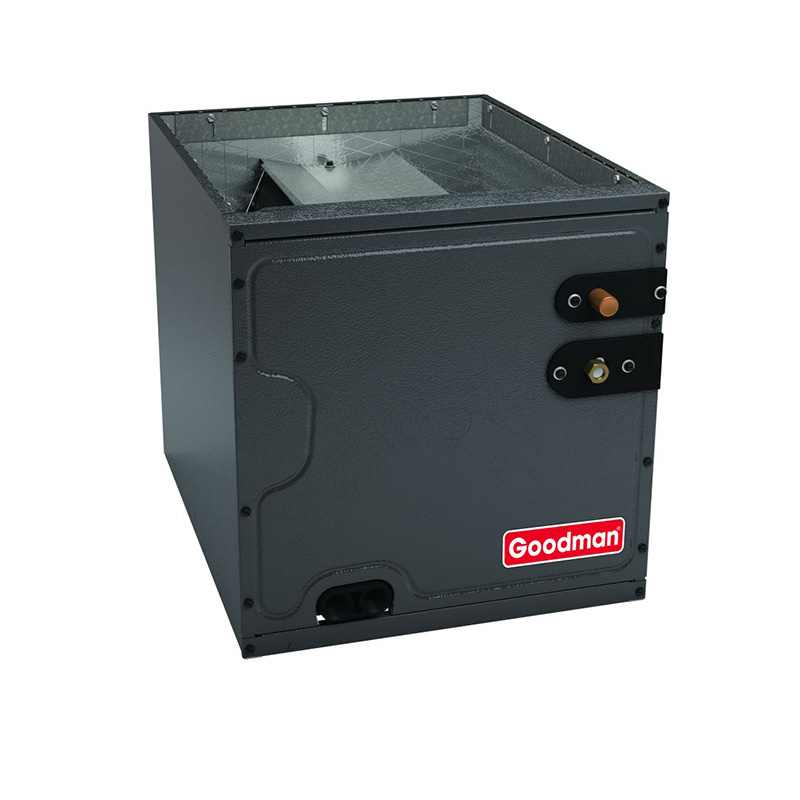
- Upflow configuration for basement or ground-floor air handler installations
- Factory-matched system optimized for consistent performance ratings
About this system
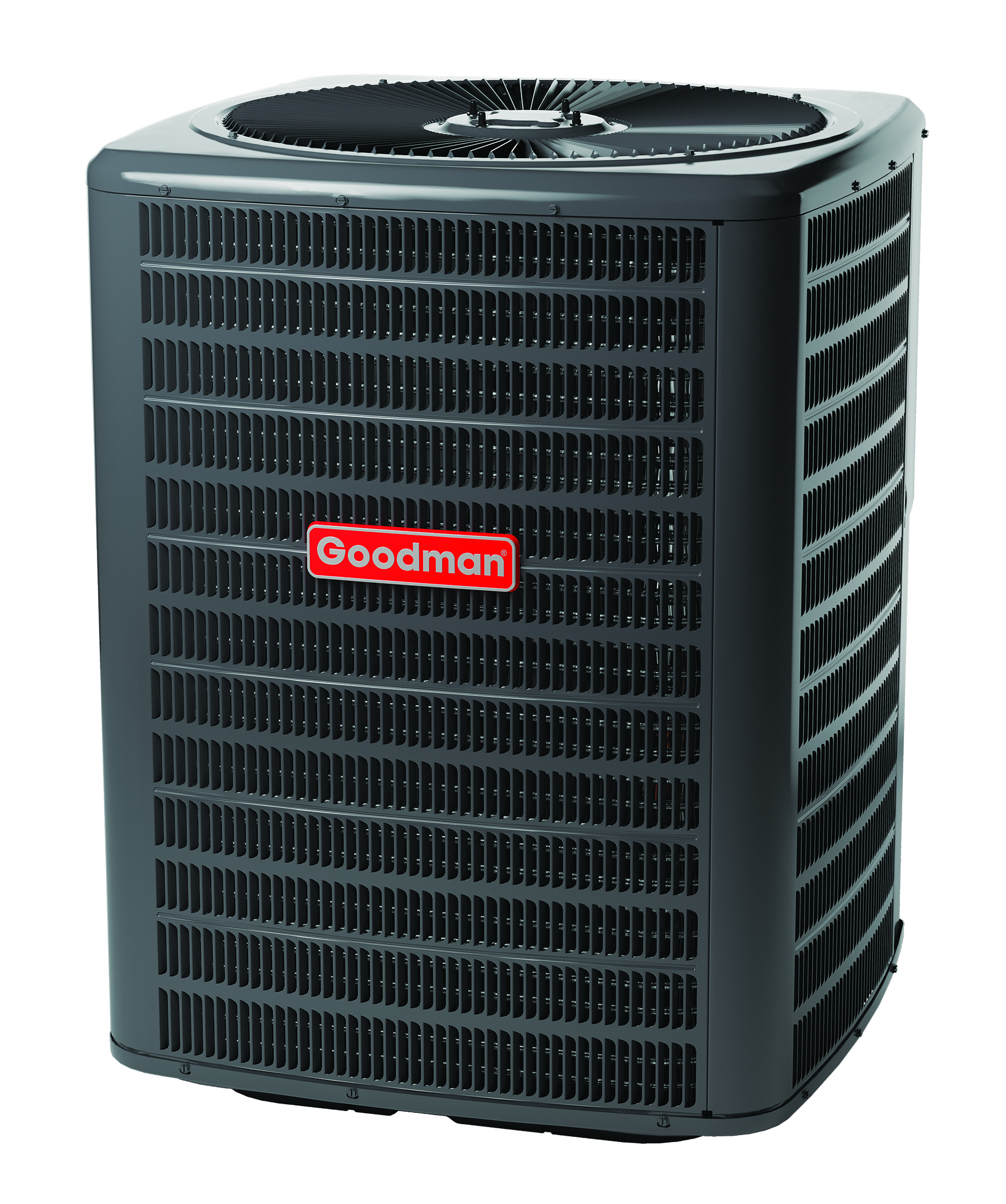
The Goodman GLXT7CA2410 pairs a 2-ton, 17.5 SEER2 two-stage central air conditioner with an 80,000 BTU, 96% AFUE two-stage variable-speed ECM gas furnace in an upflow configuration. The R-32 refrigerant charge runs at lower operating pressure than the older R-410A it replaces and carries a lower global warming potential, which positions this system ahead of the regulatory curve as the industry moves away from higher-GWP refrigerants. At 17.5 SEER2 the cooling side clears the federal minimum for most U.S. climate zones with meaningful headroom, though it sits below the 18+ SEER2 tier that qualifies for the full federal tax credit under current IRS guidance, so confirm credit eligibility before purchase.
The two-stage compressor and matching two-stage furnace are the practical heart of this system. Running on the lower stage during mild weather, both sides cycle less aggressively, which reduces temperature swings, lowers humidity more effectively than single-stage equipment, and trims runtime energy draw. The variable-speed ECM blower motor amplifies those gains by ramping airflow to match demand rather than blasting full speed every cycle. For a 2-ton application, typically a 700 to 1,100 square-foot conditioned space or a well-insulated zone up to roughly 1,400 square feet, this combination delivers noticeably steadier comfort than entry-level single-stage alternatives. Upflow-only configuration suits the most common residential installation scenario where the air handler sits in a basement, utility closet, or ground-floor mechanical room with supply duct running upward.
This Goodman system delivers genuinely capable two-stage efficiency at a price point that undercuts comparable Carrier, Trane, and Lennox packages by roughly 15 to 25 percent, making the specs-per-dollar math hard to ignore. The trade-off is a brand with documented weak points at the capacitor and evaporator coil level and compressor longevity that runs shorter than premium-tier competitors. Whether that gap matters depends almost entirely on how well it is installed and how consistently it is maintained.
Overall score is the average of the five ratings above.
What we like
- 17.5 SEER2 cooling efficiency is well above federal minimums and reduces operating costs versus standard-efficiency equipment
- 96% AFUE furnace captures nearly all fuel energy and is among the more efficient tiers available in this class
- Two-stage operation on both the AC and furnace improves humidity control and comfort consistency over single-stage systems
- Variable-speed ECM blower delivers quieter operation and lower blower electricity costs compared to PSC motors
- Factory-matched system pricing undercuts comparable premium-brand packages by a meaningful margin
Trade-offs
- Dual-run capacitors are the most frequently reported failure point, typically requiring a 300 to 600 dollar service call within the first decade
- Evaporator coil leaks appear in a notable share of owner reports, a failure mode that can mean refrigerant loss and a costly repair
- Compressor lifespan averages 10 to 14 years versus 15 to 20 years typical of premium brands, meaning earlier replacement is a realistic planning consideration
- A minority of owners report refrigerant leaks in the first year, usually traced to install or initial charge quality rather than a factory defect
What homeowners and pros say about Goodman
Homeowners who have lived with Goodman equipment give it a ConsumerAffairs rating of roughly 2.5 out of 5, though that channel disproportionately captures complaints rather than satisfied owners who simply never write a review. The recurring theme there is repair costs that start accumulating after about year seven, consistent with the documented pattern of dual-run capacitor failures and, more seriously, evaporator coil leaks that can turn into multi-hundred-dollar service events. Google dealer reviews tell a somewhat different story, averaging around 3.8 out of 5 across locations, where affordability and the value-per-dollar proposition are the most frequently cited reasons people are happy with their choice. For this two-stage variable-speed system specifically, that satisfaction gap likely narrows when installation quality is high, since technicians consistently cite the install itself as the single largest variable in how long a Goodman unit holds up.
HVAC professionals tend to characterize Goodman as a capable workhorse at a price that makes sense for budget-constrained jobs, with a candid caveat: the compressor typically runs 10 to 14 years rather than the 15 to 20 years a Trane or Lennox compressor might deliver, and the capacitor is essentially a scheduled maintenance item rather than a set-and-forget component. A minority of technicians also flag that first-year refrigerant leaks, while not the norm, appear often enough to suggest the system rewards a thorough startup check and leak verification at commissioning. For a 2-ton two-stage system in this efficiency class, the Goodman price advantage is real and the specs are genuine, but the value calculation only holds if the buyer factors in a realistic maintenance budget and selects a contractor with strong experience in two-stage variable-speed installations.
Sources: ConsumerAffairs Goodman owner reviews, AHRI Directory of Certified Product Performance, U.S. DOE appliance and equipment efficiency standards, Goodman product specification sheets.
What it costs to run
At 17.5 SEER2, cooling this 2-ton system for a typical 1200-hour cooling season at the U.S. average electricity rate of $0.17/kWh works out to roughly $280 per year in cooling, about $85 less per year than a minimum-efficiency 13.4 SEER2 unit of the same size. Your real cost depends on your climate and local rate.
Method: (24,000 BTU/hr ÷ 17.5 SEER2) × 1200 hours ÷ 1000 × $0.17/kWh. Rate source: U.S. EIA average; cooling hours: moderate-climate estimate.
How it compares
| Brand | Comparable model | SEER2 | Stage | Price position |
|---|---|---|---|---|
| Goodman | GLXT7CA2410 | 17.5 | Two-stage | Value pick |
| Carrier | Performance 17 (24ACC7) | 17 | Two-stage | Typically 15 to 25 percent more than this Goodman package |
| Trane | XR17 | 17 | Two-stage | Typically 15 to 25 percent more than this Goodman package |
| Lennox | Merit ML17XC2 | 17 | Two-stage | Typically 15 to 25 percent more than this Goodman package |
Competitor rows are comparable single-stage units at similar efficiency; price is relative position, not a quote.
Questions about this system
Does this system qualify for the federal energy efficiency tax credit?
As of current IRS guidance, the 25C tax credit for central AC generally requires 16 SEER2 or higher, but the specific threshold can depend on system configuration and IRS updates. At 17.5 SEER2 the cooling side likely qualifies, but confirm current requirements with a tax professional before purchase since rules can change and both AC and furnace components may be evaluated separately.
Can any certified HVAC technician install this system, or does it require a Goodman-authorized dealer?
Any licensed HVAC contractor can install this equipment, but the R-32 refrigerant requires technicians who hold an EPA Section 608 certification and have equipment rated for R-32 handling, since it operates at different pressures than R-410A. Given that Goodman's documented first-year refrigerant leak issues are usually traced back to install quality, choosing a contractor experienced with R-32 systems is especially important here.
What is the Goodman warranty on this system and what does it actually cover?
Goodman typically offers a 10-year parts limited warranty when the unit is registered online within 60 days of installation, dropping to a shorter coverage period if registration is missed. The warranty covers replacement parts but not labor, refrigerant, or diagnostic costs, which means a compressor or coil failure inside the warranty window still carries a real out-of-pocket service bill.
How does two-stage operation actually change day-to-day comfort compared to a standard single-stage system?
On most days the system runs on its lower stage, which means longer, gentler cycles that pull more humidity out of the air before shutting off and reduce the temperature swings that single-stage on-off cycling creates. The variable-speed ECM blower reinforces this by ramping airflow gradually, which also tends to run quieter than a full-speed PSC motor.
What maintenance steps are most important given Goodman's known failure points?
Annual professional inspections that include checking and proactively replacing the dual-run capacitor before it fails can head off the most common service call this brand generates. Keeping the evaporator coil clean and having refrigerant levels verified at each tune-up addresses the two other documented weak points, coil leaks and refrigerant loss, before they become expensive repairs.
Specifications
| Cooling capacity | 2 Ton |
| Efficiency | 17.5 SEER2 |
| Furnace output | 80000 BTU |
| Furnace efficiency | 96% AFUE |
| Configuration | Upflow |
| Refrigerant | R-32 |
| Model | GLXT7CA2410 |