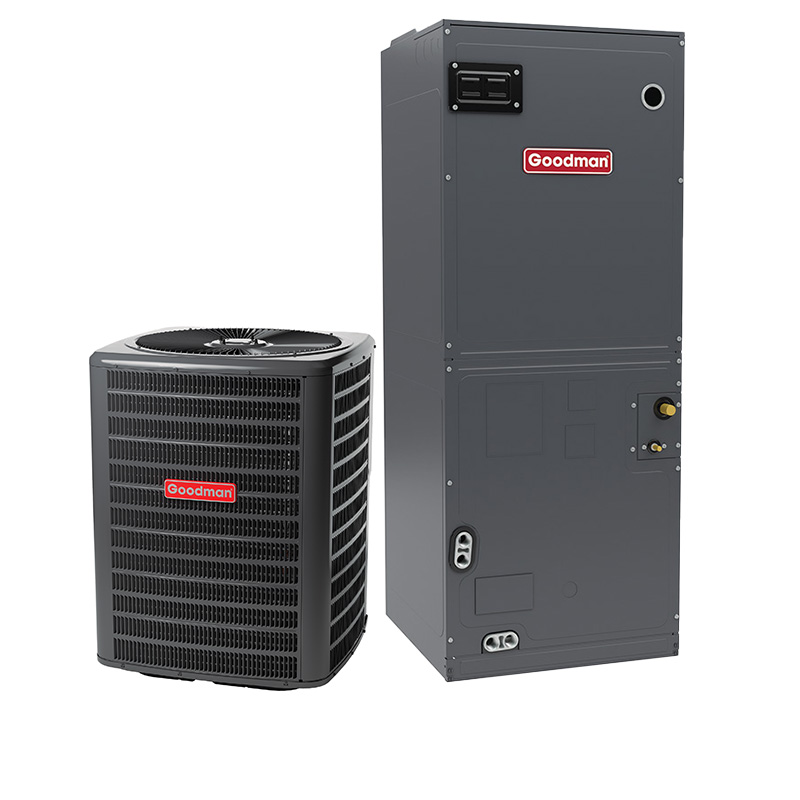
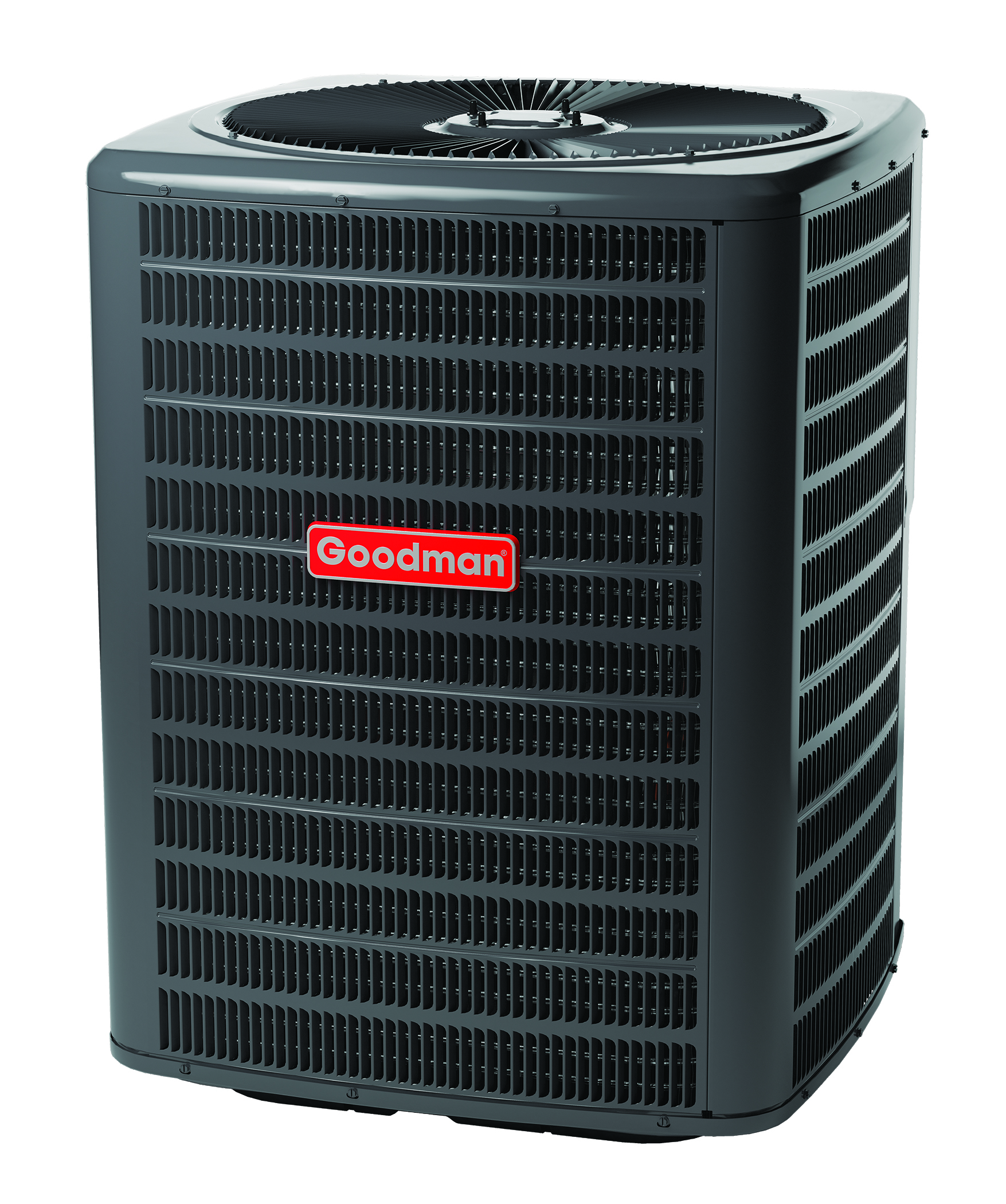
Goodman 2 Ton 18 SEER2 R32 High-Efficiency Two Stage Cooling Only System
View on AC Direct see your lowest price →Check current price on AC Direct →
Key features
- 18 SEER2 efficiency rating, upper tier for modern residential air conditioning
- Two-stage compressor runs at reduced capacity during mild conditions for better humidity control
- R-32 refrigerant with approximately 68 percent lower global warming potential than R-410A
- 2-ton capacity, suited for smaller well-insulated homes or targeted zone applications
- Cooling-only configuration pairs with an existing or separately purchased air handler and coil
- Goodman factory warranty coverage on covered components (register unit promptly after install)
About this system
The Goodman 2-ton 18 SEER2 two-stage cooling-only system is built for homeowners who want genuinely high-efficiency air conditioning without paying the premium that Trane, Lennox, or Carrier charge for comparable output. At 18 SEER2, this unit sits in the upper tier of modern efficiency ratings, which means lower monthly energy bills compared to the 14 or 15 SEER2 systems that still dominate new construction. The two-stage compressor is the most important feature here: it runs at a reduced capacity during mild weather (roughly 65 to 70 percent of full load), cycling on longer and more gently rather than hammering on and off. That behavior improves humidity removal, reduces temperature swings, and is quieter on most operating hours than a comparable single-stage unit.
The R-32 refrigerant is a meaningful upgrade over older R-410A systems. R-32 has a global warming potential roughly 68 percent lower than R-410A, and it is increasingly the direction the industry is moving under updated EPA rules. On the practical side, R-32 systems typically require a smaller refrigerant charge to achieve the same capacity, which can reduce material costs slightly. Worth noting: not every HVAC technician has R-32 certification yet, so confirming your installer is certified before booking is a step worth taking. At 2 tons, this system is sized for roughly 900 to 1,200 square feet of well-insulated living space, though climate, ceiling height, window area, and duct condition all factor into whether 2 tons is the right call for a given home. A Manual J load calculation by your installer is the only reliable way to confirm sizing.
This system delivers real efficiency and a meaningful two-stage comfort advantage at a price point 15 to 25 percent below premium brands, making it a strong choice for budget-conscious buyers who invest in a quality installation. The trade-off is a shorter average compressor lifespan than Carrier or Trane and a documented pattern of capacitor failures and occasional coil leaks that raise long-term ownership costs. If you pair it with a skilled installer and plan for routine maintenance, it performs well; if you cut corners on installation, reliability suffers more noticeably than it would with a premium brand.
Overall score is the average of the five ratings above.
What we like
- 18 SEER2 rating meaningfully reduces cooling energy costs versus standard-efficiency units
- Two-stage operation improves humidity removal and reduces temperature swings compared to single-stage
- R-32 refrigerant is lower-impact environmentally and aligns with upcoming industry regulations
- Typically priced 15 to 25 percent below comparable Trane, Lennox, and Carrier systems
- Replacement parts, including the commonly needed dual-run capacitor, are widely available and inexpensive
Trade-offs
- Compressor lifespan averages 10 to 14 years versus 15 to 20 years for premium brand compressors
- Evaporator coil leaks appear in a meaningful share of owner reports, a cost that adds up quickly
- A minority of owners report refrigerant leaks in year one, typically tied to installation quality or charge issues
- R-32 certification is not yet universal among technicians, which can limit service options in some areas
What homeowners and pros say about Goodman
Owners and dealers who review Goodman equipment on Google give it roughly 3.8 out of 5 stars, and the most consistent praise is straightforward: you get a lot of cooling equipment for the money. That sentiment fits this 18 SEER2 two-stage unit well. Buyers who invested in a thorough installation with proper refrigerant charge and commissioning tend to report solid performance in the early years. The R-32 refrigerant is newer territory for many technicians, which means the quality of the service call matters even more than it does on a standard R-410A system.
On ConsumerAffairs, Goodman lands around 2.5 out of 5, a score shaped heavily by the platform’s complaint-driven audience. The recurring theme in those reviews is repair costs that climb after roughly year 7, which lines up with the documented failure modes: dual-run capacitors are the most common culprit and a relatively affordable fix at 300 to 600 dollars, but evaporator coil leaks and compressor wear become more expensive concerns further into ownership. Goodman compressors average 10 to 14 years in practice, compared to 15 to 20 years for premium brands, and a minority of owners across all Goodman lines report refrigerant leaks within the first year that trace back to installation rather than the equipment itself. HVAC technicians consistently say that Goodman performs best when the installer is experienced and meticulous, and that the gap between a well-installed Goodman and a poorly installed premium brand closes quickly in favor of the Goodman.
Sources: ConsumerAffairs Goodman owner reviews, AHRI Directory of Certified Product Performance, U.S. DOE appliance and equipment efficiency standards, Goodman product specification sheets.
What it costs to run
At 18 SEER2, cooling this 2-ton system for a typical 1200-hour cooling season at the U.S. average electricity rate of $0.17/kWh works out to roughly $272 per year in cooling, about $93 less per year than a minimum-efficiency 13.4 SEER2 unit of the same size. Your real cost depends on your climate and local rate.
Method: (24,000 BTU/hr ÷ 18 SEER2) × 1200 hours ÷ 1000 × $0.17/kWh. Rate source: U.S. EIA average; cooling hours: moderate-climate estimate.
How it compares
| Brand | Comparable model | SEER2 | Stage | Price position |
|---|---|---|---|---|
| Goodman | 2-Ton 18 SEER2 Two-Stage R-32 Cooling Only | 18 | Two-stage | Value pick |
| Carrier | Performance 17 Series (24ACC7) | 17-18 | Two-stage | Typically 15 to 25 percent more than Goodman |
| Trane | XR17 | 17-18 | Two-stage | Typically 15 to 25 percent more than Goodman |
| Lennox | Merit ML17XC2 | 17-18 | Two-stage | Typically 15 to 25 percent more than Goodman |
Competitor rows are comparable single-stage units at similar efficiency; price is relative position, not a quote.
Questions about this system
Does this system include the air handler and evaporator coil, or do I need to buy those separately?
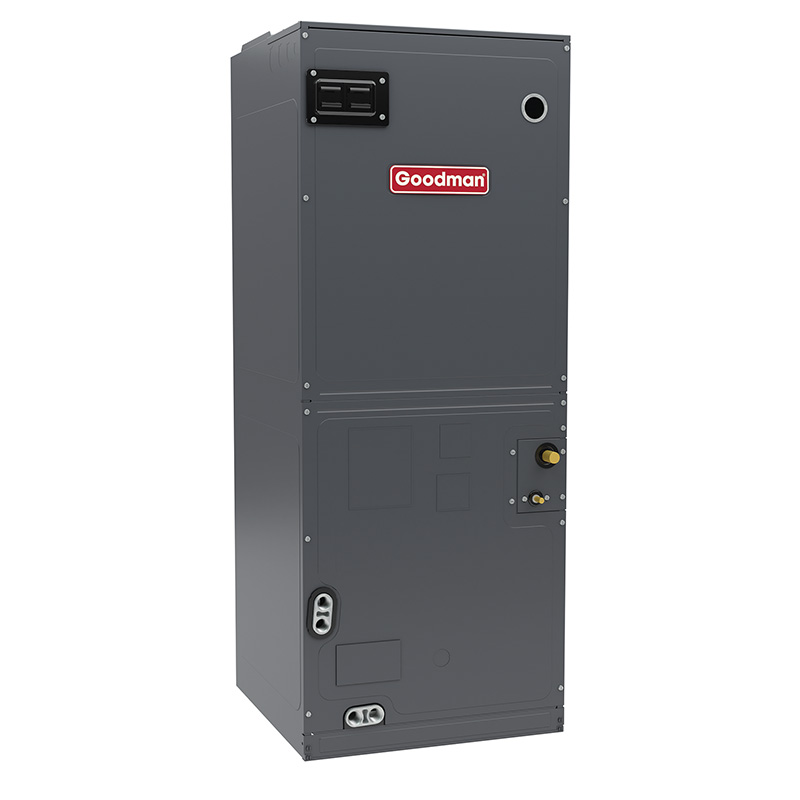
This is a cooling-only condensing unit, so it requires a compatible air handler and evaporator coil to function. You will need to purchase those components separately or confirm they are already installed in your home. Make sure any coil and air handler you pair with this unit are rated for R-32 refrigerant.
What does the two-stage compressor actually do for comfort compared to a single-stage unit?
A single-stage compressor runs at full blast or not at all. The two-stage compressor in this unit runs at a lower capacity during less demanding conditions, which means longer, gentler cycles that pull more moisture out of the air and keep temperatures more consistent. You will typically notice lower humidity indoors and fewer of the sharp temperature swings common with single-stage systems.
My technician is not R-32 certified. Can they still install or service this unit?
No. R-32 requires specific EPA Section 608 certification that covers the handling of A2L refrigerants, and not all technicians have completed that training yet. Before booking an installer for this unit, confirm they hold the appropriate R-32 or A2L certification. Skipping this step creates both a legal and a safety risk.
What are the most common repair calls owners of Goodman units report, and what do they cost?
The most frequently reported failure is the dual-run capacitor, which typically runs 300 to 600 dollars to diagnose and replace and is a straightforward repair. Evaporator coil leaks show up in a meaningful share of owner accounts and cost significantly more to address. A small number of owners also report refrigerant leaks in the first year, which are usually linked to how the system was installed or charged.
How does Goodman's warranty compare to premium brands on a unit like this?
Goodman offers competitive warranty terms, but the coverage is contingent on timely registration after installation. If you miss the registration window, coverage typically drops to a shorter baseline period. Read the warranty documentation before your installer leaves and register the unit promptly. Premium brands like Carrier and Trane offer broadly similar coverage structures, though their compressors historically last longer in practice.
Specifications
| Cooling capacity | 2 Ton |
| Efficiency | 18 SEER2 |
| Refrigerant | R-32 |