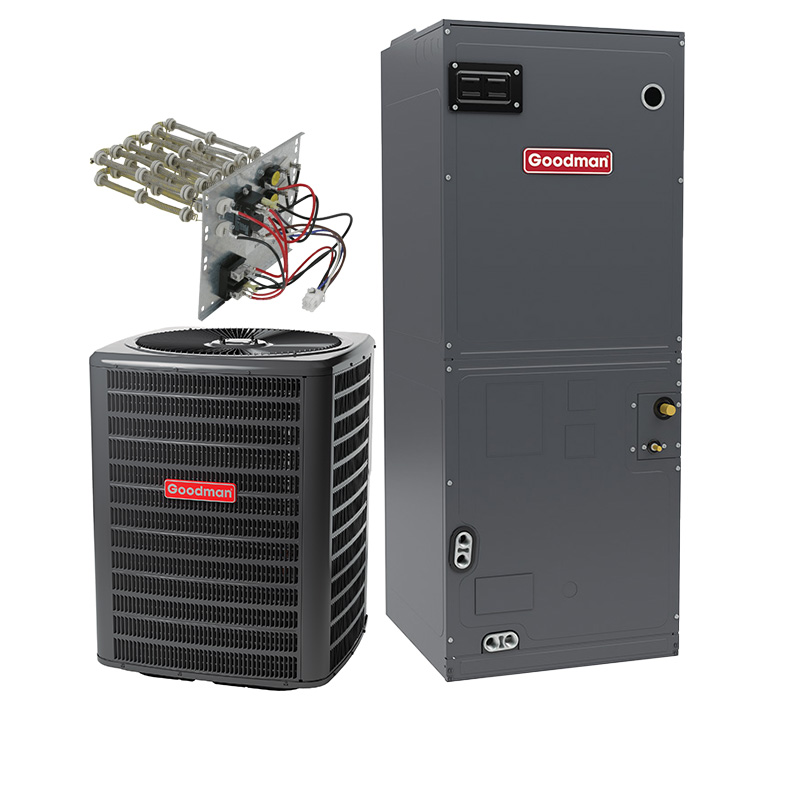
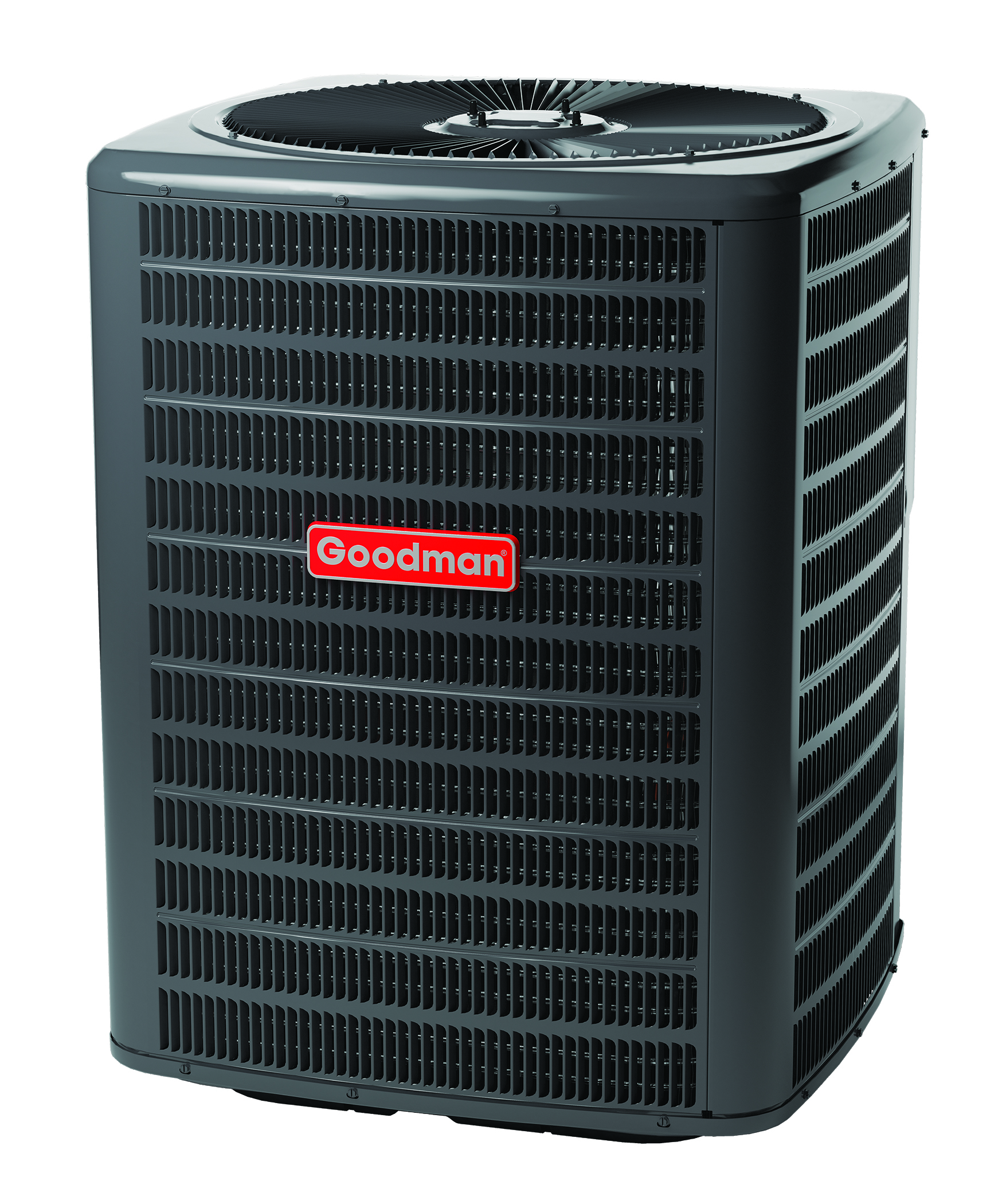
Goodman 2 Ton 18 SEER2 R32 High-Efficiency Two Stage Heat Pump System
View on AC Direct see your lowest price →Check current price on AC Direct →
Key features
- 18 SEER2 high-efficiency rating, qualifying for federal energy tax credits under current IRA thresholds
- Two-stage compressor operates at reduced capacity most of the time for better humidity control and lower cycling wear
- R-32 refrigerant with lower global warming potential than R-410A and improved energy density
- 2-ton capacity suited to smaller well-insulated homes, subject to a proper Manual J load calculation
- Goodman factory warranty covers parts and compressor; 10-year coverage requires registration within 60 days of install
- Priced approximately 15 to 25 percent below comparable Trane, Lennox, and Carrier two-stage heat pump systems
About this system
The Goodman 2-ton 18 SEER2 two-stage heat pump is aimed at homeowners who want a meaningful efficiency upgrade over a baseline system without paying premium-brand prices. At 18 SEER2, this unit sits comfortably in the high-efficiency tier, qualifying for federal energy tax credits and delivering real-world savings over 14-16 SEER2 equipment, particularly in climates with long cooling seasons or moderate winters where a heat pump handles most of the heating load. Two-stage operation means the compressor runs at a lower capacity the majority of the time, which improves humidity control, reduces temperature swings, and cuts compressor cycling wear compared to single-stage units.
The switch to R-32 refrigerant is worth noting. R-32 has a lower global warming potential than the R-410A it replaces, and its higher energy density can support slightly better real-world efficiency. It does require technicians who are current on R-32 handling procedures, so confirming your installer is trained and equipped for R-32 before booking is a practical step. At 2 tons, this system suits well-insulated homes roughly in the 900 to 1,400 square foot range, though a proper Manual J load calculation by your installer should always determine the final sizing. Oversizing is a common and costly mistake that no SEER2 rating can fix.
This system delivers genuine high-efficiency two-stage performance at a price point that makes the jump from baseline equipment accessible for budget-conscious homeowners. The trade-off is a brand reliability record that lags premium competitors, with a compressor lifespan that averages 10 to 14 years versus 15 to 20 for top-tier brands. If installation quality is excellent and you stay on top of maintenance, it is a reasonable buy; if installer vetting is not possible, the savings over a premium brand narrow considerably.
Overall score is the average of the five ratings above.
What we like
- 18 SEER2 efficiency is a genuine tier above baseline systems and supports tax credit eligibility
- Two-stage operation improves comfort and humidity control compared to single-stage alternatives
- R-32 refrigerant is lower-impact and future-oriented as R-410A is phased out
- Significantly lower upfront cost than Carrier, Trane, or Lennox two-stage equivalents
- Widely stocked by distributors, so parts availability and repair turnaround are generally fast
Trade-offs
- Compressor lifespan averages 10 to 14 years, noticeably shorter than the 15 to 20 years typical of premium brands
- Dual-run capacitor failures are the most commonly reported issue and begin appearing after year 5 to 7, adding to long-term cost of ownership
- A documented share of owners report evaporator coil leaks, and a smaller group report refrigerant issues in the first year that are often tied to install quality
- ConsumerAffairs reviews average around 2.5 out of 5, with recurring complaints about repair costs climbing after year 7, suggesting budgeting for service contracts is prudent
What homeowners and pros say about Goodman
Homeowners who leave reviews on ConsumerAffairs give Goodman equipment an average of about 2.5 out of 5, which reflects that platform’s heavy skew toward people who had problems. The recurring theme is not early failure but rather repair costs that begin climbing after roughly year 7, particularly around parts like capacitors and coils. Google dealer reviews paint a more balanced picture, averaging around 3.8 out of 5 across a range of locations, where affordability and accessibility of parts are the most common reasons buyers say they would buy Goodman again. Neither number is fabricated praise.
HVAC technicians who work on Goodman units regularly point to dual-run capacitors as the brand’s most predictable failure point, a repair that usually runs 300 to 600 dollars and is straightforward enough that it rarely becomes a serious hardship. Evaporator coil leaks appear more often in Goodman owner feedback than with premium brands, and compressor longevity averaging 10 to 14 years is a documented gap compared to the 15 to 20 years more commonly seen with Carrier, Trane, and Lennox equipment. A minority of owners also report refrigerant issues in the first year, a pattern that installers generally attribute to charging or brazing errors at the time of install rather than factory defects. For this specific two-stage R-32 unit, those realities hold: the efficiency specs are real and the price advantage is real, but the ownership cost picture over a 15-year horizon is less favorable than the sticker price alone suggests.
Sources: ConsumerAffairs Goodman owner reviews, AHRI Directory of Certified Product Performance, U.S. DOE appliance and equipment efficiency standards, Goodman product specification sheets.
What it costs to run
At 18 SEER2, cooling this 2-ton system for a typical 1200-hour cooling season at the U.S. average electricity rate of $0.17/kWh works out to roughly $272 per year in cooling, about $93 less per year than a minimum-efficiency 13.4 SEER2 unit of the same size. Your real cost depends on your climate and local rate.
Method: (24,000 BTU/hr ÷ 18 SEER2) × 1200 hours ÷ 1000 × $0.17/kWh. Rate source: U.S. EIA average; cooling hours: moderate-climate estimate.
How it compares
| Brand | Comparable model | SEER2 | Stage | Price position |
|---|---|---|---|---|
| Goodman | 2-Ton 18 SEER2 R-32 Two-Stage Heat Pump System | 18 | Two-stage | Value pick |
| Carrier | Performance Series (24PAA / 25PPA) Two-Stage Heat Pump | 17-18 | Two-stage | Typically 15 to 25 percent more than Goodman |
| Trane | XR18 Two-Stage Heat Pump | 18 | Two-stage | Typically 15 to 25 percent more than Goodman |
| Lennox | Merit Series (HP17) Two-Stage Heat Pump | 17-18 | Two-stage | Typically 15 to 25 percent more than Goodman |
Competitor rows are comparable single-stage units at similar efficiency; price is relative position, not a quote.
Questions about this system
Does this heat pump work as the primary heat source in cold climates, or do I need a backup furnace?
Most heat pumps at this efficiency tier perform well down to around 25 to 30 degrees Fahrenheit before efficiency drops significantly, and they typically have a lockout point where auxiliary or emergency heat takes over. In climates with sustained temperatures below 20 degrees Fahrenheit, pairing this unit with a gas furnace in a dual-fuel setup is worth discussing with your installer. For mild to moderate winter climates, it can handle most of the heating load on its own.
What does switching to R-32 actually mean for me as a homeowner?
R-32 is mildly flammable, which means technicians need specific training and equipment to service it safely. For the average homeowner the day-to-day experience is no different, but you should confirm your HVAC contractor is R-32 certified before scheduling any work. Parts and refrigerant are increasingly available as R-32 becomes the industry standard.
How important is installation quality for a Goodman system specifically?
HVAC technicians consistently cite installation quality as the single biggest factor in how long a Goodman unit lasts. Issues like incorrect refrigerant charge, poor brazing, or improper airflow setup are linked to the early refrigerant leak reports and reduced efficiency that some owners experience. Investing in a well-reviewed, experienced installer matters more with this brand than with premium alternatives that carry more engineering margin.
What are the most likely repair costs I should budget for over the life of this system?
Dual-run capacitor failure is the most commonly reported issue and typically costs between 300 and 600 dollars to fix. Evaporator coil leaks show up in a meaningful share of owner reviews and are more expensive to address. Compressors average 10 to 14 years on this brand, so budgeting for a possible compressor replacement or full system replacement earlier than a premium brand owner might is realistic.
Do I need to register the unit to get the full 10-year warranty, and what does the warranty actually cover?
Yes, Goodman requires product registration within 60 days of installation to activate the full 10-year parts and compressor warranty. If you miss that window, coverage typically drops to a shorter term. The warranty covers parts and the compressor but does not cover labor, refrigerant, or consequential costs, so factor those potential out-of-pocket expenses into your decision.
Specifications
| Cooling capacity | 2 Ton |
| Efficiency | 18 SEER2 |
| Refrigerant | R-32 |