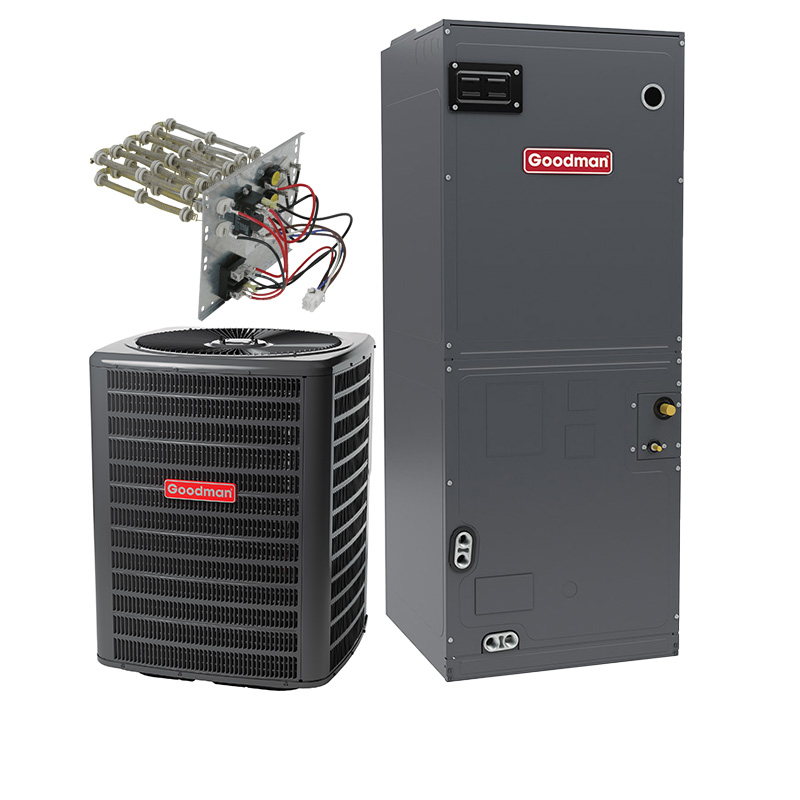
Goodman 2 Ton 18 SEER2 R32 Two Stage Cooling Only System With Electric Heat
View on AC Direct see your lowest price →Check current price on AC Direct →
Key features
- 18 SEER2 efficiency rating, well above current federal minimums
- Two-stage compressor runs at partial capacity most of the time for steadier temperatures and better dehumidification
- R-32 refrigerant with lower global warming potential than legacy R-410A
- 2-ton capacity suited to smaller homes, additions, or condos roughly 700 to 1,000 square feet
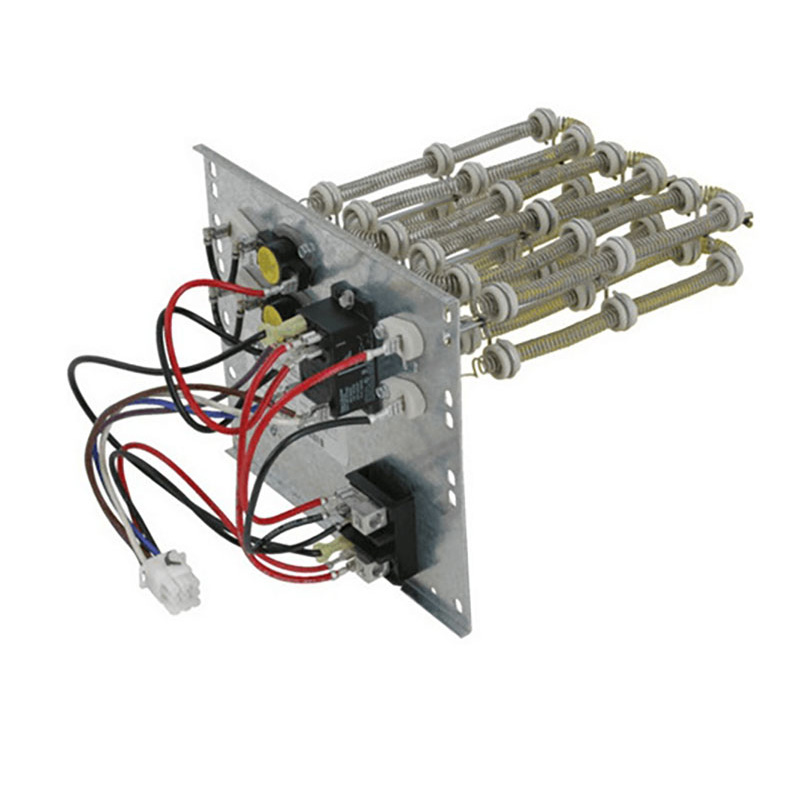
- Electric heat strips integrated into the air handler for supplemental or primary heating
- Cooling-only outdoor unit design, not a heat pump, suited to mild-winter climates
About this system
The Goodman 2 Ton 18 SEER2 Two-Stage Cooling Only System with Electric Heat is built for smaller homes, condos, and additions in the 700 to 1,000 square foot range that need efficient summer cooling paired with electric strip heat for shoulder-season or supplemental warming. The 18 SEER2 rating places it firmly in the high-efficiency tier, meaningfully above the federal minimums that hover around 14 to 15 SEER2 depending on region, so monthly utility bills will reflect real savings versus a baseline unit. Two-stage cooling is the standout operational feature: the compressor runs at a lower capacity the majority of the time, cycling less aggressively, maintaining steadier indoor temperatures, and doing a better job pulling humidity out of the air than a single-stage unit that simply blasts on at full capacity and shuts off.
The switch to R-32 refrigerant is worth noting for buyers planning a long-term ownership horizon. R-32 has a significantly lower global warming potential than the R-410A found in most existing residential equipment, and it is the direction the industry is heading. Servicing will require technicians certified and equipped for R-32 work, so confirming that availability in your area before purchasing is a practical step. This is a cooling-only outdoor unit paired with an air handler that includes electric heat strips, meaning it is not a heat pump and will not extract heat from outdoor air. In climates where winters are mild and electric rates are reasonable, that is a perfectly sensible configuration; in colder climates with high electricity costs, a heat pump system would likely be the more economical choice.
This Goodman system delivers genuinely high efficiency and two-stage comfort at a price point that undercuts comparable Carrier, Trane, and Lennox equipment by 15 to 25 percent. The trade-off is a compressor lifespan that averages 10 to 14 years versus 15 to 20 for premium brands, and a reliability record that leans heavily on the quality of the installing technician. For budget-conscious buyers who vet their installer carefully and can absorb a capacitor replacement or two along the way, the value case is solid.
Overall score is the average of the five ratings above.
What we like
- 18 SEER2 efficiency delivers real monthly utility savings over baseline equipment
- Two-stage operation improves humidity control and temperature consistency versus single-stage units
- Priced 15 to 25 percent below Carrier, Trane, and Lennox equivalents, lowering the total project cost
- R-32 refrigerant positions the system well for long-term regulatory compliance
- Dual-run capacitor failures, the most common documented issue, are typically a quick low-cost repair in the $300 to $600 range
Trade-offs
- Compressor lifespan averages 10 to 14 years, shorter than the 15 to 20 years reported for premium-brand compressors
- Evaporator coil leaks appear in a meaningful share of owner reviews, a potential mid-life repair cost
- A minority of owners report refrigerant leaks in the first year, typically tied to install or charge quality rather than the unit itself
- R-32 servicing requires specifically certified and equipped technicians, which may limit your pool of service providers in some markets
What homeowners and pros say about Goodman
Homeowners who choose Goodman most often point to price as the deciding factor, and the Google dealer review score of around 3.8 out of 5 suggests that when installation goes well, satisfaction follows. The affordability praise is consistent across locations, and many owners describe years of trouble-free operation. The picture shifts on ConsumerAffairs, where Goodman sits at roughly 2.5 out of 5, a platform that skews toward people motivated enough by a bad experience to write a review. The recurring theme in those lower ratings is repair costs climbing after year 7, which lines up with the documented compressor lifespan of 10 to 14 years compared to 15 to 20 for premium brands.
HVAC technicians who work on Goodman equipment regularly emphasize that install quality is the single biggest variable in how long any of these systems lasts. The most commonly documented failure mode is the dual-run capacitor, which technicians describe as a quick, low-cost fix, typically in the $300 to $600 range, and not a reason to avoid the brand. More consequential are evaporator coil leaks, which show up in a meaningful share of owner reviews and represent a more significant mid-life repair. A smaller minority of owners report refrigerant leaks within the first year, which technicians attribute more to charge and installation issues than to the unit itself. For this specific R-32 system, confirming your installer has R-32 experience is particularly important, since improper handling of that refrigerant can turn a strong-value purchase into an early headache.
Sources: ConsumerAffairs Goodman owner reviews, AHRI Directory of Certified Product Performance, U.S. DOE appliance and equipment efficiency standards, Goodman product specification sheets.
What it costs to run
At 18 SEER2, cooling this 2-ton system for a typical 1200-hour cooling season at the U.S. average electricity rate of $0.17/kWh works out to roughly $272 per year in cooling, about $93 less per year than a minimum-efficiency 13.4 SEER2 unit of the same size. Your real cost depends on your climate and local rate.
Method: (24,000 BTU/hr ÷ 18 SEER2) × 1200 hours ÷ 1000 × $0.17/kWh. Rate source: U.S. EIA average; cooling hours: moderate-climate estimate.
How it compares
| Brand | Comparable model | SEER2 | Stage | Price position |
|---|---|---|---|---|
| Goodman | 2 Ton 18 SEER2 R-32 Two-Stage Cooling Only with Electric Heat | 18 | Two-stage | Value pick |
| Carrier | Comfort 18 Series (24ACC6) | 18 | Single-stage | Typically 15 to 25 percent more than this Goodman system |
| Trane | XR18 | 18 | Two-stage | Typically 15 to 25 percent more than this Goodman system |
| Lennox | Merit ML18XC2 | 18 | Two-stage | Typically 15 to 25 percent more than this Goodman system |
Competitor rows are comparable single-stage units at similar efficiency; price is relative position, not a quote.
Questions about this system
Does this system include both the outdoor condenser and the indoor air handler, or do I need to buy them separately?
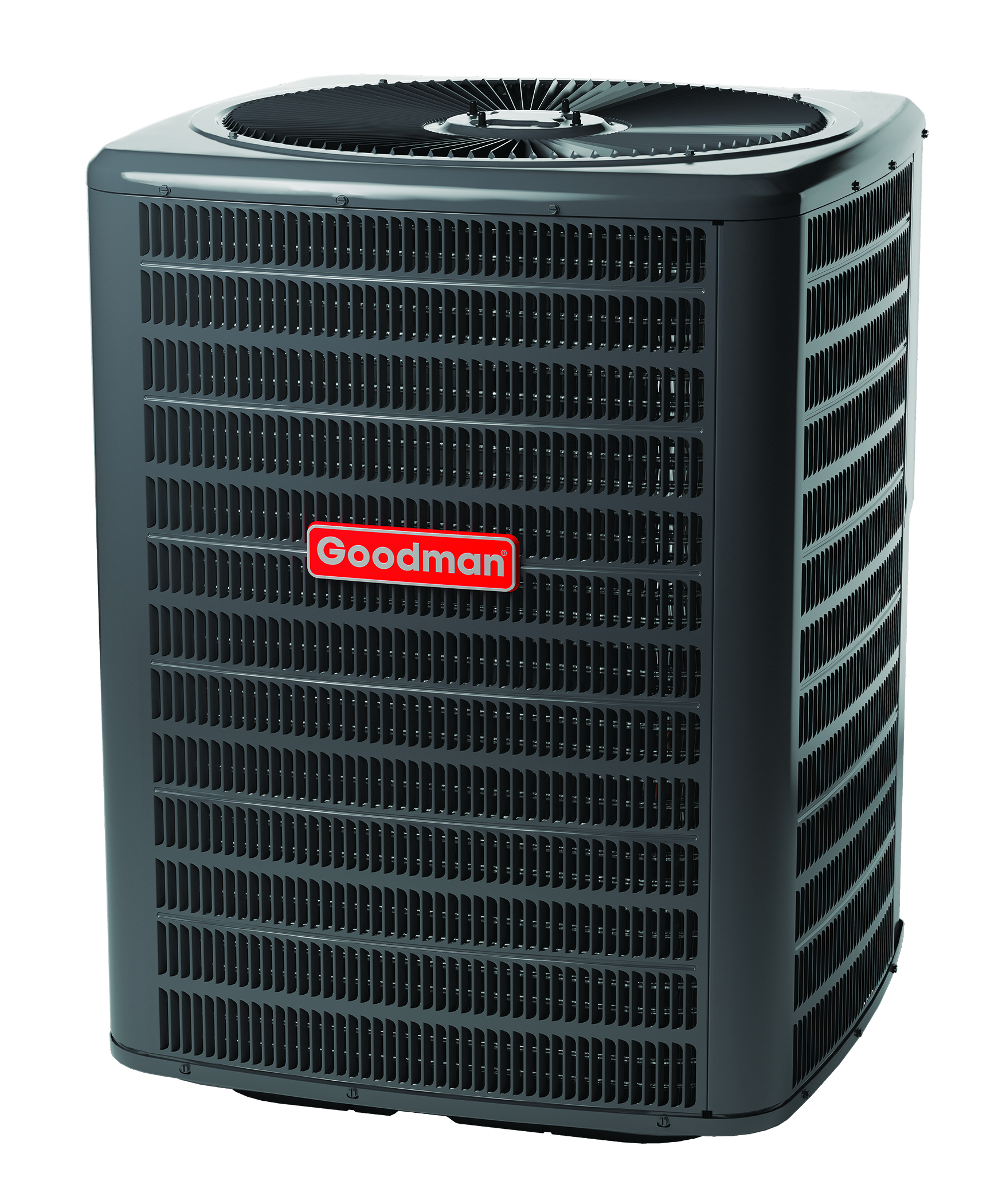
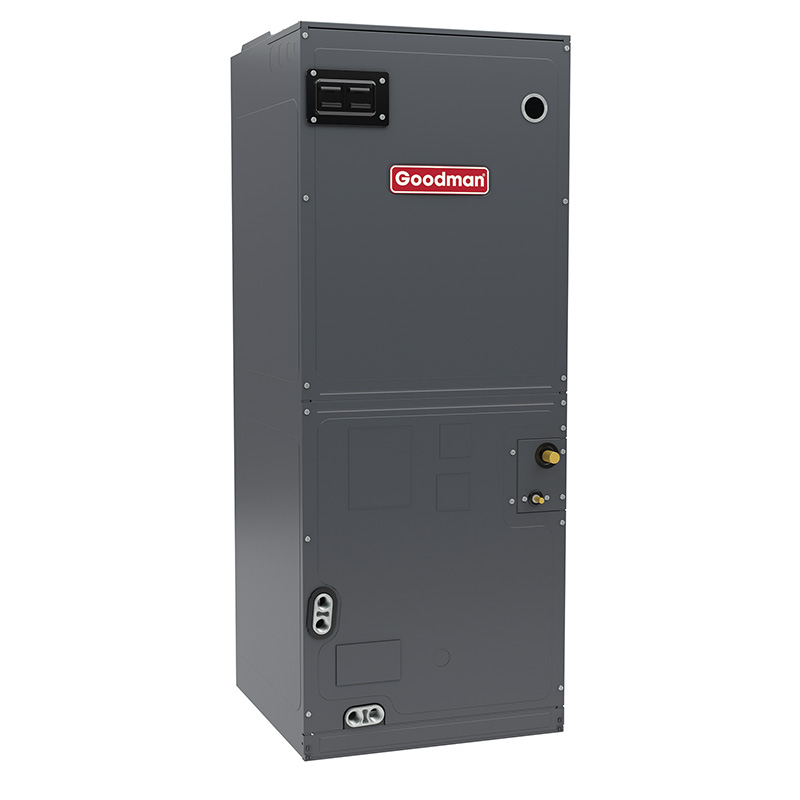
This is sold as a system, meaning it includes the matched outdoor condensing unit and the indoor air handler with electric heat strips. Confirm with the seller exactly which components are included in the specific SKU before ordering, since air handler and coil matching matters for achieving the rated efficiency.
Will my current HVAC technician be able to service an R-32 system?
Not automatically. R-32 requires technicians who are certified and equipped specifically for that refrigerant, including different handling procedures and compatible tools. Before buying, verify that at least one or two service providers in your area are already working with R-32 equipment.
Is two-stage cooling actually worth it over a single-stage unit at this size?
At 2 tons, two-stage operation helps avoid the short-cycling that can plague a single-stage unit in a smaller space, and it runs at low stage the majority of the time, which improves humidity removal and keeps temperatures more even. For humid climates especially, the comfort difference is noticeable and the efficiency gain is real.
What is the most likely repair I should budget for over the first ten years?
Based on documented owner experience with Goodman equipment, the dual-run capacitor is the most commonly reported failure point, typically an inexpensive fix in the $300 to $600 range. Evaporator coil leaks are a secondary concern that appears in a meaningful share of reviews and can be a more significant repair cost.
This is listed as cooling only with electric heat. Why would I choose this over a heat pump that also does both?
In mild-winter climates where heating loads are light and electricity rates are moderate, a cooling-only system with electric strip heat is simpler, less expensive upfront, and has fewer mechanical components than a heat pump. If you rely heavily on heating or live where temperatures regularly drop below freezing, a heat pump system would likely cost less to operate over time.
Specifications
| Cooling capacity | 2 Ton |
| Efficiency | 18 SEER2 |
| Refrigerant | R-32 |