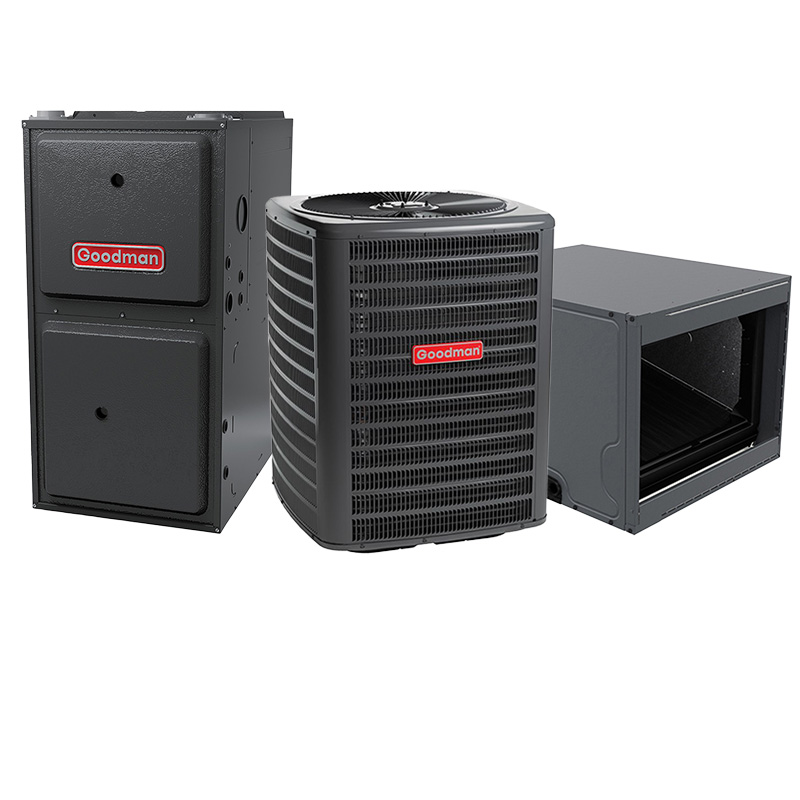
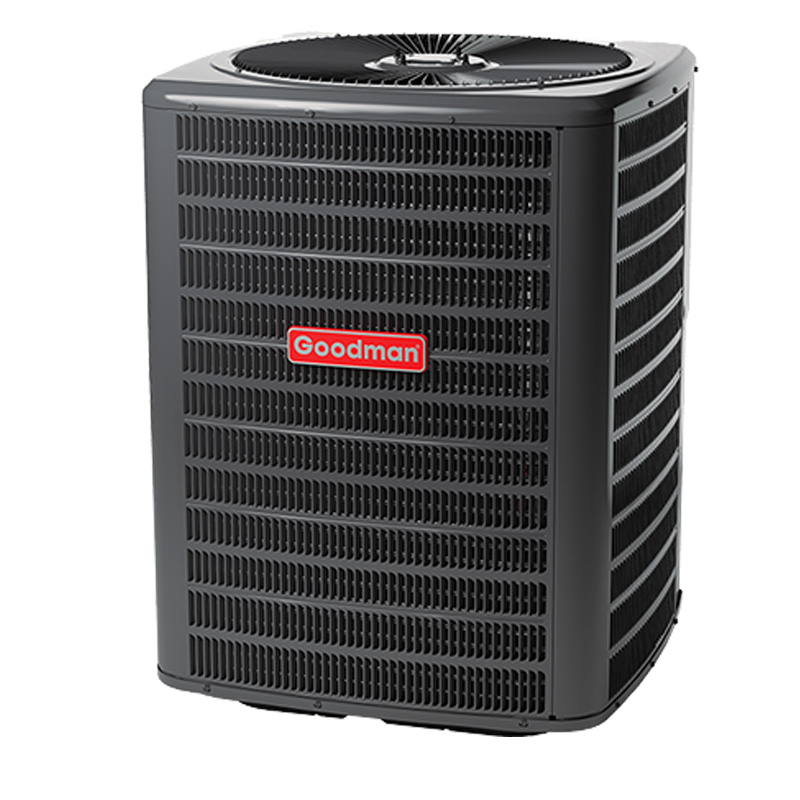
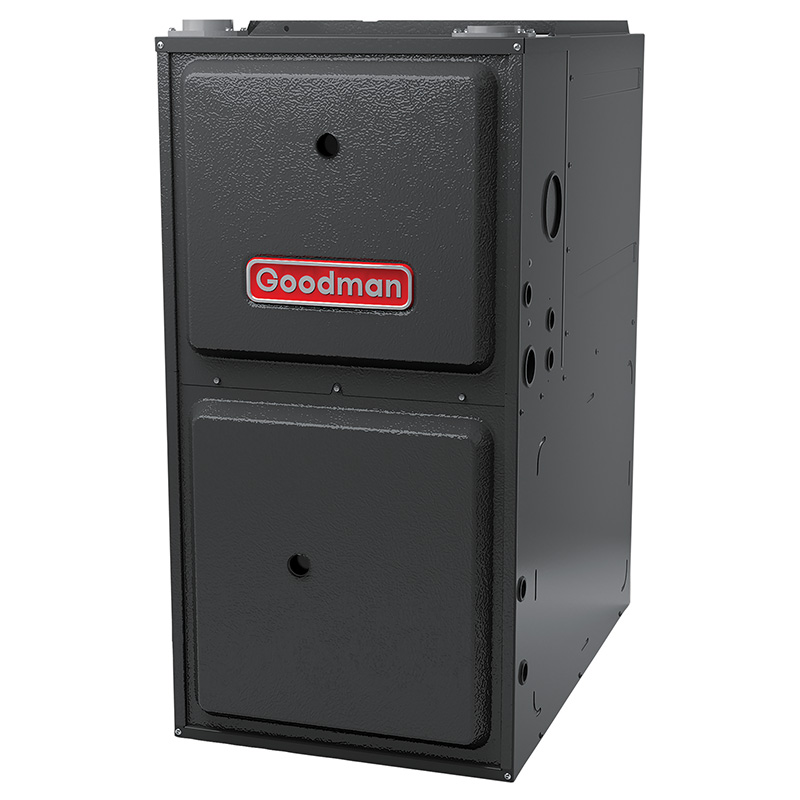
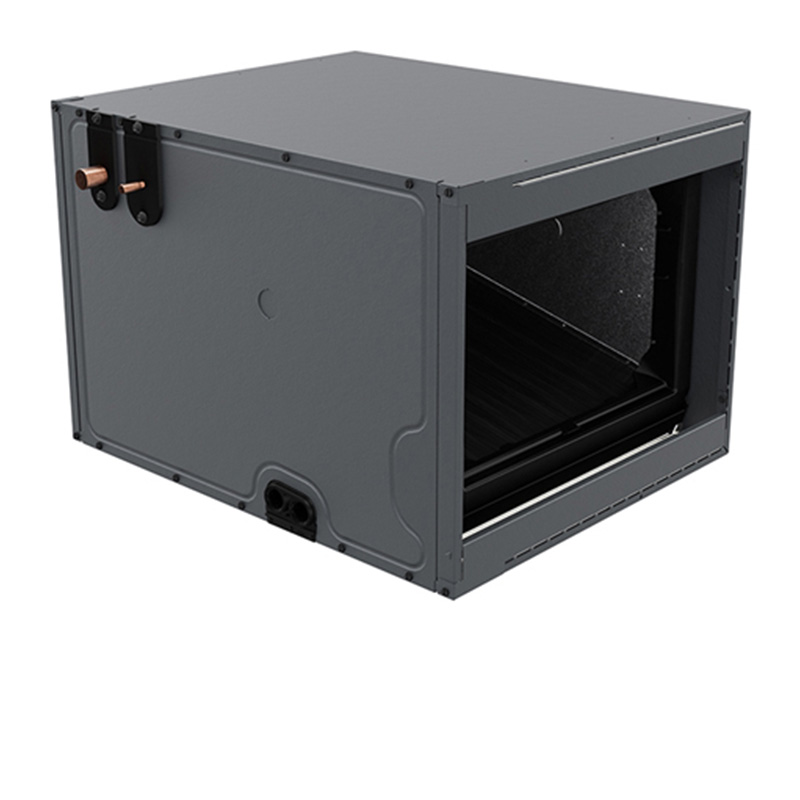
Goodman 2 Ton 15.2 SEER2 R32 AC System with 40,000 BTU 96% AFUE Gas Furnace – California & Colorado Ultra Low NOx, Horizontal, Multi-Speed ECM
View on AC Direct see your lowest price →Check current price on AC Direct →
Key features
- 15.2 SEER2 efficiency rating meets federal minimums with room above baseline
- 96% AFUE gas furnace reduces heat loss to only 4 cents per dollar of fuel burned
- R-32 refrigerant with lower global warming potential than R-410A
- Horizontal configuration designed for attics, crawlspaces, and side-mount installations
- California and Colorado Ultra Low NOx certified for high-restriction emissions markets
- Multi-speed ECM blower motor lowers fan electricity use and smooths airflow delivery
About this system
The Goodman 2-ton 15.2 SEER2 R-32 air conditioner paired with a 40,000 BTU 96% AFUE gas furnace is a budget-conscious ducted split system aimed at smaller homes and conditioned spaces in the 700-to-1,000 square foot range, depending on local climate and insulation. The 15.2 SEER2 rating clears the federal minimum efficiency threshold and qualifies as a meaningful step above baseline, though it stops short of the 16+ SEER2 tier where energy savings start compounding more noticeably over time. The 96% AFUE furnace is a genuine high-efficiency unit that converts 96 cents of every dollar of gas into usable heat, making it well suited for heating-heavy climates where fuel costs dominate annual utility bills.
This particular configuration is built for horizontal installation, which means the furnace is designed to sit on its side in a crawlspace, attic, or tight utility closet rather than standing upright. That limits its placement flexibility compared to a multi-position or upflow unit, so confirming your existing ductwork layout before purchasing is essential. The system uses R-32 refrigerant, a lower global-warming-potential option compared to R-410A, and meets California and Colorado Ultra Low NOx combustion standards, making it compliant in two of the strictest emissions-regulation states in the country. The multi-speed ECM blower motor improves airflow consistency and reduces electricity draw during fan operation compared to a standard PSC motor, adding a quiet comfort benefit without the price premium of a fully variable-speed system.
This Goodman bundle delivers solid core specs at a price point that is hard to ignore for budget-conscious buyers in smaller homes, especially in states where Ultra Low NOx compliance narrows the field of eligible equipment. The trade-off is a brand track record that shows real vulnerability after year seven and compressor longevity that trails premium competitors by several years. If you go in with realistic expectations and a qualified installer, this system can perform well; if you cut corners on installation or skip a maintenance plan, the documented failure modes are not theoretical.
Overall score is the average of the five ratings above.
What we like
- Purchase price typically runs 15 to 25 percent below comparable Carrier, Trane, and Lennox systems
- 96% AFUE furnace is genuinely high-efficiency and delivers meaningful annual gas savings
- R-32 refrigerant compliance future-proofs the system as R-410A is phased out
- Ultra Low NOx certification satisfies California and Colorado regulatory requirements out of the box
- ECM blower motor reduces operating noise and fan-mode electricity costs compared to PSC motors
Trade-offs
- Compressor lifespan averages 10 to 14 years versus 15 to 20 years for premium-brand compressors
- Evaporator coil leaks appear in a meaningful share of owner reports and can be costly to address
- Dual-run capacitor failures are the most commonly documented issue and recur after year seven
- Horizontal-only configuration limits where this system can be installed and rules out upflow or downflow applications
What homeowners and pros say about Goodman
Homeowners who choose Goodman tend to cite the upfront cost savings as the primary reason, and the Google dealer review average of around 3.8 out of 5 across hundreds of reviews reflects a base of satisfied buyers who got functional, affordable equipment. The praise is almost always about price, not about standout performance or reliability. The ConsumerAffairs score tells a different story, sitting at roughly 2.5 out of 5, though that platform skews heavily toward people who experienced problems rather than owners who had uneventful service. Reading across both channels, the honest picture is a system that works reasonably well in the early years and then tends to generate repair calls as it ages past seven years, with dual-run capacitor failures being the most documented nuisance and evaporator coil leaks representing the more consequential risk.
HVAC technicians who work on Goodman equipment regularly point out that the brand’s reputation is inseparable from installation quality. A clean, properly charged system with good airflow and correctly sized ductwork will outperform a premium brand that was carelessly installed. For this specific horizontal system, that point is amplified because attic and crawlspace installs are physically harder to execute well, which raises the stakes for choosing an experienced contractor. The compressor lifespan concern is real: documented averages of 10 to 14 years versus 15 to 20 for premium brands means that if you are planning a long stay in the home, the total cost of ownership gap between Goodman and a higher-tier brand can narrow considerably after the first replacement cycle.
Sources: ConsumerAffairs Goodman owner reviews, AHRI Directory of Certified Product Performance, U.S. DOE appliance and equipment efficiency standards, Goodman product specification sheets.
What it costs to run
At 15.2 SEER2, cooling this 2-ton system for a typical 1200-hour cooling season at the U.S. average electricity rate of $0.17/kWh works out to roughly $322 per year in cooling, about $43 less per year than a minimum-efficiency 13.4 SEER2 unit of the same size. Your real cost depends on your climate and local rate.
Method: (24,000 BTU/hr ÷ 15.2 SEER2) × 1200 hours ÷ 1000 × $0.17/kWh. Rate source: U.S. EIA average; cooling hours: moderate-climate estimate.
How it compares
| Brand | Comparable model | SEER2 | Stage | Price position |
|---|---|---|---|---|
| Goodman | GSZTO / GMVM – R32 Horizontal Bundle (this system) | 15.2 | Single-stage | Value pick |
| Carrier | Comfort 24ACC6 with 58MXA Furnace | 15.2 | Single-stage | Typically 15 to 20 percent higher than this Goodman bundle |
| Trane | XR15 with S9X2 Furnace | 15.2 | Single-stage | Typically 20 to 25 percent higher than this Goodman bundle |
| Lennox | Merit ML15XC1 with ML196UH Furnace | 15.2 | Single-stage | Typically 20 to 25 percent higher than this Goodman bundle |
Competitor rows are comparable single-stage units at similar efficiency; price is relative position, not a quote.
Questions about this system
Can this system be installed in an attic in California?
Yes, the horizontal configuration is specifically designed for attic and crawlspace installations where the furnace must lie on its side. You will still need to verify that your attic meets local code requirements for clearance, access, and condensate drainage before proceeding.
Does the R-32 refrigerant require any special handling or certifications from my installer?
R-32 is classified as mildly flammable (A2L), so technicians working with it need to be aware of safe handling practices and some jurisdictions require specific training or updated equipment. Confirm that your installer is familiar with A2L refrigerants before scheduling work, particularly in enclosed spaces like attics.
What does the Goodman warranty actually cover on this system, and are there conditions?
Goodman typically offers a 10-year parts limited warranty when the system is registered within a set window after installation, and a lifetime heat exchanger warranty on qualifying furnaces. Registration must be completed by the homeowner, and the warranty generally requires installation by a licensed contractor; DIY installation typically voids coverage.
Is 15.2 SEER2 efficient enough to qualify for the federal energy tax credit?
The federal 25C tax credit for central air conditioning requires a minimum of 15.2 SEER2 in the northern climate zone and higher thresholds in the southern zone; this system sits at exactly the northern threshold. Check whether your specific climate zone and installation type meet the current IRS requirements before counting on the credit.
How worried should I be about capacitor failures and coil leaks based on what owners report?
Dual-run capacitor failures are the most frequently documented issue with Goodman equipment and tend to surface after year seven; they are typically a straightforward repair in the 300-to-600-dollar range when caught early. Evaporator coil leaks are less common but more expensive to fix, so enrolling in an annual maintenance agreement that includes coil inspection is a practical way to catch either problem before it becomes a system-down situation.
Specifications
| Cooling capacity | 2 Ton |
| Efficiency | 15.2 SEER2 |
| Furnace output | 40,000 BTU |
| Furnace efficiency | 96% AFUE |
| Configuration | Horizontal |
| Refrigerant | R-32 |