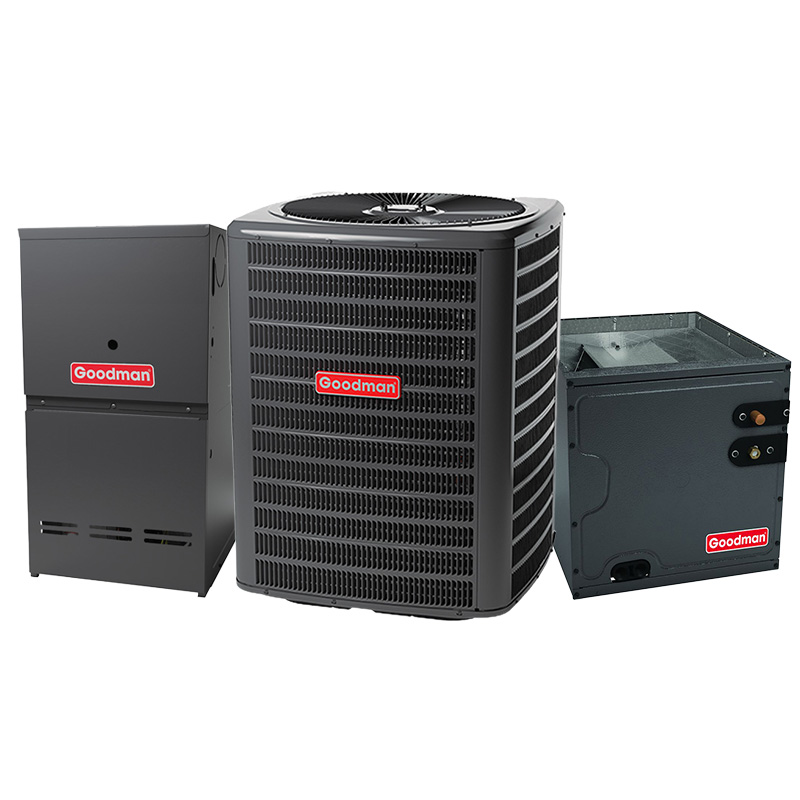
Goodman 2 Ton AC And 40000 BTU 80% AFUE Gas Furnace System | 14.5 SEER2 AC | Multi-Speed ECM Low NOx Furnace | Downflow | R32
View on AC Direct see your lowest price →Check current price on AC Direct →
Key features
- 14.5 SEER2 cooling efficiency meets current federal minimum standards for most U.S. regions
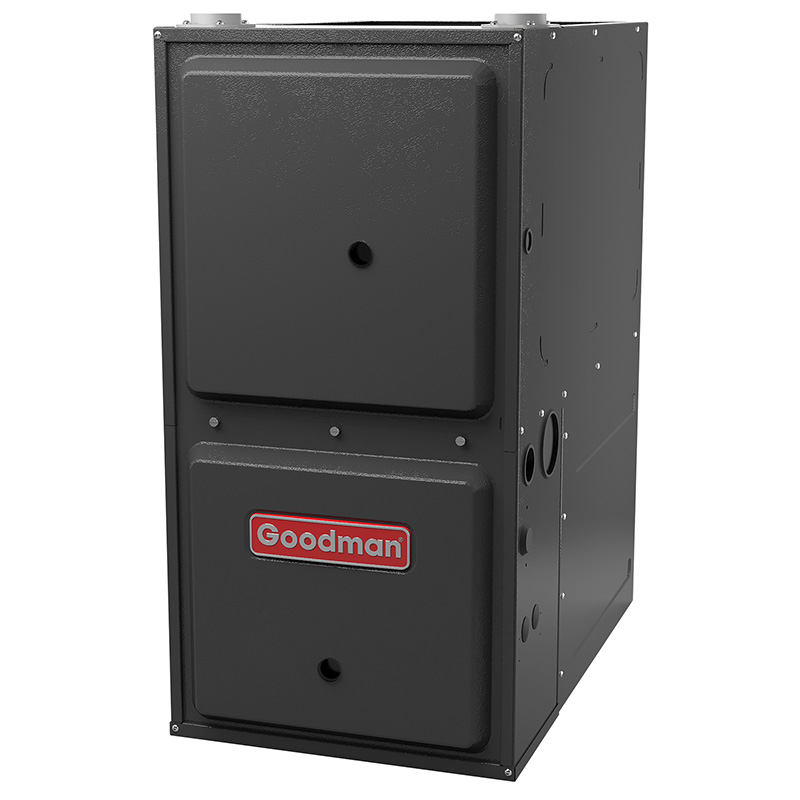
- 40,000 BTU, 80% AFUE single-stage gas furnace in downflow configuration
- Multi-speed ECM blower motor reduces electrical consumption versus standard PSC motors
- Low NOx combustion meets strict California SCAQMD and similar regional emissions rules
- R-32 refrigerant with a lower global-warming potential than the R-410A it replaces
- Goodman's 10-year parts warranty applies when registered within 60 days of installation
About this system
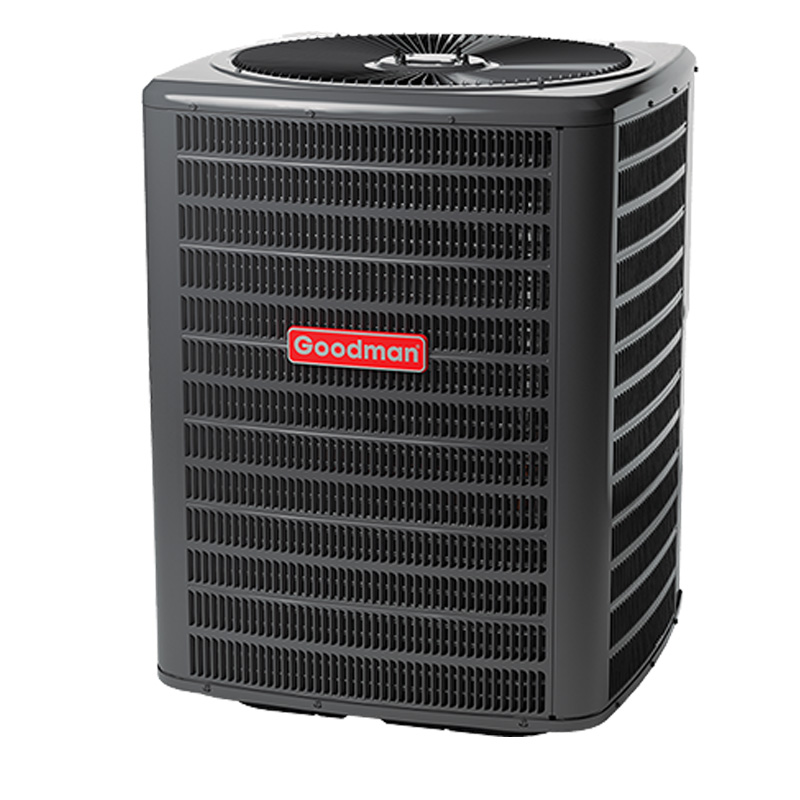
This Goodman bundle pairs a 2-ton, 14.5 SEER2 central air conditioner with a 40,000 BTU, 80% AFUE gas furnace in a downflow configuration, making it a practical fit for homes where the air handler sits in an upper-level closet or attic and supply air flows downward into the living space. The system uses R-32 refrigerant, a lower global-warming-potential option that is becoming more common in residential equipment and requires technicians certified to handle it. At 2 tons, the cooling side is sized for roughly 900 to 1,200 square feet of well-insulated space, though a proper Manual J load calculation should always confirm that before purchase.
The furnace runs a multi-speed ECM blower motor, which uses noticeably less electricity than a standard PSC motor and moves air more quietly at lower demand settings. The Low NOx rating satisfies stricter regional emissions standards, including California’s South Coast Air Quality Management District rules, so this unit opens doors in areas where standard furnaces cannot legally be installed. At 80% AFUE, one-fifth of the fuel energy exits as exhaust, which is standard for a single-stage 80-percent furnace but a step behind 90-plus modulating options if gas costs are a concern. This system suits budget-conscious buyers in moderate climates who want a code-compliant, functional bundle without paying premium-brand prices.
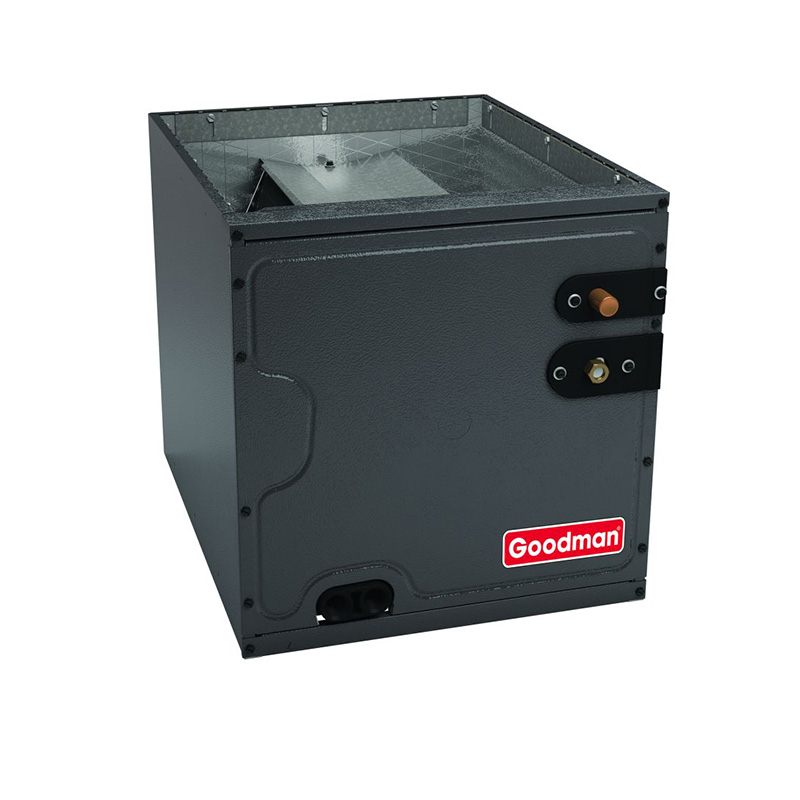
This Goodman bundle delivers a code-compliant, practically spec'd system at a price point that is 15 to 25 percent below comparable Carrier, Trane, and Lennox equipment, making the upfront math attractive. The trade-off is a documented history of capacitor failures, evaporator coil leaks, and compressor lifespans that run shorter than premium competitors, so total cost of ownership over 12 or more years can close that gap. For buyers who want an honest, functional system and are willing to budget for routine maintenance and one or two repairs in the second half of its life, it is a reasonable choice.
Overall score is the average of the five ratings above.
What we like
- Upfront cost runs 15 to 25 percent below Trane, Carrier, and Lennox systems of comparable efficiency
- Multi-speed ECM motor delivers quieter operation and lower blower electricity costs than single-speed alternatives
- Low NOx certification allows installation in California and other strict-emissions jurisdictions where many furnaces are disqualified
- R-32 refrigerant has a lower environmental impact than R-410A and is increasingly supported by service technicians
- 10-year registered parts warranty provides solid coverage for a value-tier brand
Trade-offs
- Dual-run capacitors are the most frequently reported failure point, typically needed within years 5 to 10 at a repair cost of roughly 300 to 600 dollars
- Evaporator coil leaks appear in a meaningful share of owner reports and can be a costly mid-life repair
- Compressor lifespan averages 10 to 14 years versus 15 to 20 years for premium-brand compressors, narrowing long-term cost savings
- A minority of owners report refrigerant leaks in the first year, generally tied to install or initial charge quality rather than the equipment itself
What homeowners and pros say about Goodman
Homeowners who have lived with Goodman equipment land in two fairly distinct camps. Those who had a careful installation and kept up with annual tune-ups often report years of uneventful service and point to the lower purchase price as straightforward savings. The friction typically starts in year 7 and beyond, which aligns with the pattern visible on ConsumerAffairs, where Goodman sits at roughly 2.5 out of 5 stars and repair costs after that window are the recurring complaint. On Google dealer reviews, where ratings skew toward the buying and installation experience rather than long-term ownership, Goodman averages closer to 3.8 out of 5, and affordability is consistently the most cited reason buyers chose the brand.
HVAC technicians tend to view Goodman with tempered respect. They acknowledge it as functional, code-compliant equipment that is straightforward to service, but they are candid about the failure patterns they see in the field. Dual-run capacitors are the most common call they make on Goodman systems, usually a quick fix in the 300 to 600 dollar range but one that happens more predictably than on premium units. Evaporator coil leaks and refrigerant issues also come up with enough frequency that experienced installers flag them as something owners should budget for rather than be surprised by. Compressor longevity averaging 10 to 14 years versus 15 to 20 for top-tier brands is the figure technicians mention most often when a customer asks whether the upfront savings will hold over time. The consensus is that Goodman is a solid choice when the install is done right and expectations are set honestly around the back half of the system’s life.
Sources: ConsumerAffairs Goodman owner reviews, AHRI Directory of Certified Product Performance, U.S. DOE appliance and equipment efficiency standards, Goodman product specification sheets.
What it costs to run
At 14.5 SEER2, cooling this 2-ton system for a typical 1200-hour cooling season at the U.S. average electricity rate of $0.17/kWh works out to roughly $338 per year in cooling, about $27 less per year than a minimum-efficiency 13.4 SEER2 unit of the same size. Your real cost depends on your climate and local rate.
Method: (24,000 BTU/hr ÷ 14.5 SEER2) × 1200 hours ÷ 1000 × $0.17/kWh. Rate source: U.S. EIA average; cooling hours: moderate-climate estimate.
How it compares
| Brand | Comparable model | SEER2 | Stage | Price position |
|---|---|---|---|---|
| Goodman | 2-Ton 14.5 SEER2 AC + 40K BTU 80% AFUE Downflow Bundle | 14.5 | Single-stage | Value pick |
| Carrier | Comfort 14 Series (CA14NA / 58SB) | 14.3-14.5 | Single-stage | Typically 15 to 25 percent more than the Goodman bundle |
| Trane | XR14 / S8X1 Series | 14.3-15.0 | Single-stage | Typically 15 to 25 percent more than the Goodman bundle |
| Lennox | Merit 14ACX / ML180 Series | 14.3-15.0 | Single-stage | Typically 15 to 25 percent more than the Goodman bundle |
Competitor rows are comparable single-stage units at similar efficiency; price is relative position, not a quote.
Questions about this system
Does the downflow configuration mean I cannot install this in a basement or crawlspace setup?
Correct. Downflow furnaces are specifically designed for installations where the unit sits above the living space, such as in an upper-level closet or attic, and pushes conditioned air downward through floor registers. A basement or crawlspace installation typically requires an upflow or horizontal unit, so confirm your duct layout before ordering.
My area requires Low NOx equipment. Does this furnace actually qualify?
Yes. The Low NOx designation on this furnace meets the stricter emissions standards set by the California South Coast Air Quality Management District and similar regional programs. Verify with your local authority having jurisdiction, but this rating is specifically what those rules require.
Will my existing HVAC technician be able to service an R-32 system?
R-32 requires technicians to hold EPA Section 608 certification and use equipment rated for mildly flammable refrigerants, since R-32 has a low but non-zero flammability rating. Most established HVAC companies are equipping for R-32 as the industry transitions, but confirm your service provider has the appropriate tools and training before installation.
How do I make sure the 10-year parts warranty stays valid?
Goodman requires product registration within 60 days of installation to activate the 10-year parts warranty; without registration, coverage defaults to a shorter base period. The installation must also be performed by a licensed HVAC contractor, and keeping records of annual maintenance visits is strongly recommended if a warranty claim arises later.
Given Goodman's reputation for capacitor failures and coil leaks, should I buy an extended warranty or service plan?
It is a reasonable consideration. Capacitor replacements typically run 300 to 600 dollars and are relatively simple fixes, but evaporator coil leaks can cost considerably more and tend to surface in years 6 to 10. A service agreement that covers parts and labor can limit surprise expenses, though you should read the contract carefully to confirm coil and refrigerant work are included.
Specifications
| Cooling capacity | 2 Ton |
| Efficiency | 14.5 SEER2 |
| Furnace output | 40000 BTU |
| Furnace efficiency | 80% AFUE |
| Configuration | Downflow |
| Refrigerant | R-32 |