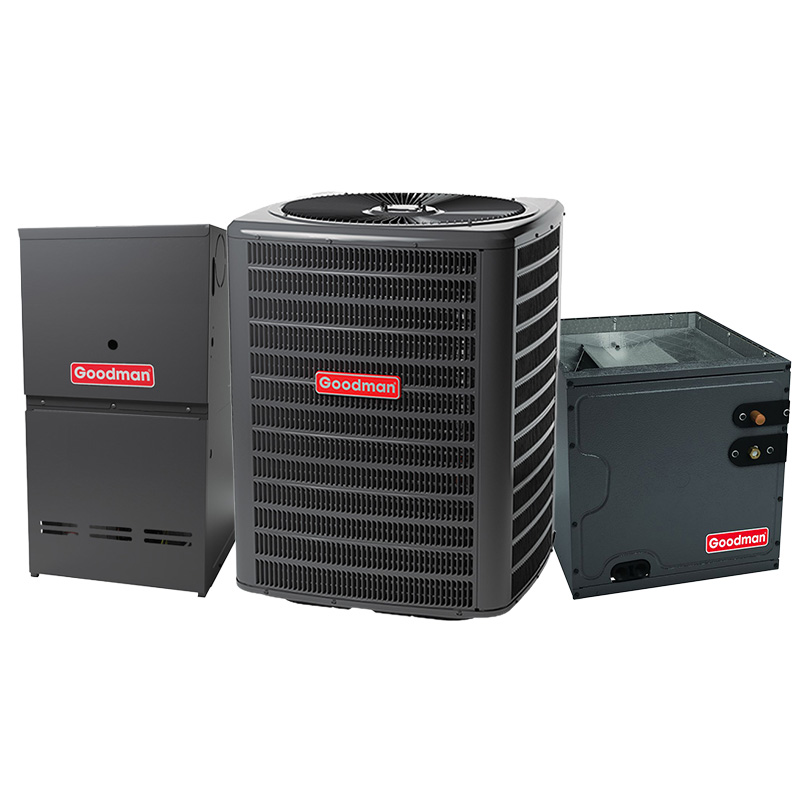
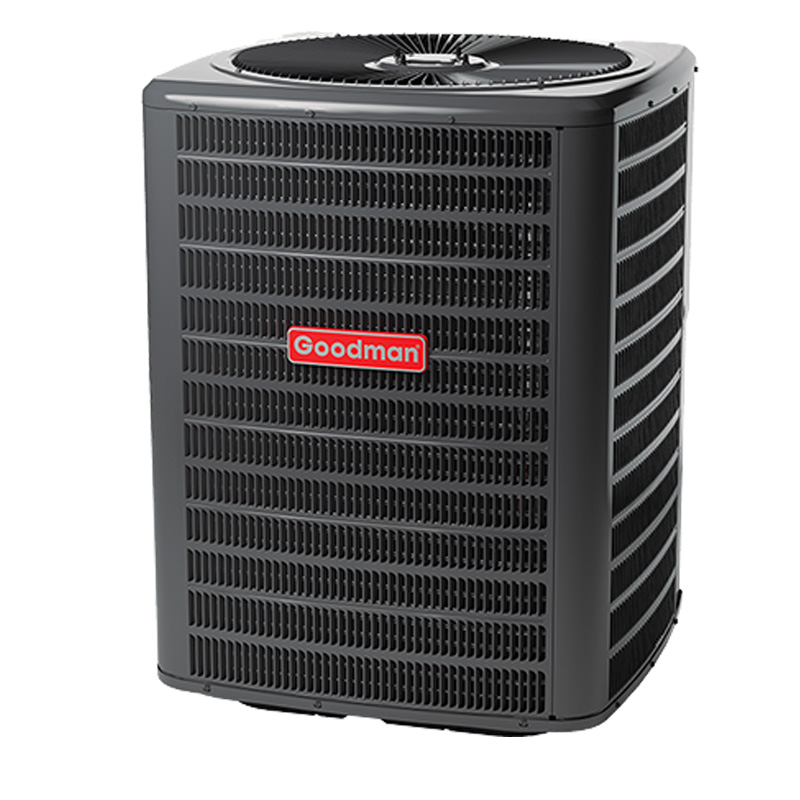
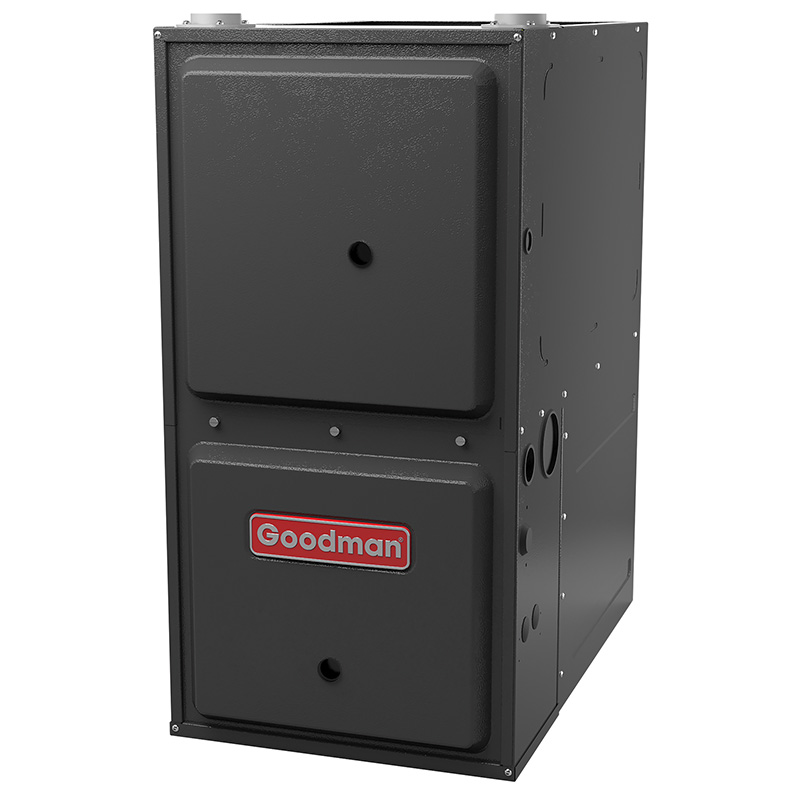
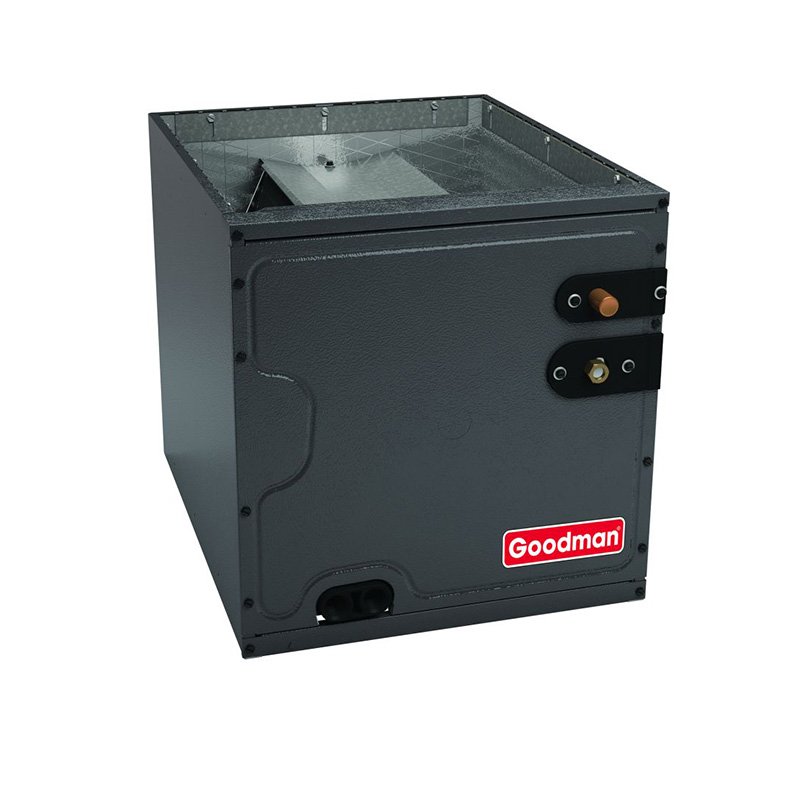
Goodman 2 Ton AC And 40000 BTU 80% AFUE Gas Furnace System | 14.5 SEER2 AC | Multi-Speed ECM Low NOx Furnace | Downflow | R32
View on AC Direct see your lowest price →Check current price on AC Direct →
Key features
- 2-ton cooling capacity with 14.5 SEER2 efficiency rating
- 40,000 BTU 80% AFUE gas furnace with multi-speed ECM blower motor
- Downflow configuration for installations where airflow discharges downward
- R-32 refrigerant, lower global-warming potential than R-410A
- Low NOx burner design reduces nitrogen oxide emissions
- Factory-matched system designed to meet 2023 federal minimum efficiency standards
About this system
This Goodman bundle pairs a 2-ton, 14.5 SEER2 central air conditioner with a 40,000 BTU, 80% AFUE gas furnace in a downflow configuration, making it a natural fit for homes where the air handler sits above the living space and supplies air downward, such as in a closet or utility room on the main floor above a basement. The R-32 refrigerant charge is a meaningful detail: R-32 has a lower global-warming potential than the older R-410A it replaces and is more efficient per unit volume, which is one reason regulators and manufacturers are moving toward it. At 14.5 SEER2, this system meets the federal minimum efficiency standard that took effect in 2023 and will deliver meaningful savings over an older 10 or 12 SEER unit, though it sits at the entry tier rather than the mid or premium efficiency range.
The furnace side runs a multi-speed ECM blower motor, which draws less electricity at lower speeds than a standard PSC motor and does a better job of maintaining even temperatures between heating cycles. The 80% AFUE rating means 80 cents of every dollar of gas becomes heat, with 20 cents lost up the flue. That is code-compliant across most of the country but not eligible for the federal high-efficiency tax credit, which requires 97% AFUE for gas furnaces. This system is well suited to moderate climates, smaller homes under roughly 1,000 square feet in colder regions, or as a budget-conscious replacement where the existing ductwork already accommodates a downflow layout. Buyers who want higher efficiency or longer compressor longevity should consider stepping up to a two-stage or variable-speed system.
This Goodman bundle is a straightforward, entry-level replacement system that delivers adequate efficiency at a price point noticeably below Carrier, Trane, and Lennox equivalents. It gets the job done when installed correctly, but the 80% AFUE furnace limits long-term gas savings, and Goodman's documented track record on compressor and coil longevity is shorter than premium competitors. Buyers who prioritize upfront cost over a 20-year horizon will find it reasonable; those planning to stay in the home long-term should factor in potentially higher repair costs after year 7.
Overall score is the average of the five ratings above.
What we like
- Priced 15 to 25 percent below comparable Carrier, Trane, and Lennox systems
- 14.5 SEER2 meets current federal minimums and improves on aging 10-12 SEER equipment
- ECM multi-speed blower reduces electricity consumption and improves comfort consistency
- R-32 refrigerant is more environmentally responsible than the R-410A it replaces
- Low NOx burner reduces local air-quality emissions, required in some regions
Trade-offs
- 80% AFUE furnace is not eligible for the federal high-efficiency tax credit and leaves 20% of fuel unconverted
- Compressor lifespan averages 10 to 14 years versus 15 to 20 years for premium brands
- Evaporator coil leaks and dual-run capacitor failures are the most commonly reported repair issues
- A minority of owners have reported refrigerant leaks within the first year, often traceable to installation or initial charge quality
What homeowners and pros say about Goodman
Homeowners who choose Goodman most often cite the lower upfront cost as the deciding factor, and that sentiment lines up with the roughly 3.8 out of 5 score Goodman earns across Google dealer reviews, where affordability is the most frequently praised attribute. The picture gets more complicated on ConsumerAffairs, where Goodman averages about 2.5 out of 5, a platform that skews heavily toward people who had problems. The recurring complaint there is repair costs that start to climb after roughly year 7, which tracks with the documented compressor lifespan of 10 to 14 years for Goodman equipment compared to 15 to 20 years typically reported for premium brands. For this 2-ton, 14.5 SEER2 system specifically, the downflow furnace adds a configuration constraint that limits who the system suits, but within that group it is priced to compete.
HVAC technicians who service Goodman equipment regularly point to two failure modes that show up consistently: dual-run capacitor failures, which are common across many brands but well-documented with Goodman and usually resolved for 300 to 600 dollars, and evaporator coil leaks, which require more significant repair work. A smaller group of owners with this refrigerant platform have reported leaks within the first year, and most technicians attribute those to installation errors rather than factory defects. The broader professional consensus is that Goodman sits in an acceptable reliability tier when the system is installed by a skilled contractor who verifies the refrigerant charge and airflow, but that the margin for installation error is thinner than it is with some higher-priced competitors.
Sources: ConsumerAffairs Goodman owner reviews, AHRI Directory of Certified Product Performance, U.S. DOE appliance and equipment efficiency standards, Goodman product specification sheets.
What it costs to run
At 14.5 SEER2, cooling this 2-ton system for a typical 1200-hour cooling season at the U.S. average electricity rate of $0.17/kWh works out to roughly $338 per year in cooling, about $27 less per year than a minimum-efficiency 13.4 SEER2 unit of the same size. Your real cost depends on your climate and local rate.
Method: (24,000 BTU/hr ÷ 14.5 SEER2) × 1200 hours ÷ 1000 × $0.17/kWh. Rate source: U.S. EIA average; cooling hours: moderate-climate estimate.
How it compares
| Brand | Comparable model | SEER2 | Stage | Price position |
|---|---|---|---|---|
| Goodman | GLXS3BA24 + GCVC8 40 series (this system) | 14.5 | Single-stage | Value pick |
| Carrier | Comfort 14 (24ACC4) + 58TP 80% furnace | 14.5 | Single-stage | 15 to 25 percent higher than this system |
| Trane | XR14 (4TTR4) + S8X1 80% furnace | 14.5 | Single-stage | 15 to 25 percent higher than this system |
| Lennox | Merit 14ACX + ML180 80% furnace | 14.3 to 14.5 | Single-stage | 20 to 30 percent higher than this system |
Competitor rows are comparable single-stage units at similar efficiency; price is relative position, not a quote.
Questions about this system
Does this system qualify for the federal energy-efficiency tax credit?
The air conditioner at 14.5 SEER2 meets the minimum efficiency threshold for the federal 25C tax credit in certain configurations, but the gas furnace at 80% AFUE does not qualify. Current law requires 97% AFUE for gas furnaces to be eligible. Check with a tax professional before assuming a credit applies to the full system.
Is R-32 refrigerant harder or more expensive to service than R-410A?
R-32 is widely available and most certified HVAC technicians are already equipped to handle it. It requires the same EPA Section 608 certification as other refrigerants, and recovery equipment needs to be rated for R-32, which most newer recovery machines are. Recharge costs are generally comparable to R-410A today.
What does downflow configuration mean and how do I know if my home uses it?
Downflow means the furnace discharges conditioned air out the bottom and pulls return air in from the top. It is typically used when the air handler is installed in a main-floor closet or utility space and feeds ductwork running under the floor or through a crawlspace. If your current furnace has the supply plenum at the bottom and the return at the top, downflow is your configuration.
What is the most likely repair I will face with this Goodman system and what does it typically cost?
The dual-run capacitor is the most commonly reported failure on Goodman AC units and is usually a quick fix in the 300 to 600 dollar range including labor. Evaporator coil leaks are the second most-cited issue and are more involved, often requiring coil replacement. These failure patterns tend to show up after roughly year 7 based on owner feedback.
Why is install quality so important with Goodman specifically?
Goodman equipment performs and lasts closer to its rated lifespan when the refrigerant charge, airflow, and ductwork connections are done correctly. HVAC technicians consistently note that improper installation, such as an overcharged or undercharged R-32 system, is the source of many early refrigerant leak complaints. Getting a licensed contractor who will pull permits and verify the charge with proper tools matters more here than with some premium brands that have tighter factory tolerances.
Specifications
| Cooling capacity | 2 Ton |
| Efficiency | 14.5 SEER2 |
| Furnace output | 40000 BTU |
| Furnace efficiency | 80% AFUE |
| Configuration | Downflow |
| Refrigerant | R-32 |