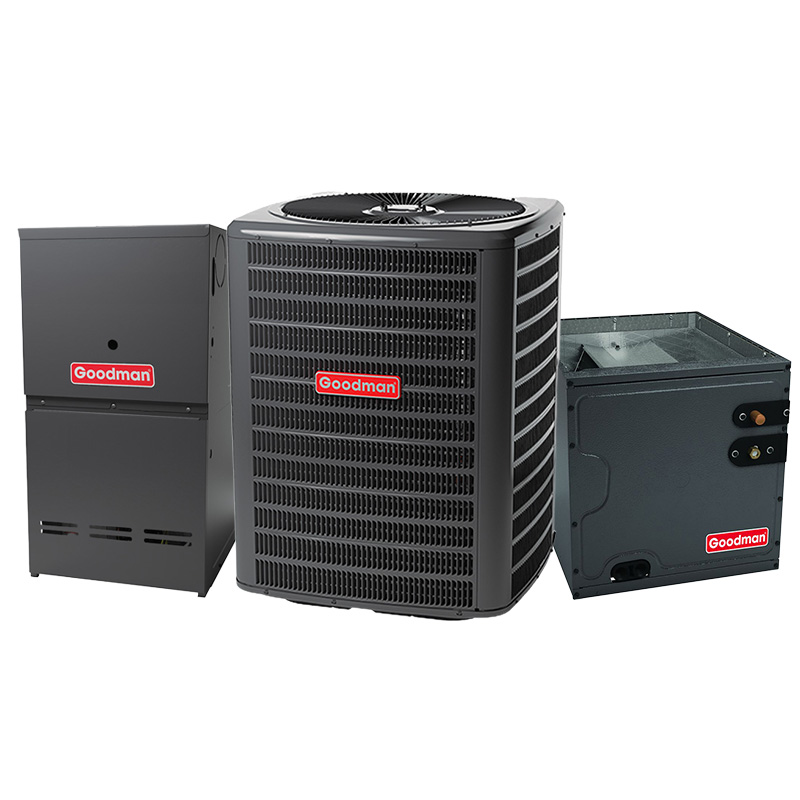
Goodman 2 Ton AC And 60000 BTU 80% AFUE Gas Furnace System | 14.3 SEER2 AC | Multi-Speed ECM Low NOx Furnace | Downflow | R32
View on AC Direct see your lowest price →Check current price on AC Direct →
Key features
- 14.3 SEER2 cooling efficiency meets current federal minimums for most regions
- 60,000 BTU 80% AFUE furnace with multi-speed ECM blower for quieter, variable airflow
- Downflow configuration for installations above floor registers or crawlspace duct systems
- R-32 refrigerant with lower global-warming potential than outgoing R-410A
- Low NOx burner meets California and other state emissions requirements
- Factory-matched system simplifies permitting and helps ensure rated performance
About this system
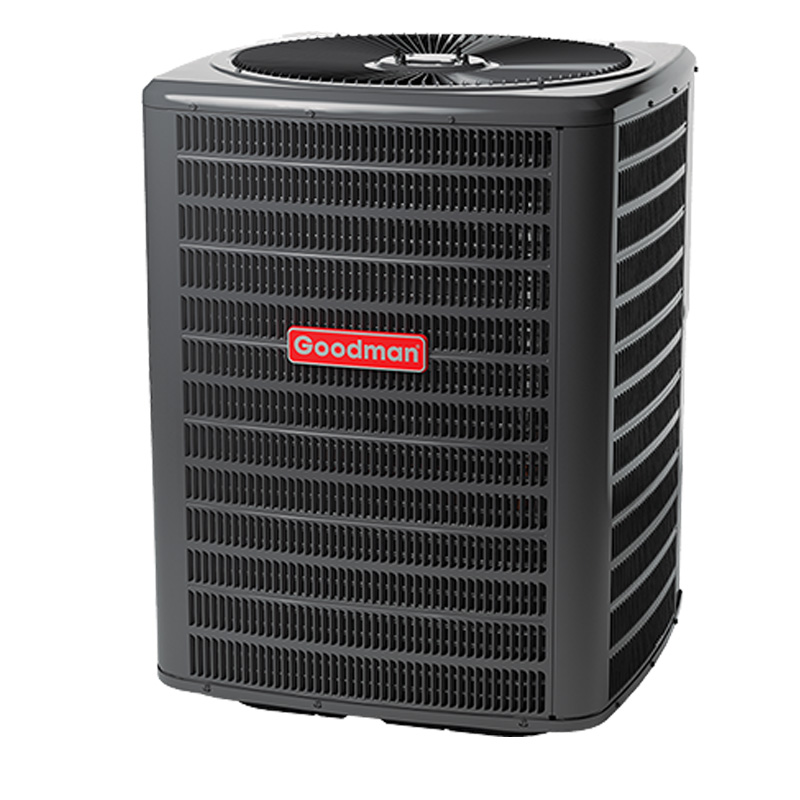
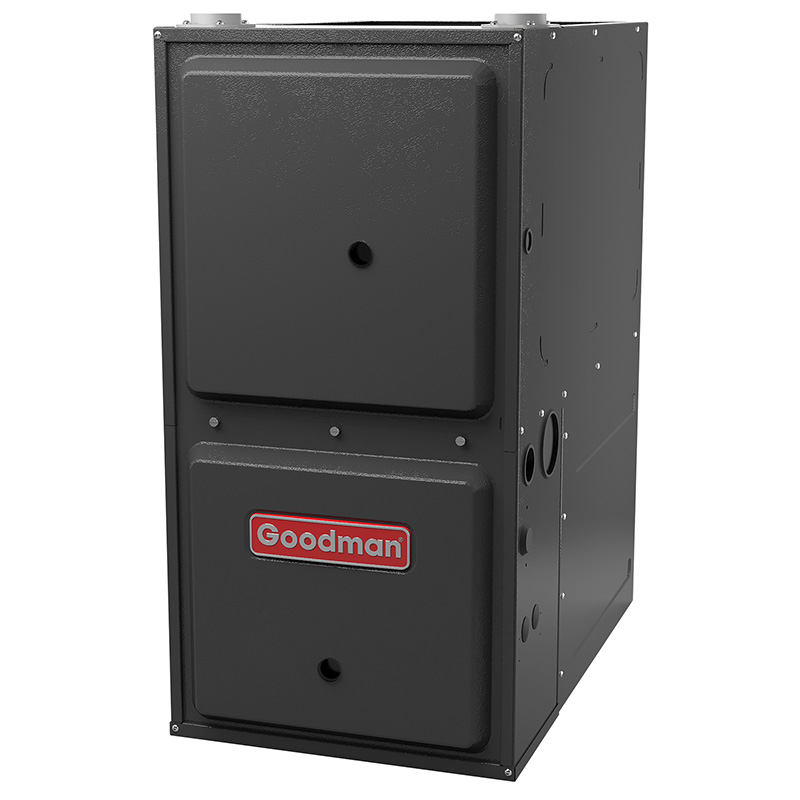
This Goodman bundle pairs a 2-ton, 14.3 SEER2 central air conditioner with a 60,000 BTU, 80% AFUE gas furnace in a downflow configuration, meaning the furnace sits on top and pushes conditioned air downward into the duct system. That layout is typical in homes where the air handler lives in an upper-floor closet or above a crawlspace with floor registers. The AC side runs on R-32 refrigerant, a lower global-warming-potential option that is increasingly common as the industry moves away from R-410A. At 14.3 SEER2, this system clears the current federal minimum for most U.S. climate regions without reaching into the premium-efficiency tier, which keeps the upfront cost in check.
The furnace uses a multi-speed ECM blower motor, which ramps airflow up and down rather than running at a fixed speed. That reduces energy use during partial-load operation, cuts temperature swings, and runs noticeably quieter than a standard PSC motor. The 80% AFUE rating means 80 cents of every heating dollar becomes useful heat, a step behind 90%-plus condensing furnaces but perfectly adequate in mild-to-moderate heating climates where winter run times are limited. The Low NOx designation signals the burner meets California and other state emissions standards, so the system qualifies for installation in NOx-restricted areas. This bundle suits smaller homes roughly 800 to 1,200 square feet, budget-minded buyers replacing aging equipment, and landlords or builders looking to keep first costs manageable without falling to the absolute basement of efficiency.
This Goodman bundle is a solid entry-level choice for buyers who want a code-compliant, factory-matched system at a meaningfully lower price than premium brands. Performance is adequate rather than exceptional, and long-term costs depend heavily on install quality and willingness to budget for maintenance after year seven. Buyers who prioritize longevity or minimal service calls should weigh the savings against Goodman's documented compressor and coil failure history.
Overall score is the average of the five ratings above.
What we like
- Upfront cost runs 15 to 25 percent below comparable Carrier, Trane, and Lennox systems
- Multi-speed ECM blower improves comfort and reduces blower energy versus single-speed motors
- Factory-matched AC and furnace simplifies permitting, warranty administration, and coil compatibility
- R-32 refrigerant is forward-compatible with evolving environmental regulations
- Low NOx rating opens the system to installation in California and other emissions-regulated markets
Trade-offs
- Dual-run capacitors are the most frequently reported failure, typically around years 5 to 8, at a repair cost of roughly $300 to $600
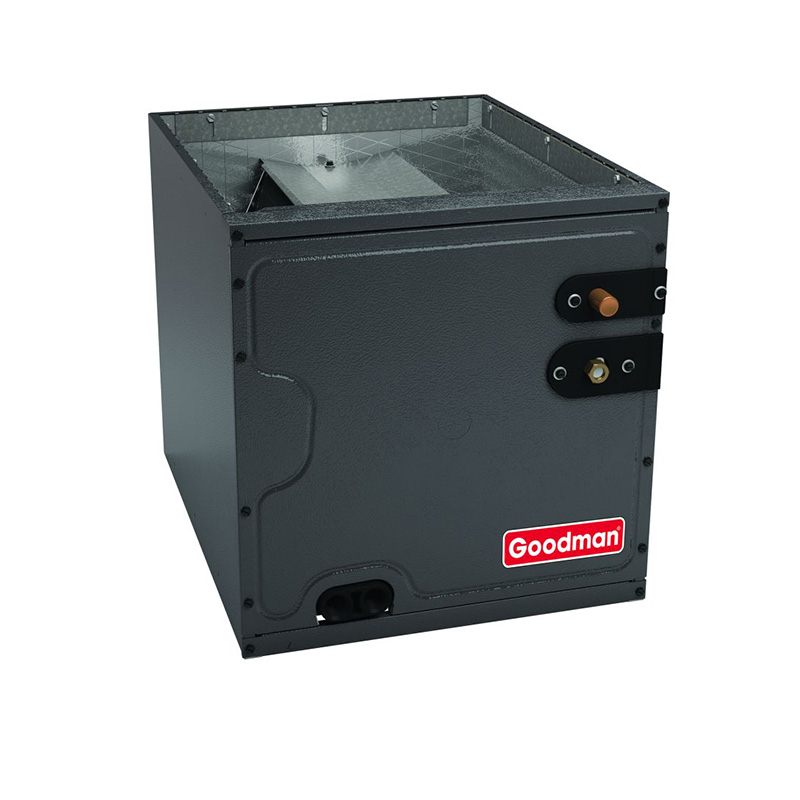
- Evaporator coil leaks appear in a meaningful share of owner reviews, a potential mid-life expense
- Compressor lifespan averages 10 to 14 years versus 15 to 20 years for premium-brand compressors
- 80% AFUE is the minimum efficiency tier; homes in colder climates will see noticeably higher heating bills than with a 96% condensing furnace
What homeowners and pros say about Goodman
Homeowners who share feedback about Goodman equipment tend to split along a clear line: those in the first five to six years generally report no major complaints, while frustration surfaces more often after year seven, a pattern consistent with the roughly 2.5 out of 5 score Goodman carries on ConsumerAffairs, a channel that draws disproportionately from dissatisfied owners. The recurring theme in those later complaints is repair costs that feel steep relative to the original savings. Google dealer reviews tell a somewhat different story, averaging around 3.8 out of 5 across hundreds of location-level reviews, where affordability is the praise most often volunteered and installer responsiveness shapes the rating more than the equipment brand itself.
HVAC technicians are consistent on one point: Goodman’s outcome in the field is more install-dependent than premium brands. A careful, properly charged installation can get solid service life out of this equipment; a rushed or undercharged one accelerates the failure modes the brand is known for. Those documented failure modes are worth knowing before you buy. Dual-run capacitors are the most commonly reported breakdown, a relatively low-cost repair but one that comes up with enough regularity that experienced owners build it into their maintenance budget. Evaporator coil leaks show up in a meaningful share of reviews, and compressor lifespan on Goodman equipment tends to average 10 to 14 years, shorter than the 15 to 20 years associated with premium-brand compressors. A small minority of first-year refrigerant leak reports also appear in owner feedback, almost always traced back to installation or initial charge issues rather than a factory defect. For this specific downflow R-32 system, verifying that your installing contractor has R-32 certification is an extra step that reduces the chance of joining that minority.
Sources: ConsumerAffairs Goodman owner reviews, AHRI Directory of Certified Product Performance, U.S. DOE appliance and equipment efficiency standards, Goodman product specification sheets.
What it costs to run
At 14.3 SEER2, cooling this 2-ton system for a typical 1200-hour cooling season at the U.S. average electricity rate of $0.17/kWh works out to roughly $342 per year in cooling, about $23 less per year than a minimum-efficiency 13.4 SEER2 unit of the same size. Your real cost depends on your climate and local rate.
Method: (24,000 BTU/hr ÷ 14.3 SEER2) × 1200 hours ÷ 1000 × $0.17/kWh. Rate source: U.S. EIA average; cooling hours: moderate-climate estimate.
How it compares
| Brand | Comparable model | SEER2 | Stage | Price position |
|---|---|---|---|---|
| Goodman | GSXN4/GCVC8 Bundle (this system) | 14.3 | Single-stage AC / Multi-speed furnace | Value pick |
| Carrier | Comfort 14 (24ACC4) with 58MCA furnace | 14.3 | Single-stage | Typically 15 to 25 percent more than this Goodman bundle |
| Trane | XR14c with S8X1 furnace | 14.3 | Single-stage | Typically 15 to 25 percent more than this Goodman bundle |
| Lennox | Merit ML14XC1 with ML180 furnace | 14.3 | Single-stage | Typically 15 to 25 percent more than this Goodman bundle |
Competitor rows are comparable single-stage units at similar efficiency; price is relative position, not a quote.
Questions about this system
Why does this furnace blow air downward, and is my home set up for it?
Downflow furnaces discharge air from the bottom, feeding duct systems that run under the floor or through a crawlspace. If your existing furnace sits on a platform with ductwork below it and floor registers throughout the home, you are likely in a downflow setup. An HVAC technician can confirm the correct orientation before you order.
Is R-32 refrigerant safe, and will technicians in my area be able to service it?
R-32 is mildly flammable (A2L classification) but has been used widely in Asia and Europe for years without significant field incidents. EPA and UL certifications cover its residential use in the U.S. Most service technicians are completing R-32 certification as the industry transitions away from R-410A, though availability of trained techs can still vary by region, so it is worth checking locally.
What is the real warranty on this Goodman system, and what does it require?
Goodman offers a 10-year parts warranty when you register the equipment within 60 days of installation. If you miss the registration window, coverage typically drops to five years on parts. The warranty does not cover labor, refrigerant, or consequential costs, so a service agreement with your installer is worth considering separately.
How often should I expect to replace the dual-run capacitor, and what does that cost?
Dual-run capacitors are the single most commonly reported failure on Goodman air conditioners, often showing up between years five and eight. The part itself is inexpensive, and a qualified technician can usually swap it in under an hour, with total repair costs typically in the $300 to $600 range depending on labor rates in your market. Keeping a service contract that includes diagnostic visits makes it easier to catch a weakening capacitor before it takes the compressor down with it.
Is 80% AFUE good enough, or should I upgrade to a 96% condensing furnace?
In climates with short, mild winters, the efficiency gap between 80% and 96% AFUE rarely pays back the higher upfront cost of a condensing furnace within a reasonable timeframe. In colder regions where the furnace runs hundreds of hours per season, the 16-percentage-point fuel savings can offset the price difference in seven to ten years. A Manual J heat load calculation from your installer will give you the clearest picture for your specific home and location.
Specifications
| Cooling capacity | 2 Ton |
| Efficiency | 14.3 SEER2 |
| Furnace output | 60000 BTU |
| Furnace efficiency | 80% AFUE |
| Configuration | Downflow |
| Refrigerant | R-32 |