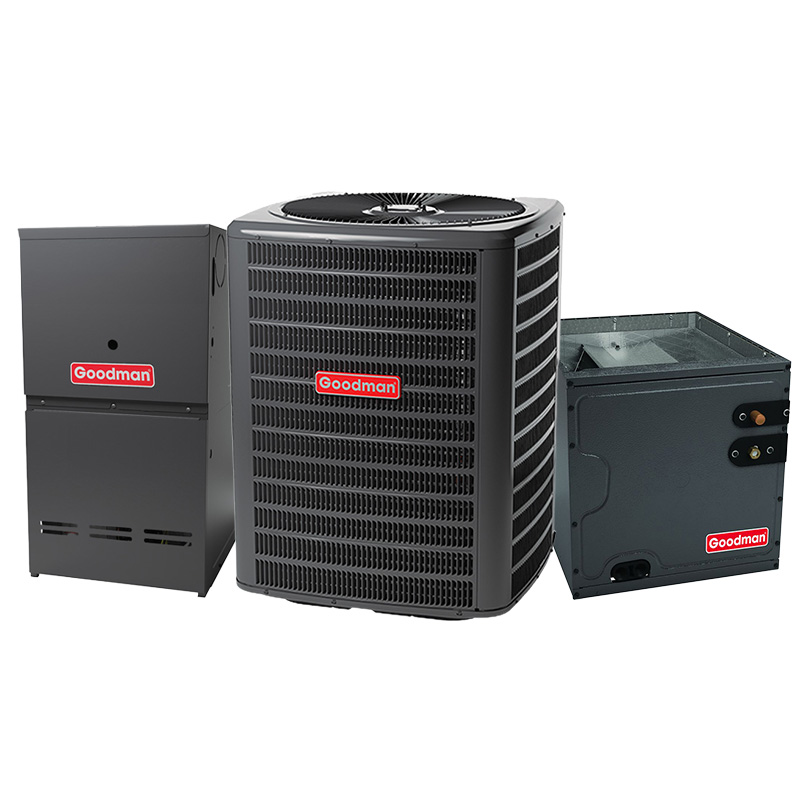
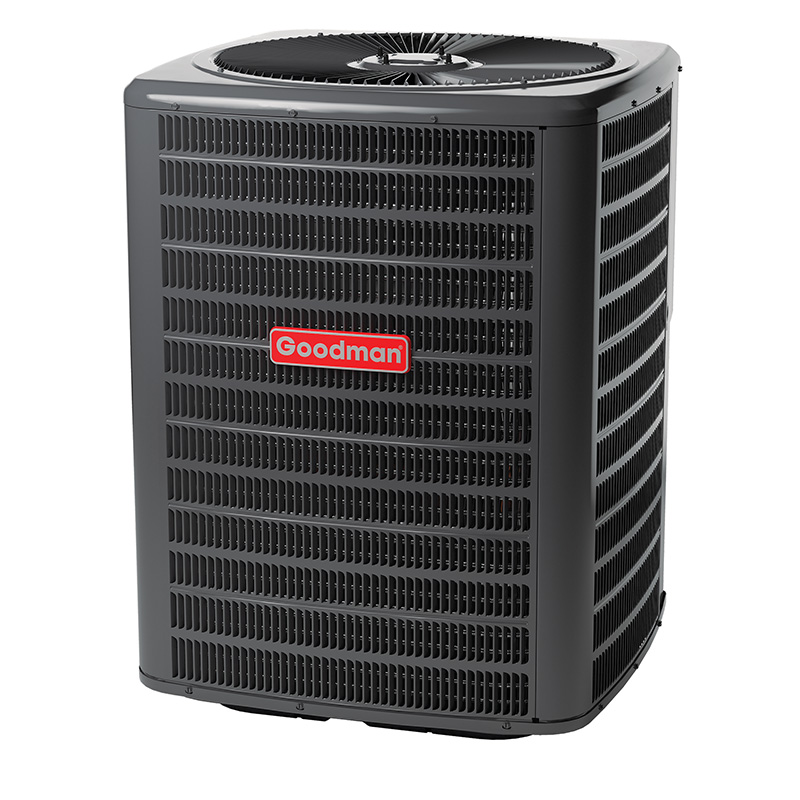
Goodman 2 Ton AC And 60000 BTU 80% AFUE Gas Furnace System | 14.5 SEER2 AC | Multi-Speed ECM Low NOx Furnace | Downflow | R32
View on AC Direct see your lowest price →Check current price on AC Direct →
Key features
- 14.5 SEER2 single-stage AC rated for the current federal minimum efficiency standard
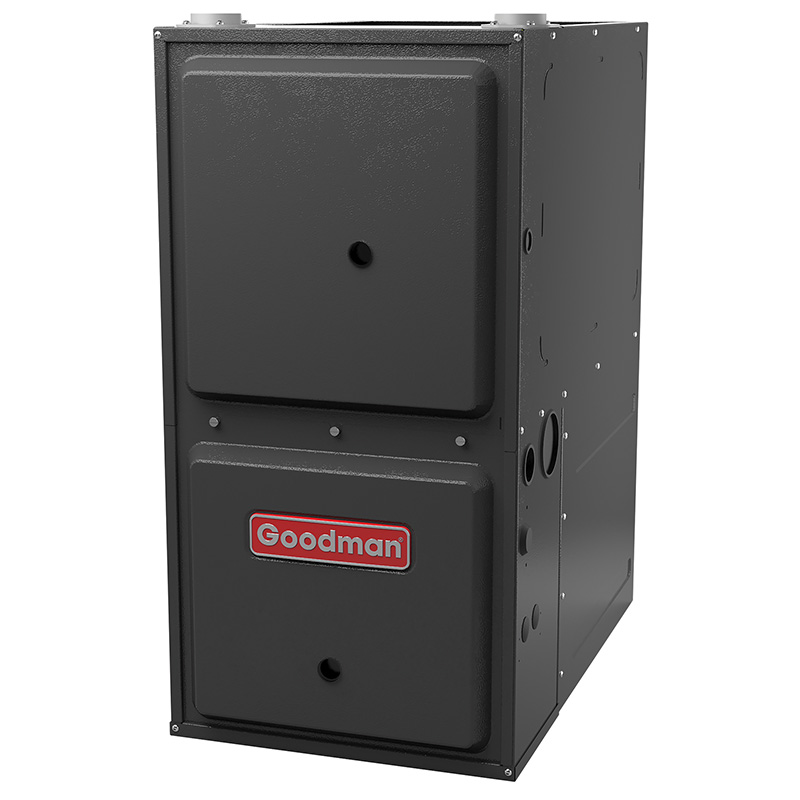
- 60,000 BTU 80% AFUE gas furnace in downflow configuration for closet or platform installations
- Multi-speed ECM blower motor for quieter operation and lower fan-mode electricity draw
- R-32 refrigerant with roughly 68% lower global warming potential than R-410A
- Low NOx combustion design meets strict air-quality district requirements including California SCAQMD
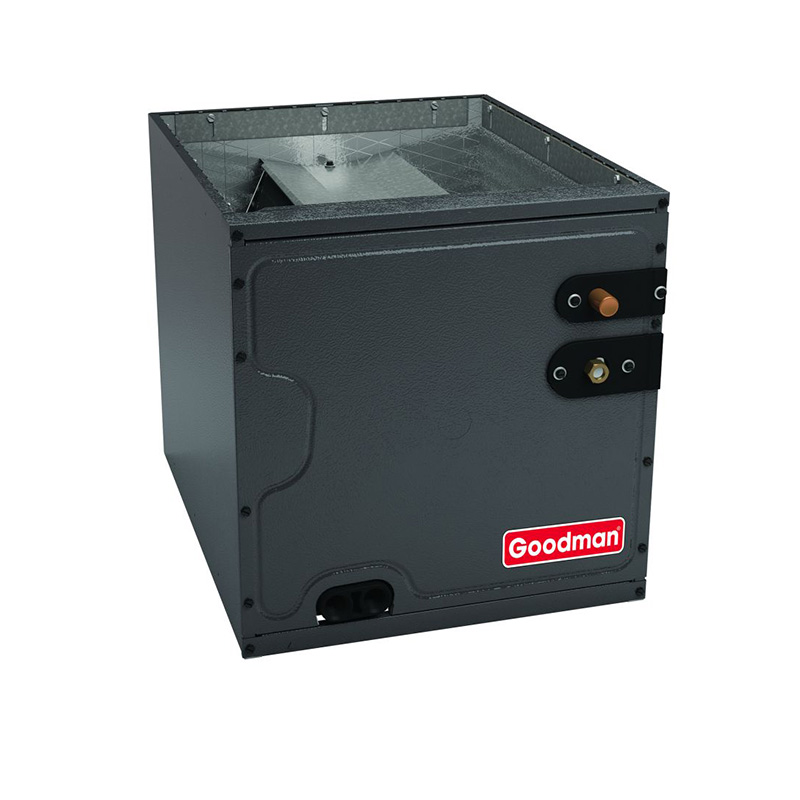
- Factory-matched system designed for straightforward coil and furnace compatibility
About this system
The Goodman 2-ton, 14.5 SEER2 split system pairs a straightforward single-stage AC with a 60,000 BTU, 80% AFUE gas furnace in a downflow configuration, making it a practical replacement choice for homes where the air handler sits in a closet or platform above the living space and blows conditioned air downward into the ductwork. R-32 refrigerant gives it a lower global warming potential than the R-410A systems it often replaces, and the multi-speed ECM blower motor in the furnace runs more quietly and draws less electricity than a standard PSC motor, improving comfort during fan-only and heating cycles.
At 14.5 SEER2 and 80% AFUE, this system sits at the regulatory minimum or just above it, depending on your climate region. That is honest entry-level efficiency: it will meaningfully cut energy bills compared to a 10-to-14-year-old unit, but it will not deliver the operating-cost savings of a two-stage or modulating system at 16-plus SEER2 or 96% AFUE. The Low NOx furnace designation satisfies Southern California and other air-quality districts with strict nitrogen oxide emissions limits, which is a hard requirement in those regions rather than a marketing feature. Two-ton capacity is appropriate for roughly 900 to 1,400 square feet of well-insulated space in a moderate climate, though a proper Manual J load calculation from your installer is the only reliable way to confirm fit.
This system suits homeowners who need a reliable replacement at a realistic budget, are not chasing top-tier efficiency credits, and have a licensed installer with Goodman familiarity on the job. It is not the right call if you are building a high-performance envelope, live in an extreme climate, or want the longest possible compressor lifespan without intermediate service calls.
This Goodman bundle delivers a functional, code-compliant replacement system at a price point 15 to 25 percent below comparable Carrier, Trane, and Lennox equipment, which is its core appeal. Efficiency is entry-level, reliability is install-dependent, and owners should budget for a capacitor replacement somewhere in years 4 to 8. For buyers who prioritize upfront cost and have a skilled installer, it covers the basics without pretense.
Overall score is the average of the five ratings above.
What we like
- Priced 15 to 25 percent below comparable Trane, Carrier, and Lennox systems
- Multi-speed ECM motor improves comfort and reduces fan electricity consumption versus PSC-motor furnaces
- R-32 refrigerant has meaningfully lower environmental impact than R-410A
- Low NOx furnace satisfies strict regional air-quality mandates where other units cannot be legally installed
- Factory-matched AC and furnace reduces compatibility guesswork during installation
Trade-offs
- 80% AFUE is the low end of current furnace efficiency; 15 to 20 percent of heat energy exits through the flue
- Compressor lifespan averages 10 to 14 years versus 15 to 20 years for premium-brand compressors
- Dual-run capacitor failures are a well-documented recurring issue, typically requiring a 300 to 600 dollar service call in the first decade
- A minority of owners report refrigerant leaks within the first year, most traced to install or charge quality rather than the equipment itself
What homeowners and pros say about Goodman
Homeowners who review Goodman equipment on ConsumerAffairs give the brand roughly 2.5 out of 5, a score that reflects a complaint-heavy audience but also a real pattern: repair costs that climb after about year 7, with dual-run capacitor failures and evaporator coil leaks appearing repeatedly in written accounts. Google dealer reviews land around 3.8 out of 5 across hundreds of location-level ratings, where the most consistent praise is straightforwardly about price. Neither score suggests a premium ownership experience, but together they outline a reasonable picture of a budget brand that performs adequately when installed correctly and disappoints when it is not.
HVAC technicians who work on Goodman equipment frequently echo the same point: the install matters more than the nameplate. First-year refrigerant leaks, which a minority of owners report on this and similar Goodman systems, are most often traced back to improper charging or line-set connections rather than a factory defect. The compressor lifespan concern is more structural: independent industry data and owner accounts suggest Goodman compressors tend to run 10 to 14 years on average, compared to 15 to 20 years for compressors in Trane, Carrier, and Lennox equipment. For this specific 2-ton, 14.5 SEER2 downflow system, the calculus is familiar: a lower purchase price in exchange for a shorter likely service life and a higher probability of at least one capacitor service call before the ten-year mark.
Sources: ConsumerAffairs Goodman owner reviews, AHRI Directory of Certified Product Performance, U.S. DOE appliance and equipment efficiency standards, Goodman product specification sheets.
What it costs to run
At 14.5 SEER2, cooling this 2-ton system for a typical 1200-hour cooling season at the U.S. average electricity rate of $0.17/kWh works out to roughly $338 per year in cooling, about $27 less per year than a minimum-efficiency 13.4 SEER2 unit of the same size. Your real cost depends on your climate and local rate.
Method: (24,000 BTU/hr ÷ 14.5 SEER2) × 1200 hours ÷ 1000 × $0.17/kWh. Rate source: U.S. EIA average; cooling hours: moderate-climate estimate.
How it compares
| Brand | Comparable model | SEER2 | Stage | Price position |
|---|---|---|---|---|
| Goodman | GSXH502410 + GCVC800603BX (this system) | 14.5 | Single-stage | Value pick |
| Carrier | Comfort 24ACC636A003 + 58SB0B060E17–12 | 14.5 | Single-stage | 15 to 25 percent more than this system |
| Trane | XR14c + S8X1B060M3PSAA | 14.5 | Single-stage | 15 to 25 percent more than this system |
| Lennox | Merit ML14XC1 + ML180UH060E36B | 14.5 | Single-stage | 15 to 20 percent more than this system |
Competitor rows are comparable single-stage units at similar efficiency; price is relative position, not a quote.
Questions about this system
Does the downflow configuration mean this furnace can only be installed in a specific type of setup?
Yes. A downflow furnace is designed to sit above the living space, typically in a closet or on a platform, and discharge air downward into floor-level or below-floor ductwork. It cannot be used in an upflow or horizontal application without a different cabinet. Confirm your existing duct layout before ordering.
Is 14.5 SEER2 going to qualify me for a federal tax credit or utility rebate?
The federal 25C tax credit for central AC and heat pump systems requires meeting specific efficiency thresholds that generally exceed 14.5 SEER2 for split-system AC, so this unit is unlikely to qualify. Utility rebates vary widely by provider; check your local utility's program directly, as some do offer incentives at this efficiency tier.
What does the Low NOx rating actually mean for me as a homeowner?
In practical terms, it means this furnace can be legally installed in California's South Coast Air Quality Management District and other regions with strict nitrogen oxide emissions rules. If you are outside those areas it has no day-to-day impact on your experience, but it does future-proof the unit if NOx regulations tighten in your region.
How serious is the capacitor failure issue I keep reading about in Goodman reviews?
Dual-run capacitor failures are the most commonly reported repair on Goodman AC equipment and are well-documented. The good news is it is typically a quick, low-cost fix in the 300 to 600 dollar range when a technician is already dispatched. Keeping a service agreement or scheduling annual tune-ups can catch early signs of capacitor degradation before it becomes a no-cool situation.
Why does my quote for this system vary so much between installers?
Goodman's own brand research and technician feedback consistently point to install quality as the largest variable in long-term performance, and labor rates differ significantly by region and contractor. A lower-priced install is not always a worse one, but you should verify licensing, check references, and confirm the installer will perform a proper refrigerant charge and airflow commissioning, since a significant share of first-year refrigerant leak complaints trace back to install or charging errors rather than the equipment.
Specifications
| Cooling capacity | 2 Ton |
| Efficiency | 14.5 SEER2 |
| Furnace output | 60000 BTU |
| Furnace efficiency | 80% AFUE |
| Configuration | Downflow |
| Refrigerant | R-32 |